






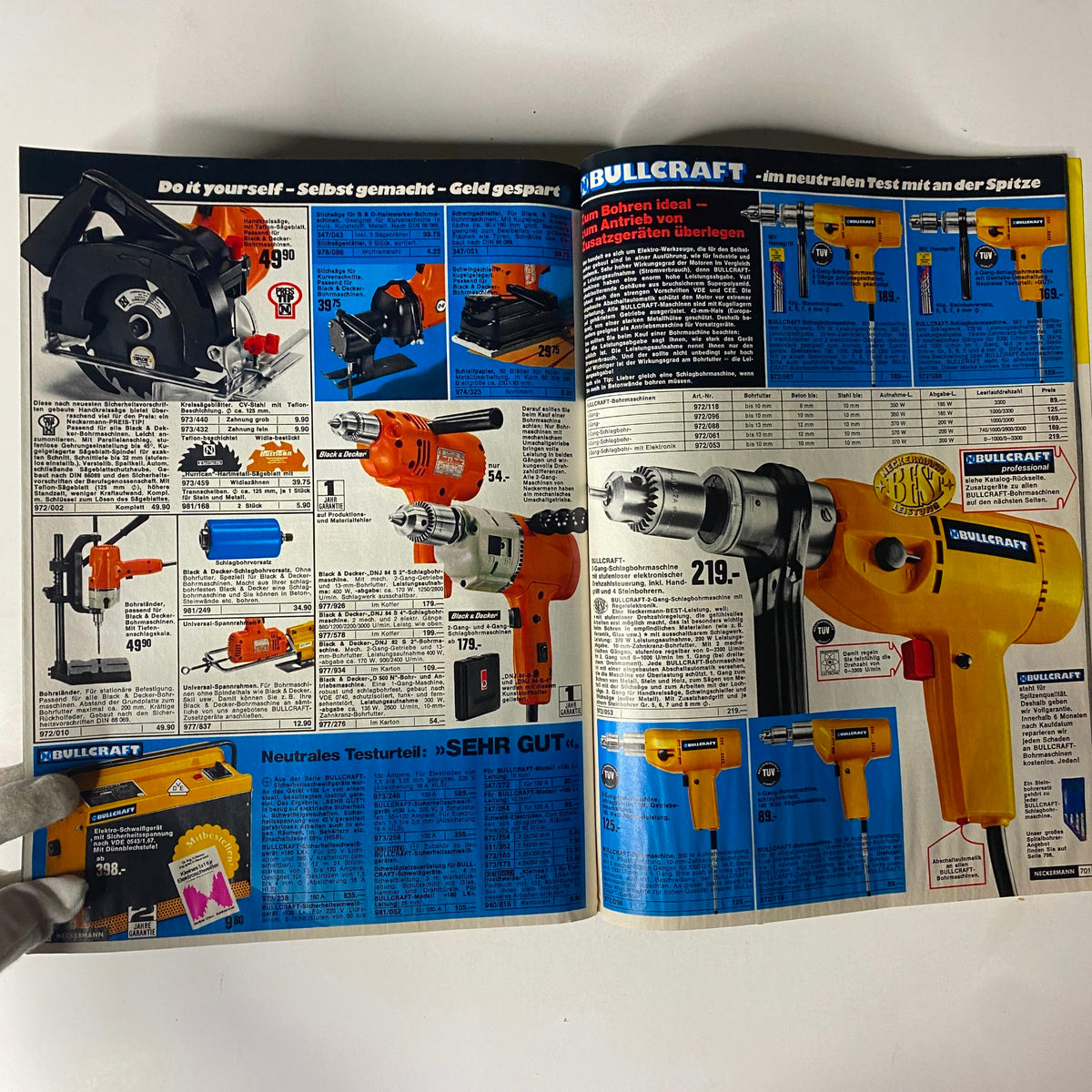
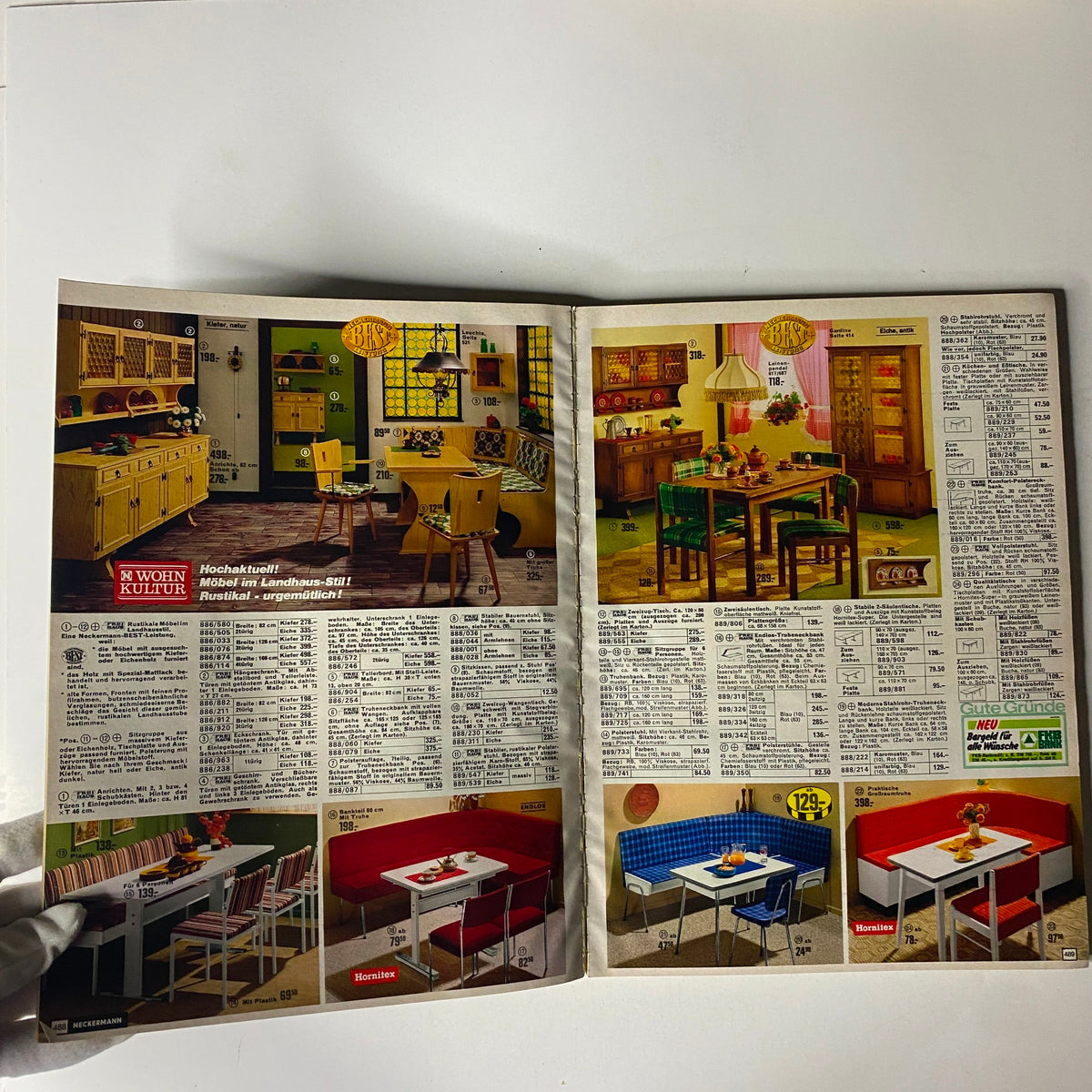


Description
Collector's Note – Why This Issue Matters
The 1974–1975 Neckermann Winter catalog is a primary document of West German consumer culture at one of the most economically disruptive periods of the postwar era. The winter season bridging 1974 and 1975 arrived in the deepening aftermath of the OPEC oil crisis — the economic shock that had begun with the October 1973 embargo was fully working its way through Western economies by the winter of 1974–75, producing the most severe recession since the Second World War. West Germany, despite its structural economic strengths, was not immune: growth contracted, inflation rose, and the consumer confidence that had characterized the postwar prosperity decade was operating under genuine new anxieties. Chancellor Helmut Schmidt, who had taken office in May 1974, was managing the country through this turbulence with the pragmatic competence that would define his chancellorship. A Neckermann winter catalog distributed into this specific economic moment documents what West German families were buying — or planning to buy — during a winter defined by energy-consciousness, recession anxiety, and the practical consumer recalibration that economic disruption always produces. That specificity gives this catalog a historical character that purely prosperous periods cannot replicate. Collectors and historians researching the early-to-mid 1970s West German consumer record will find the Neckermann catalog archive an essential resource for tracing how West German retail culture evolved through these pivotal postwar years.
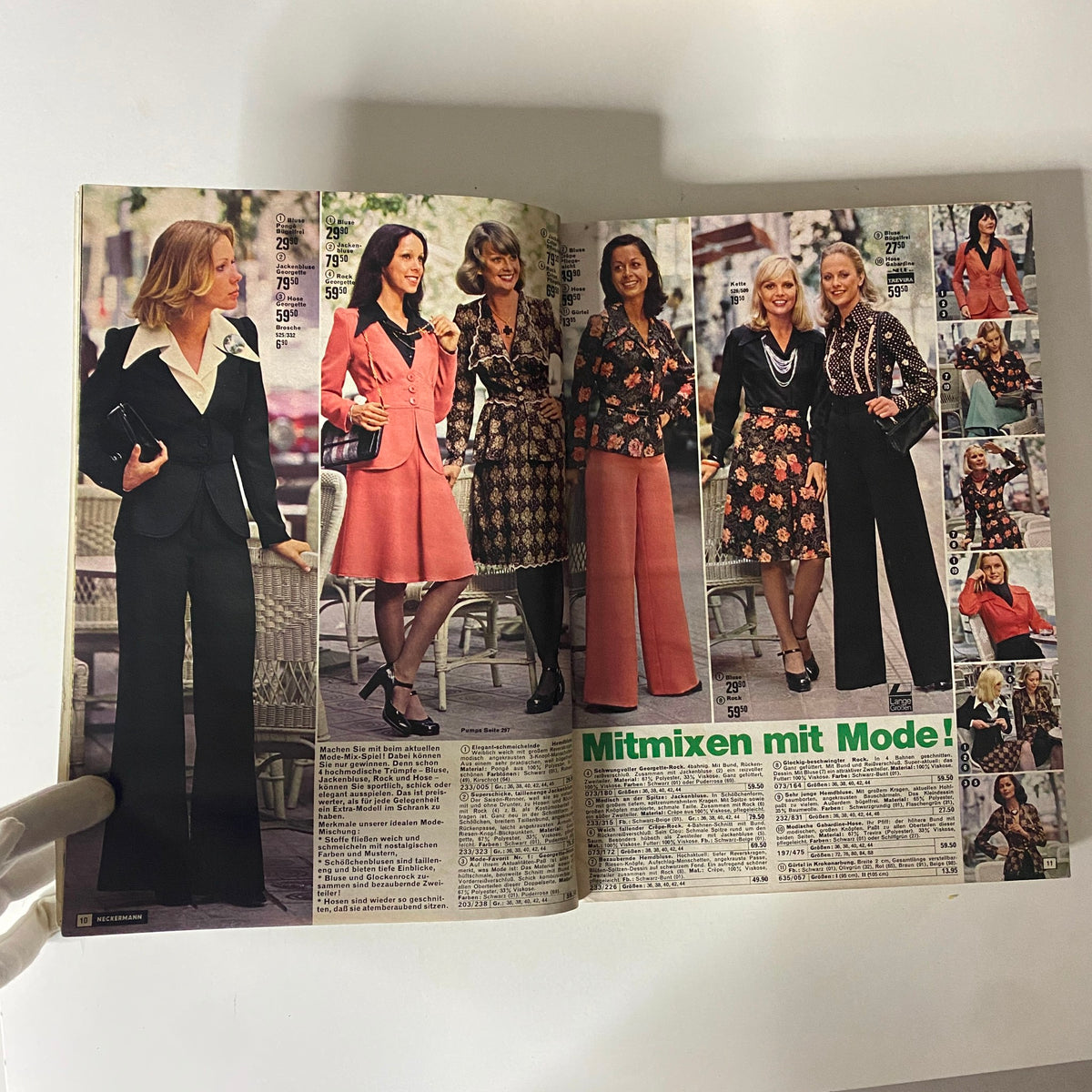
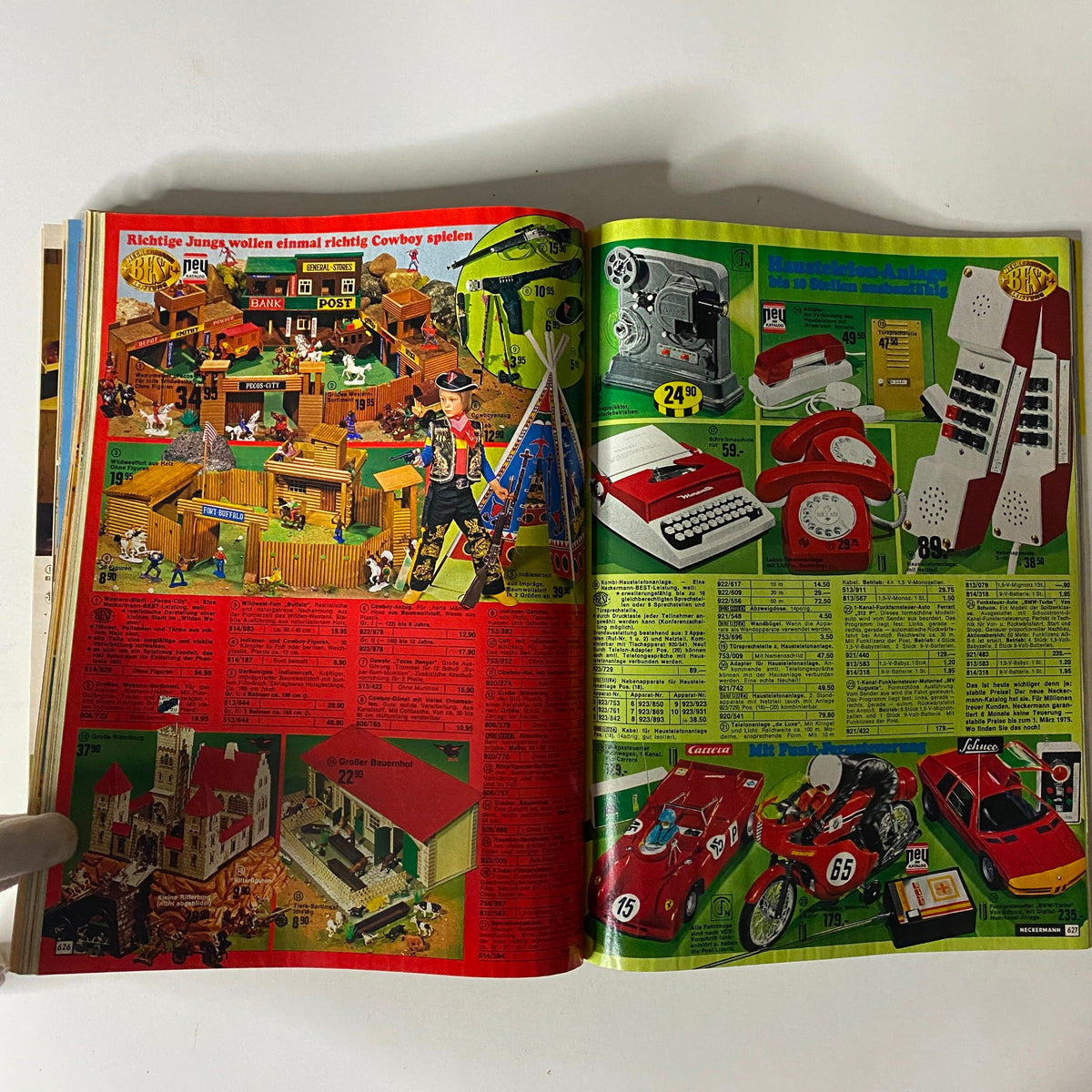
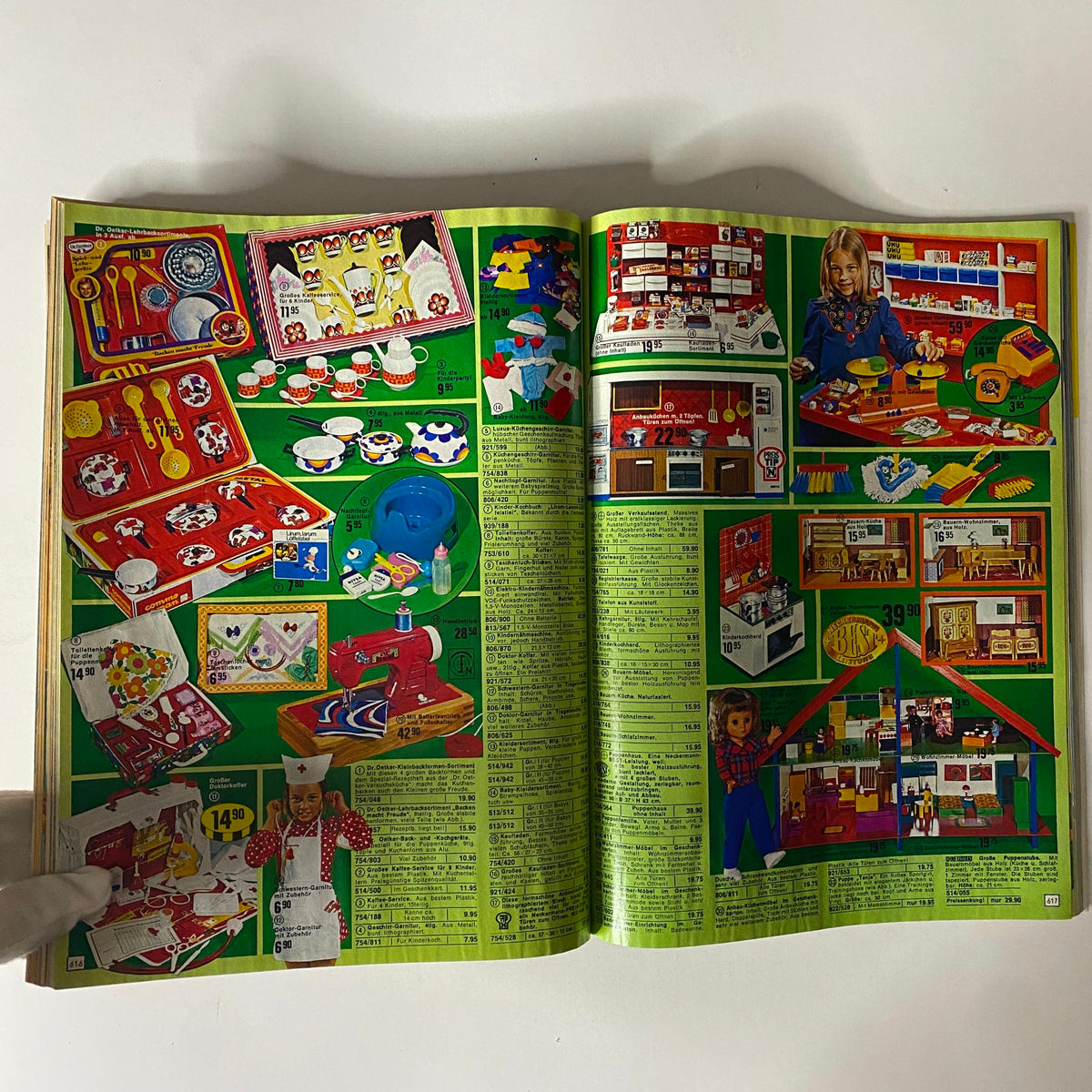
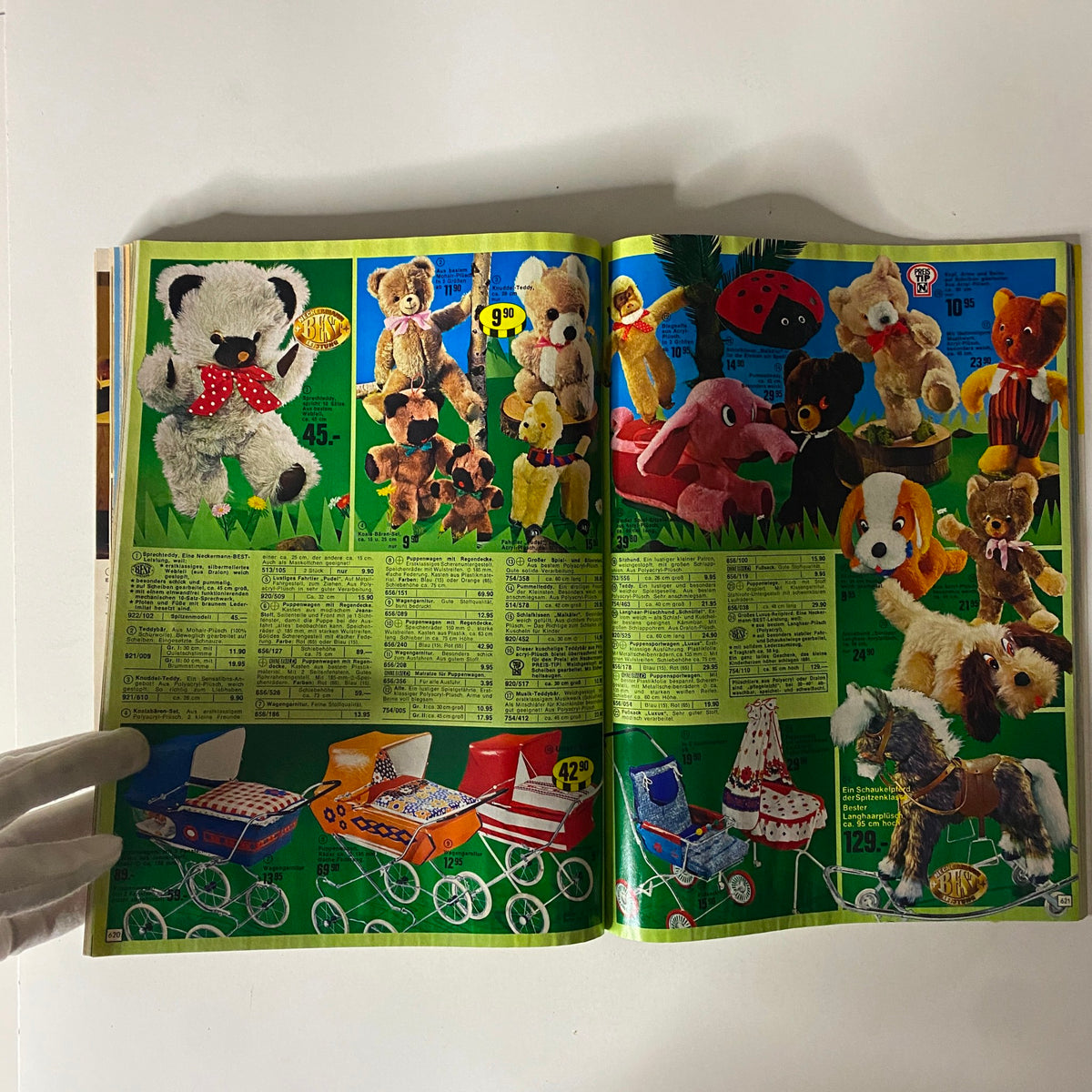
The early-to-mid 1970s aesthetic documented in this winter catalog reflects a West German mass-market fashion moment that was simultaneously fully established and beginning to consolidate toward its mid-decade peak. By the winter of 1974–75, the distinctly 1970s visual language — earth tones alongside bolder accent colors, synthetic and blended fabric confidence, relaxed coordinated dressing — was the dominant commercial standard across Neckermann's cold-weather line, fully displacing the late-1960s aesthetic that had preceded it. The cold-weather specific categories of a German winter catalog — outerwear, knitwear, boots, and the household heating and comfort goods that West German families consulted their Neckermann catalog for each winter — document the particular material requirements of northern European domestic life in the mid-1970s with a specificity that fashion-only publications cannot provide. Christmas merchandise, one of the most commercially significant categories in the German retail calendar, is also a key component of any Neckermann winter edition, capturing the gift-giving and decorating conventions of mid-1970s West German domestic culture at a moment when those conventions were operating under the practical pressures of recession-era household budgets. The full range of 1974 publications provides essential context for the year that opened this catalog's winter season — one of the most economically and politically significant in postwar West German history.
The 1974–75 winter edition occupies a specific and historically useful position within the Neckermann catalog series: it is the first winter catalog following the oil crisis winter of 1973–74, documenting the second phase of that disruption's impact on West German consumer behavior and retail culture. Comparative research between this edition and the 1973–74 winter catalog immediately preceding it offers some of the clearest available documentation of how the oil crisis affected the West German mass-market retail environment across two consecutive winter seasons.
About the Publication
Neckermann Versand, founded in Frankfurt in 1950 by Josef Neckermann, grew into one of West Germany's largest and most recognized mail-order companies, issuing seasonal general merchandise catalogs that reached millions of German households at their peak. The winter edition was the company's most comprehensive annual publication, covering cold-weather fashion, household goods, Christmas merchandise, and the full range of domestic products that West German families needed across the long cold-weather season. By the mid-1970s Neckermann's catalogs were sophisticated full-color publications reflecting the decade's evolving visual aesthetic, and they serve today as detailed primary sources for researchers of postwar German consumer culture, European fashion history, and the material culture of Cold War-era West German domestic life.
Key Highlights Inside
- Winter fashion for men, women, and likely children reflecting the early-to-mid 1970s West German mass-market aesthetic — earth tones, synthetic and blended fabric confidence, and the relaxed coordinated dressing philosophy of the decade, fully established as the dominant commercial standard by the winter of 1974–75.
- Cold-weather outerwear, knitwear, and seasonal clothing documenting the specific silhouette preferences and fabric technologies of West German consumers navigating the first recession-era winter following the oil crisis — practical cold-weather dressing in a period of newly heightened energy consciousness.
- Household goods and home comfort products capturing the domestic priorities of West German families in the winter of 1974–75, including the heating, insulation, and energy-related domestic products that took on new significance in the post-oil-crisis consumer environment.
- Christmas and holiday merchandise reflecting the gift-giving and decorating conventions of mid-1970s West German domestic culture at a moment of recession-era household budget constraint — one of the most commercially significant and culturally specific seasonal categories in the German retail calendar.
- Note: Specific section titles, page counts, and detailed interior content beyond what is documented in the listing have not been independently confirmed. The above reflects what is verifiable from the listing description and well-documented knowledge of Neckermann's catalog format and the consumer culture of this era.
Condition & Rarity
Neckermann winter catalogs from the mid-1970s were the company's most heavily used annual publications — consulted repeatedly over a five-to-six-month household season and subjected to the binding stress that extended domestic use produces over time. A surviving example from 1974–75 rated in good condition with a protective plastic sleeve represents a well-preserved artifact by realistic standards for a catalog now more than fifty years old. When evaluating any surviving copy of this catalog, the primary condition factors are binding integrity and spine cohesion — the most common structural failure mode for heavily used winter editions — alongside cover brightness, the completeness of the full-color fashion and product pages, and the absence of significant moisture damage or household markings. Good condition on a winter catalog of this age indicates structural soundness and visual legibility sufficient for both research and display purposes, a meaningful standard for mid-1970s West German retail ephemera.
Looking for More Issues Like This?
Mid-1970s Neckermann winter catalogs from the oil crisis era are among the most historically charged entries in the Neckermann archive, and the 1974–75 edition — documenting West German consumer behavior in the recession winter that followed the most significant economic disruption of the postwar era — draws consistent interest from collectors and researchers of European economic and consumer history. The Neckermann catalog collection at OriginalMagazines.com is the most focused resource for locating other seasonal editions from this important West German mail-order institution. Collectors building around the economically pivotal year of 1974 will also want to explore the 1974 magazine collection, which brings together a range of period publications that document the style, economic disruption, and everyday life of one of the postwar era's most consequential years.