

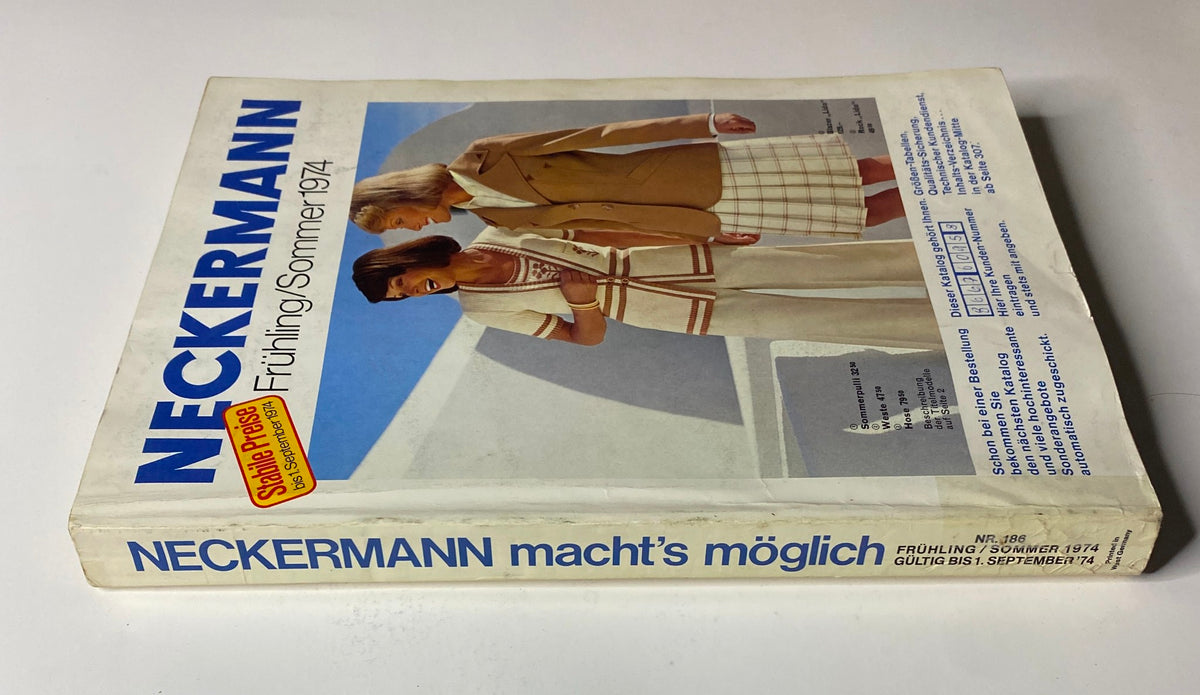



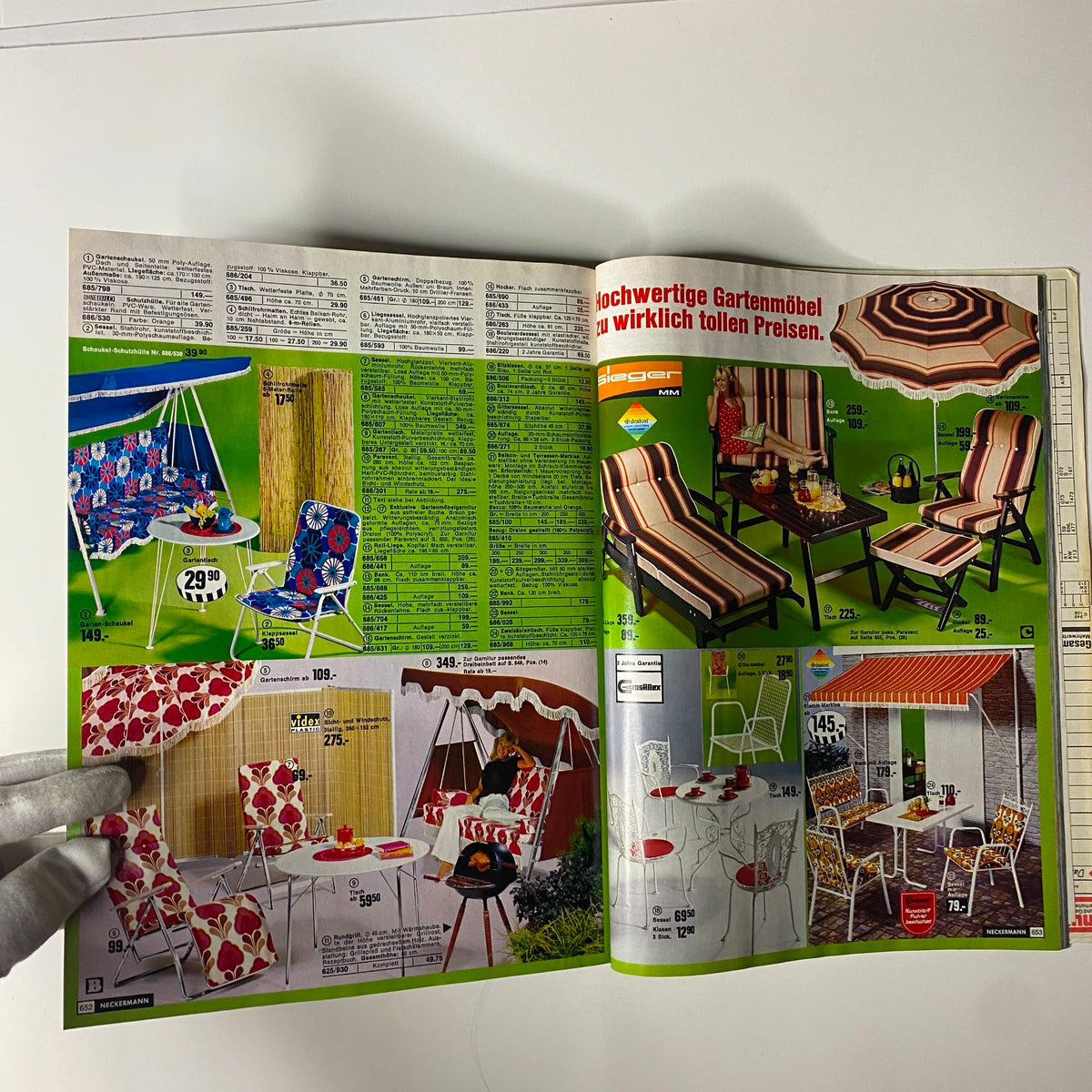
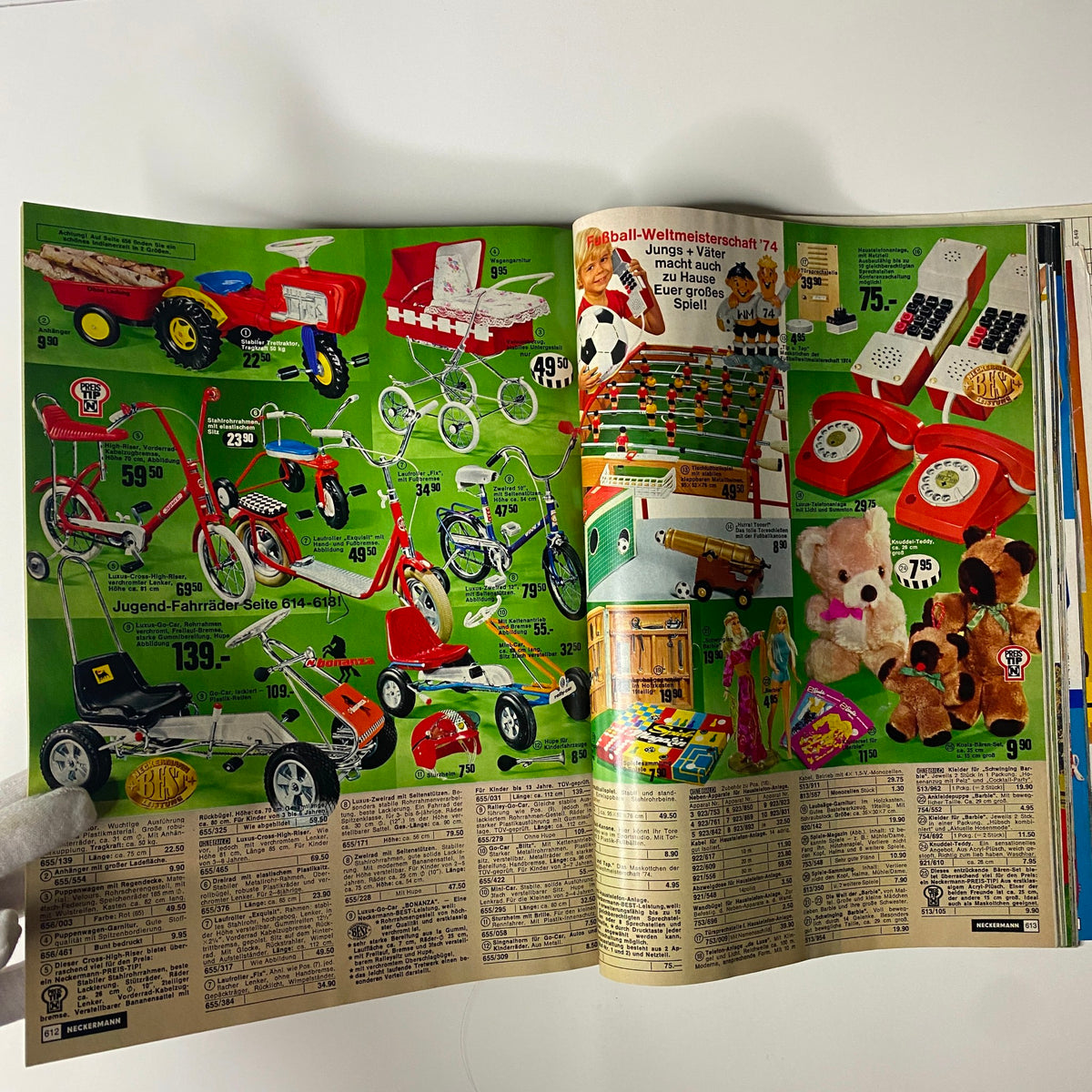


Description
Collector's Note – Why This Issue Matters
The 1974 Neckermann Sommer catalog is a primary document of West German consumer culture at one of the most historically significant summers of the postwar era. The summer of 1974 arrived in the immediate aftermath of the OPEC oil crisis of 1973–74 — the first major economic disruption of the postwar period — and in the midst of a global recession that was reshaping consumer behavior and economic expectations across the Western world. West Germany was navigating these pressures under Chancellor Helmut Schmidt, who had taken office in May 1974 following Willy Brandt's resignation. The 1974 FIFA World Cup was hosted by West Germany that summer, providing a moment of national pride and international visibility that coexisted with the underlying economic anxieties of the oil shock era. A Neckermann summer catalog from this precise moment documents what West German families were buying and planning to buy during a summer defined by that particular tension between national celebration and economic uncertainty — a combination that gives this catalog a historical density that purely prosperous or purely troubled years do not possess. Collectors researching the early-to-mid 1970s West German consumer record will find the Neckermann catalog archive an essential resource for tracing the evolution of West German retail culture through the postwar decades.
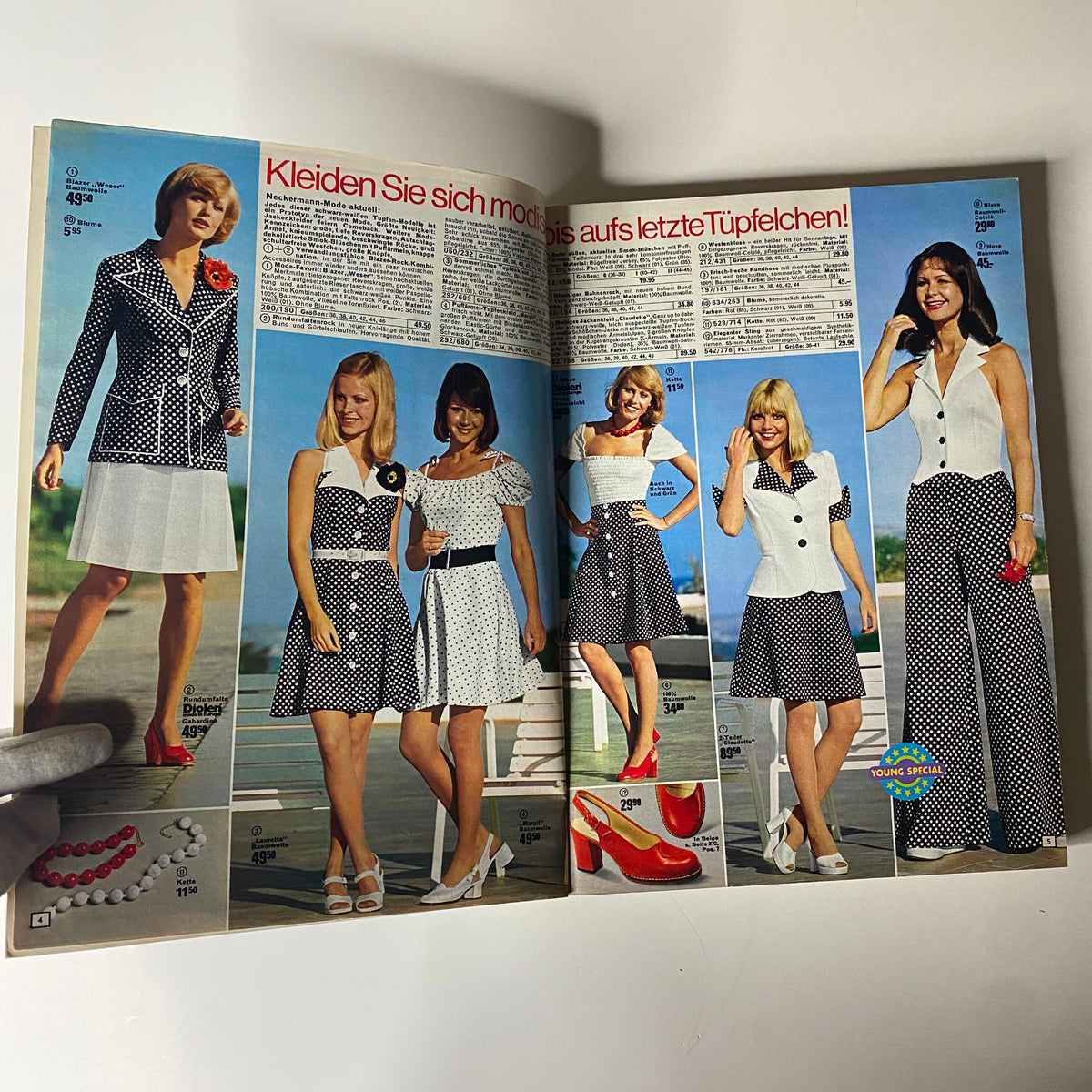
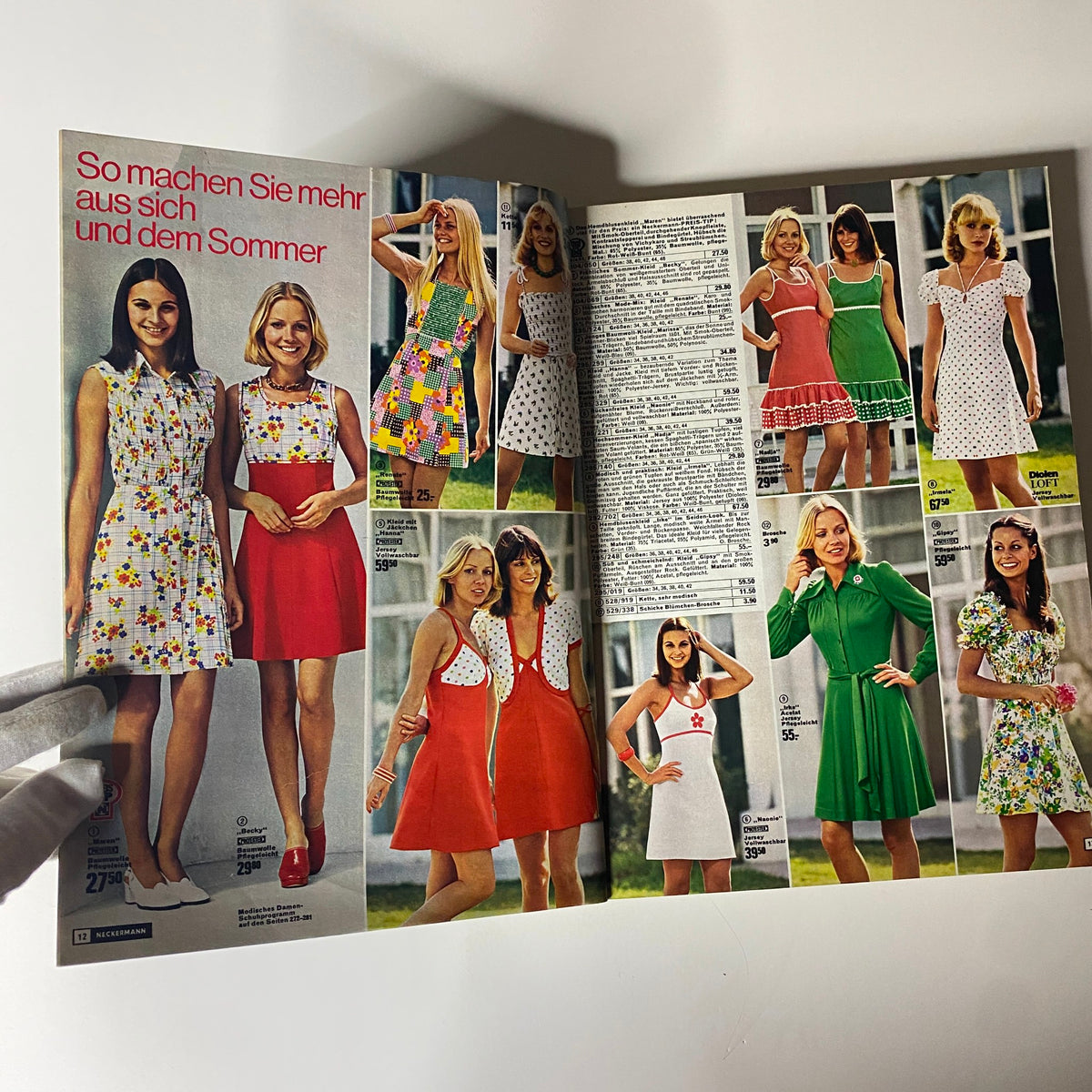
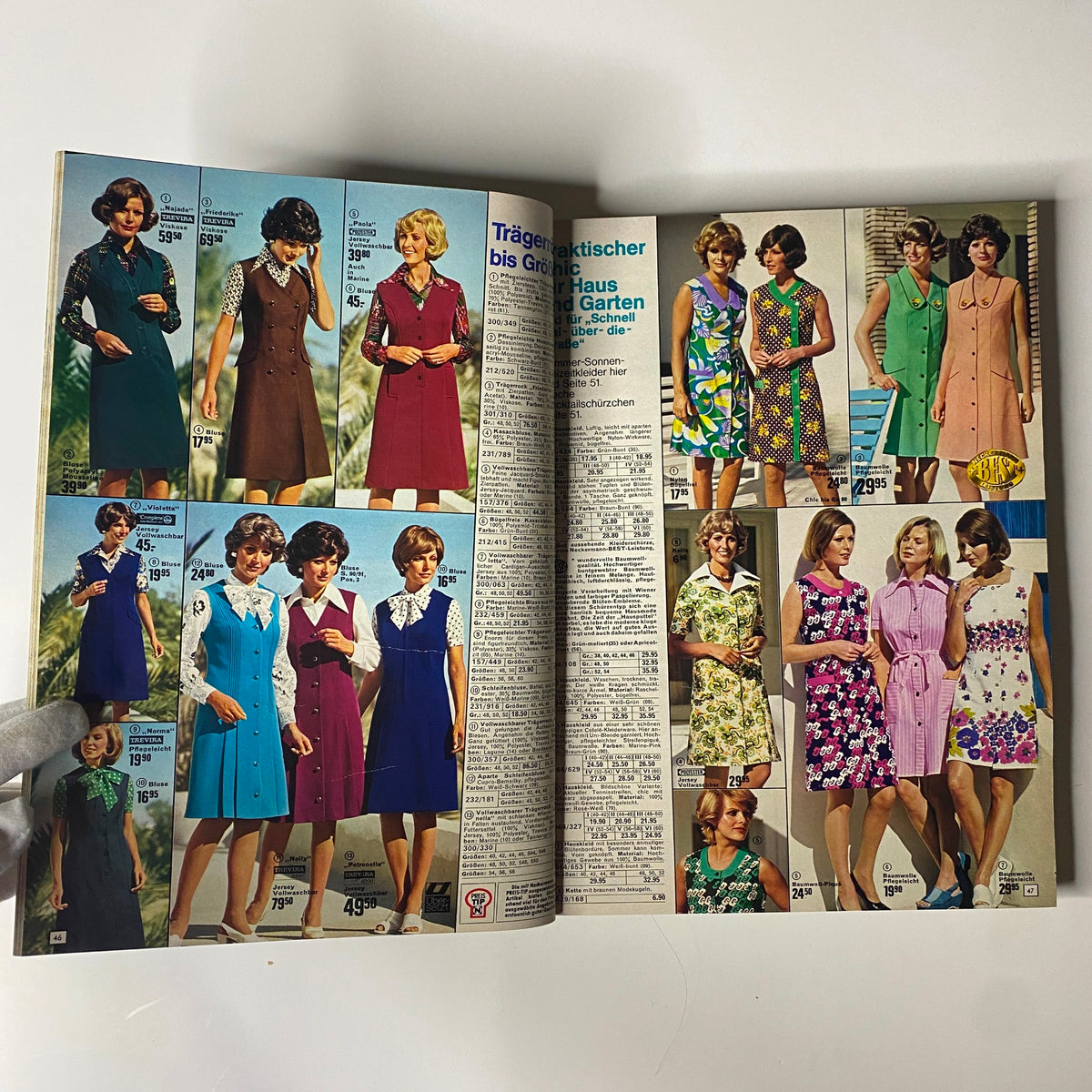
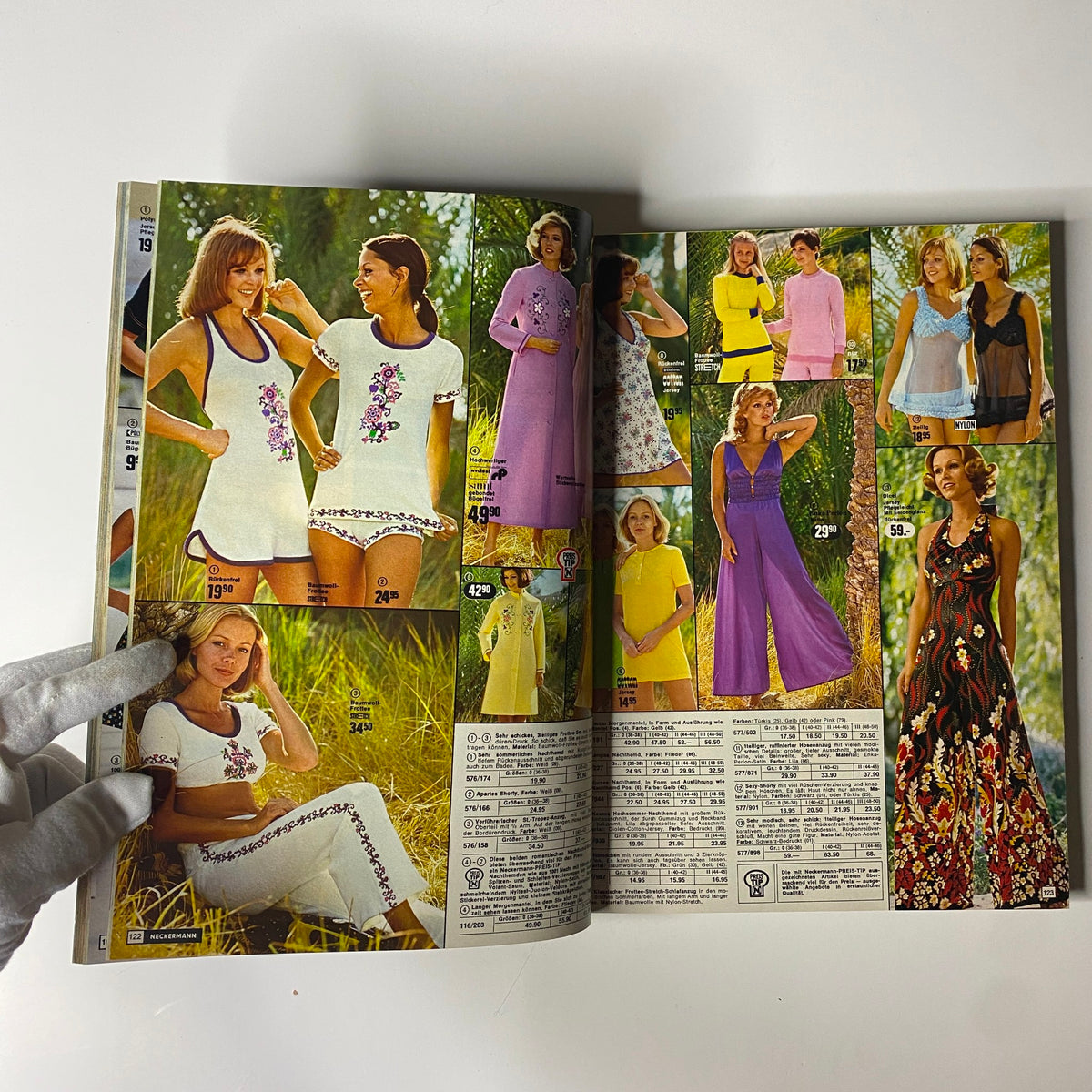
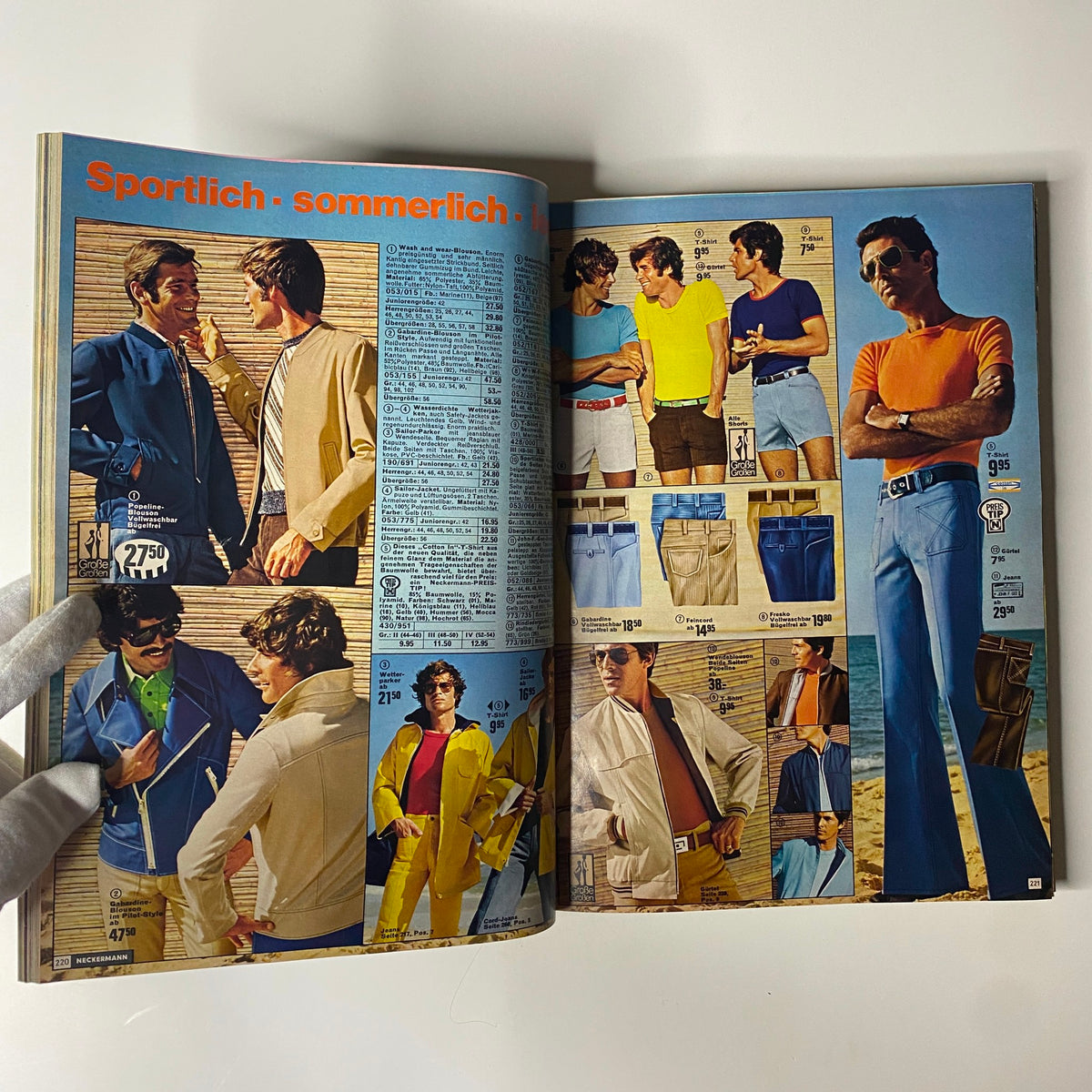
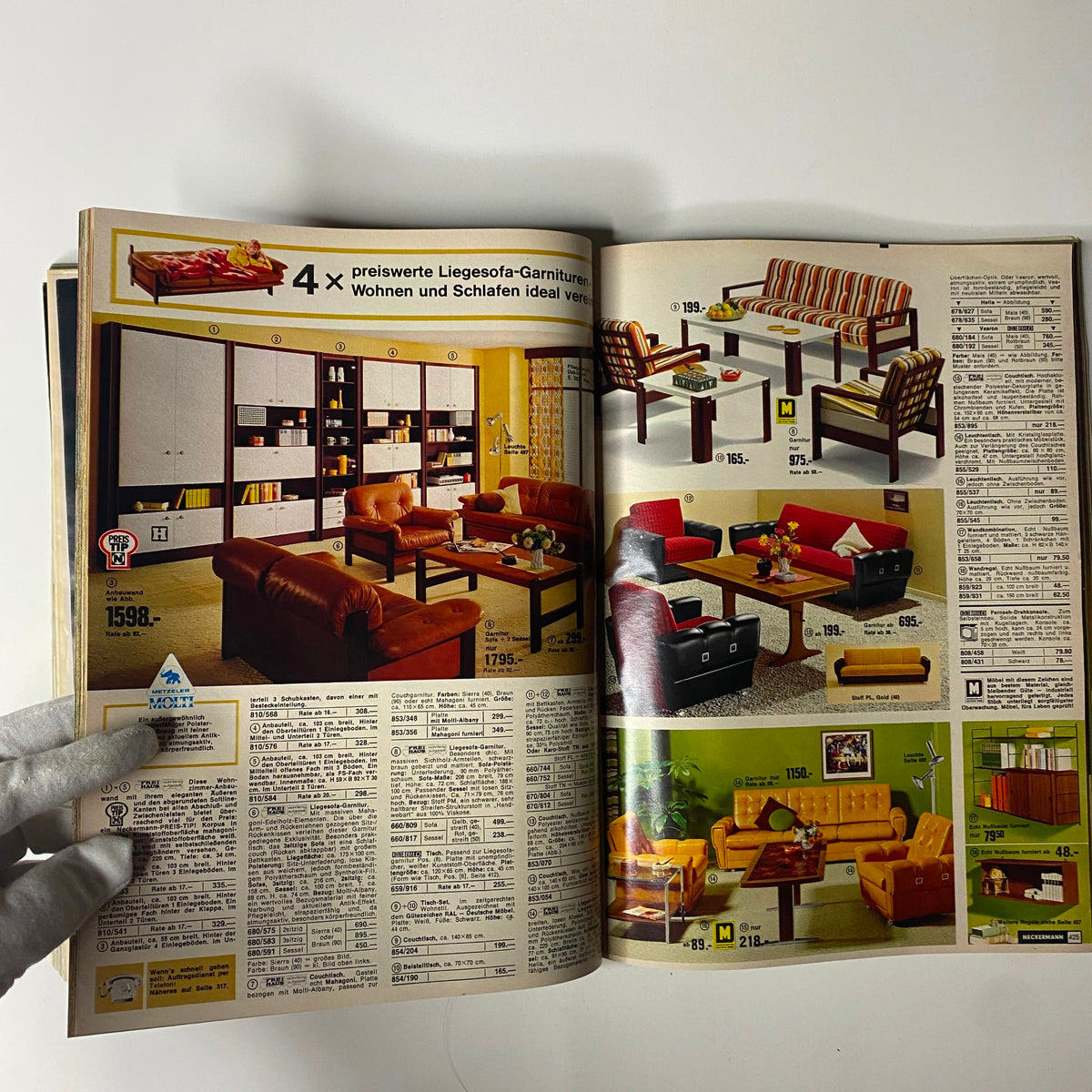
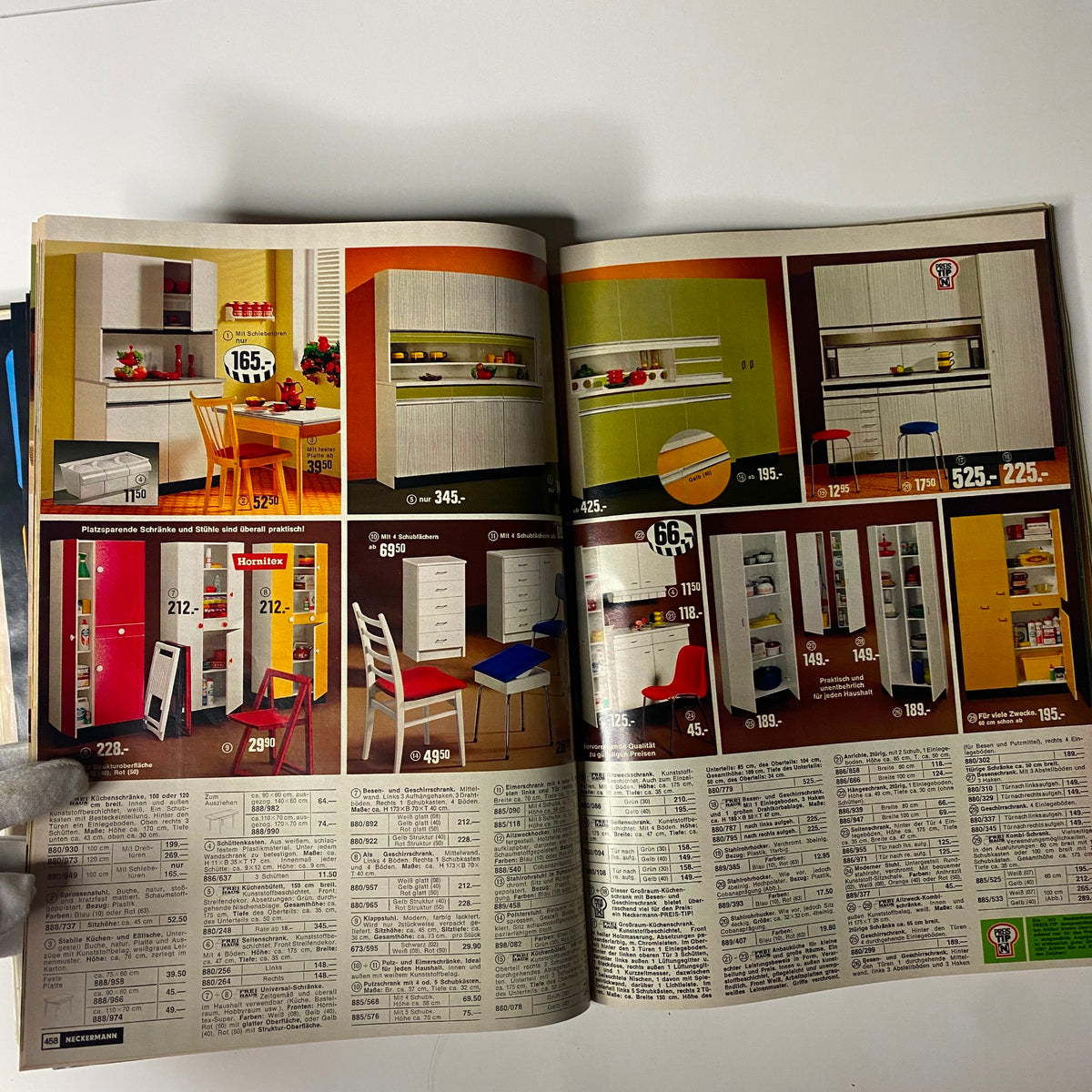
The early-1970s aesthetic documented in this summer catalog reflects a West German mass-market fashion moment in active consolidation. By the summer of 1974 the late-1960s visual language had fully receded, and the distinctly 1970s sensibility — colorful, synthetic-fabric-driven, relaxed in silhouette, committed to coordinated dressing — was the established commercial standard across Neckermann's summer line. The specific colorfulness noted in the listing description reflects the decade's characteristic approach to summer fashion: bold, saturated palettes applied to the lightweight fabrics and casual silhouettes that defined European warm-weather dressing at mid-decade. Home essentials and lifestyle products documented alongside the fashion pages illuminate the domestic priorities of West German families in the summer of 1974 — the appliances, outdoor products, and household goods that constitute the material record of early-mid-decade West German domestic life, including the energy-conscious adjustments that the oil crisis had begun to introduce into household purchasing decisions. The full range of 1974 publications provides essential context for the economically and politically charged year this catalog documented.
Within the Neckermann collecting category, the 1974 summer edition occupies a historically specific position: it is the first summer catalog following the oil crisis winter, documenting consumer behavior in the immediate aftermath of that disruption and during the World Cup summer that gave West Germany one of its most celebrated postwar moments. That combination of economic anxiety and national triumph makes 1974 one of the more historically textured years in the Neckermann summer catalog series.
About the Publication
Neckermann Versand, founded in Frankfurt in 1950 by Josef Neckermann, grew into one of West Germany's largest and most recognized mail-order companies, issuing seasonal general merchandise catalogs that reached millions of German households at their peak. The company's summer editions covered fashion, household goods, outdoor products, and lifestyle merchandise in a comprehensive format designed to function as a complete warm-weather retail reference for subscribing households. By the mid-1970s Neckermann's catalogs were sophisticated full-color publications reflecting the decade's colorful and distinctive visual aesthetic, and they serve today as detailed primary sources for researchers of postwar German consumer culture, European fashion history, and the material culture of Cold War-era West German domestic life.
Key Highlights Inside
- Summer fashion for men, women, and likely children reflecting the early-to-mid 1970s West German mass-market aesthetic — colorful, synthetic-fabric-confident, and relaxed in silhouette, documenting the decade's visual language at the fully consolidated early-mid-decade stage.
- Home essentials and household products capturing the domestic priorities of West German families in the summer of 1974 — the first summer following the OPEC oil crisis, with consumer behavior beginning to reflect the energy-consciousness and economic caution introduced by that disruption.
- Lifestyle and outdoor products documenting the leisure culture of mid-1970s West German family life during a summer defined by both World Cup national celebration and underlying economic uncertainty.
- The visual production language of early-mid-1970s German catalog publishing — color reproduction, photography conventions, and layout design characteristic of Neckermann's publications at this specific transitional moment in the decade.
- Note: Specific section titles, page counts, and detailed interior content beyond what is documented in the listing have not been independently confirmed. The above reflects what is verifiable from the listing description and well-documented knowledge of Neckermann's catalog format and the consumer culture of this era.
Condition & Rarity
Neckermann summer catalogs from the early-to-mid 1970s were produced as working household retail documents with no expectation of long-term preservation, and surviving examples in good condition are less common in the international market than their original West German print runs would suggest. A copy rated in good condition with a protective plastic sleeve represents a well-preserved artifact by realistic standards for a catalog now more than fifty years old. When evaluating any surviving copy of this catalog, the primary condition factors are cover brightness and the integrity of the colorful full-color printing that characterizes mid-1970s Neckermann catalog production — susceptible to fading and color shift with age and light exposure — along with binding cohesion, page completeness, and the absence of significant moisture damage or household markings. Good condition on a catalog of this age and format indicates structural soundness and visual legibility sufficient for both research and display purposes.
Looking for More Issues Like This?
Early-to-mid-1970s Neckermann summer catalogs are a specialized and historically resonant find in the European vintage retail ephemera collecting category, and the 1974 edition — from the World Cup summer that followed the oil crisis winter — is a particularly textured primary source for researchers of West German consumer and cultural history. The Neckermann catalog collection at OriginalMagazines.com is the most focused resource for locating other seasonal editions from this important West German mail-order institution. Collectors building around the economically and culturally charged landscape of 1974 will also want to explore the 1974 magazine collection, which brings together a range of period publications that document the style, politics, and everyday life of one of the postwar era's most historically significant years.