
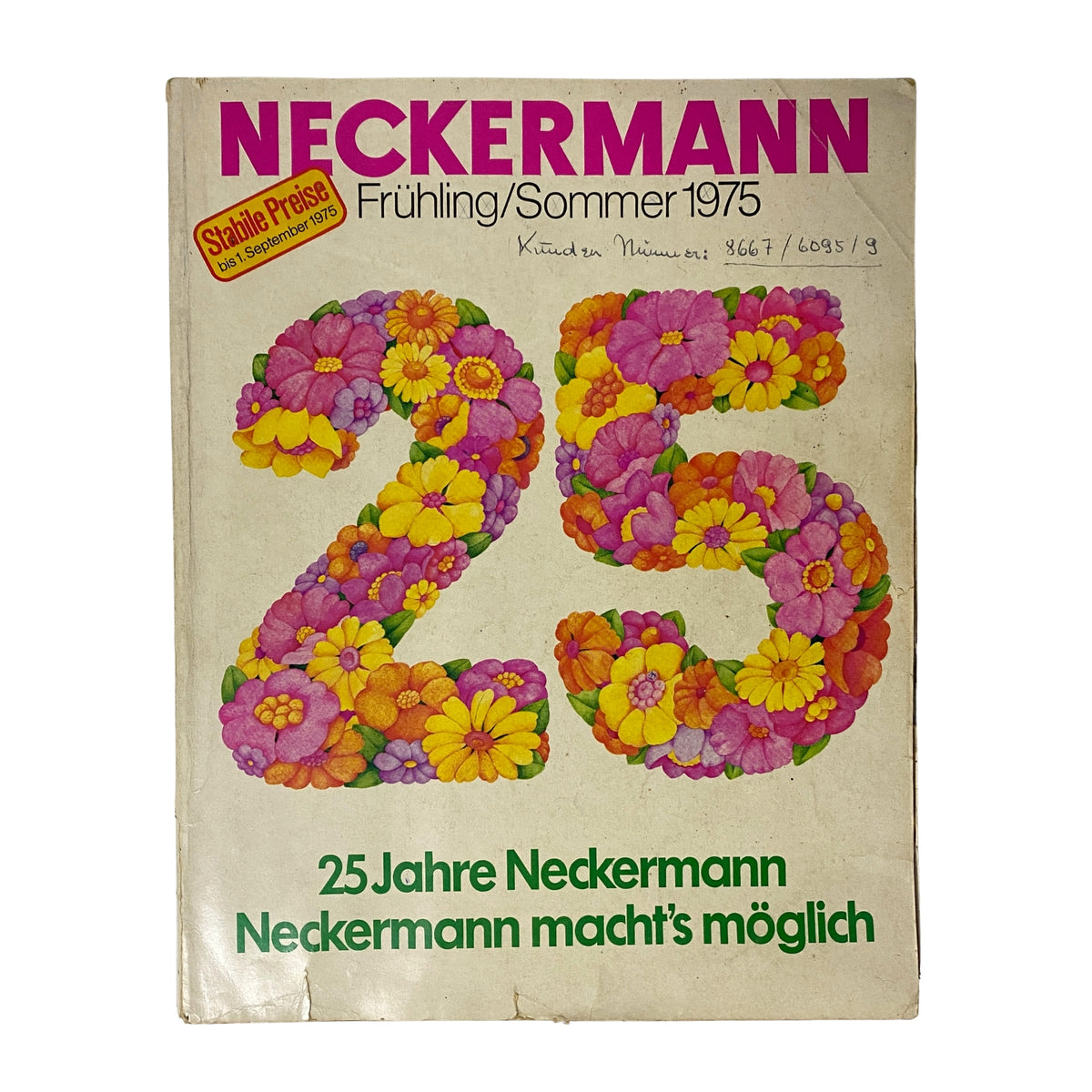
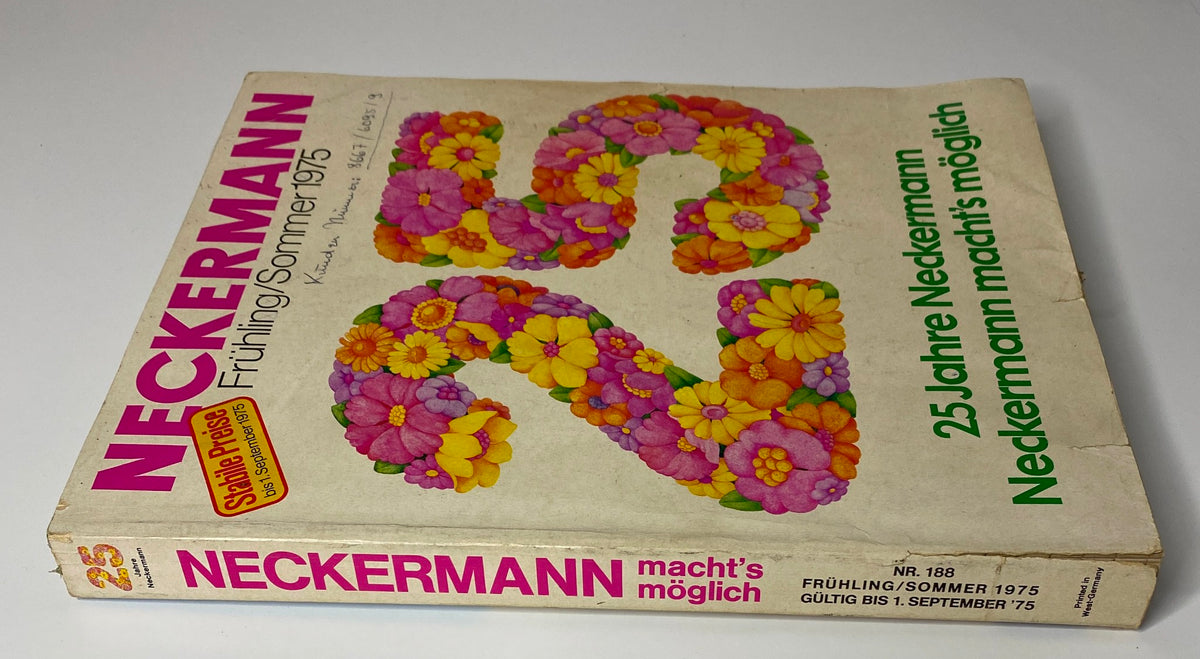
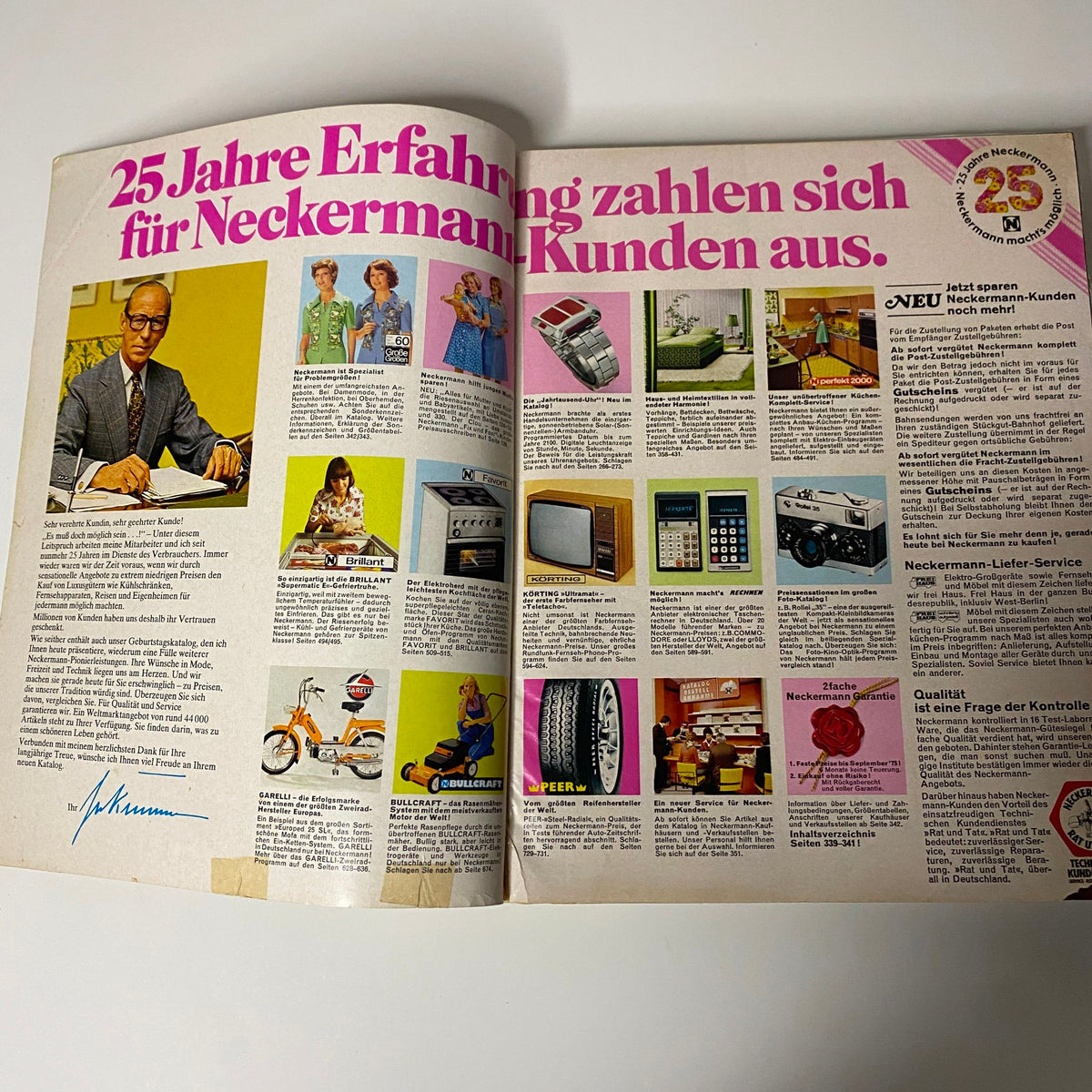
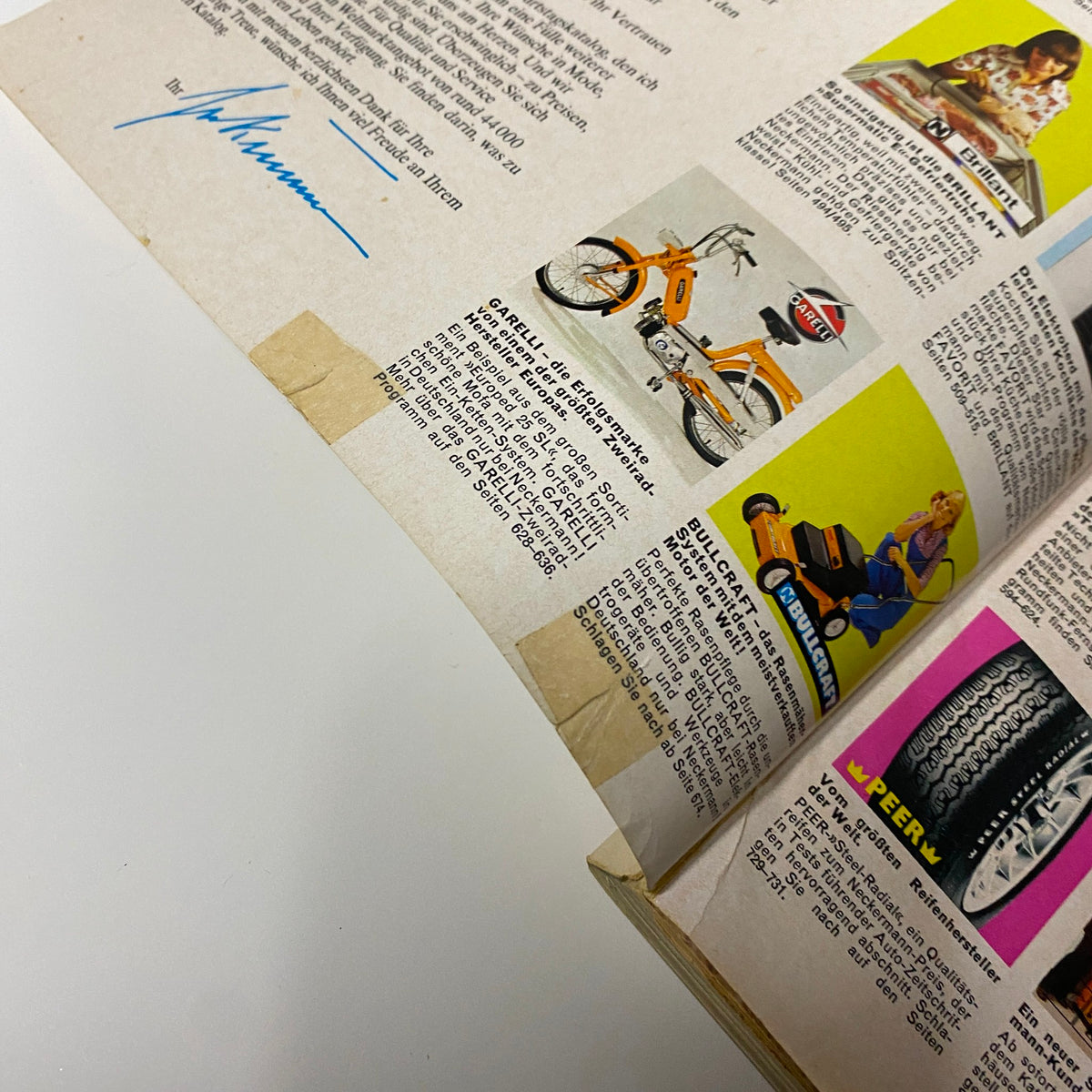
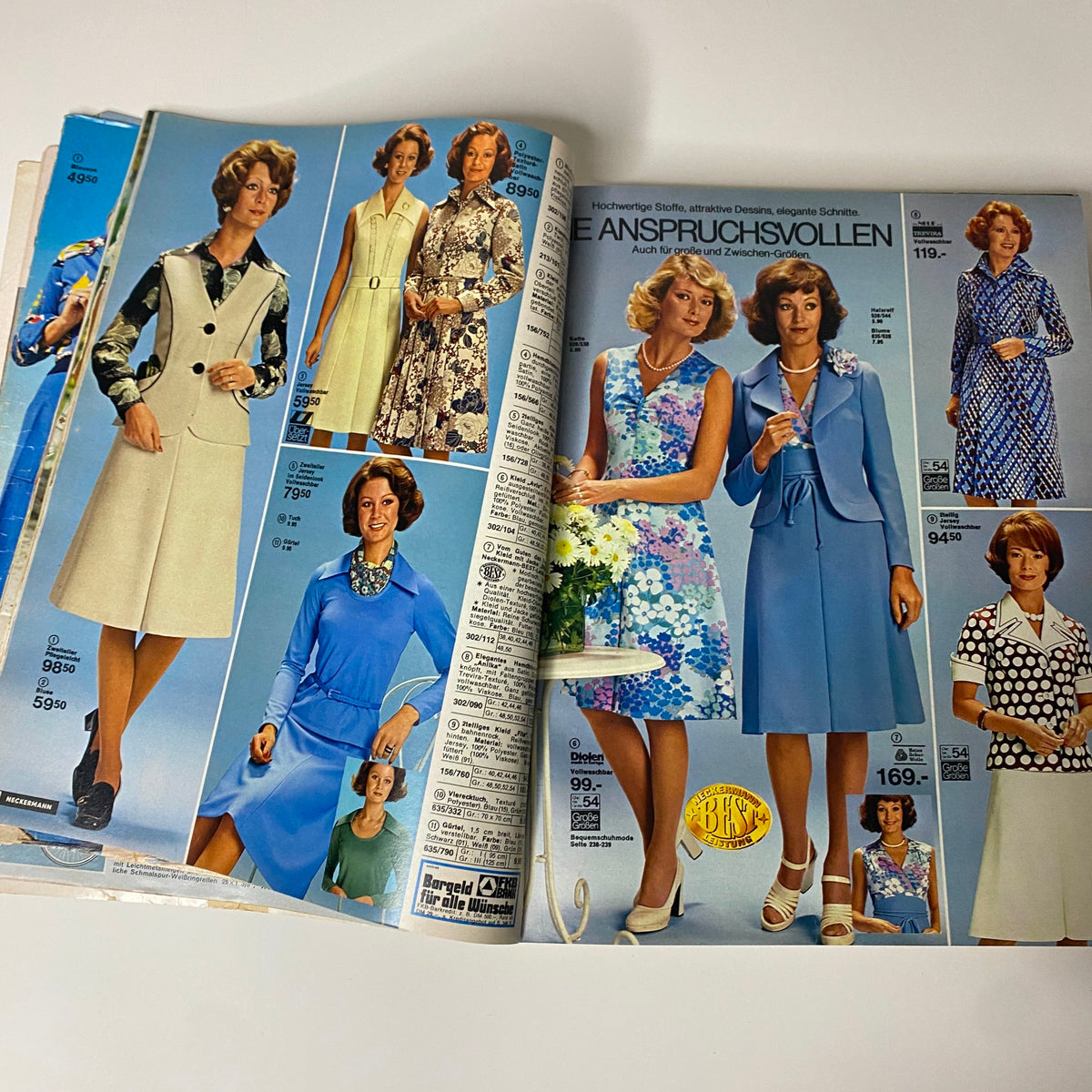
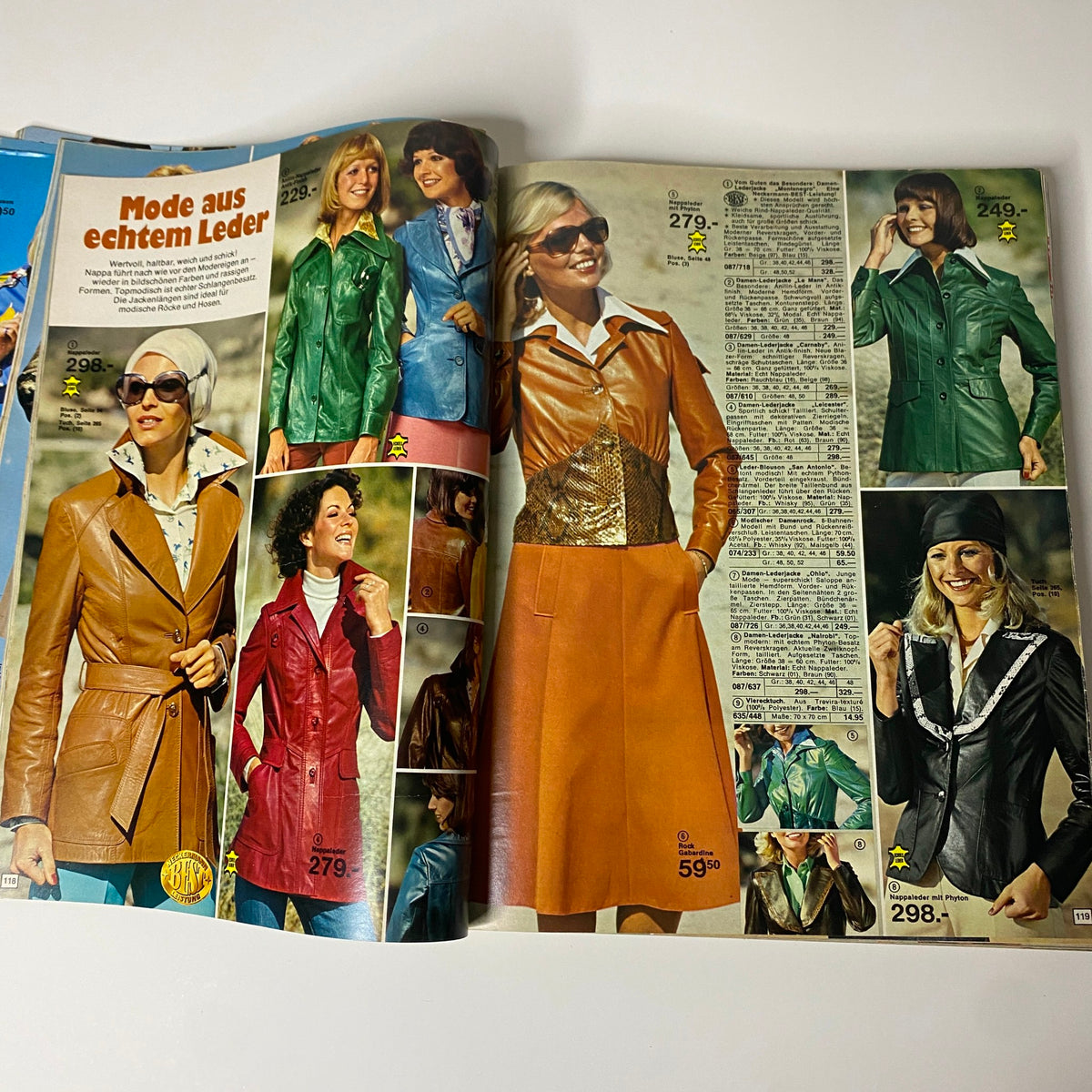
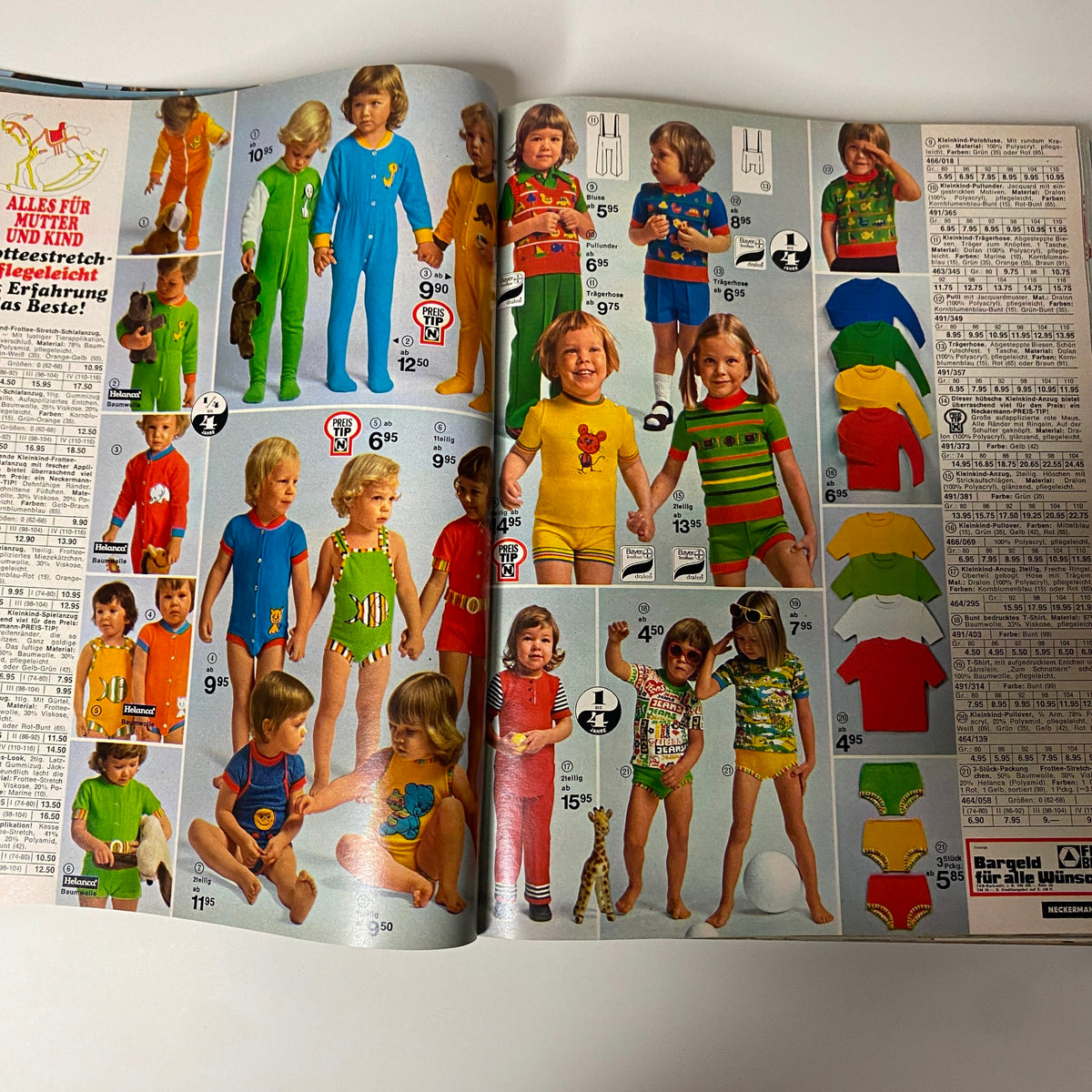
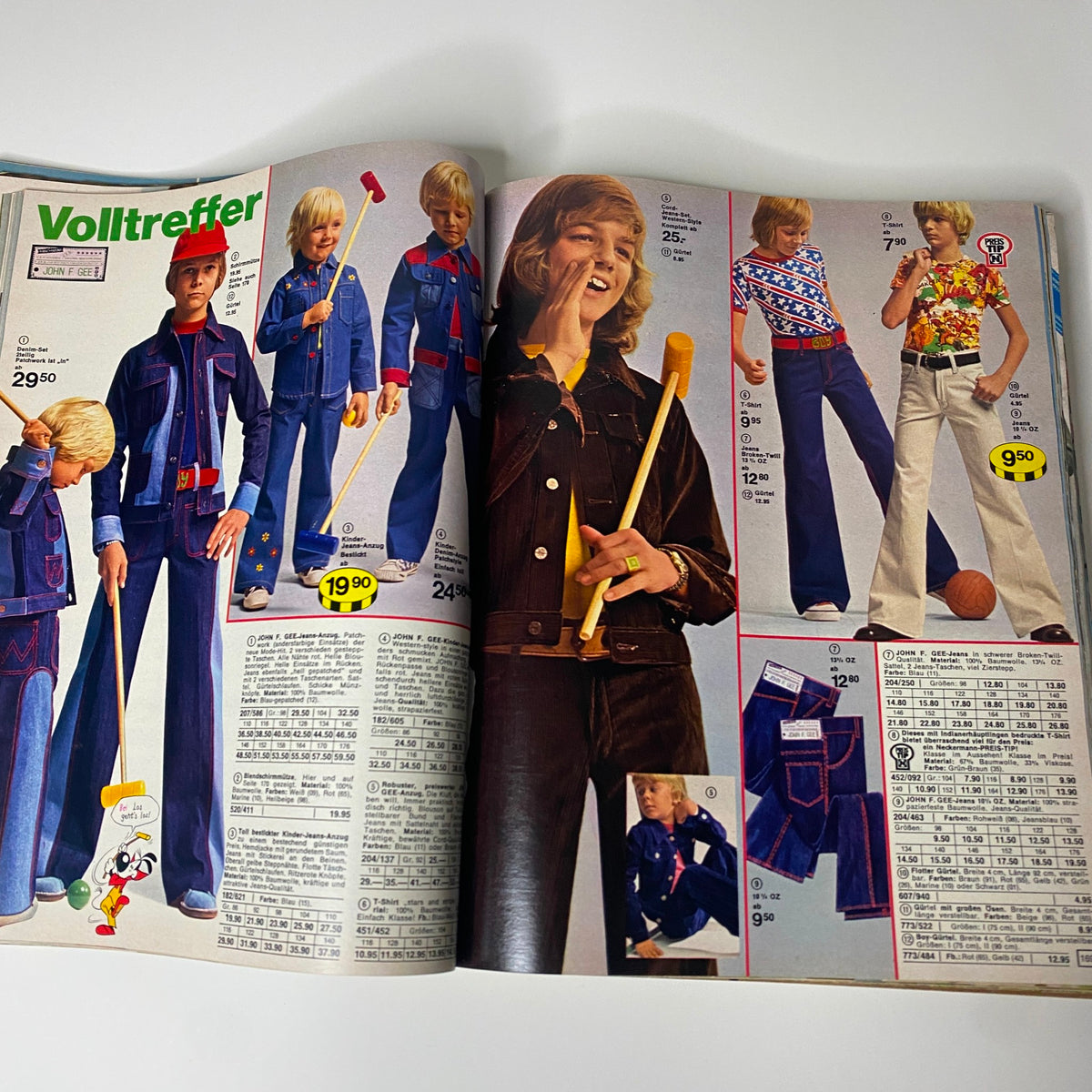


Description
Collector's Note – Why This Issue Matters
The 1975 Neckermann Spring and Summer Catalog is a primary document of mid-1970s European consumer culture at a specific and historically interesting moment in the continent's economic and social life. Neckermann was one of the dominant mail-order retailers in West Germany — founded by Josef Neckermann in 1950, the company had grown into one of the largest catalog retailers in Europe by the 1970s, competing directly with Quelle and Otto in a mail-order market that served tens of millions of West German households who relied on catalog shopping for clothing, household goods, electronics, and furnishings in ways that have no precise American equivalent. By 1975, the catalog had been in continuous publication for a quarter century and had developed into a comprehensive document of what affordable consumer goods looked like for mainstream European buyers — the fashions that ordinary families wore, the appliances they aspired to own, the home furnishings that defined the interior aesthetic of middle-class European life in the mid-decade. The 1975 Spring and Summer edition arrived within a specific economic context: West Germany and much of Western Europe were still navigating the aftermath of the 1973 oil crisis and the economic disruptions that followed, making the catalog's presentation of affordable fashion and innovative electronics a document of consumer aspiration against a backdrop of real economic constraint. For collectors building archives around Neckermann's catalog publishing history, the 1975 edition is a particularly rich primary source of mid-decade European retail culture at a moment of both consumer confidence and economic anxiety.
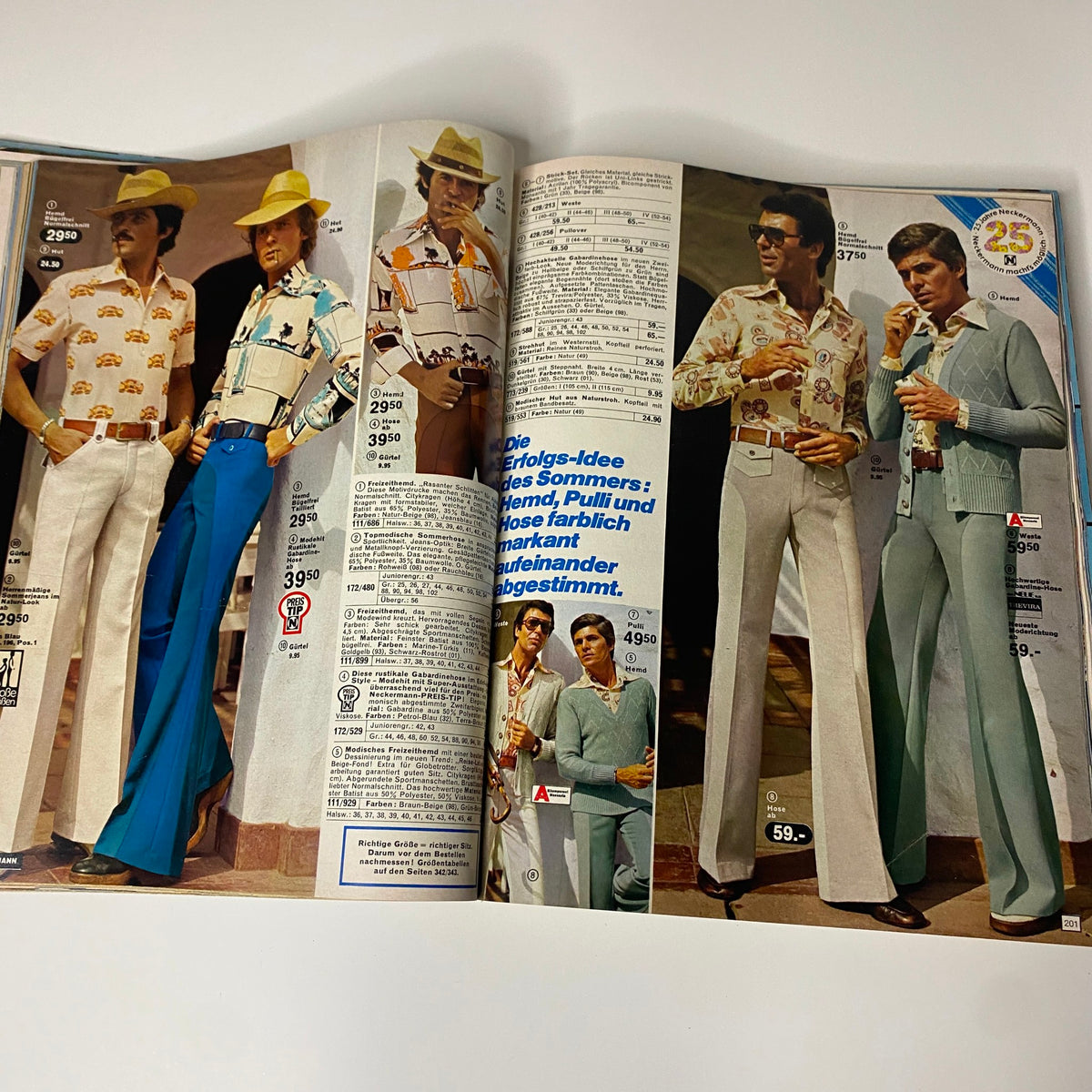
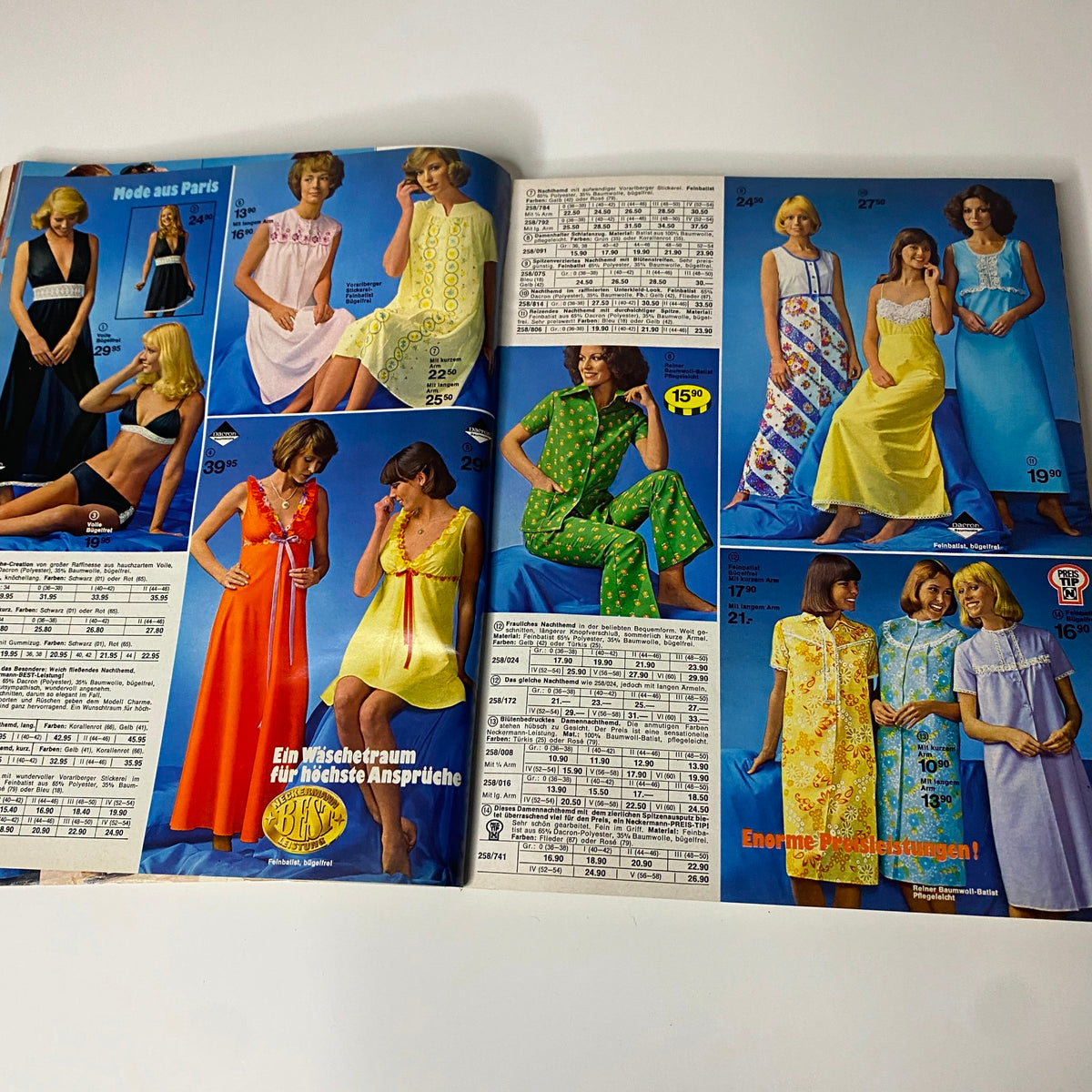
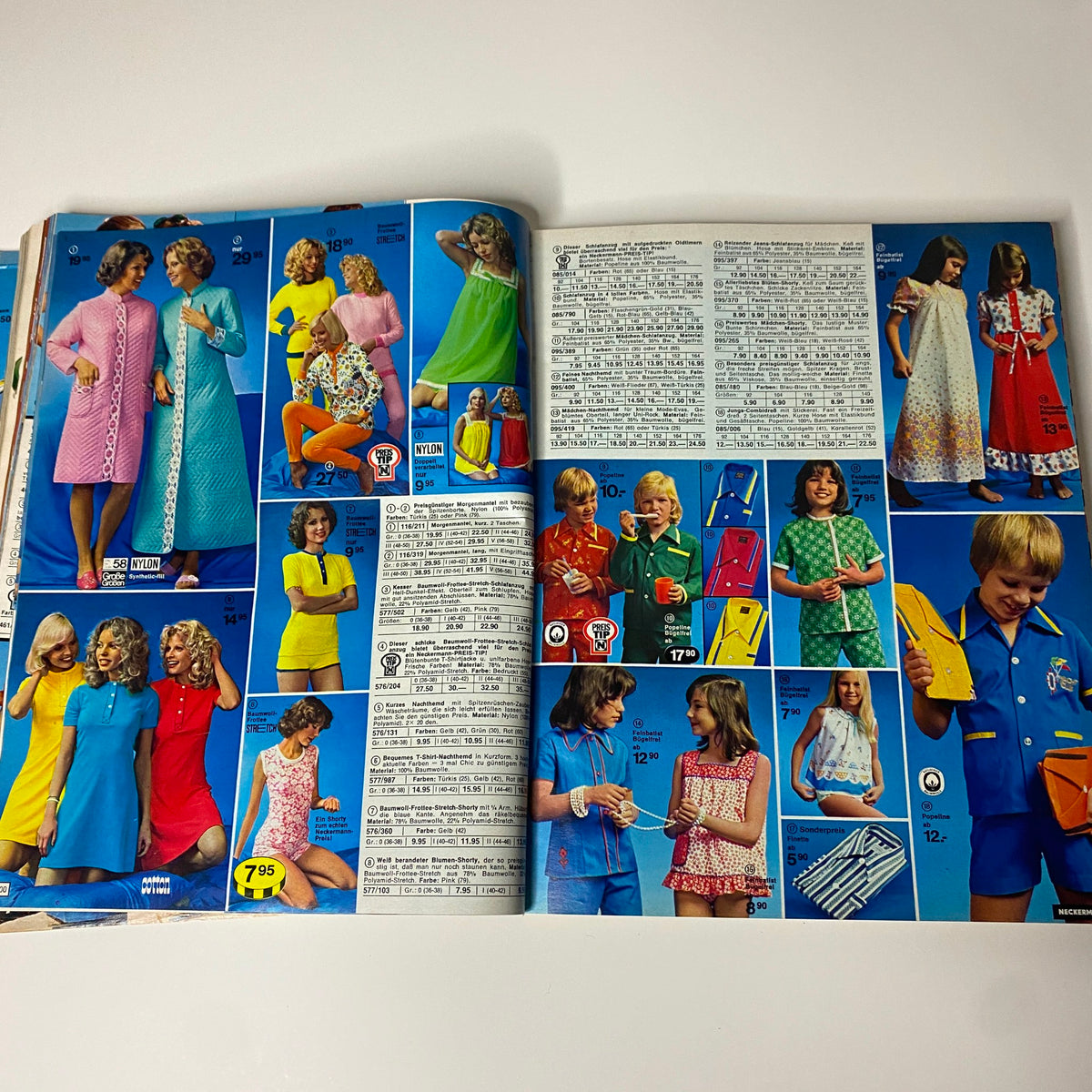
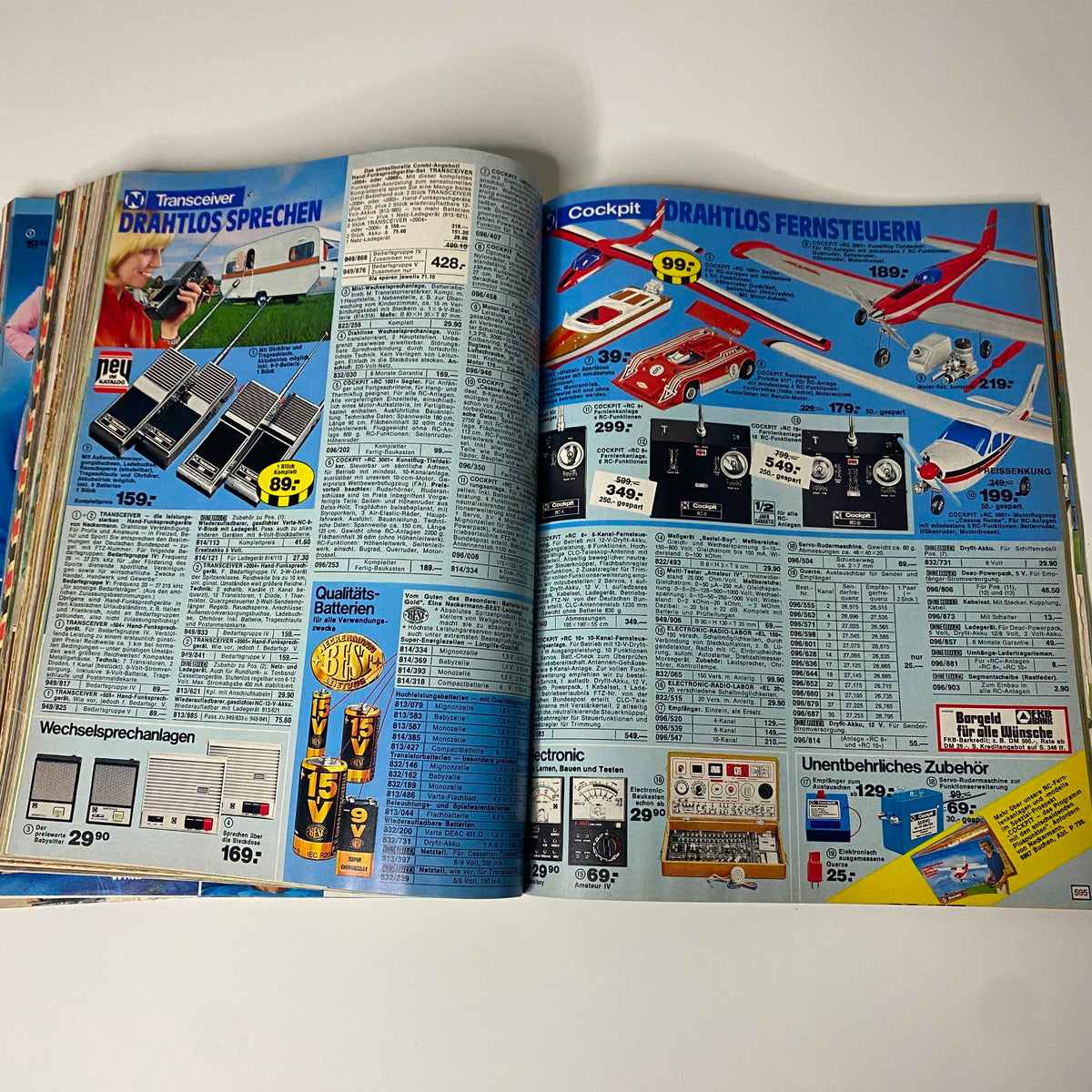
The confirmed content highlights — extensive women's and men's fashion including plus-size options, alongside featured electronics and home décor — give this catalog a documentary specificity that makes it valuable to researchers across multiple disciplines. The inclusion of plus-size fashion options in a 1975 mainstream European mail-order catalog is itself a social history data point: the degree to which a mass-market retailer of Neckermann's scale explicitly marketed to that demographic reflects assumptions about its customer base and the commercial recognition of a market that mainstream fashion advertising of the era frequently ignored. The electronics content — high-efficiency appliances and home technology — documents the 1975 consumer electronics landscape as it was being presented to a mainstream European audience at a moment when the post-oil-crisis emphasis on energy efficiency was beginning to shape product design and marketing in ways that would accelerate through the late 1970s and 1980s. Catalogs like this one are primary sources for fashion historians, design researchers, consumer culture scholars, and social historians in ways that editorial magazines are not — they document what was actually being sold to and purchased by ordinary consumers rather than what was being aspirationally presented in editorial fashion pages. Collectors researching European and American consumer culture from 1975 will find this Neckermann catalog a rich and underutilized primary document of the period.
The catalog format itself carries a specific kind of historical value that distinguishes it from editorial magazines. Where a fashion magazine documents aspirational aesthetics curated for a specific editorial voice, a mail-order catalog documents what was actually manufactured, priced, and purchased at a specific moment — the precise garments, appliances, and home goods that ordinary European families were buying in the spring and summer of 1975. That documentary directness is precisely what makes historical catalogs valuable to researchers who want to understand material culture as it was actually lived rather than as it was idealized in editorial publishing.
About the Publication
Neckermann was a West German mail-order company founded by entrepreneur Josef Neckermann in Frankfurt in 1950, growing rapidly through the postwar economic recovery into one of the dominant catalog retailers in Western Europe. Its biannual Spring/Summer and Fall/Winter catalogs were among the most widely distributed publications in West Germany, reaching millions of households and serving as primary shopping resources for consumers across the country and beyond its borders. The Neckermann catalog's format was comprehensive and highly practical — organized by product category with detailed specifications, sizing information, pricing, and order forms — reflecting its function as a retail transaction document rather than an editorial publication. By 1975, the catalog had been in continuous publication for twenty-five years and had accumulated the editorial authority and customer trust that came from two and a half decades of reliable delivery on its product promises. The company's catalog competed directly with those of Quelle, Otto, and smaller regional mail-order retailers for the loyalty of West German consumers whose relationship with catalog shopping was significantly more central to their retail lives than the equivalent American catalog consumer of the same era.
Key Highlights Inside
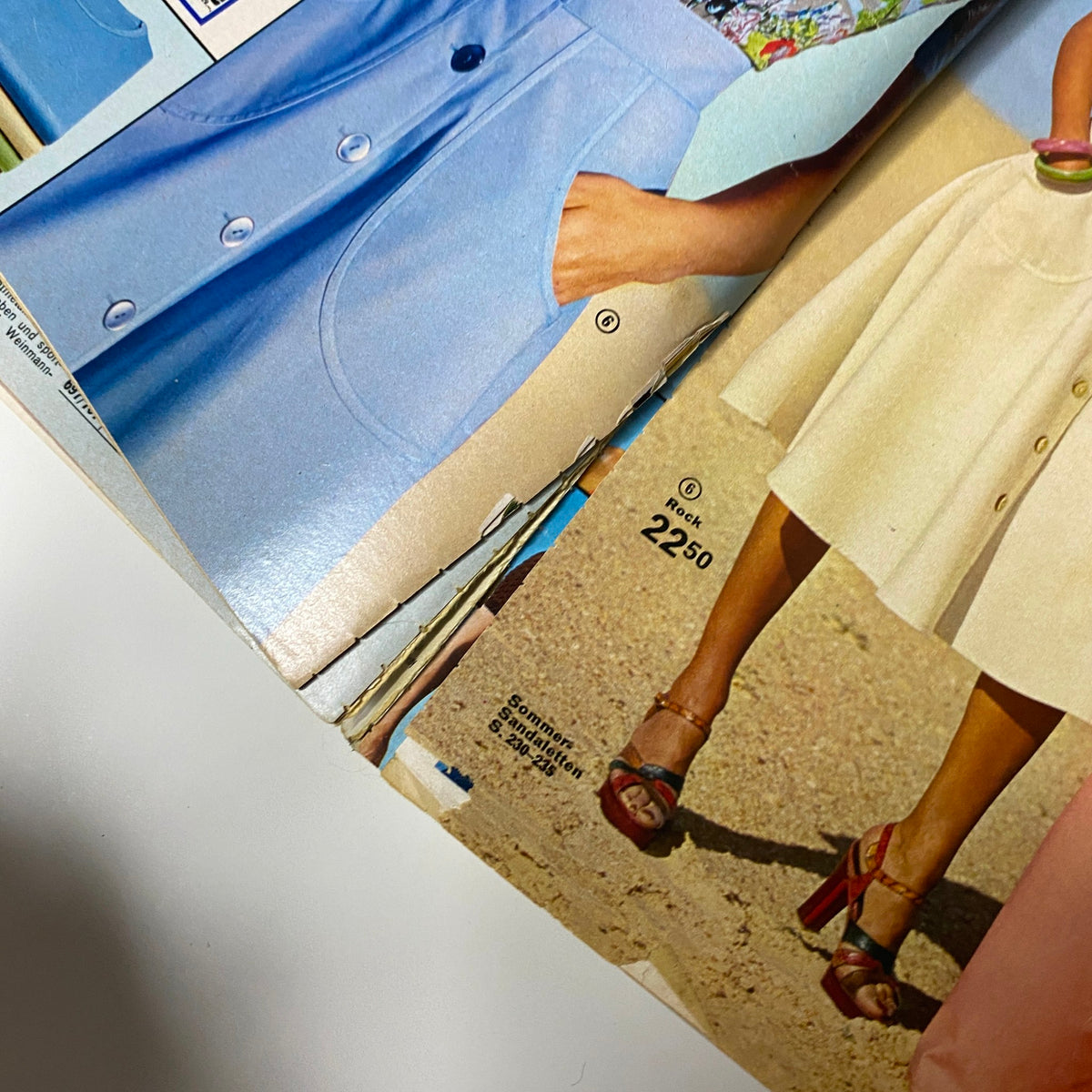
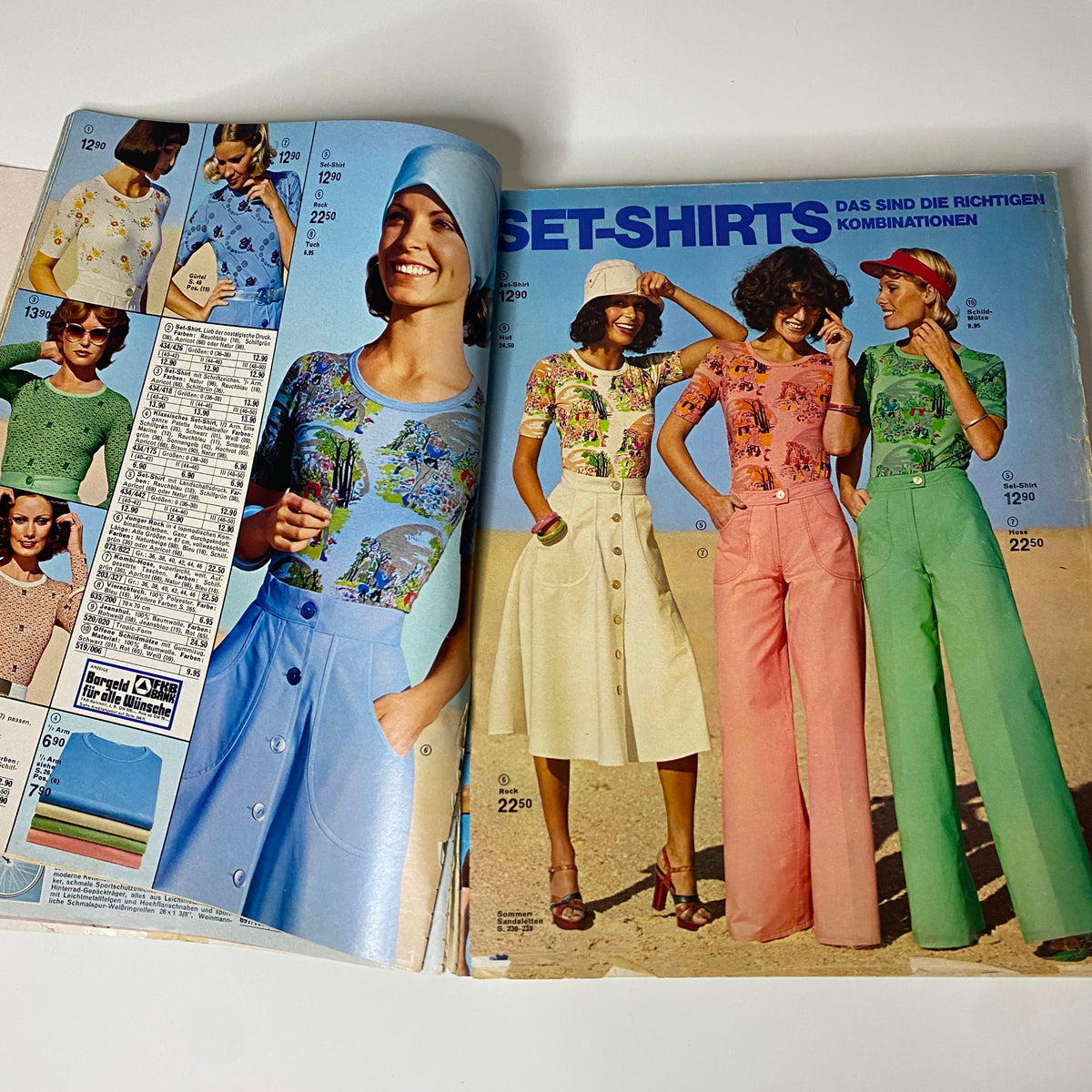
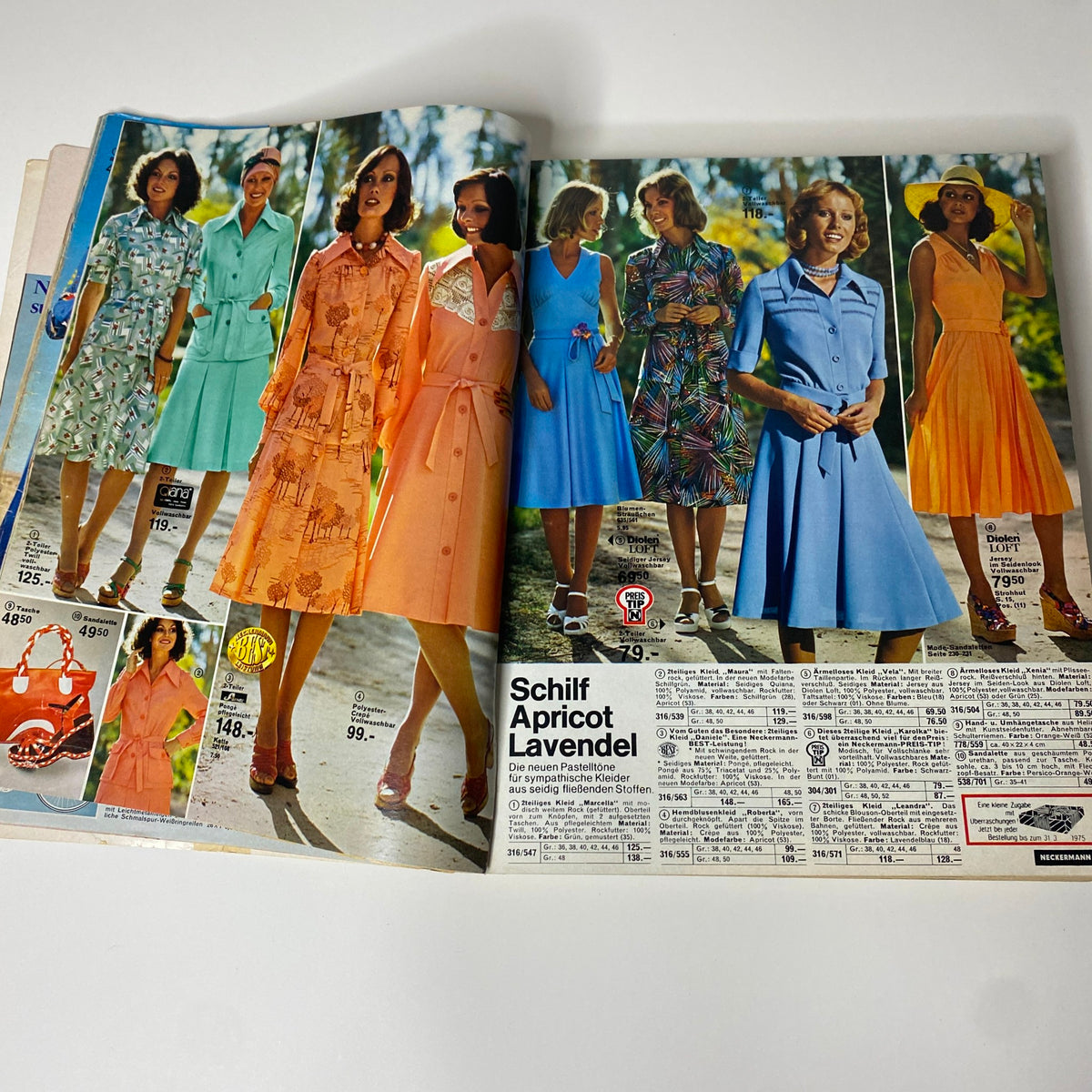
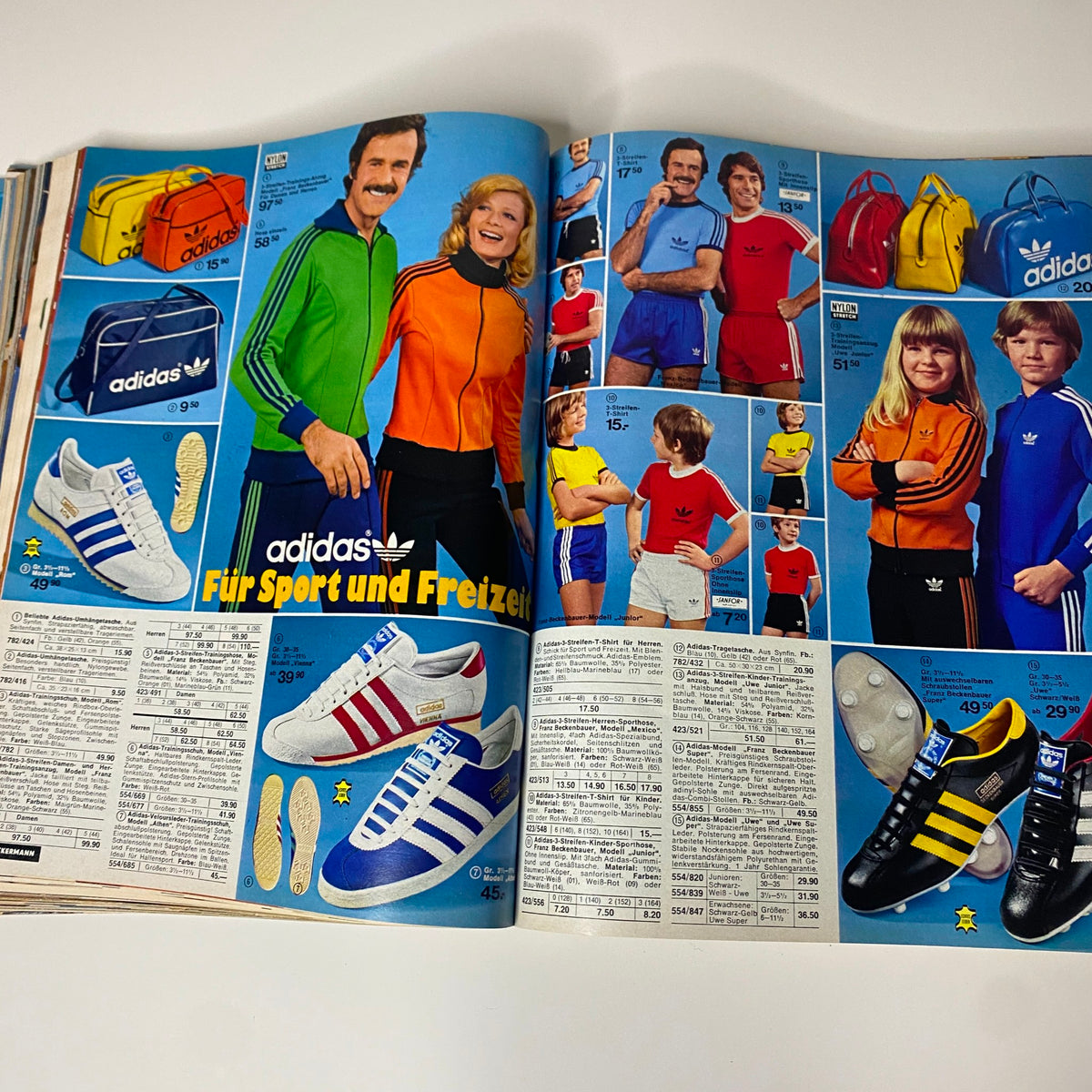
- Extensive women's and men's fashion collections document the specific garment styles, silhouettes, color palettes, and fabric choices that defined affordable mainstream European fashion for the Spring and Summer 1975 season — primary source documentation of mid-decade European fashion as it was actually manufactured and marketed to ordinary consumers rather than as it was aspirationally presented in editorial fashion magazines.
- The confirmed inclusion of plus-size fashion options is a social history data point reflecting Neckermann's recognition of a significant consumer demographic that mainstream fashion advertising of the era frequently marginalized — the commercial decision to explicitly market to this demographic in a 1975 mainstream catalog is itself a document of consumer culture's relationship with body diversity in mid-decade Europe.
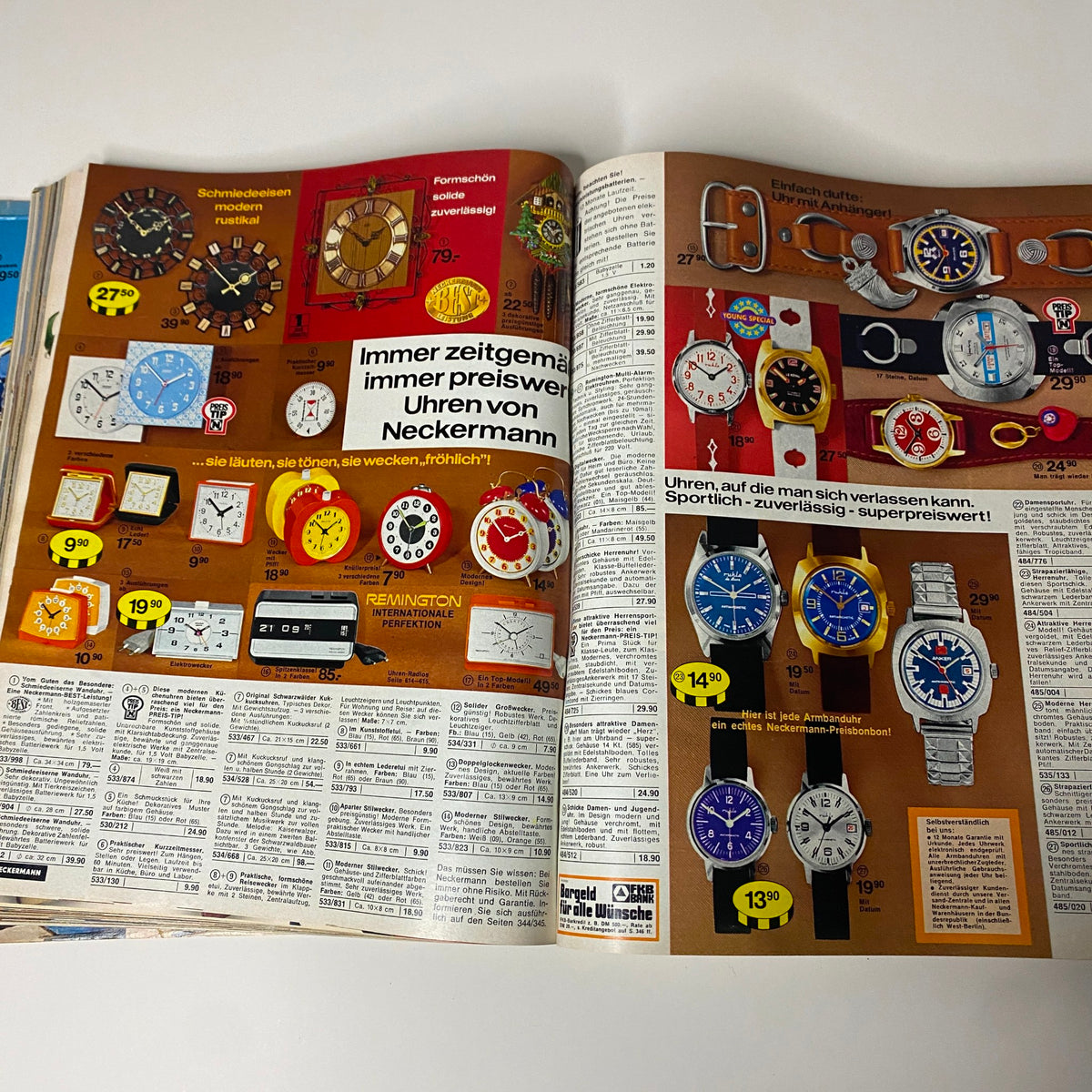
- Electronics and high-efficiency appliances featured in this catalog document the 1975 consumer technology landscape as it was being presented to mainstream European buyers in the post-oil-crisis environment — a moment when energy efficiency was beginning to emerge as a meaningful consumer and product design value in ways that would reshape European appliance marketing through the late 1970s and beyond.
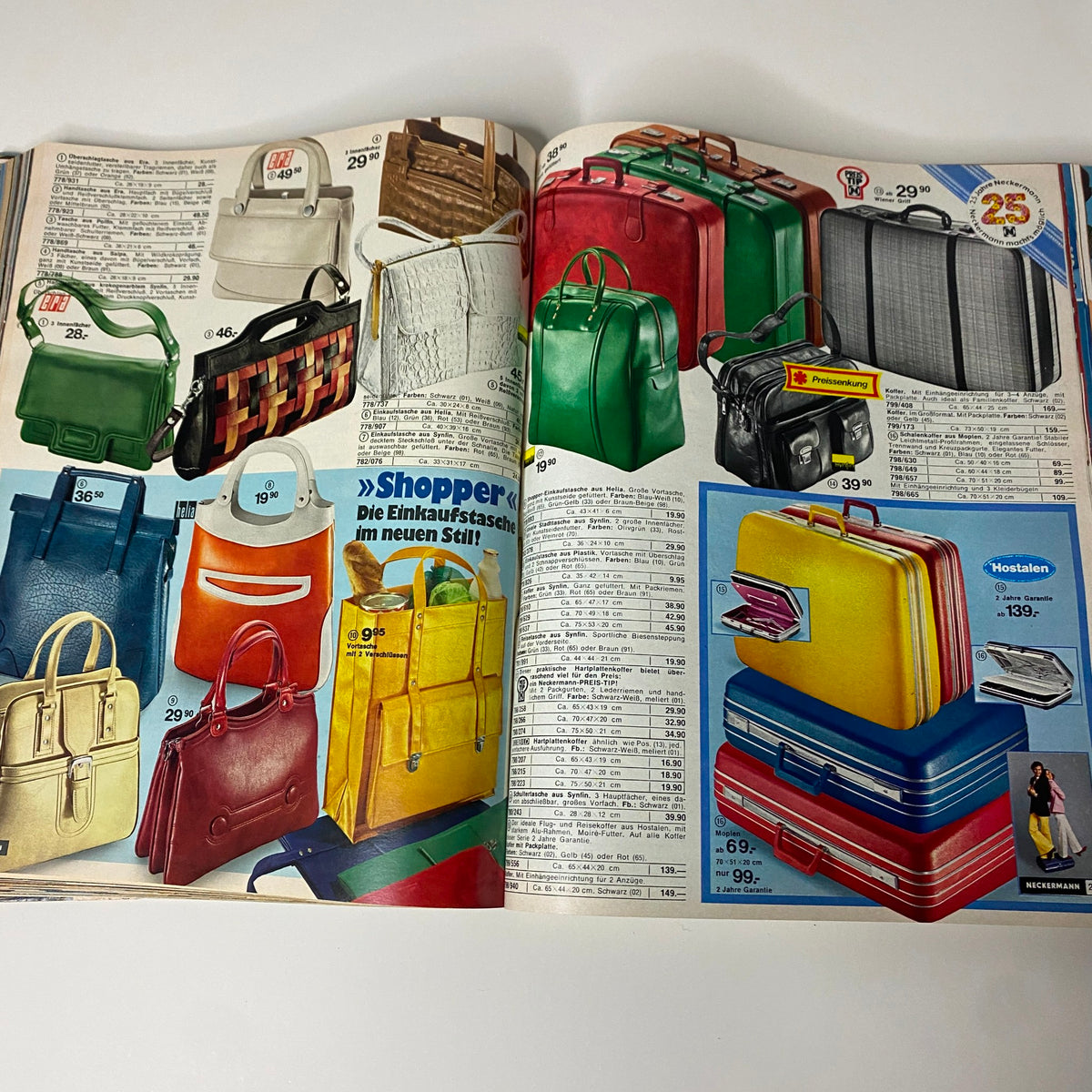
- Home décor content provides documentation of the interior aesthetic that a mainstream European mail-order retailer of Neckermann's scale believed its customers aspired to in 1975 — a primary source for design historians studying the material culture of mid-decade European domestic life.
- Period pricing, product specifications, and order form details throughout the catalog provide economic history documentation that editorial magazines cannot offer — the actual cost of specific consumer goods in the Spring and Summer 1975 market, enabling direct comparison across years and across product categories for economic and social history research.
Condition & Rarity
Surviving copies of this catalog are graded at the Good level with wear consistent with fifty years of existence — a condition designation that indicates a complete and usable document showing honest aging without the more significant deterioration that affects less carefully preserved copies of the same era. For a Neckermann mail-order catalog from 1975, Good condition is a meaningful survival grade: catalogs of this type were working documents produced for transactional use rather than archival preservation, printed on paper stock of functional rather than archival quality, and typically discarded at season's end when the next catalog arrived. Those that have survived five decades in any readable condition have generally done so through deliberate retention rather than accidental preservation, which gives Good-grade surviving copies a collector significance that their original disposable function would not have predicted. The plastic protective covering currently housing this copy is appropriate stabilization for a publication of this age and paper quality, helping to prevent further cover surface deterioration and spine damage during handling and storage. Neckermann catalogs from the mid-1970s are more systematically sought by European design researchers and fashion historians than their original utilitarian purpose might suggest, with the 1975 Spring and Summer edition representing a particularly rich year for the documentation of post-oil-crisis European consumer culture.
Looking for More Issues Like This?
Neckermann catalogs from the mid-1970s are genuinely difficult to find in collector-grade condition — their original function as disposable retail transaction documents meant that most were discarded when superseded, and surviving copies in any readable state represent a small fraction of the original print run. The Neckermann catalog collection at OriginalMagazines.com is the most focused place to browse available editions across the company's publishing history, offering researchers and collectors access to one of the richer archives of European mid-century consumer culture documentation available in the collector market. For those building a broader picture of 1975's consumer landscape and publishing culture, the 1975 magazines collection offers a wide cross-section of titles that together capture the full range of that mid-decade year's print culture on both sides of the Atlantic.