


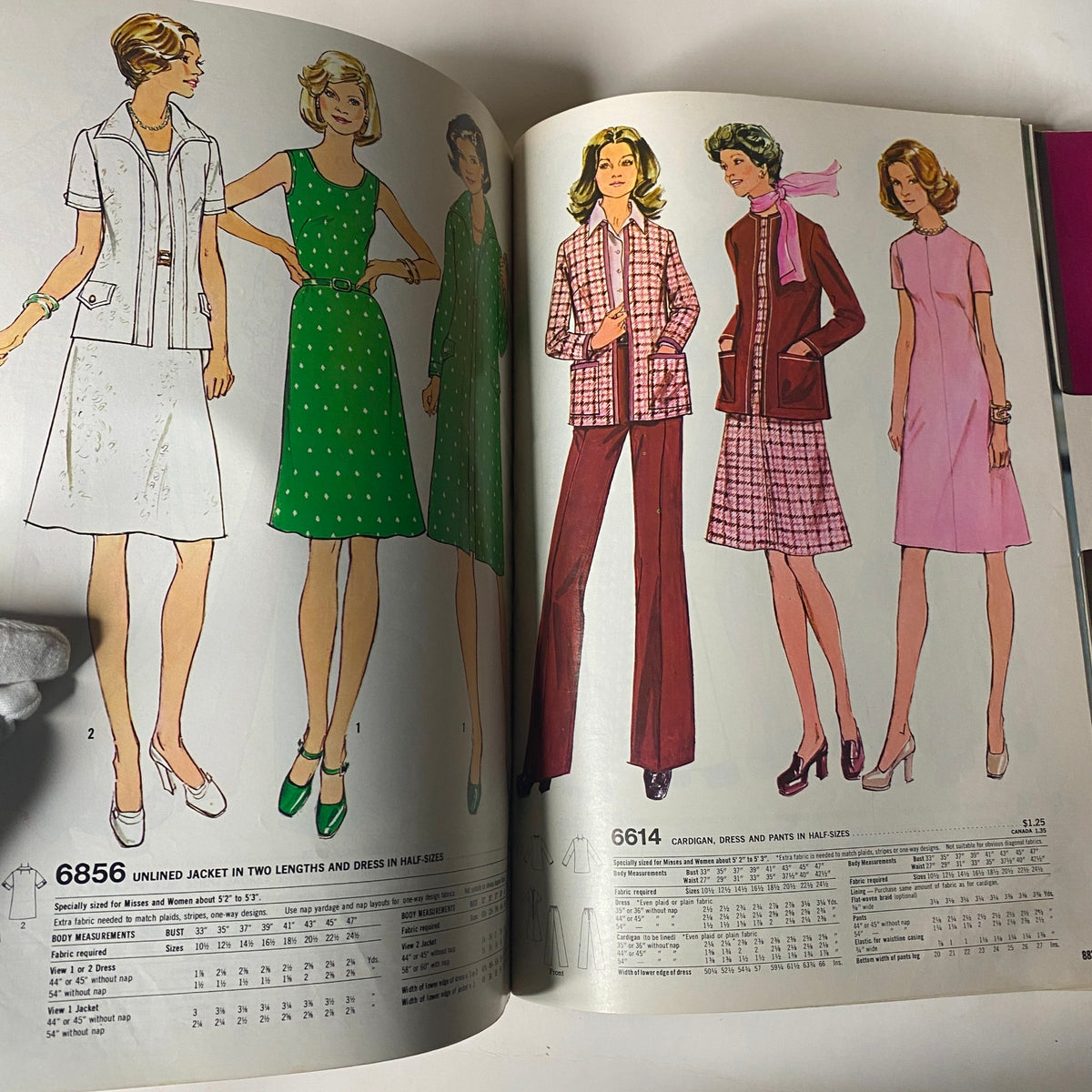


Description
Collector's Note – Why This Issue Matters
The November 1975 Simplicity Catalog is a precisely dated primary document of American home sewing culture at the heart of the mid-1970s fall and winter season — and a November edition carries specific seasonal weight in the Simplicity publishing calendar. November was the critical month when home sewers were finalizing their cold-weather wardrobes, selecting patterns for holiday occasion dressing, and making the practical fabric purchases that would carry them through the winter months. A November Simplicity catalog was therefore a document of the year's most ambitious sewing season: the months when home sewers tackled coats, suits, ensembles, eveningwear, and the full range of cold-weather garments that required the most skill, the most fabric investment, and the most careful pattern selection. The breadth of this catalog — from beginner-friendly JIFFY knits through designer fashions, evening and bridal wear, coats, suits, capes, and the dedicated LOOK-SLIMMER line — reflects the extraordinary commercial range that Simplicity maintained in its mid-decade fall editions, serving the full spectrum of American home sewers from absolute beginners to accomplished dressmakers tackling complex formal construction. Collectors and fashion historians researching the mid-1970s American home sewing market at its fall and winter peak will find the Simplicity catalog archive an indispensable primary resource, and the November 1975 edition is one of its most seasonally specific and content-rich entries.
The fall and winter of 1975 was a culturally and economically specific moment in American life. The United States was working through the aftermath of the Vietnam War's conclusion earlier that year and navigating the continued economic disruption of the post-oil-crisis recession. In that context, the home sewing values of practicality, creativity, and self-sufficiency carried genuine cultural weight — making one's own cold-weather wardrobe was both an economic choice and an expression of the decade's DIY ethic. Several sections of this November catalog carry particular historical significance. Capes and Jackets within the Coats, Suits, and Ensembles section document two of the mid-1970s' most iconic cold-weather silhouettes at the height of their mainstream pattern-market presence. The Designer Fashions section reflects Simplicity's mid-decade strategy of associating home sewing with aspirational design credentials that made the craft feel fashion-forward rather than merely practical. Robes and Lingerie within the Evening and At-Home category document the home-sewn intimate and loungewear market that has largely disappeared from contemporary pattern publishing but was central to mid-1970s domestic sewing culture. The condition notes — clean pages with only minor signs of age — make this a particularly usable primary source for researchers whose work depends on the legibility of the fashion illustration and pattern category pages. The full range of 1975 publications provides essential context for the mid-decade year this catalog documented.
The November designation is a research-grade detail that distinguishes this from undated or broadly seasonal Simplicity catalogs. A specifically dated November 1975 edition can be cross-referenced against Simplicity's sequential pattern numbering records to establish exactly where the company's fall and winter line stood at the mid-decade moment, providing chronological precision that fashion historians and serious pattern collectors will find genuinely valuable.
About the Publication
Simplicity Pattern Co., founded in 1927, was one of the dominant American sewing pattern manufacturers of the twentieth century, built on a philosophy of accessible, affordable patterns for home sewers of all skill levels. Its seasonal counter catalogs — large-format store reference books distributed to fabric retailers rather than sold directly to consumers — presented the full pattern line for each period, organized by garment category, size range, and design tier. By the mid-1970s Simplicity catalogs were sophisticated full-color publications featuring professional fashion photography and illustration, and they serve today as authoritative primary sources for researchers of American home sewing culture, 1970s fashion history, and the visual and commercial aesthetic of mid-decade American retail publishing.
Key Highlights Inside
- JIFFY Knits — Quick-construction stretch fabric patterns reflecting the mid-1970s synthetic knit fabric culture and its particular relevance for cooler-month dressing, when knit fabrics offered warmth, comfort, and the ease of construction that made them central to the fall home sewing season.
- Young Contemporary and Designer Fashions — Bold, modern fall silhouettes reflecting Simplicity's mid-decade strategy of associating accessible home sewing with designer-adjacent credibility and contemporary fashion relevance.
- Coats, Suits, Ensembles including Capes and Jackets — The most ambitious construction categories in the fall and winter pattern line, documenting two of the mid-1970s' most iconic cold-weather silhouettes — the cape and the layered jacket ensemble — at their mainstream pattern-market peak.
- LOOK-SLIMMER patterns for Half-Sizes, Misses, and Women — Fit-engineered patterns representing one of Simplicity's most consistently marketed mid-decade categories, documented here within the fall and winter seasonal context where flattering cold-weather dressing carried particular consumer importance.
- Evening, Bridal, At-Home Wear including Robes and Lingerie — A full-occasion range documenting the ambition and breadth of mid-1970s American home sewing culture, including the intimate and loungewear categories that were central to the decade's domestic sewing practice and have since largely disappeared from mainstream pattern publishing.
- How-to-Sew and Super Simple patterns for Young Junior, Teens, and Misses — Entry-level content reflecting Simplicity's consistent strategy of cultivating new home sewers through accessible fall and winter patterns, ensuring the craft's continuity across generations.
Condition & Rarity
Simplicity counter catalogs from the mid-1970s present the standard preservation challenges of large-format retail store reference books — binding stress from seasonal use, corner wear from counter display, and cover handling accumulated over a full fall and winter pattern season. A surviving example from November 1975 rated in good condition with clean pages and only minor signs of age, protected by a plastic sleeve, represents a well-preserved artifact by realistic standards for a counter catalog now fifty years old. The specific notation of clean pages is the most meaningful condition detail for researchers and collectors: the fashion illustration and photography pages are the primary research and display value of a Simplicity fall catalog of this era, and interior cleanliness significantly enhances both the usability and collector desirability of any surviving copy. November catalogs, covering the year's most ambitious and diverse sewing categories, typically had larger page counts than summer editions, making binding integrity a particularly important condition factor for surviving examples.
Looking for More Issues Like This?
Specifically dated November Simplicity catalogs from the mid-1970s are among the most seasonally rich and content-dense entries in the Simplicity collecting category, and the 1975 edition's clean interior condition makes it a particularly strong working copy of a catalog that documents mid-decade American home sewing at its fall and winter peak. The Simplicity catalog collection at OriginalMagazines.com is the most comprehensive resource for locating other dated and seasonal editions across the full span of Simplicity's publishing history. Collectors building around the mid-1970s fashion and cultural moment will also want to explore the 1975 magazine collection, which brings together a wide range of period publications that document the style, economic pressures, and everyday life of one of the decade's most historically textured years.