
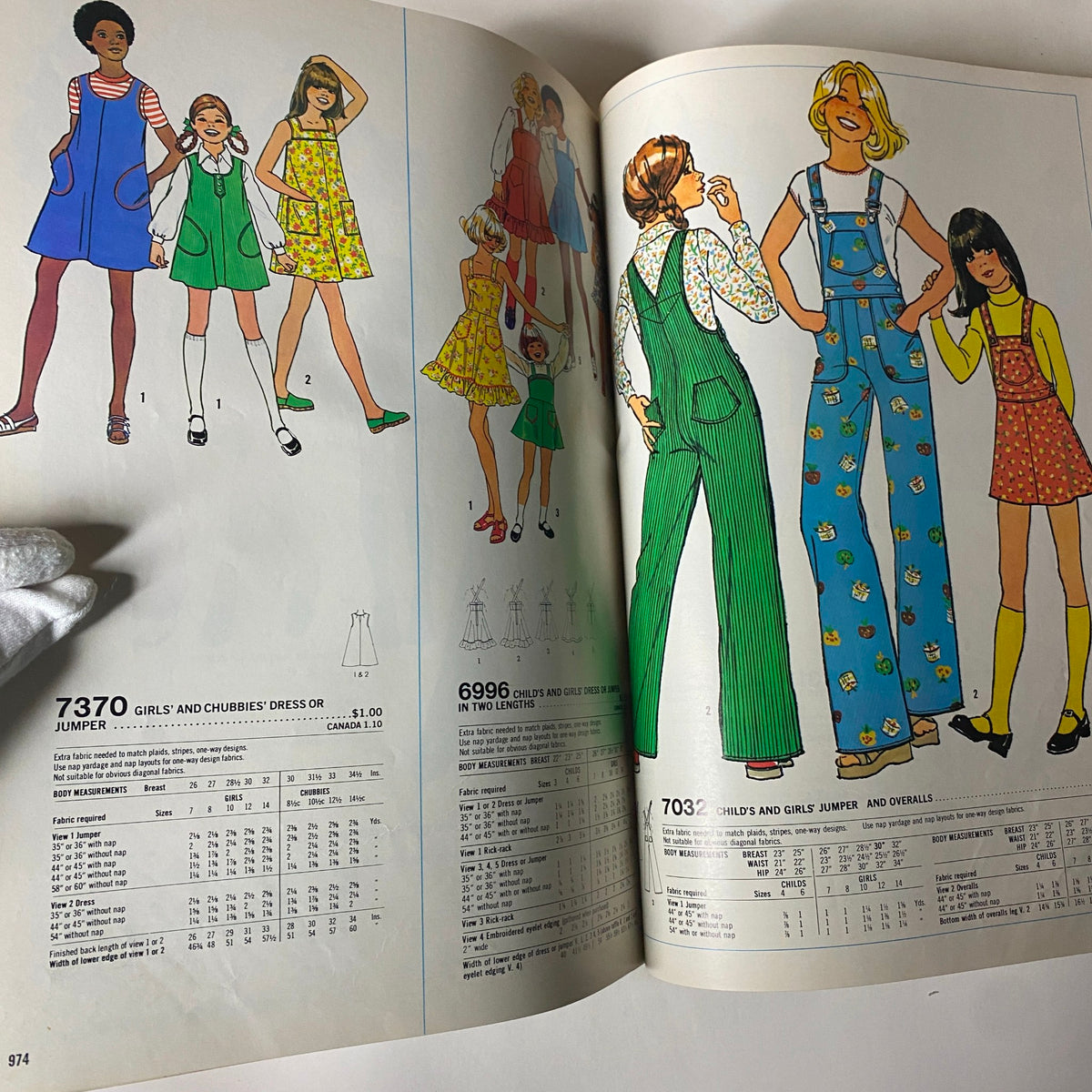
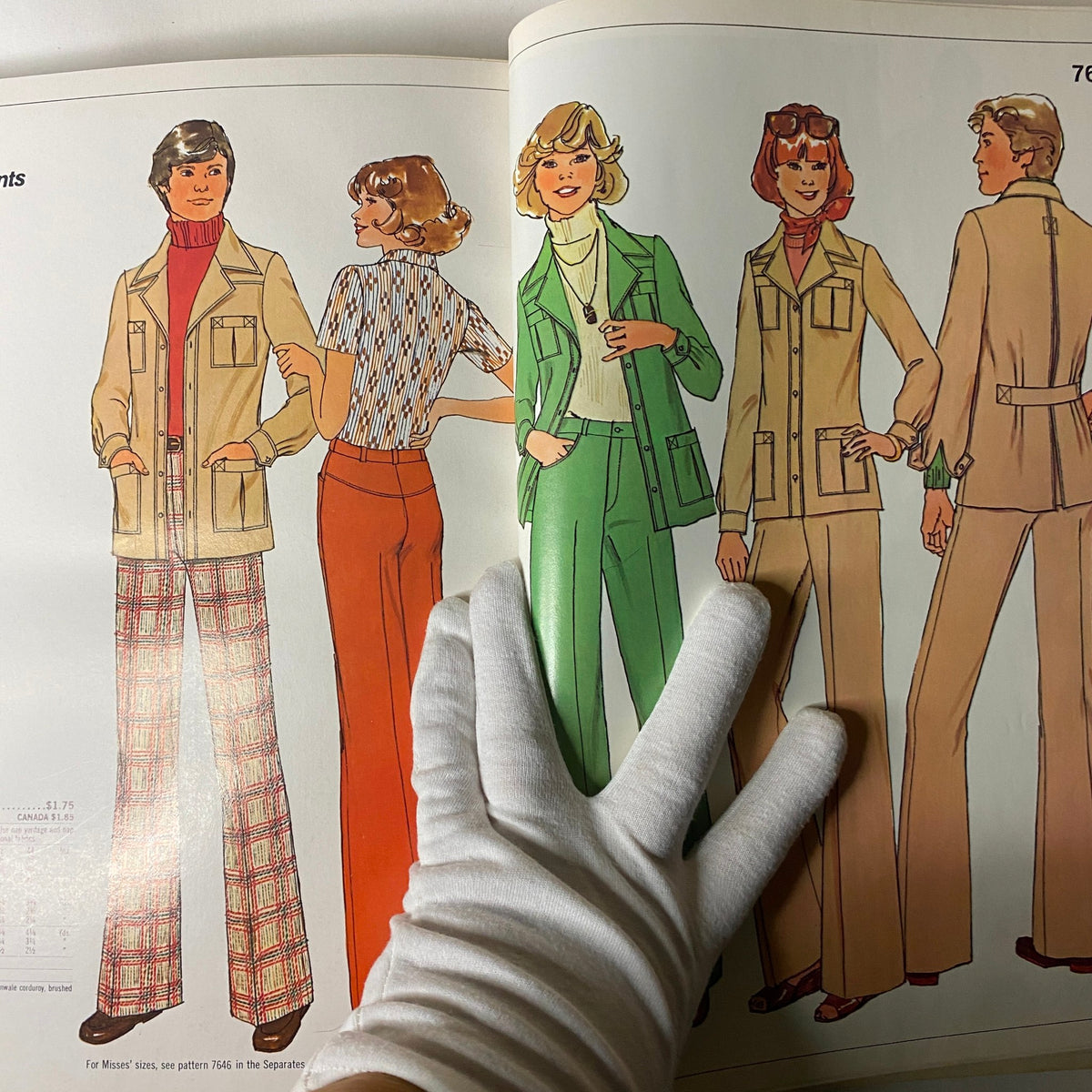
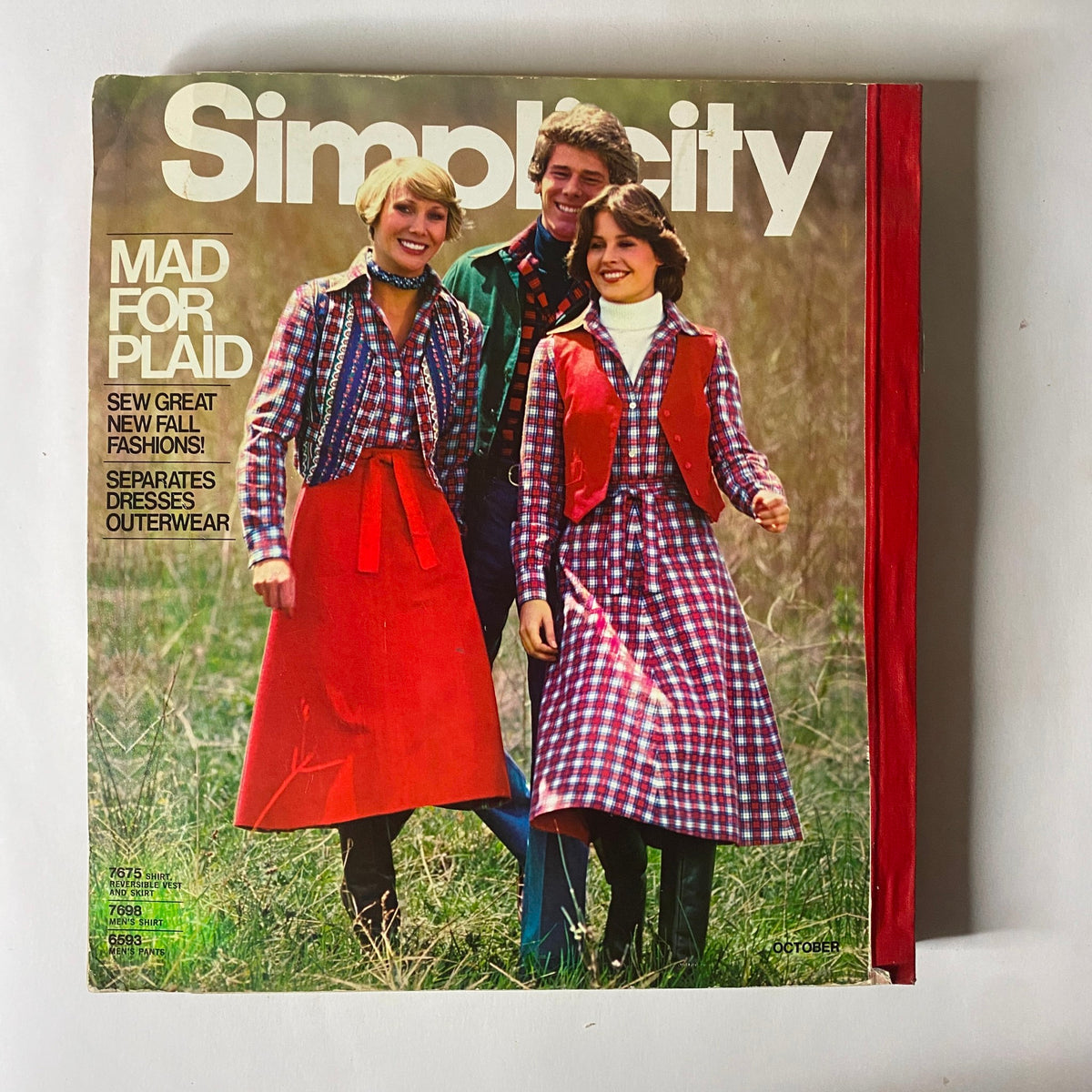


Description
Collector's Note – Why This Issue Matters
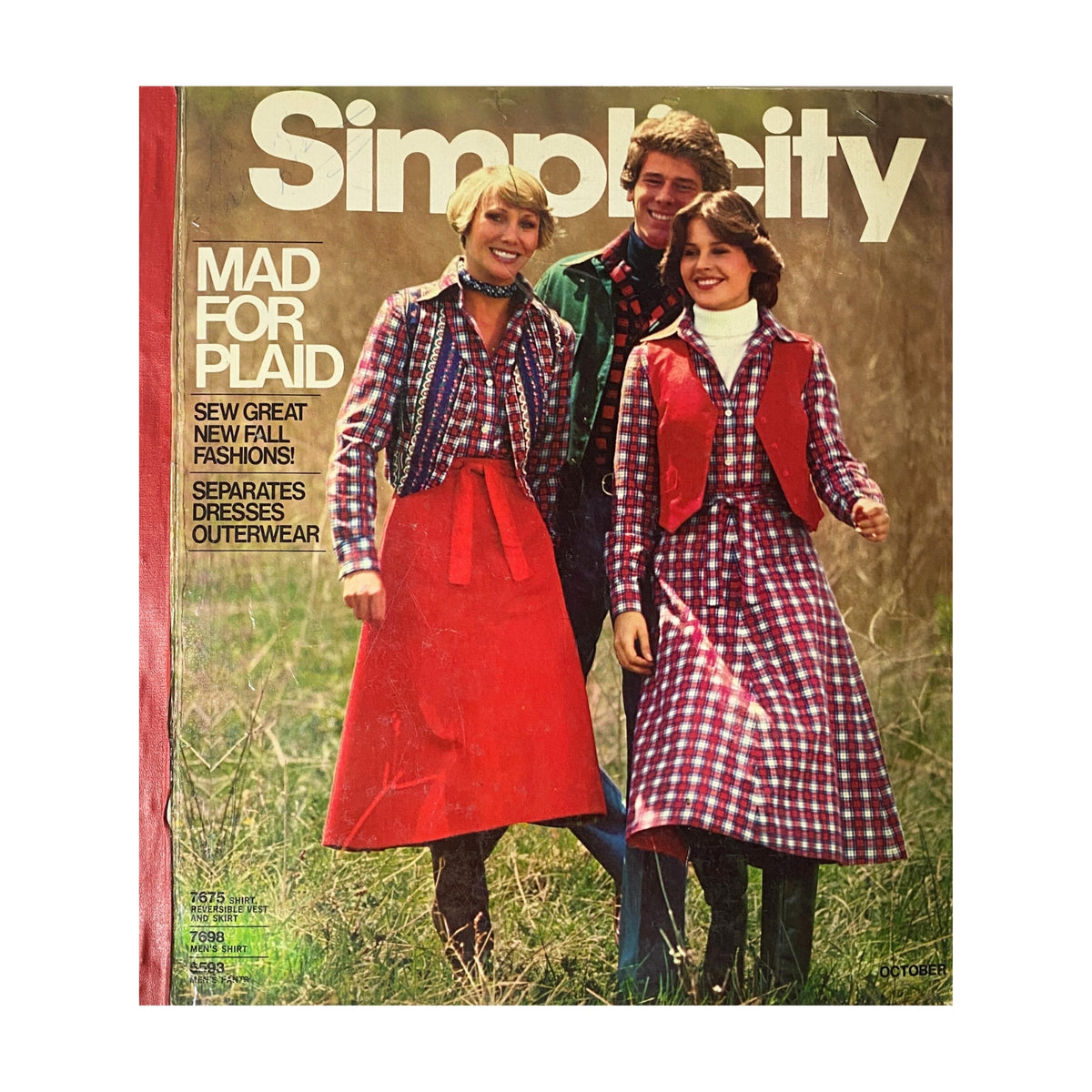
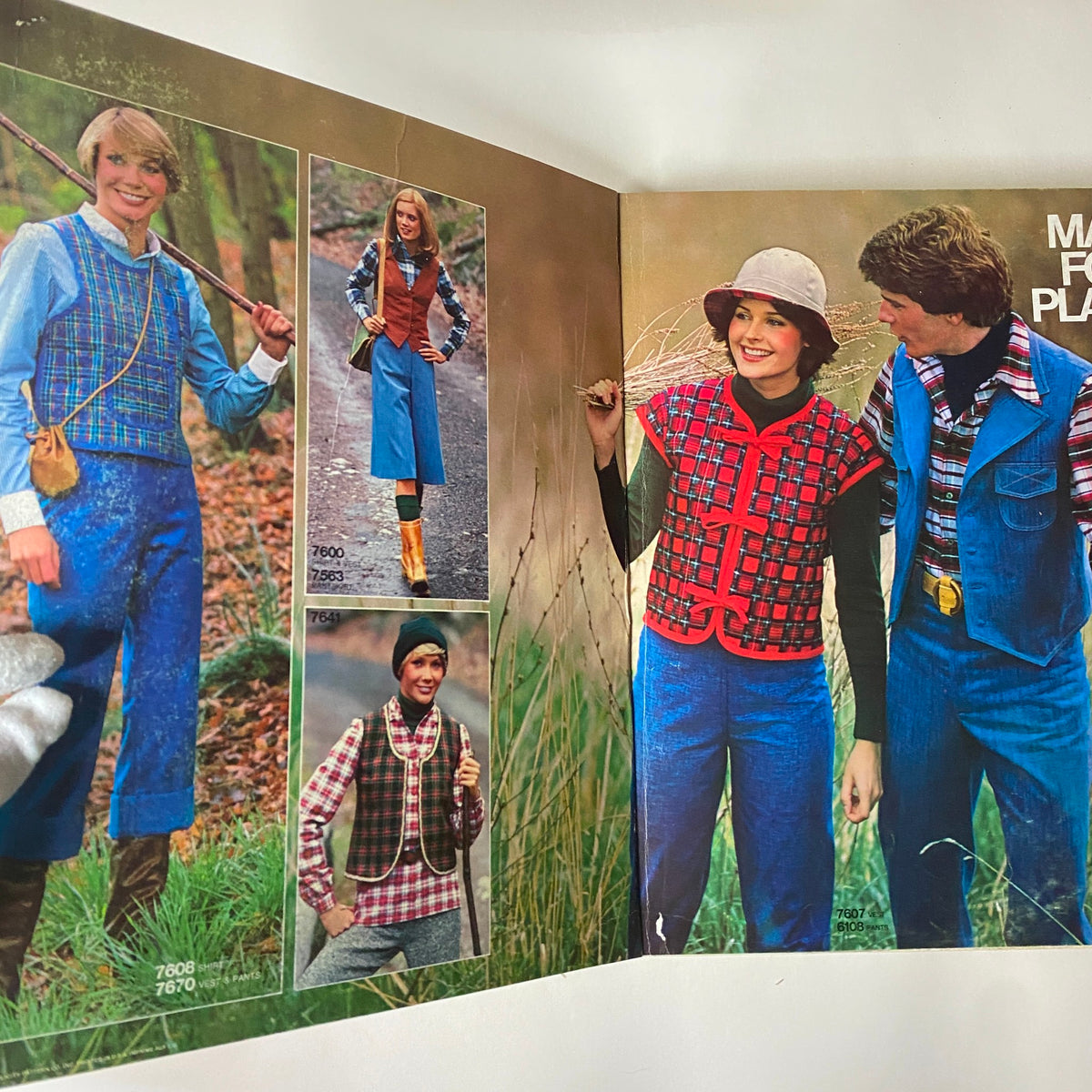
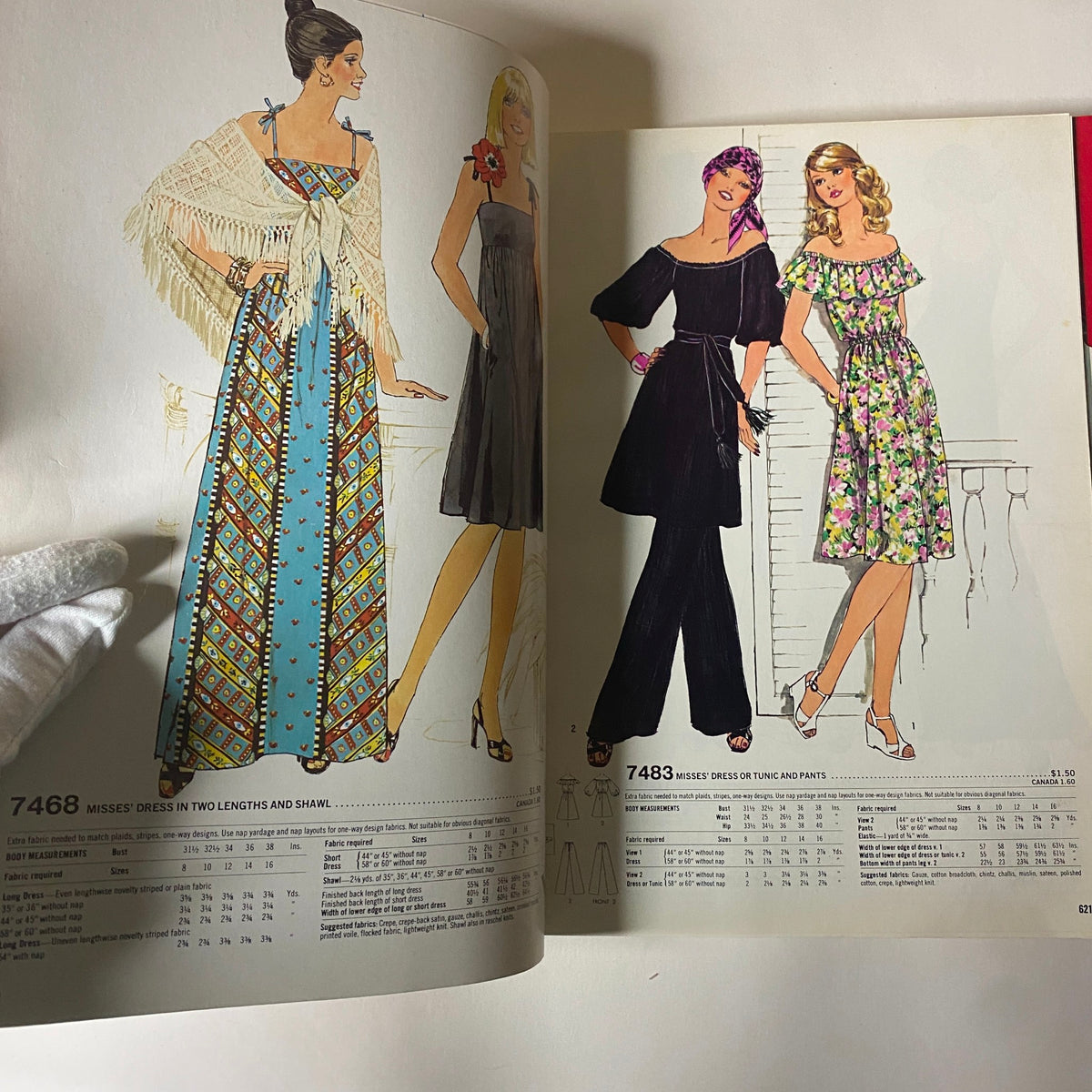
The October 1976 Simplicity Sewing Pattern Catalog is a primary document of American home sewing culture at its absolute commercial peak. By the mid-1970s, home sewing had reached levels of mainstream participation that would never be replicated — driven by a combination of economic practicality, the counterculture's embrace of handmade clothing, and the extraordinary influence of fashion-forward pattern companies that made designer-adjacent styles accessible to anyone with a sewing machine. Simplicity was one of the dominant forces in that landscape, and its seasonal counter catalogs functioned as the authoritative reference books of the home sewing world, displayed in fabric store counters across the country and consulted by millions of home sewers deciding what to make each season. An October catalog was a fall fashion document — the patterns inside reflected the autumn and transitional-season silhouettes that defined what American women were making and wearing as 1976 moved toward its close. Collectors and fashion historians researching 1970s American style will find the Simplicity catalog archive an invaluable record of how mainstream fashion filtered down into the home sewing market season by season.
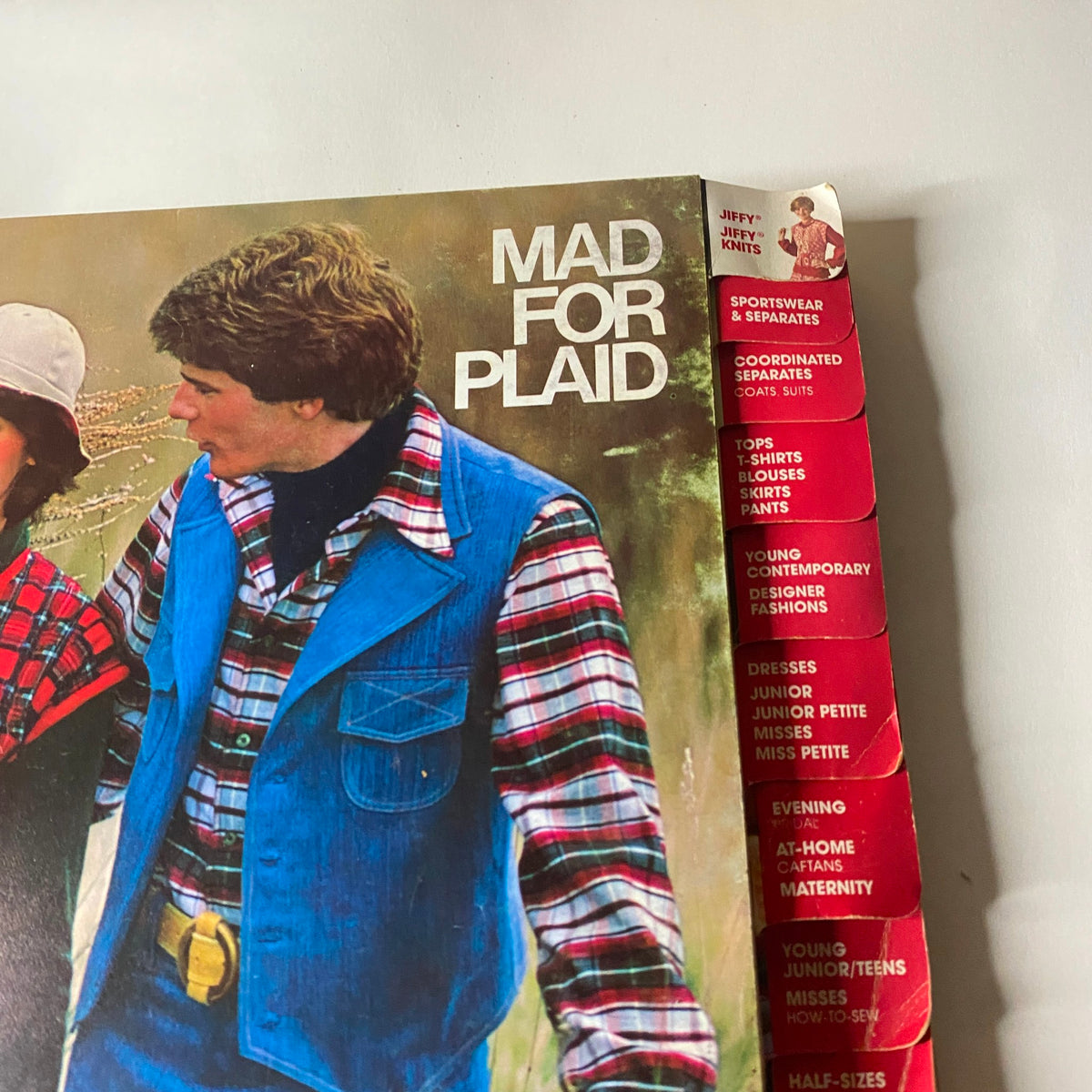
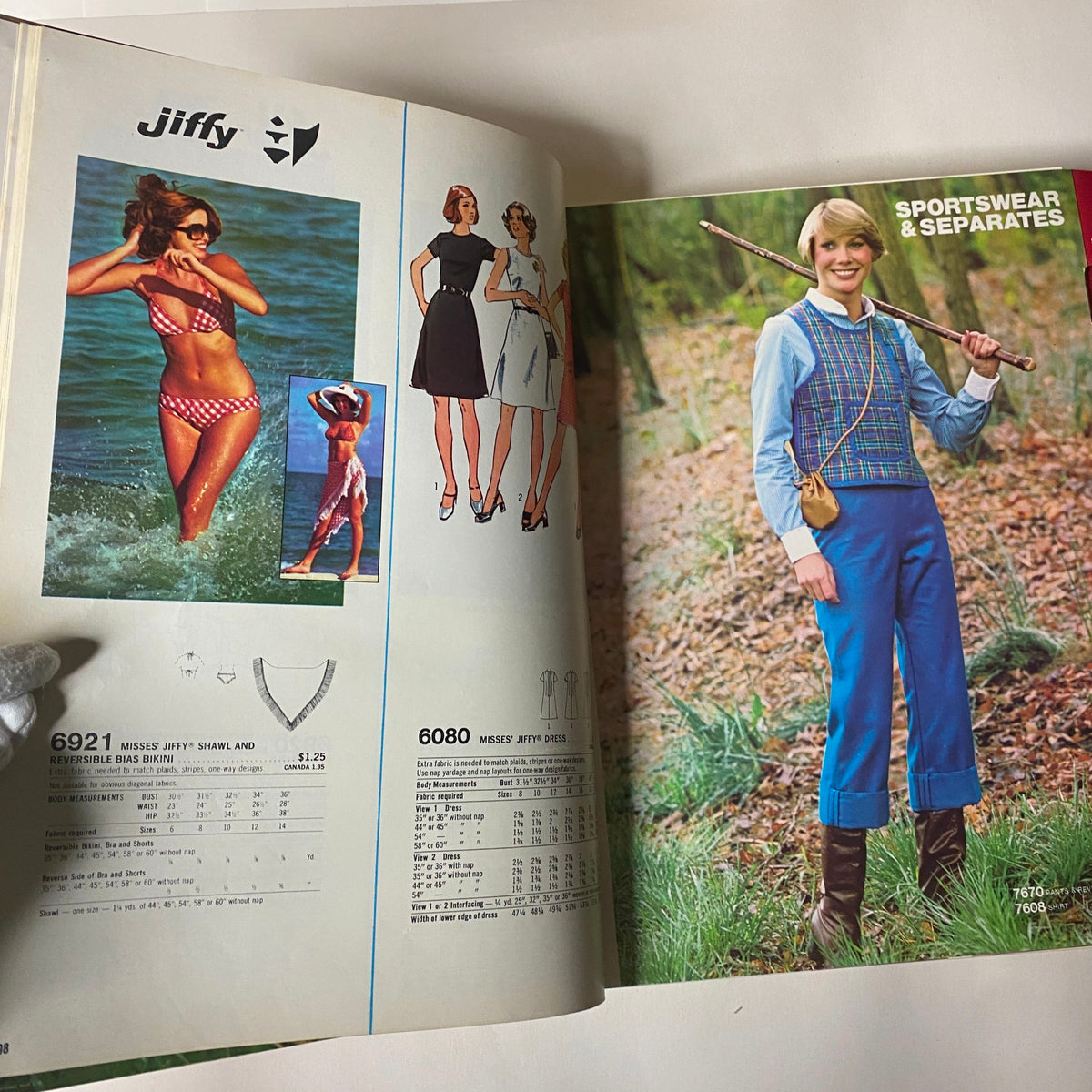
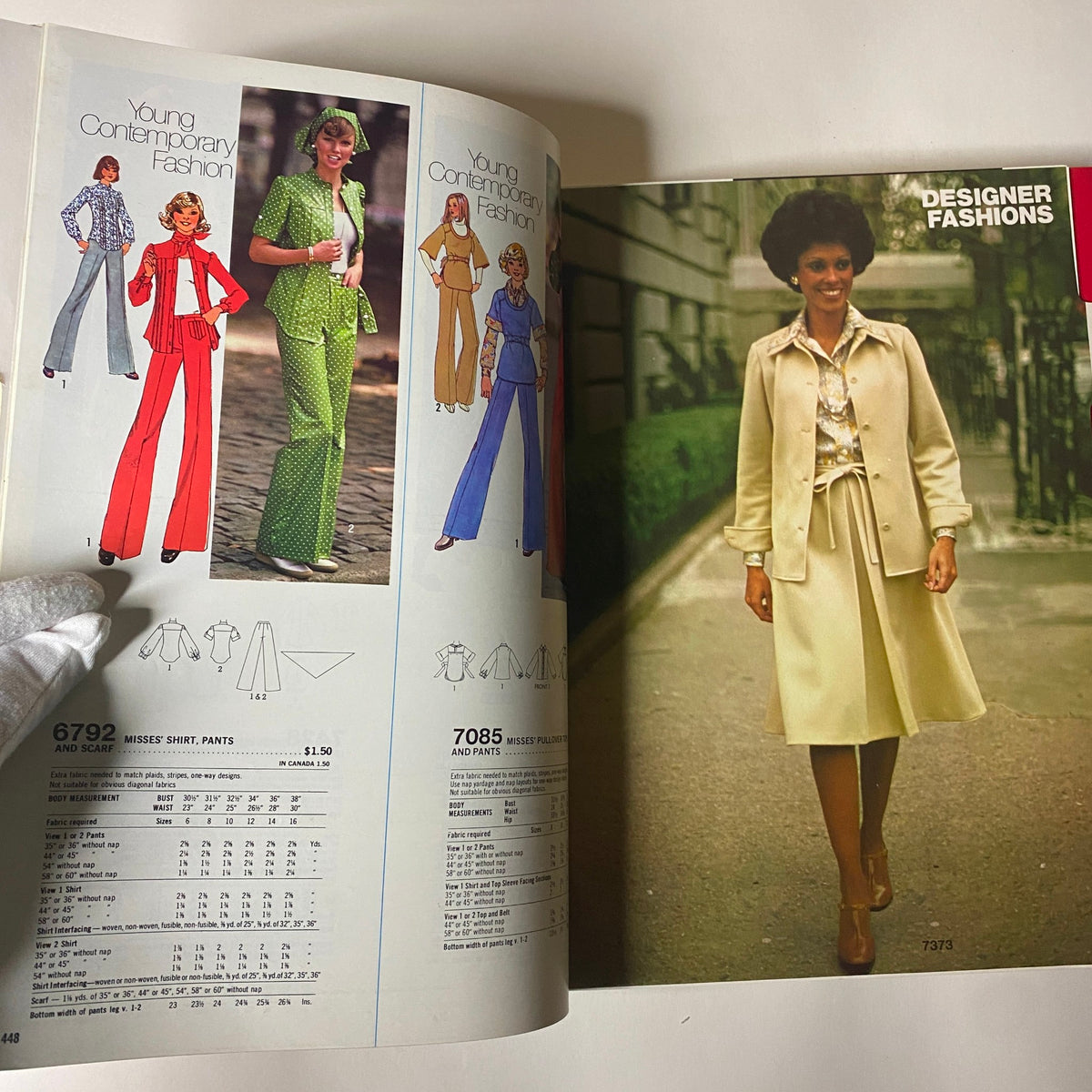
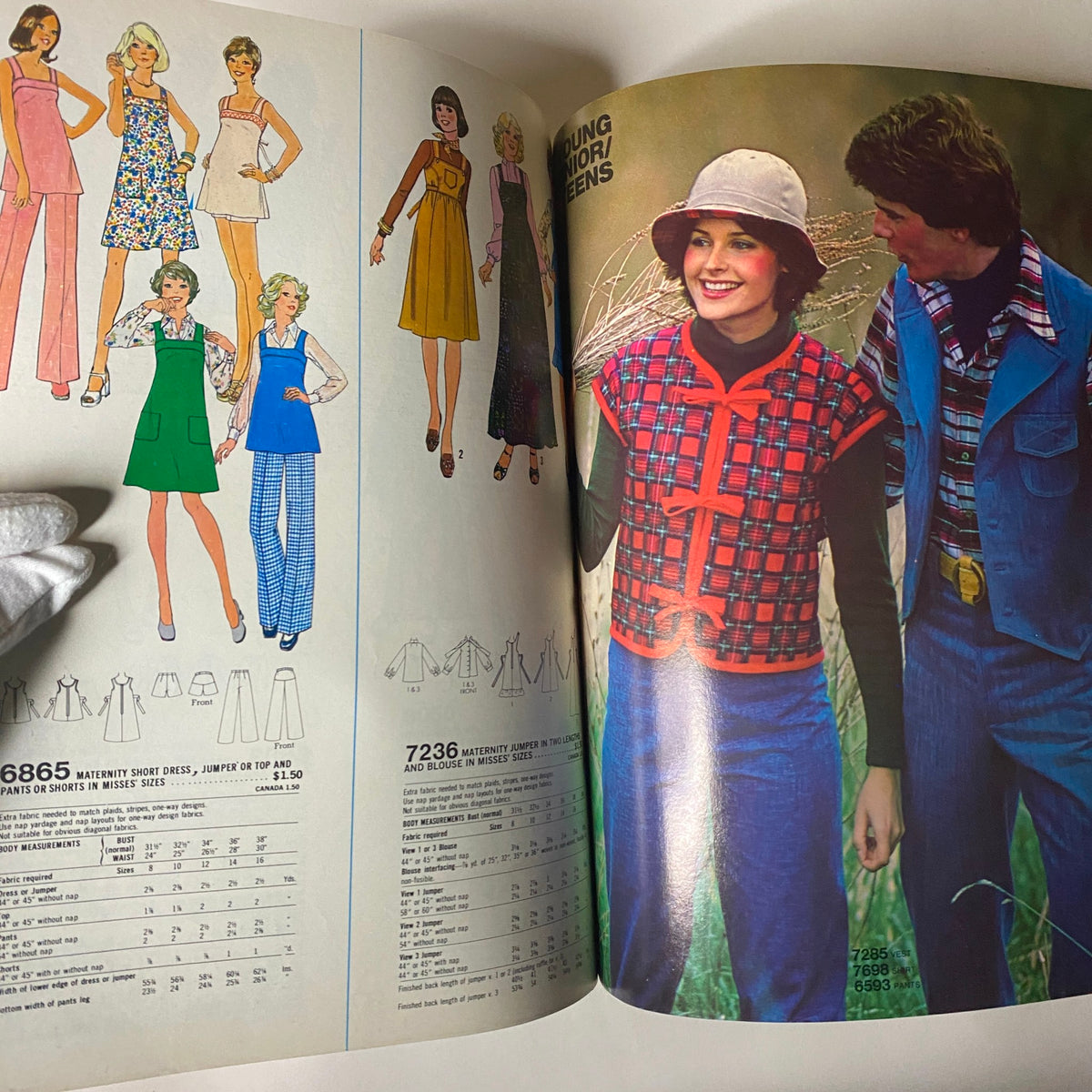
The contents of this particular catalog capture several converging 1970s fashion currents simultaneously. The JIFFY and JIFFY KNITS lines — Simplicity's signature quick-construction patterns — reflect the era's appetite for fast, accessible projects at a time when synthetic knit fabrics had transformed what home sewers could accomplish without advanced tailoring skills. The Young Contemporary Designer Fashions section, segmented across Junior, Junior Petite, Misses, and Miss Petite sizing, speaks to the decade's intense focus on youth-oriented, trend-driven design. Evening and at-home wear featuring flowing caftans is an unmistakably 1970s category — the caftan was one of the decade's defining silhouettes, moving fluidly between loungewear and formal occasions in a way that suited the era's relaxed approach to dress codes. The inclusion of maternity patterns within the evening and at-home section reflects period norms around maternity dressing that would shift considerably in subsequent decades. For collectors building a comprehensive picture of 1970s American domestic and fashion culture, the full range of 1976 publications provides essential context around this catalog's specific seasonal moment.
Counter catalogs like this one occupied a distinct role in the pattern industry's ecosystem. They were not sold to consumers — they were store reference books, placed at fabric counters for customers to browse before selecting individual patterns. Surviving examples that left the retail environment and entered private hands are therefore less numerous than the print runs alone might suggest, and copies in collectible condition represent genuine finds for researchers of home sewing history, 1970s fashion, and American retail culture of the period.
About the Publication
Simplicity Pattern Co., founded in 1927, became one of the dominant American sewing pattern manufacturers of the twentieth century, built on a philosophy of accessible, affordable patterns designed for home sewers of all skill levels. Its seasonal counter catalogs — large-format store reference books distributed to fabric retailers — presented the full pattern line for each season in a browsable format, organized by garment category and size range. By the 1970s Simplicity catalogs had evolved into sophisticated fashion publications in their own right, featuring professional fashion illustration and photography and covering the full spectrum from beginner quick-sew projects to designer-influenced contemporary fashions. They serve today as authoritative primary sources for researchers of American home sewing culture, postwar fashion history, and mid-century retail publishing.
Key Highlights Inside
- JIFFY and JIFFY KNITS patterns — Simplicity's flagship quick-construction line, reflecting the 1970s knit fabric revolution and the democratization of fast, accessible home sewing for all skill levels.
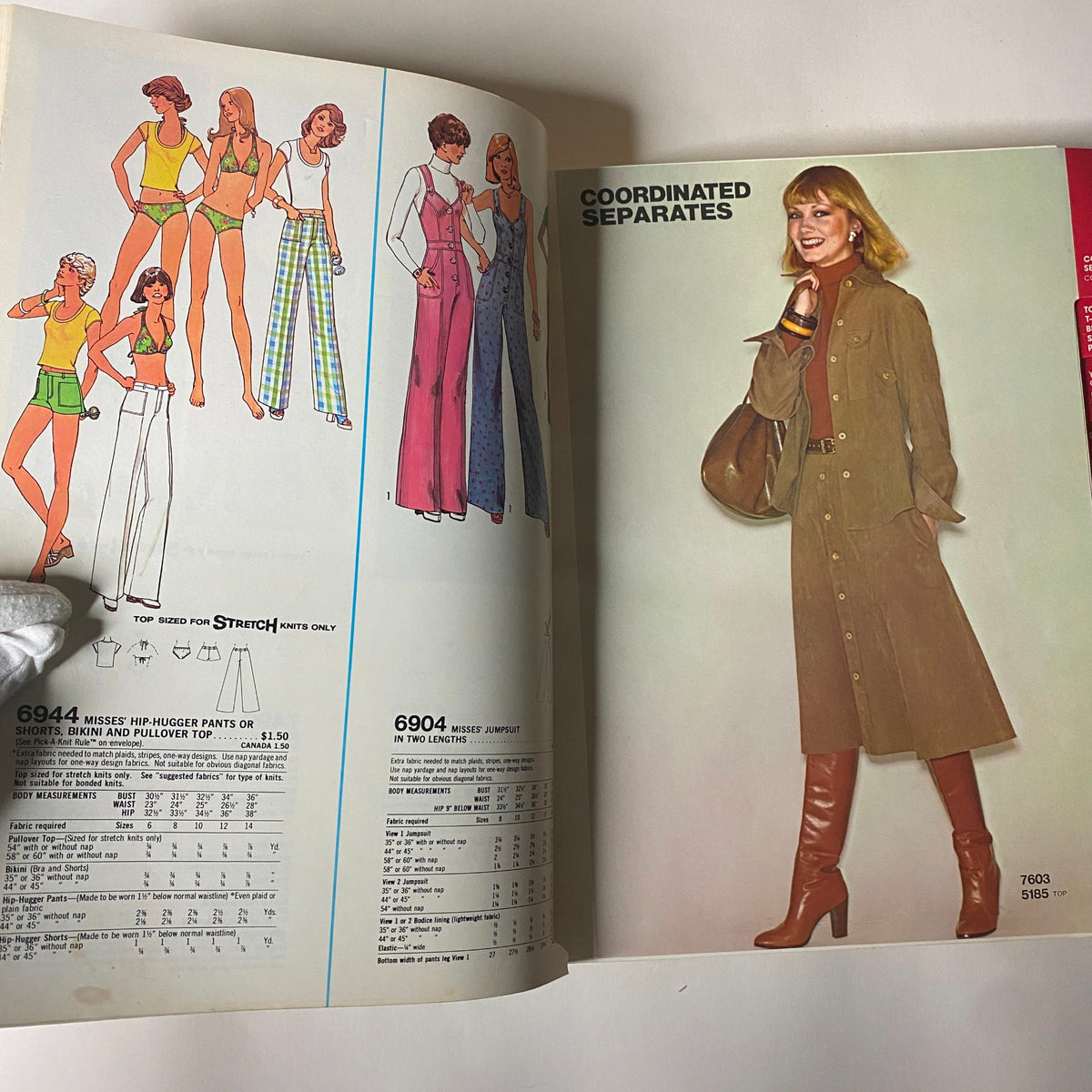
- Sportswear and Separates — Coordinated sets, coats, suits, tops, t-shirts, blouses, skirts, and pants documenting the mix-and-match separates aesthetic that dominated practical American fashion in the mid-1970s.
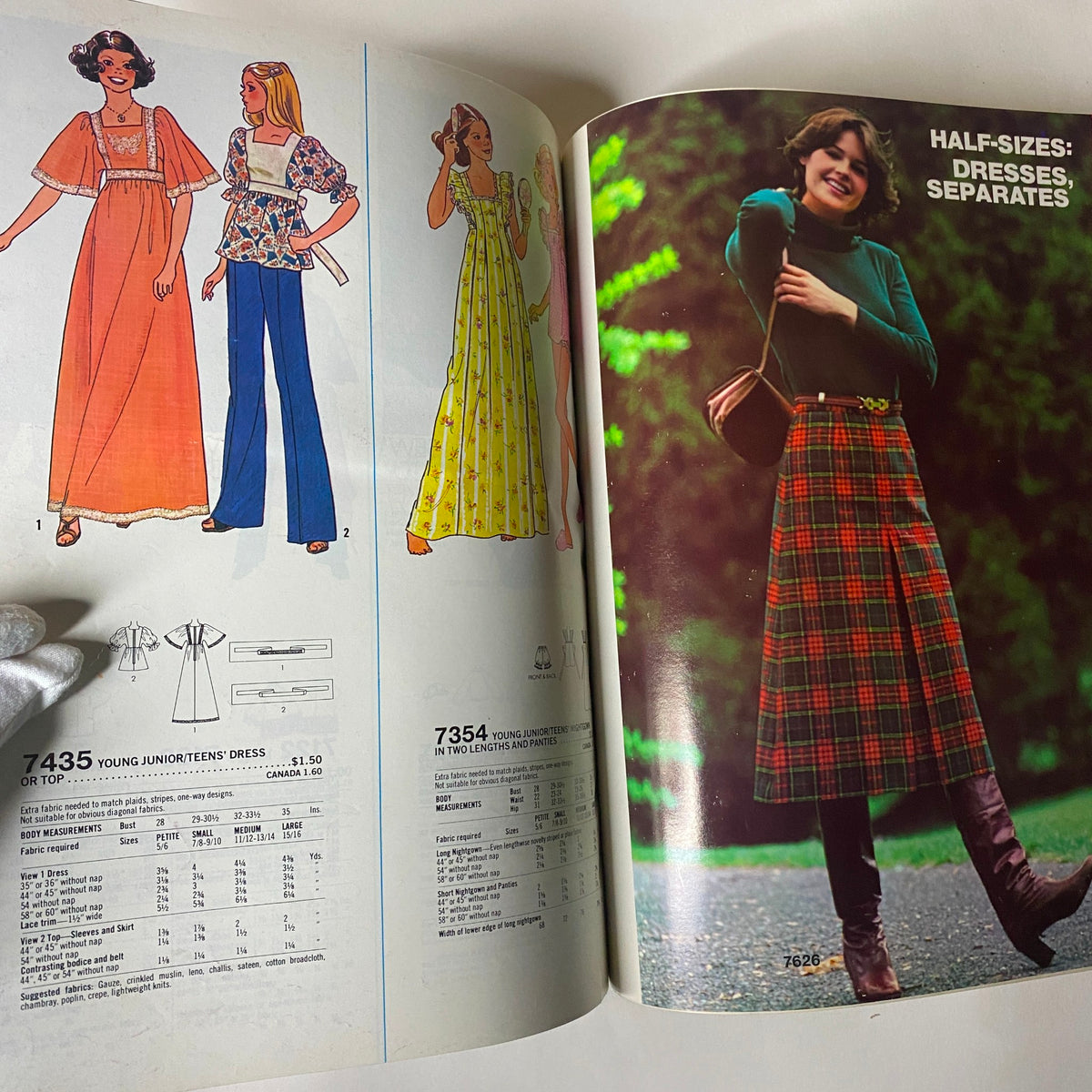
- Young Contemporary Designer Fashions — Trend-forward patterns across Junior, Junior Petite, Misses, and Miss Petite sizing categories, capturing the youth-oriented design sensibility that defined mainstream American fashion in 1976.
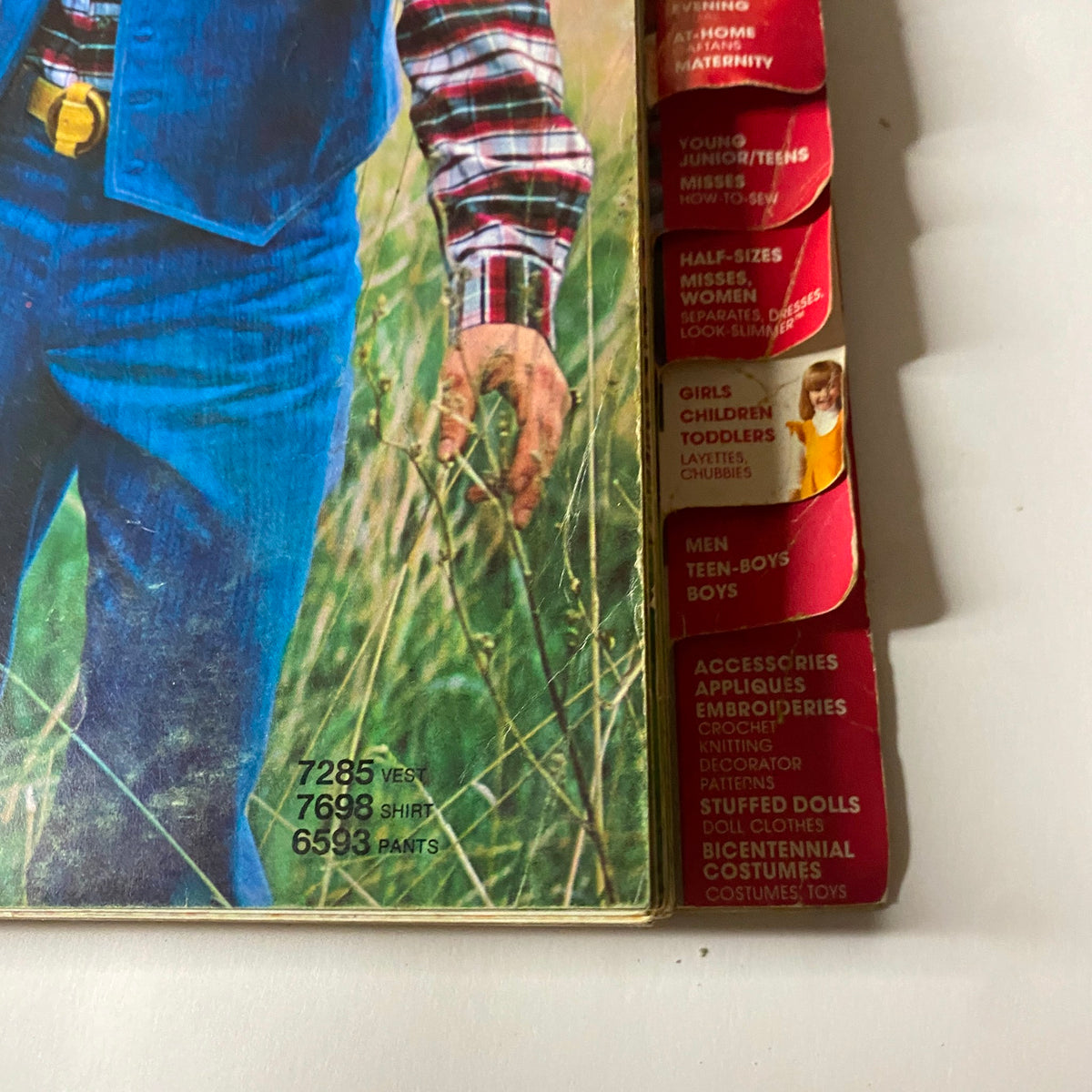
- Evening and At-Home Wear — Including flowing caftans and maternity options, reflecting two distinctly 1970s fashion categories that occupied significant space in the home sewing market of the period.
- How-To-Sew instructional content — Step-by-step guidance for beginners, consistent with Simplicity's brand identity as the accessible entry point for new home sewers.
- Half-Sizes and extended sizing — Patterns designed for tailored fit across Misses and Women's half-size ranges, reflecting Simplicity's commitment to inclusive sizing across its full catalog.
Condition & Rarity
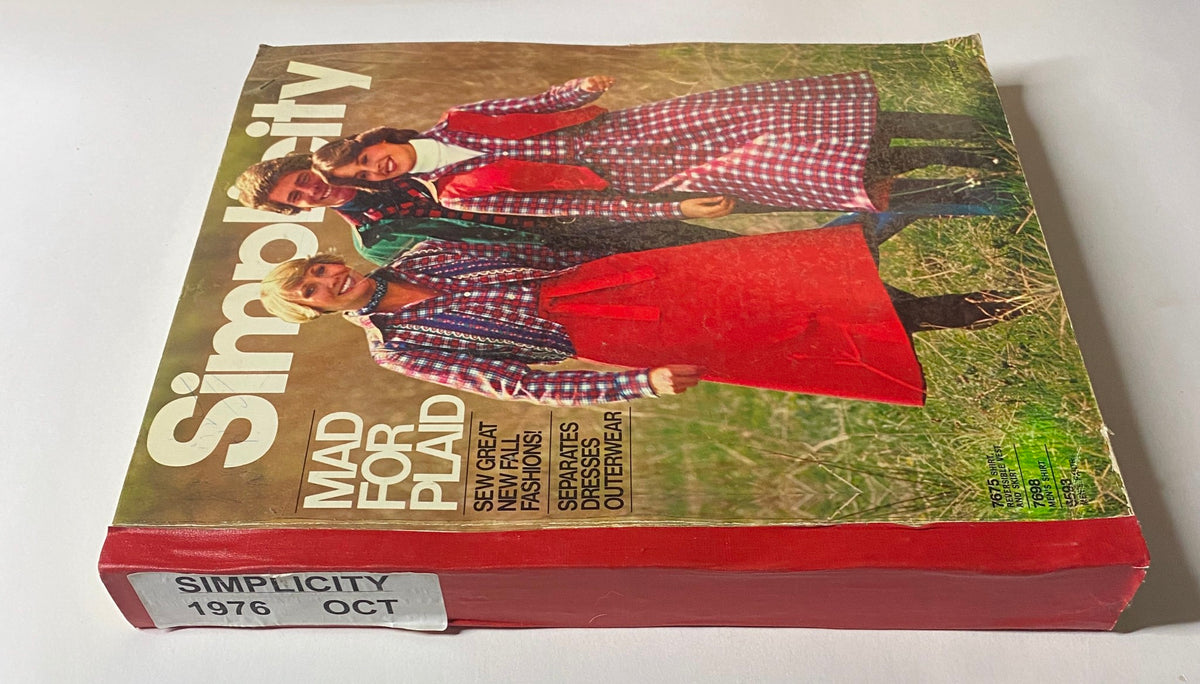
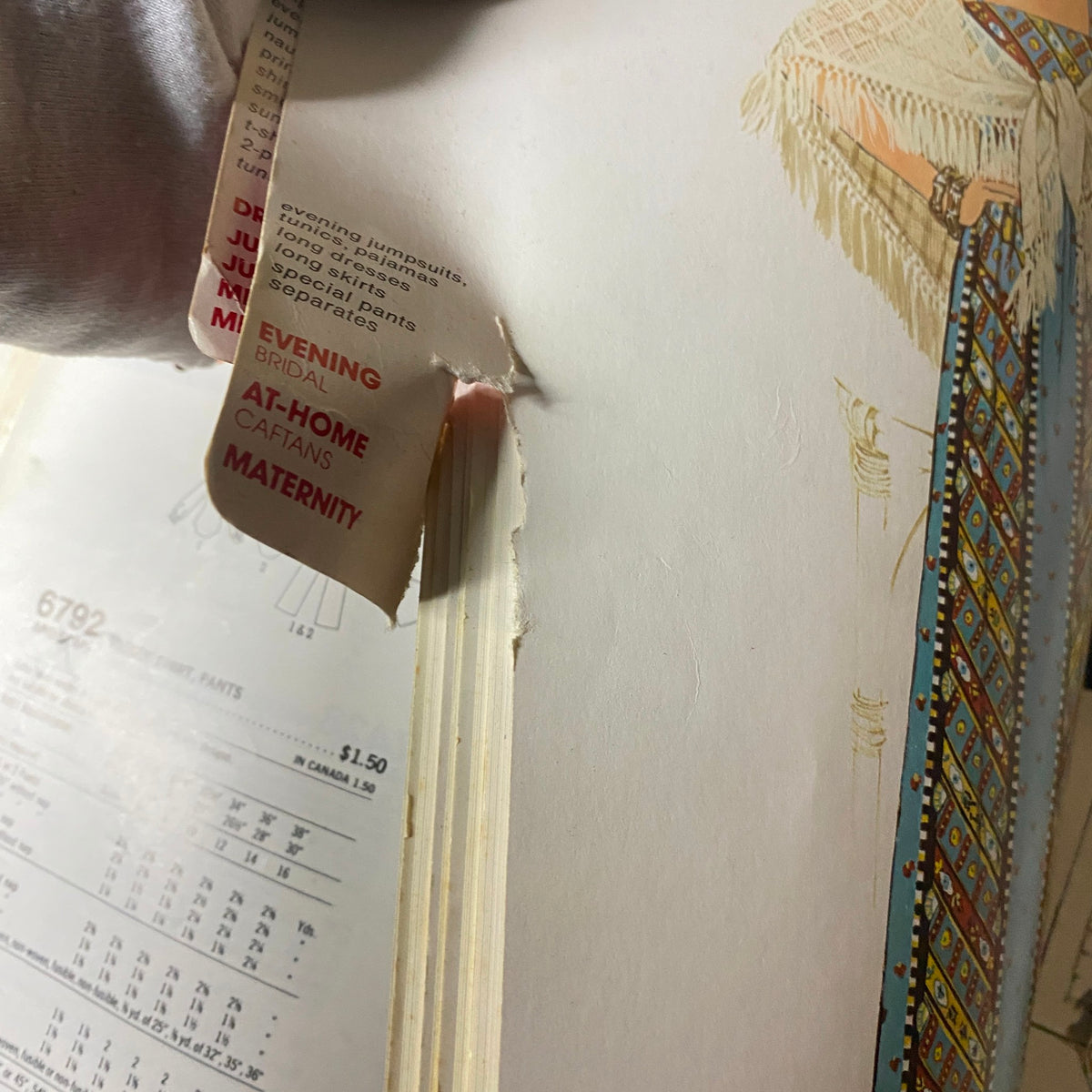
Simplicity counter catalogs from the 1970s present specific preservation challenges that make good-condition survivors genuinely desirable. These were working retail reference books — handled daily by store customers, exposed to the ambient conditions of fabric store environments, and subject to the kind of cumulative wear that comes from repeated consultation over a full season. Surviving examples in good condition, protected by a plastic sleeve, represent well-preserved artifacts by realistic standards for a retail counter publication of this age and format. The large-format counter catalog binding — typically a thick spine with heavy covers — is prone to corner wear and hinge stress from repeated opening and closing, making structural integrity a key evaluation factor. When assessing any surviving copy of this catalog, collectors should prioritize the completeness of the pattern illustration pages, the legibility of the sizing and category sections, cover brightness, and the absence of significant moisture damage or retail markings. A good-condition grade on a fifty-year-old fabric store counter book is a meaningful designation.
Looking for More Issues Like This?
Simplicity counter catalogs from the peak 1970s home sewing era are among the most actively researched items in vintage pattern collecting, and October seasonal editions — which capture the full autumn fashion moment — are particularly sought after. The Simplicity catalog collection at OriginalMagazines.com is the most focused place to search for other seasonal editions across the full span of Simplicity's publishing history. Collectors building around the distinctive fashion culture of the mid-1970s will also want to explore the 1976 magazine collection, which brings together a wide range of period publications that document the style, culture, and everyday life of that era.