


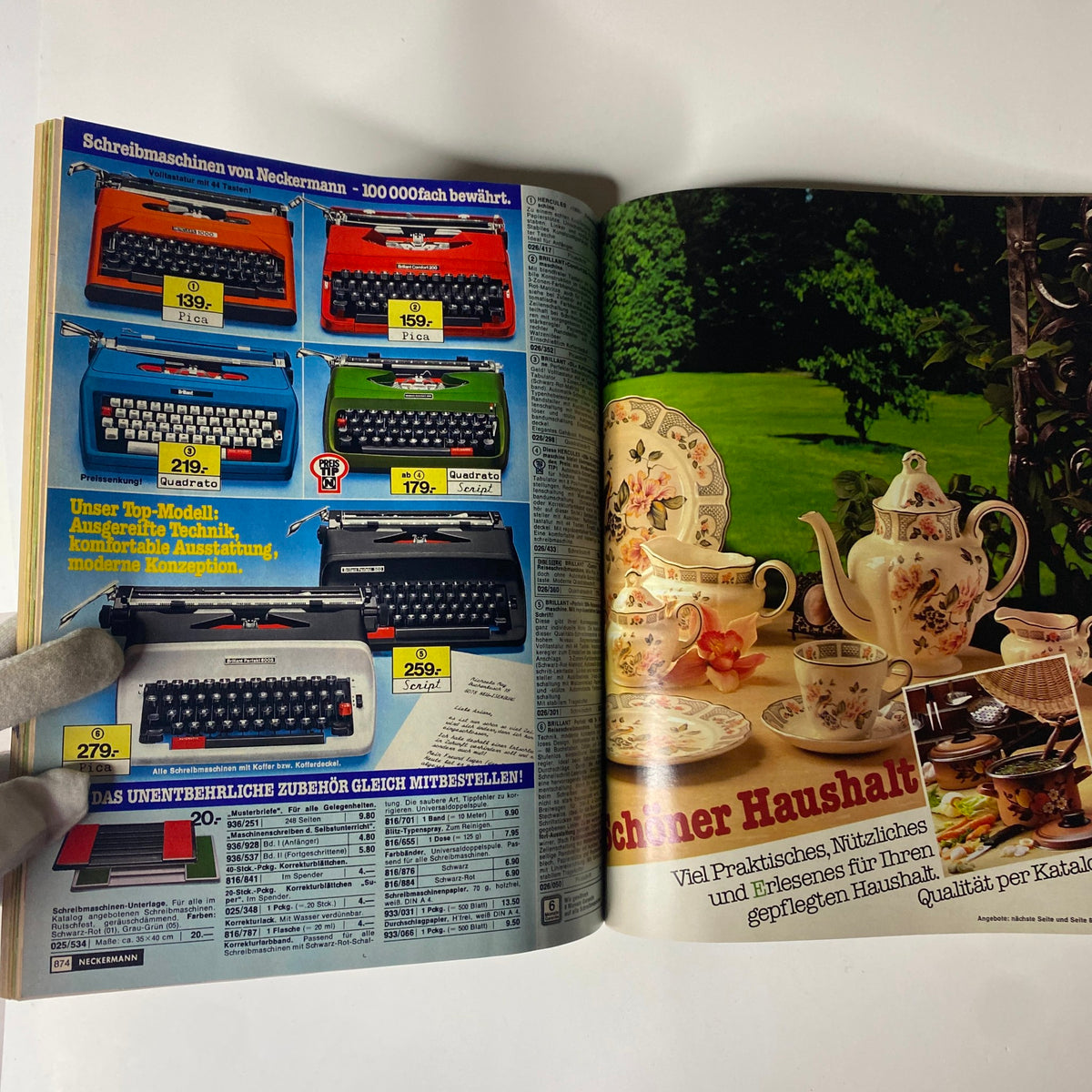

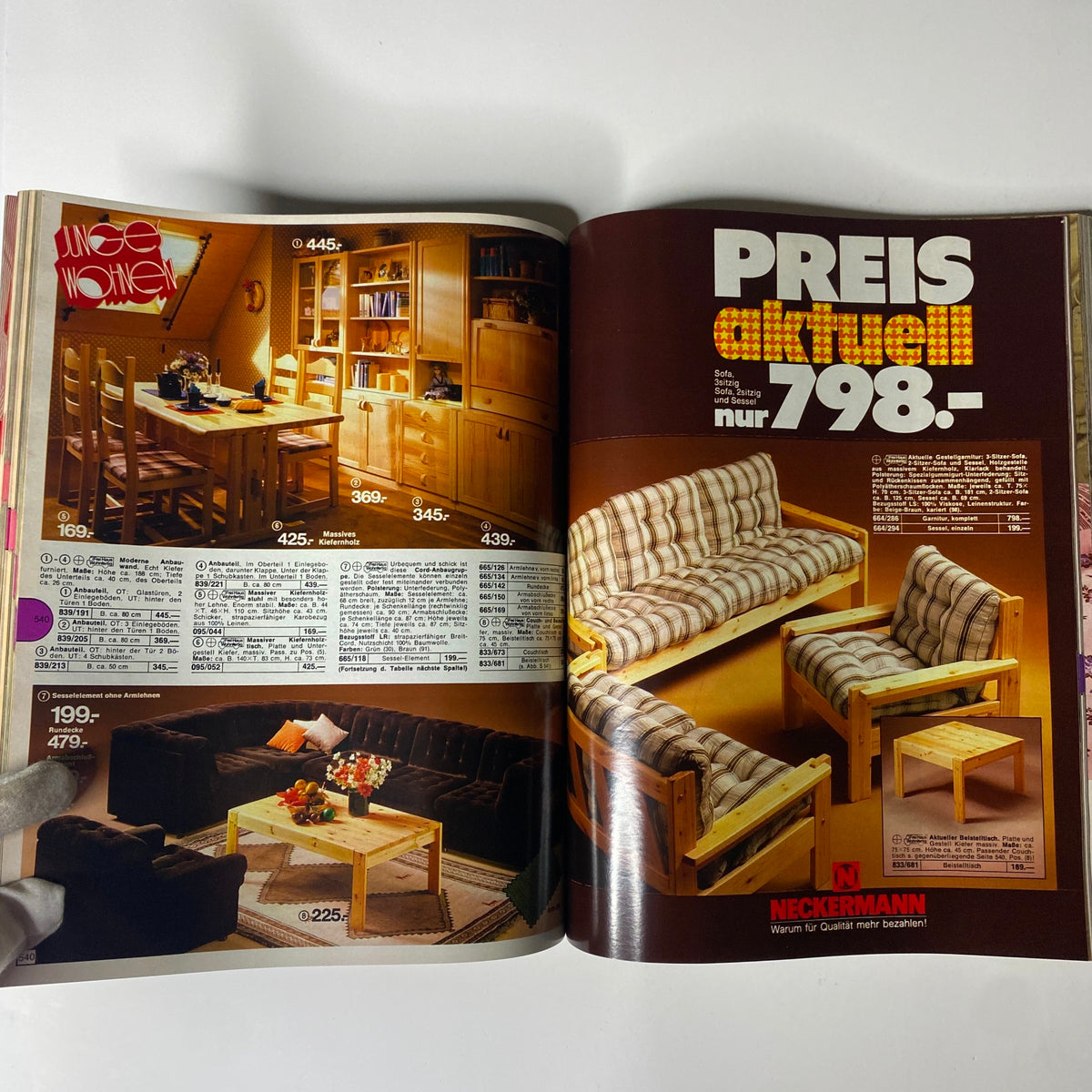

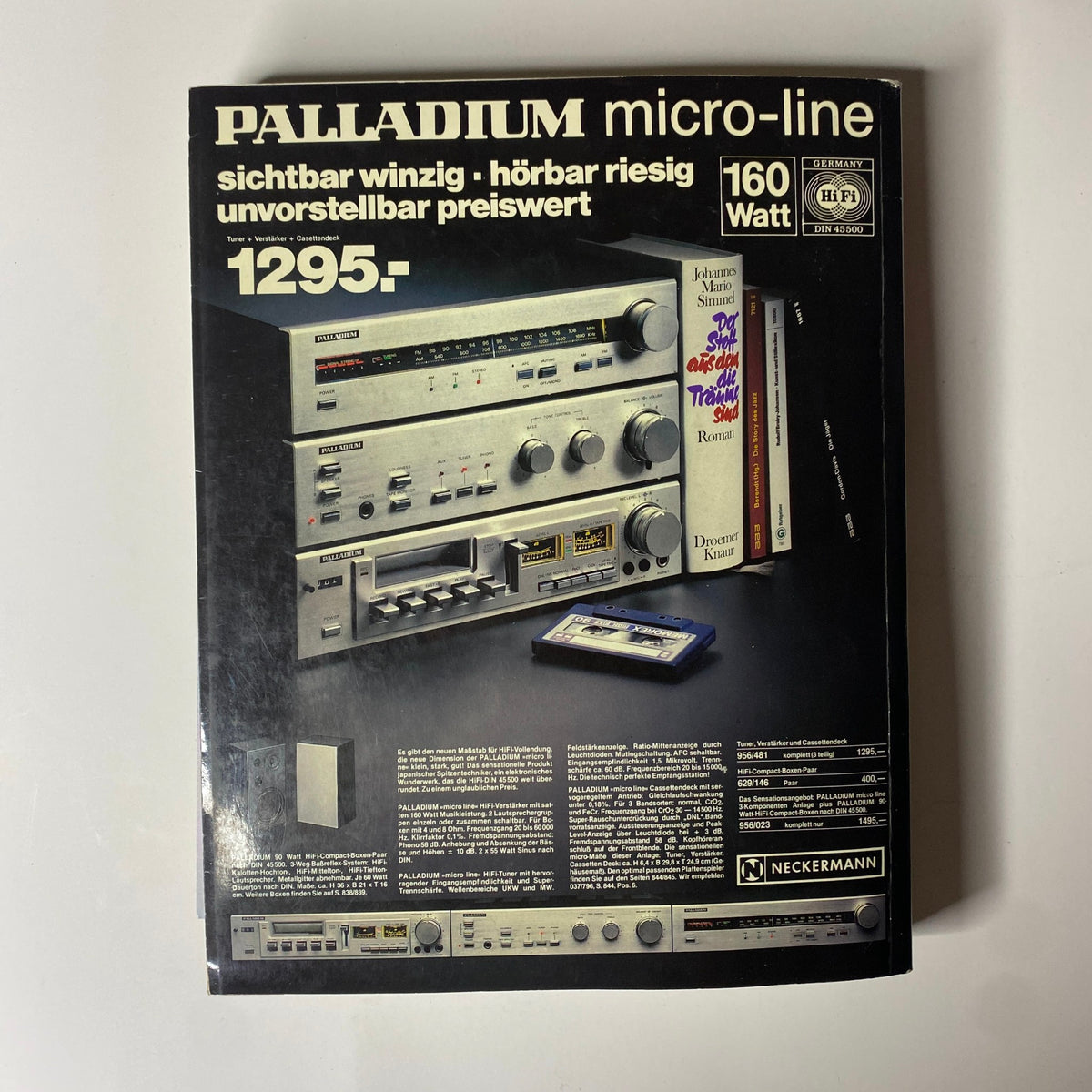


Description
Collector's Note – Why This Issue Matters
The 1979–1980 Neckermann Winter catalog occupies a uniquely transitional position in the history of European mass-market retail publishing. A winter catalog that bridges two calendar years — produced in late 1979 for the winter season extending into early 1980 — sits precisely at the hinge between two decades with distinctly different aesthetic identities. The late 1970s in West Germany, as across much of the Western world, were a period of visual and cultural flux: the earthy palette and relaxed silhouettes of mid-decade fashion were giving way to the crisper lines, bolder colors, and more structured forms that would define the early 1980s. A Neckermann winter catalog from this exact transitional moment captures that aesthetic shift in real time, in the pages of a document that was designed not to interpret trends but simply to sell clothing and household goods to mainstream West German consumers. That commercial directness is precisely what makes it historically valuable. Collectors and fashion researchers studying the late-1970s-to-early-1980s transition in European mass-market style will find the Neckermann catalog archive an essential resource for tracing how those shifts actually manifested in the mail-order retail market that most West Germans used.
Winter catalogs from major German mail-order companies carried a particular weight in the household retail calendar. Unlike the more recreational summer edition, the winter catalog was the primary annual reference for cold-weather clothing, heating and home comfort goods, holiday merchandise, and the full range of domestic products that West German families needed for the long months between autumn and spring. A 1979–1980 winter edition would have covered outerwear and cold-weather fashion reflecting the transitional aesthetic of the late-decade moment, home goods and appliances consistent with the state of West German domestic technology at the turn of the decade, and likely holiday merchandise positioned for the Christmas season — one of the most important retail periods in the German consumer calendar. The broader context of this catalog's publication year is well worth understanding: 1979 was the year of the Iranian Revolution, the Soviet invasion of Afghanistan, and the second oil crisis, all of which shaped the economic anxieties that ran beneath West Germany's consumer confidence. The full range of 1979 publications provides essential context for the world this catalog was produced in.
The dual-year designation of this catalog — 1979–1980 — is itself a meaningful collector's detail. Neckermann's winter editions, like those of other major European mail-order companies, were issued to cover a season that spanned two calendar years, and the dating reflects the catalog's intended shelf life in the household. This makes precise year attribution more complex than for single-season editions, and it adds a research dimension that collectors of German retail ephemera will appreciate when cross-referencing pattern numbers, product codes, and fashion details against other period sources.
About the Publication
Neckermann Versand, founded in Frankfurt in 1950 by Josef Neckermann, grew into one of West Germany's largest and most recognized mail-order companies, issuing seasonal general merchandise catalogs that reached millions of German households at their peak. The company's winter and summer editions were its primary consumer touchpoints, covering fashion, household goods, electronics, sporting goods, and garden products in a comprehensive format designed to function as a complete retail reference for subscribing households. By the late 1970s Neckermann's catalogs were full-color publications reflecting the era's evolving aesthetic, and they serve today as detailed primary sources for researchers of postwar German consumer culture, European fashion history, and the material culture of Cold War-era West German domestic life.
Key Highlights Inside
- Winter fashion for men, women, and likely children reflecting the transitional late-1970s West German mass-market aesthetic — the precise moment when the decade's characteristic palette and silhouettes were beginning to give way to the crisper, bolder forms of the early 1980s.
- Cold-weather outerwear and seasonal clothing documenting the state of West German ready-to-wear manufacturing and retail at the turn of the decade, when synthetic fabric technology and mass-production methods were producing genuinely new garment categories.
- Household goods and home comfort products reflecting the domestic priorities of West German families at the close of the 1970s, including the appliances, textiles, and everyday items that illuminate how ordinary households actually lived.
- Holiday and seasonal merchandise consistent with the Christmas retail priorities of the German consumer calendar — one of the most culturally significant shopping seasons in the West German market.
- Note: Specific section titles, page counts, and detailed interior content beyond what is documented in the listing have not been independently confirmed. The above reflects what is verifiable from the listing description and well-documented knowledge of Neckermann's catalog format and the consumer culture of this era.
Condition & Rarity
Neckermann winter catalogs from the late 1970s are working household documents that were produced for seasonal use rather than preservation, and surviving examples in collectible condition are uncommon in the international market. A copy rated in good condition with a protective plastic sleeve represents a well-preserved artifact by realistic standards for a catalog now approaching fifty years of age. Winter editions, as the most heavily consulted of Neckermann's annual publications — referenced repeatedly over the full cold-weather season for clothing orders, gift purchases, and household goods — were subject to more handling than summer supplements, making structurally intact examples particularly desirable. When evaluating any surviving copy of this catalog, the primary condition factors are binding integrity and spine cohesion, cover brightness, the completeness of the page count across all seasonal sections, and the absence of significant moisture damage or household markings. The protective plastic sleeve limits ongoing surface oxidation and physical wear, which matters considerably for paper and binding of this age.
Looking for More Issues Like This?
Late-1970s Neckermann winter catalogs are a genuinely specialized find outside the German collector market, and the 1979–1980 edition — straddling the aesthetic boundary between two distinct decades — is of particular interest to collectors and researchers tracking the transition from 1970s to 1980s European consumer style. The Neckermann catalog collection at OriginalMagazines.com is the most focused resource for locating other seasonal editions across the full span of this important West German retailer's publishing history. Collectors interested in the broader cultural and consumer landscape of the late 1970s will also want to explore the 1979 magazine collection, which brings together a range of period publications that document the style, politics, and everyday life of one of the decade's most consequential closing years.