



Description
Collector's Note – Why This Issue Matters
The April 1952 issue of Better Homes & Gardens Magazine captures postwar American home life through one of the magazine’s most enduring subjects: practical gardening. The listing identifies “How To Get The Quickest Bloom” as the central feature, giving the issue a clear seasonal and instructional focus. April was a natural month for garden planning and spring planting, making this issue especially representative of how mid-century home magazines guided readers through seasonal household routines. For collectors, that seasonal timing helps place the issue within the practical rhythm of 1950s domestic publishing, when magazines were often used as month-by-month guides for home improvement.
In 1952, American home and garden publishing was closely tied to suburban growth, domestic improvement, do-it-yourself projects, and the ideal of a well-kept home landscape. Gardening advice in a magazine like Better Homes & Gardens was not merely decorative; it reflected a broader culture of planning, maintenance, and pride in the home environment. For collectors studying magazines from 1952, this issue offers a period view of how gardening knowledge, visual presentation, and household aspiration were communicated to everyday readers. It also shows how postwar magazines helped standardize ideas about the attractive home, productive yard, and well-planned seasonal garden.
The “quickest bloom” theme gives this issue its strongest collector identity from the listing. It points to practical flower-gardening advice rather than celebrity or news coverage, which is exactly what makes many vintage home magazines valuable as social-history documents. Even without confirmed individual article titles beyond the bloom-focused feature, this issue remains meaningful as a reference object for collectors interested in mid-century gardening, domestic design, seasonal magazine publishing, and the everyday expertise that shaped American home life. Its no-label presentation and protective covering further support its value as both a displayable periodical and a practical record of 1950s home-and-garden culture.
About the Publication
Better Homes & Gardens Magazine is an American home and lifestyle magazine known for gardening, decorating, cooking, home improvement, family living, crafts, and practical household advice. Its audience has traditionally included homeowners, gardeners, homemakers, decorators, and readers interested in improving everyday domestic spaces. By the early 1950s, the magazine was already strongly associated with accessible guidance for the home, especially in areas such as gardens, interiors, recipes, and seasonal projects. Vintage issues are useful to collectors because they preserve the design tastes, household priorities, advertising, and practical advice of their period. They also document how home magazines shaped expectations around comfort, beauty, efficiency, and personal pride in the domestic environment.
Key Highlights Inside
- April 1952 issue of Better Homes & Gardens Magazine, representing mid-century home and garden publishing.
- Features the gardening theme “How To Get The Quickest Bloom,” as identified in the listing.
- Reflects springtime gardening advice and seasonal home-planning culture from the early 1950s.
- Described in the listing as including illustrated articles and expert tips for improving outdoor spaces.
- Connects to broader collector interest in postwar American domestic life, gardening, and home-improvement magazines.
- Represents the practical role home magazines played as reference guides for readers planning gardens, flowers, and outdoor spaces.
- Listed as having no newsstand label, an important detail for collectors who value clean cover presentation.
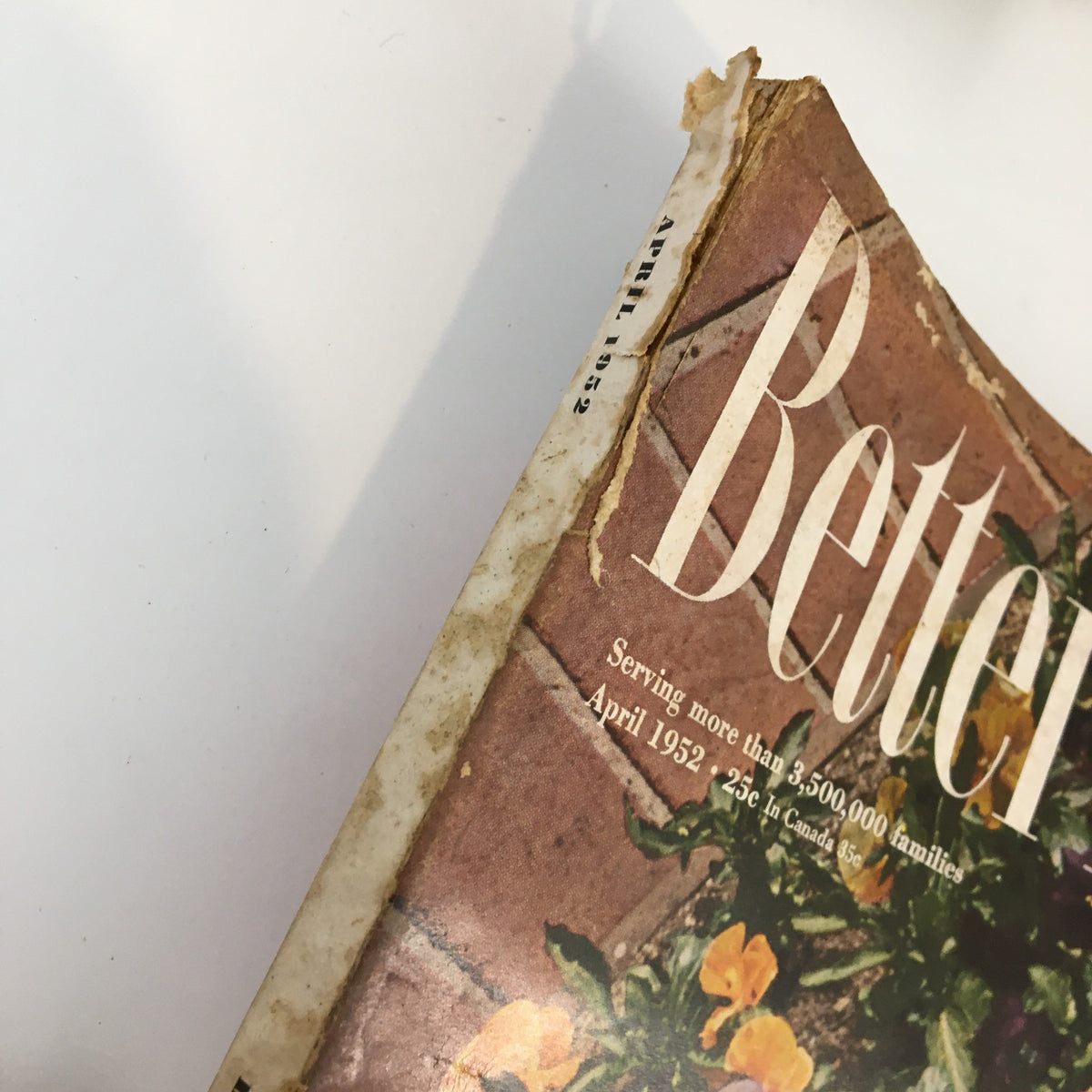
- Condition notes describe good shape with minor wear throughout and some wear on the binding.
- Comes with a plastic protective covering, indicating preservation-minded storage after publication.
- Specific interior article titles beyond the “quickest bloom” gardening feature are not confirmed from the listing, so no additional article names are assumed here.
Condition & Rarity
Collector evaluation of this issue should account for its reported good shape, minor overall wear, no-label presentation, binding wear, and included plastic protective covering. The lack of a newsstand label is meaningful because cover presentation matters for home and garden magazines, especially issues collected for seasonal themes, illustration, or mid-century design. Binding wear is a notable condition factor because older household magazines were often read repeatedly, stored in kitchens or living rooms, clipped for recipes or garden advice, and handled as practical reference material rather than preserved as collectibles. The protective covering noted in the listing can help reduce further handling damage, but any surviving example should still be reviewed for spine stability, page completeness, edge wear, paper toning, interior markings, clipped pages, and the clarity of garden-related illustrations or photographs. For a gardening-focused issue, complete readable pages are especially important because much of the collector value comes from the period advice and visual documentation. A no-label example with protective storage is especially useful for collectors who value both clean presentation and long-term reference quality.
Looking for More Issues Like This?
The April 1952 “How To Get The Quickest Bloom” issue is a strong reference point for collectors interested in mid-century gardening, seasonal home advice, and postwar domestic magazine culture. Related issues can be explored through the broader Better Homes & Gardens Magazine collection, where readers can compare gardening, decorating, cooking, and home-improvement themes across different decades. Browsing multiple issues can help reveal how the magazine followed the yearly rhythm of household life, from spring planting to summer entertaining and winter interiors.
For wider historical context, the 1952 magazine archive helps place this issue alongside other home, lifestyle, news, entertainment, and specialty magazines from the same year. Looking across 1952 can help collectors understand how magazines documented the rhythms of postwar home life, from spring gardens to household design and everyday domestic planning. That broader view is especially useful for collectors who study vintage magazines as records of everyday life, not only as individual collectibles.