



Description
Collector's Note – Why This Issue Matters
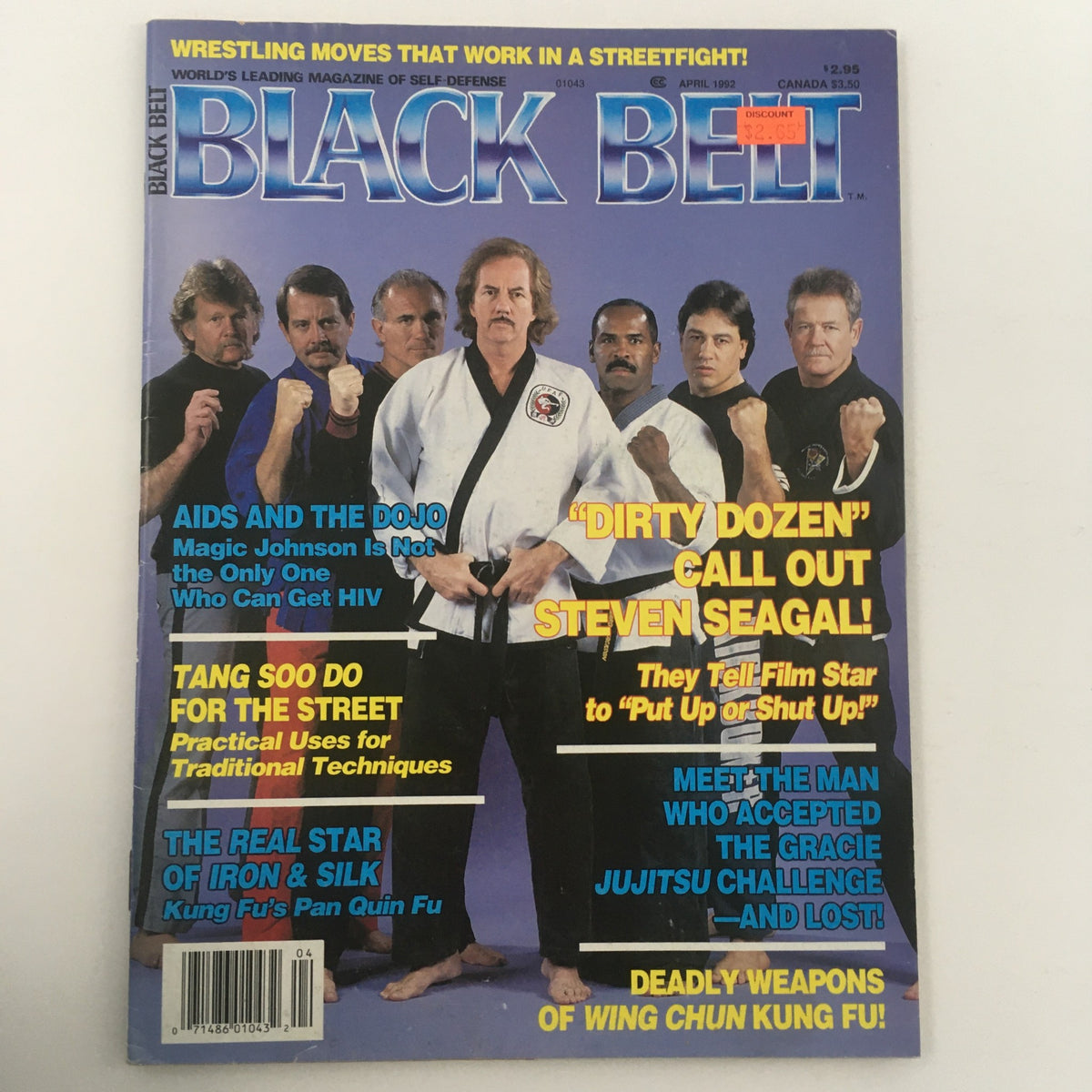
Black Belt magazine from April 1992 belongs to a period when martial arts cinema and traditional martial arts publishing were strongly connected in American popular culture. The listing identifies the issue with a “Dirty Dozen Call Out Steven Seagal” feature, placing it squarely in the early-1990s moment when Seagal was one of the most visible martial arts action stars in Hollywood. For collectors of vintage Black Belt magazine issues, this issue is meaningful because it reflects how martial arts magazines responded to screen figures whose public images were tied to combat skill, authenticity, and cinematic persona. It also shows how magazines like Black Belt served as a meeting point between dojo culture, action-film fandom, and debates about real martial arts credibility. That overlap is one of the defining qualities of martial arts publishing in the early 1990s.
The April 1992 date matters because Steven Seagal’s mainstream profile was especially strong during this period. His films had helped popularize aikido-influenced action choreography for a broad moviegoing audience, and martial arts publications often examined the overlap between film image and real-world martial arts credibility. The “Dirty Dozen Call Out” phrasing suggests a challenge-oriented or debate-driven feature, though the exact article text and conclusions are not confirmed from the listing. That uncertainty should be preserved, because the issue’s confirmed importance rests on its date, publication title, Steven Seagal association, newsstand format, and stated condition details. In collector terms, the feature title alone helps identify the issue within Seagal-related martial arts magazine history, while avoiding unsupported claims about the article’s specific arguments.
As part of the broader field of original magazines from 1992, this issue captures a moment when martial arts were highly visible in film, training culture, fitness, self-defense, and celebrity media. Black Belt served as an important bridge between serious practitioners and readers drawn to martial arts through action cinema. This April 1992 issue reflects that bridge: it connects a major Hollywood martial arts figure to the magazine’s broader world of training techniques, personalities, photography, and martial arts debate. For collectors, it is a useful artifact of how early-1990s martial arts culture negotiated the relationship between screen fame and combat credibility. It also preserves the tone of a pre-internet martial arts media environment, when magazine features could shape public conversation around fighters, actors, instructors, and reputations.
About the Publication
Black Belt is one of the best-known martial arts magazines, long associated with coverage of karate, kung fu, taekwondo, judo, aikido, kickboxing, weapons training, self-defense, tournament competition, martial arts philosophy, and action cinema. Its readership has traditionally included students, instructors, competitors, film fans, and collectors interested in both practical training and the public image of martial arts. By the early 1990s, the magazine occupied a distinctive position in the martial arts world, combining instructional content, personality features, interviews, photography, and commentary on the stars who brought martial arts to mainstream audiences. For modern collectors, issues from this period preserve the language, debates, visual style, and pre-internet fan culture that shaped how martial arts were discussed before online forums and digital video archives changed the field. The magazine’s importance also comes from its ability to treat martial arts as both discipline and culture, covering technique alongside the personalities who made the arts visible to the public. That dual role is why Black Belt remains a key title for collectors of martial arts history.
Key Highlights Inside
- April 1992 issue of Black Belt magazine, representing martial arts publishing during a major period for action cinema and celebrity martial artists.
- Identified in the listing with the feature phrase “Dirty Dozen Call Out Steven Seagal.”
- Connected to Steven Seagal’s early-1990s period of major visibility as a martial arts action star.
- Represents Black Belt during a time when martial arts magazines covered both traditional training culture and action-cinema personalities.
- The listing notes candid articles, insights into martial arts figures, fascinating articles, and photography, though specific interior article titles beyond the Seagal-related feature are not confirmed here.
- Newsstand issue with a front price sticker, an important condition and presentation detail for collectors.
- Condition details include very good to excellent condition, minimal wear typical for age, and preservation in boarded plastic.
- Relevant to collectors who study Black Belt by cover subject, Steven Seagal appearances, martial arts film culture, newsstand format, or early-1990s combat media.
Condition & Rarity
Collector evaluation for the April 1992 Black Belt issue should focus on its stated very good to excellent condition, newsstand status, minimal age-related wear, front price sticker, and boarded plastic protection. The price sticker is an important note because it affects the front-cover presentation, especially for collectors who prefer completely clean covers, but it can also serve as evidence of original retail handling. Minimal wear is a positive condition detail for a martial arts magazine from the early 1990s, since issues were often actively read by students, fans, and practitioners. The boarded plastic protection noted in the listing is useful for maintaining shape, limiting surface rubbing, and reducing further handling stress. For a Steven Seagal-related issue, the most important preservation factors are cover clarity, page completeness, spine stability, clean interior pages, and whether the Seagal feature remains intact and readable within the full magazine context. Because martial arts magazines were frequently used as both entertainment and practical reference material, well-preserved examples can be harder to find than their publication date might suggest. A very good to excellent newsstand issue with only minimal wear remains desirable when the cover and contents retain strong structural integrity.
Looking for More Issues Like This?
This April 1992 Steven Seagal-related Black Belt issue is the kind of martial arts magazine that appeals to collectors interested in action-cinema figures, early-1990s training culture, and well-preserved newsstand examples. Related material can be explored through the broader Black Belt magazine collection, where collectors can compare cover subjects, training features, film coverage, and martial arts personalities across different years. Looking at nearby issues can also help show how the magazine followed Steven Seagal’s public image and the larger action-film landscape of the period.
For readers focused on the year itself, the 1992 magazine collection offers a useful way to place this issue within the wider print culture of the early 1990s. Looking across original magazines from 1992 helps show how martial arts, film, fitness, celebrity, and action entertainment were being documented during a period when martial arts cinema had strong mainstream visibility. That broader year-based context can make a single Black Belt issue more meaningful as part of the larger record of early-1990s action culture and martial arts media.