

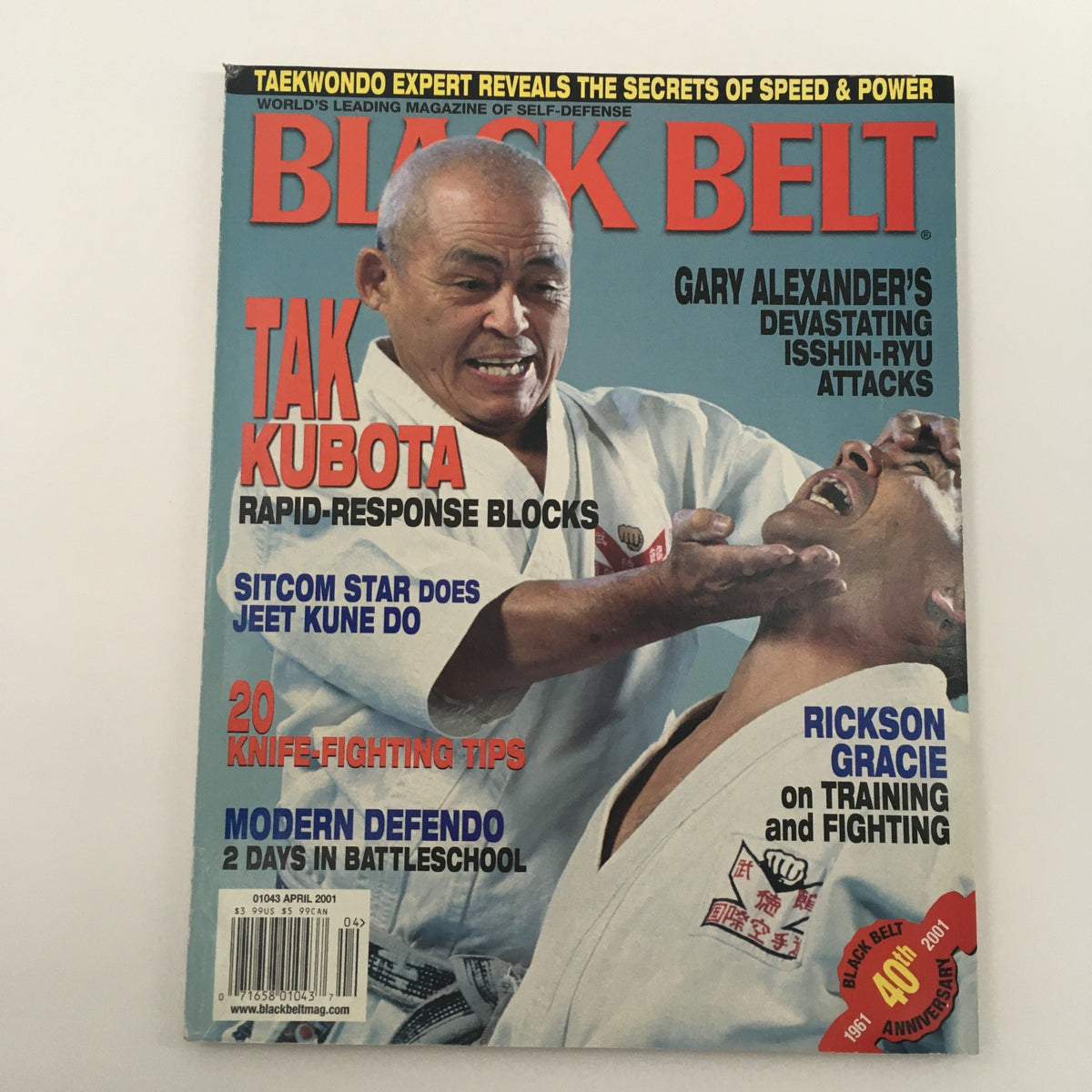


Description
Collector's Note – Why This Issue Matters
Black Belt from April 2001 reflects a moment when traditional karate systems were being revisited for a new generation of readers at the start of the twenty-first century. A feature built around Gary Alexander's Isshin-Ryu attacks gives the issue a clear technical identity. For collectors, that matters because style-specific issues often preserve more than general martial-arts enthusiasm; they document how a particular lineage, set of techniques, or training philosophy was being interpreted in print at a specific moment. In that sense, this issue belongs to the long tradition of martial-arts magazines serving as both instructional media and historical record.
The Isshin-Ryu focus is especially important. By 2001, readers of martial-arts magazines were navigating a landscape shaped by both traditional systems and the growing visibility of newer combat-sports culture. An issue centered on Isshin-Ryu stands as a reminder that classical and lineage-based karate remained central to the enthusiast press. Readers exploring the broader run of Black Belt magazines will recognize how often the publication returned to style-specific technique, respected instructors, and practical applications. Within the wider context of magazines published in 2001, this issue captures how traditional karate was still being presented with authority and relevance in a changing martial-arts culture.
For serious collectors, the appeal lies in that balance between continuity and transition. A date-specific issue like April 2001 preserves the editorial voice of an era when magazines were still a major source of technical instruction, but were also responding to a broader and more fragmented martial-arts audience. That makes this issue useful not only for followers of Isshin-Ryu, but for anyone studying how established karate traditions were framed in the early 2000s.
About the Publication
Black Belt was one of the most prominent American martial-arts magazines, created for practitioners, instructors, hobbyists, and readers interested in combat disciplines, training culture, and influential figures across the martial arts. Its editorial format typically combined technique features, interviews, style spotlights, historical context, and broader personality-driven coverage. By 2001, it remained an important print forum for readers who wanted both practical material and a wider sense of what mattered across the martial-arts world.
Key Highlights Inside
- A feature centered on Gary Alexander's Isshin-Ryu attacks, as identified in the title and description.
- Editorial emphasis on Isshin-Ryu technique and philosophy, as described in the listing.
- A useful early-2000s snapshot of how traditional Okinawan-derived karate systems were being presented in mainstream martial-arts publishing.
- A representative example of Black Belt's long-running technique-driven editorial style.
- Newsstand status, which adds collector interest because it indicates a retail-sold copy rather than a subscriber-mailed example.
Condition & Rarity
From a collector's standpoint, surviving copies of this issue are judged on cover presentation, spine integrity, page quality, edge wear, and distribution type. The listing describes a good example with minor wear, possible slight rips or marks, no labels or marks, and bagged-and-boarded storage in boarded plastic. For periodical collectors, a newsstand copy without an address label is especially desirable because it usually offers a cleaner front-cover presentation than a mailed subscriber issue. Protective storage is also a meaningful preservation detail for glossy early-2000s martial-arts magazines, which can still develop edge rubbing, bends, and handling wear over time.
Looking for More Issues Like This?
April 2001 is the kind of issue collectors often look for when tracing the print history of traditional karate coverage in the modern era. Readers who want to continue in that direction can browse the wider Black Belt collection, which helps place this issue within the magazine's broader editorial run. It is also worth exploring the larger group of 2001 magazines, since the year-by-year context often makes a specialized issue like this even more meaningful.