
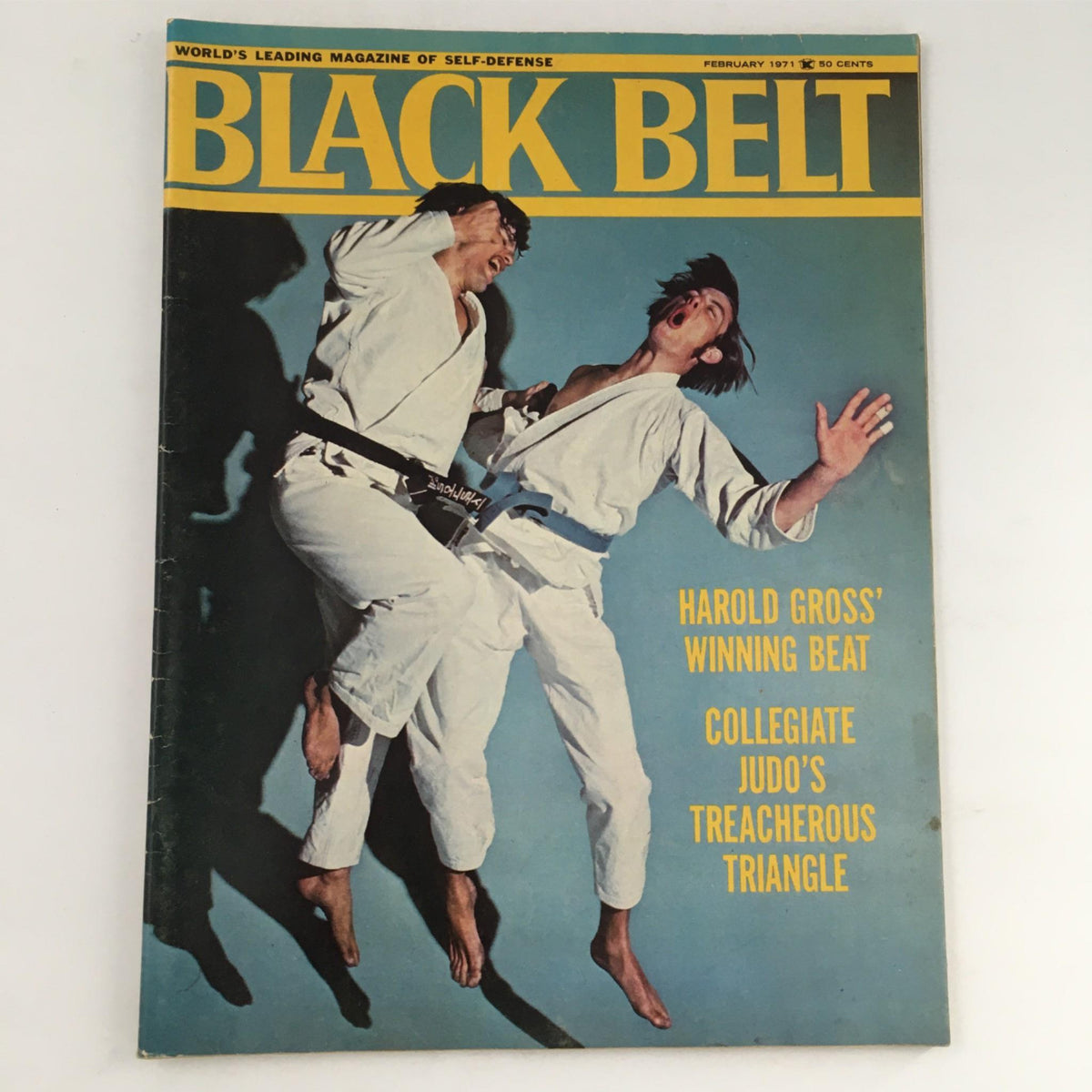


Description
Collector's Note – Why This Issue Matters
Black Belt magazine from February 1971 belongs to a revealing period in American martial arts history, when the subject was moving out of specialized schools and small practitioner circles and into broader popular awareness. In the early 1970s, martial arts publishing still had a distinctly insider tone. Magazines like Black Belt were not yet simply riding a mass-market trend; they were helping define how readers understood technique, rank, discipline, self-defense, and the personalities who gave the movement its authority. That makes issues from this period especially valuable to collectors who want to study the culture before martial arts became a much larger commercial phenomenon later in the decade.
This February 1971 issue carries added interest because the listing identifies Harold Gross and Jay Friedman, placing the magazine within a network of practitioners and personalities who mattered to dedicated readers of the time. Even when a cover does not feature the most famous crossover stars, issues like this often become important reference points because they preserve the names, teaching perspectives, and editorial priorities that shaped serious martial-arts discourse. For collectors building a run of early Black Belt magazines, this issue helps document the magazine's role as a record of martial arts in America just before the field experienced a major surge in mainstream visibility.
There is also something distinctive about the date itself. A February 1971 issue sits at the front end of a year that still feels closely tied to the late 1960s martial-arts world, with its blend of traditional training values, tournament culture, and growing public curiosity. That transitional quality gives this issue a strong archival appeal. It reflects a moment when readers were looking to magazines not just for entertainment, but for guidance, validation, and a sense of connection to a fast-developing community. Within the wider landscape of 1971 magazines, it stands as part of a broader print record of how specialized enthusiast publishing captured changing cultural interests at the start of the decade.
About the Publication
Black Belt was one of the most important martial-arts magazines published in the United States, serving a readership that included active students, instructors, competitors, collectors, and general enthusiasts. Its audience spanned a wide range of experience levels, from beginners learning basic terminology to advanced practitioners interested in schools, systems, philosophy, and tournament developments. In practical terms, the magazine functioned as both an educational resource and a cultural meeting point for people trying to follow the martial arts world before the internet or modern video media existed.
Editorially, the magazine was known for combining personality profiles, technical or instructional material, self-defense themes, commentary on training culture, and coverage of notable figures across different martial traditions. That mix helped it stand apart from more general sports or men's magazines of the era. By 1971, Black Belt had already established itself as a serious title with a recognizable voice, one that documented not only martial arts as physical practice but martial arts as identity, discipline, and evolving American subculture. For researchers and collectors, that breadth is part of what makes vintage issues worth preserving.
Key Highlights Inside
- The provided listing identifies Harold Gross and Jay Friedman as the principal names associated with this February 1971 issue, making them the clearest documented subjects tied to the magazine.
- As an early-1970s issue of Black Belt, the magazine likely reflects the publication's core editorial interests of the period: practitioner-focused coverage, profiles of respected martial-arts figures, and discussion shaped by technique, philosophy, and training culture.
- This issue is useful to collectors studying the period just before martial arts reached a much broader American audience, when specialist magazines still carried much of the field's authority and historical memory.
- The listing describes the magazine as featuring prominent martial-arts figures and presenting a glimpse into the techniques and beliefs of the time, which aligns with the kind of historically minded, practitioner-centered coverage for which Black Belt was known.
- The exact interior table of contents is not confirmed from the material provided here, so any more detailed claims about specific departments, interviews, or article titles should be verified directly from the issue itself rather than assumed.
Condition & Rarity
The listing describes a surviving example with no label, a plastic protective covering, and generally good condition with minor wear typical of an older periodical, including small rips and edge creases. In collector terms, the absence of a mailing label is a meaningful point because it preserves the front cover presentation and can make an issue visually cleaner for display or archival shelving. A protective covering also suggests that preservation has at least been considered, which matters for magazines from this era that were often handled, stacked, and reread rather than stored as future collectibles.
Wear such as light creasing and small edge flaws is not unusual for a 1971 martial-arts magazine, especially one that may have been used as a practical reference rather than kept untouched. What matters most in evaluating any surviving issue is the overall integrity of the spine, completeness of the pages, stability of the binding, legibility of text and photographs, and the absence of more serious problems such as moisture exposure, detached wraps, or major tears. Early niche magazines can be harder to locate in consistently well-preserved condition because they were often read closely by enthusiasts and retained for content rather than treated as collectibles at the time of publication. For that reason, even modestly worn but complete examples can still hold solid collector interest.
Looking for More Issues Like This?
February 1971 is the sort of issue that tends to matter more over time, especially for collectors trying to map the development of martial-arts media before its biggest boom years. Individual copies may be elusive, but the real value often comes from seeing where an issue fits within the larger editorial run. Exploring the broader Black Belt collection makes it easier to trace how the magazine's visual style, featured instructors, and subject matter changed from one year to the next.
It also helps to place the issue within the wider print culture of its moment. Browsing other 1971 magazines can show how specialized enthusiast titles sat alongside the broader publishing world of the same year, giving added context to what readers were seeing, collecting, and discussing at the time.
Collectors who return to this title again and again are usually responding to that sense of continuity. Each issue captures a small piece of a larger story, and together they form one of the most useful printed records of how martial arts were discussed, taught, and presented to enthusiasts in the United States.