



Description
Collector's Note – Why This Issue Matters
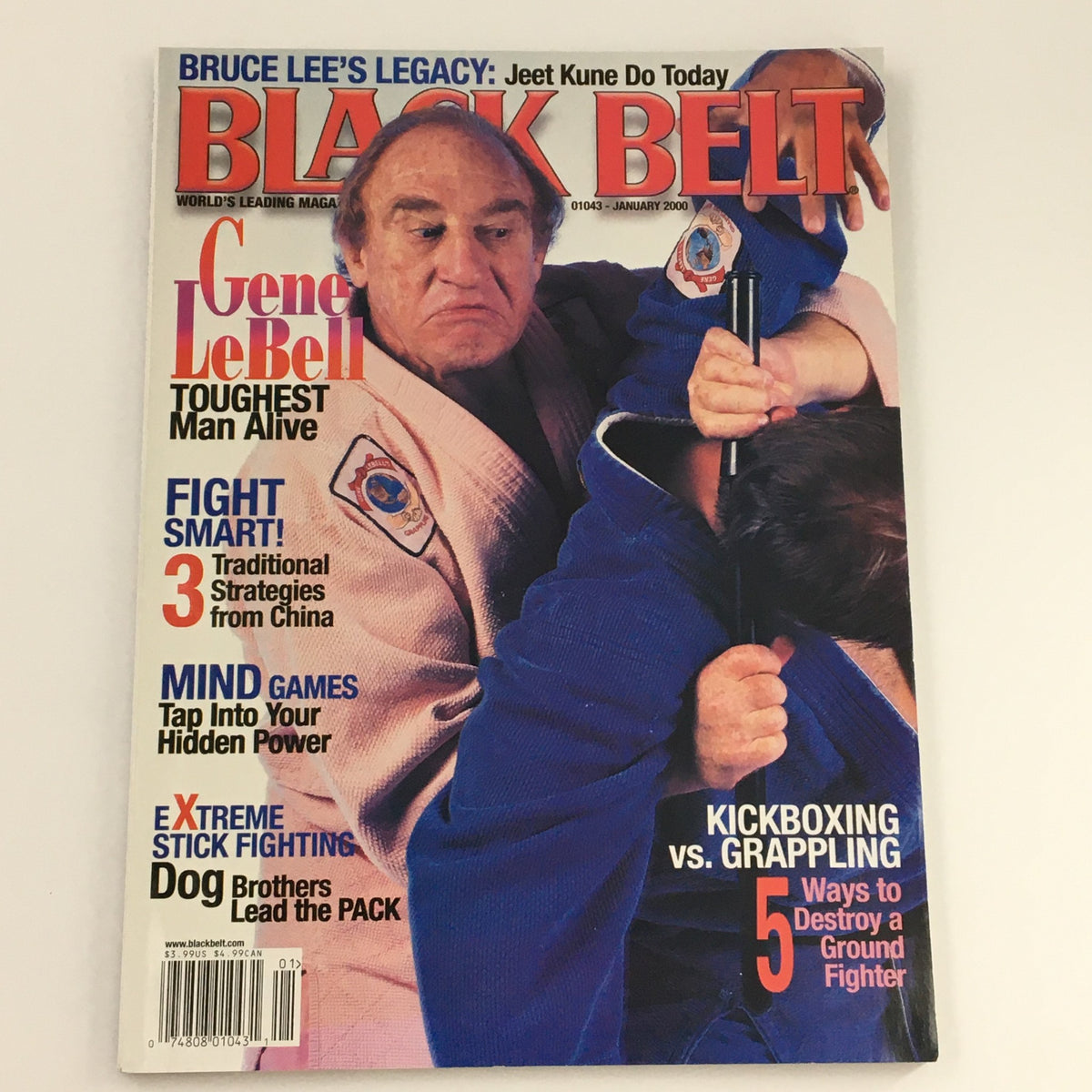
The January 2000 issue of Black Belt captures a fitting turn-of-the-millennium subject in Gene LeBell, a figure whose career linked judo, professional wrestling, self-defense instruction, and Hollywood stunt work. By the time this issue appeared, LeBell had already become one of the most recognizable crossover names in American martial arts culture, known not only for his competitive background but also for the unusual breadth of his influence across grappling, film, and combat-sports training. A cover billing him as “Toughest Man Alive” fits the public image he had carried for decades.
The date matters because January 2000 sits at the edge of a major shift in martial arts media. The late 1990s had already pushed grappling and mixed-style combat into wider public view, and LeBell’s legacy suddenly looked even more contemporary than nostalgic. He belonged to an older generation of martial artists, yet many of the skills and ideas associated with him—cross-training, realism, submission grappling, and practical fighting—were becoming central to how a new generation understood combat sports. Within the broader run of vintage Black Belt magazines, this issue works as a bridge between old-school martial arts authority and the modern era that was coming into focus.
For collectors, Gene LeBell is compelling precisely because he resists narrow categorization. He was an AAU judo champion, a professional wrestler, a stunt performer, and a teacher whose name appears repeatedly in martial arts history. That makes this January 2000 issue more than a personality cover. It is a record of how martial arts publishing chose to frame one of its most durable and unconventional legends at a moment when the culture was rethinking what “toughness” and martial credibility meant. Seen alongside other 2000 magazines, it also reflects the way specialized magazines were preserving lineage and reputation just as the new century began.
About the Publication
Black Belt was one of the central American martial arts magazines of the postwar era, and by 2000 it was already widely established as a monthly title serving readers across many different systems and training philosophies. Google Books describes it as “the oldest and most respected martial arts title in the industry,” aimed at martial artists of all levels and covering self-defense styles, techniques, and strategies from around the world. That broad editorial scope is important here, because it explains why a figure like Gene LeBell fit the magazine so well: Black Belt was designed not only for style-specific instruction, but also for personalities, history, and larger debates about martial effectiveness.
Key Highlights Inside
- January 2000 issue of Black Belt, identified in the source listing by its Gene LeBell cover and the phrase “Toughest Man Alive.”
- Especially relevant to collectors interested in judo, grappling, professional wrestling crossover history, and old-school self-defense culture.
- Gene LeBell’s significance comes from his unusually broad martial arts résumé, including national judo success, professional wrestling, stunt work, and long-term influence on later generations of fighters and trainers.
- The raw listing broadly describes the issue as touching on martial arts, self-defense techniques, and insights from recognized practitioners, which aligns with Black Belt’s established editorial format.
- Its strongest historical value lies in documenting how Black Belt framed LeBell at the turn of the millennium, when older martial lineages were being reconsidered through the lens of modern combat sports.
- Specific article titles and full interior departments are not confirmed from the source listing alone and should be verified from a contents page or complete interior review.
Condition & Rarity
The source description presents the issue as a newsstand example in very good condition, bagged and boarded, with no visible wear noted. In collector terms, a newsstand copy is generally preferred because it preserves the cover without a mailing label, which improves visual presentation and cover-based cataloging. Bagging and boarding are also positive preservation measures, especially for late-period glossy magazines whose corners, spine edges, and cover surfaces can pick up storage wear even when the interiors remain clean. Serious evaluation of any surviving copy would still depend on page completeness, spine integrity, staple security, gloss retention, corner stress, and whether pressure marks or handling impressions affect display quality. For a 2000 issue like this, collector appeal usually comes less from age alone than from the combination of strong subject matter, clean survival, and clear newsstand presentation.
Looking for More Issues Like This?
Issues like this are often most revealing when viewed across a broader run, because Black Belt built its identity over time through changing cover choices, training emphases, and the way it introduced important martial artists to readers. Anyone interested in this January 2000 Gene LeBell issue will usually get the clearest context by comparing it with other issues from the same title.
The broader Black Belt collection is the natural place to continue that exploration, while the 2000 magazine collection helps place it in the wider print culture of the year. Seen in that larger frame, this issue becomes part of a broader record of how martial arts publishing carried older legends into a new century.