

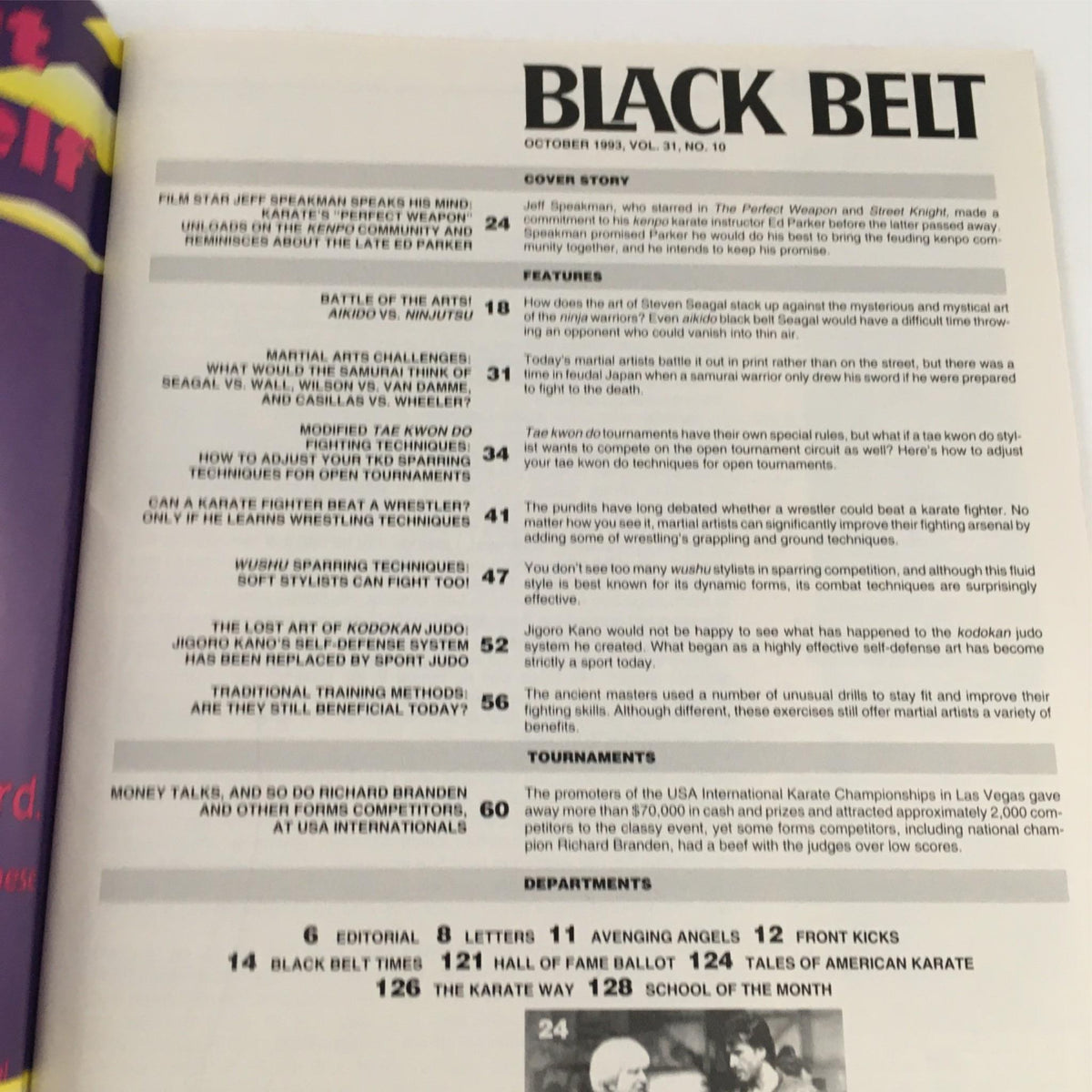


Description
Collector's Note – Why This Issue Matters
Black Belt from October 1993 belongs to a revealing moment in martial arts culture, when traditional magazine publishing was beginning to overlap more visibly with film, fitness, and a broader mainstream audience. The listing identifies Jeff Speakman and Kathy Long as the key names associated with the issue, and that pairing alone makes the magazine historically interesting. It brings together two figures who represented different but related sides of early-1990s martial arts visibility: the screen-ready expansion of martial arts into action entertainment and the growing public recognition of elite female fighters and instructors.
The date matters because 1993 sits in a period when martial arts media had moved well beyond niche dojo readership without yet losing its specialist identity. A title like Black Belt was still speaking directly to practitioners, but it was also documenting a wider cultural moment in which martial artists could become public personalities. For readers exploring the longer run of Black Belt magazines, this issue reflects how the magazine balanced practical credibility with the era's fascination for recognizable names and crossover appeal.
It also fits naturally into the wider print culture of its year. Seen alongside other magazines from 1993, this issue captures a moment when martial arts were being framed not only as discipline and technique, but also as part of a larger conversation about performance, competition, image, and media presence. That combination gives the issue lasting value as a reference document rather than just a period collectible.
About the Publication
Black Belt was one of the foundational American martial arts magazines, aimed at practitioners, instructors, students, and enthusiasts interested in training, self-defense, personality profiles, style coverage, and developments across the martial arts world. By the early 1990s, the magazine had a long-established editorial formula that blended practical instruction with feature writing and broader cultural reporting. That mix is part of what makes vintage issues so useful to collectors: they preserve not only named martial artists, but also the language, priorities, and visual presentation of martial arts culture in a given era.
Key Highlights Inside
- The provided listing identifies Jeff Speakman and Kathy Long as the principal names associated with this October 1993 issue.
- The issue belongs to a period when Black Belt was documenting both established training culture and the increasing visibility of martial artists in mainstream media.
- Jeff Speakman had already become widely recognizable in the early 1990s through martial arts film work, which gives his presence in a 1993 issue particular period value.
- Kathy Long's inclusion points to the growing recognition of female martial artists in 1990s combat-sports and training culture.
- The exact interior table of contents is not confirmed from the material provided here, so more specific claims about article titles, interviews, or departments should be verified directly from the issue itself rather than inferred.
Condition & Rarity
The listing describes a no-label example in very good to excellent condition with minimal wear and a protective plastic covering. In collector terms, the absence of a label is usually favorable because it preserves the cover presentation without subscriber markings. Minimal wear is also notable for a 1993 martial arts magazine, since many surviving copies were read, shelved, and handled rather than preserved as archival items from the beginning. A protective sleeve is a meaningful preservation detail, but the key factors collectors would usually evaluate in any surviving example remain cover brightness, page completeness, binding stability, corner and edge integrity, and the absence of moisture damage, tears, or handling stress. For a magazine tied to recognizable martial arts personalities, visual presentation often matters almost as much as technical grade.
Looking for More Issues Like This?
October 1993 becomes even more interesting when placed within the larger editorial run of the magazine. Readers who want to follow that broader story can explore other Black Belt issues to see how the title covered changing personalities, styles, and trends across different decades.
It also helps to place the issue among other magazines from 1993, where its blend of martial arts credibility and crossover visibility becomes easier to appreciate. That wider context often gives a single issue much more depth as a historical reference point.