



Description
Collector's Note – Why This Issue Matters
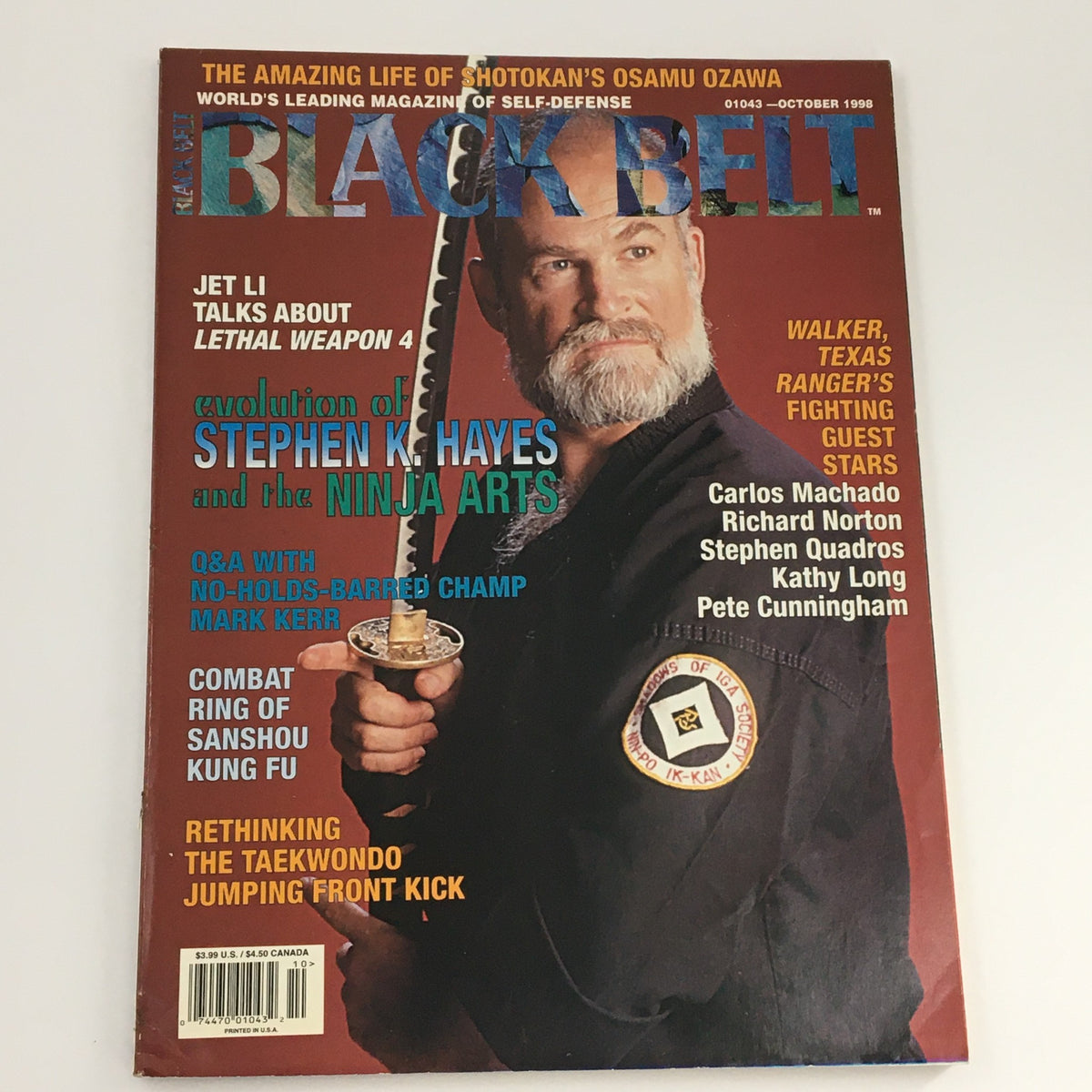
The October 1998 issue of Black Belt magazine captures a revealing moment in late-1990s martial arts culture, when American practitioners were increasingly interested not just in technique, but in lineage, personal development, and the long-term influence of recognized teachers. A cover focus on Stephen K. Hayes places this issue squarely within that conversation. By 1998, Hayes had already become one of the most recognizable American figures associated with the interpretation and teaching of Japanese ninja traditions and related martial disciplines, making his career a subject of real historical significance for readers following how martial arts knowledge moved from Japan into the English-speaking world. That gives this issue importance beyond a single profile. It marks a point when one of the field's best-known intermediaries between cultures was being reconsidered in a mature stage of his public career.
The date matters because the martial arts world of the late 1990s was in a more reflective phase than the boom years that came before it. The heightened commercial fascination with ninja culture that defined parts of the 1980s had already passed, and readers were better positioned to separate fad from lasting influence. In that environment, an issue built around “The Evolution of Stephen K. Hayes” suggests more than simple name recognition. It points to a retrospective interest in how a once-explosive martial arts movement had settled into a longer historical narrative. For collectors of 1998 magazines, this issue documents a moment when martial arts publishing was looking backward and forward at the same time: preserving the legacy of major figures while reassessing what their contributions meant to contemporary practice.
It also matters because Black Belt had long served as one of the central English-language publications for documenting martial arts personalities, systems, schools, and debates. When the magazine gave cover space to a figure like Hayes, it signaled that his role in shaping Western awareness of Japanese martial traditions remained important enough to revisit in depth. Issues like this help show how martial arts authority was presented to readers in print: through biography, reputation, technical legitimacy, and philosophical framing. For anyone studying the history of vintage Black Belt issues, this edition offers a useful reference point for understanding how the magazine interpreted influence at the close of the twentieth century. It preserves not only the subject of the profile, but also the editorial priorities of the era itself. That makes it valuable as both a martial arts document and a period piece from a highly specialized publishing culture.
About the Publication
Black Belt was one of the most established and widely read American martial arts magazines, aimed at practitioners, instructors, students, and enthusiasts seeking a serious print source on the fighting arts. Its readership extended across styles and traditions, which gave the publication a broad editorial reach unusual for a niche title. Rather than limiting itself to one system, the magazine typically covered karate, taekwondo, kung fu, jujutsu, ninjutsu, self-defense, weapons traditions, and the philosophies surrounding training and discipline. Its editorial format usually blended personality profiles, instructional content, commentary on martial arts history and ethics, and reporting on developments within the wider community. By the 1990s, Black Belt had become a long-running reference point for English-speaking readers who wanted more than promotional school literature or fleeting newsstand coverage. It functioned as both a practical guide for active practitioners and a documentary record of who mattered in martial arts culture at a given moment. That dual identity is part of what makes individual issues so useful to collectors and researchers today.
Key Highlights Inside
- Cover feature on “The Evolution of Stephen K. Hayes,” as stated directly in the listing.
- Centers on a martial artist widely associated with introducing and interpreting Japanese ninja traditions for Western readers and practitioners.
- Reflects the late-1990s martial arts interest in legacy, adaptation, and how influential teachers changed over time rather than remaining frozen in their earlier public image.
- Documents how Black Belt continued to use major profile pieces to frame authority and long-term relevance within the martial arts world.
- Represents a period when martial arts magazines were balancing biography, philosophy, and training culture for an audience that had grown more historically aware.
- Provides a time-specific reference point for collectors interested in how Stephen K. Hayes was being presented in mainstream martial arts publishing in 1998.
Condition & Rarity
The listing describes an excellent to very good surviving example, with no visible age-related wear noted, a newsstand designation, and bagged-and-boarded storage for protection. In collector terms, the newsstand detail matters because it indicates retail distribution rather than a subscriber-mailed copy, which can affect both eye appeal and collector preference. Copies sold on newsstands often avoid address labels, subscription marks, and some of the handling patterns associated with mailed issues, although they can still show shelf wear from display and browsing. Bagging and boarding are also meaningful preservation notes, especially for glossy late-1990s magazines that can develop edge wear, corner softening, surface scuffs, or pressure marks if stored carelessly over long periods.
When evaluating any surviving copy of this issue, collectors would typically look for clean cover gloss, firm spine structure, strong staples or binding, sharp corners, flat pages, and the absence of moisture damage, label residue, or storage impressions. Because magazines from the 1990s were often kept for reading rather than for archival preservation, truly well-kept examples can stand out through small details of presentation. The “like new” language in the raw listing should be read as descriptive rather than technical grading, but it does suggest a notably well-preserved example within the normal expectations of the market. For a title like Black Belt, condition matters not only aesthetically but also historically, since clean copies preserve advertisements, editorial design, and production values that are part of the magazine's documentary value. In other words, preservation is not just about appearance; it is part of how the issue communicates its original cultural moment to later readers.
Looking for More Issues Like This?
For readers interested in martial arts publishing from this period, the broader Black Belt magazine collection offers the best context for where this issue fits within the title's long editorial history. Looking across multiple issues makes it easier to see how the magazine tracked changing trends in technique, philosophy, celebrity instructors, and martial arts identity over time. That broader run is especially useful for anyone researching how certain figures rose, matured, or were reevaluated in print.
The 1998 magazine collection also helps place this issue within the wider publishing culture of its year. Seen in that broader frame, this edition becomes part of a larger story about late-1990s specialty media and the way niche magazines spoke to dedicated audiences with depth and authority. Together, these collections give collectors and researchers a practical way to move beyond a single issue and understand the wider landscape it belonged to. For anyone tracing martial arts history through original periodicals, that context is often just as important as the issue itself.