


Description
Collector's Note – Why This Issue Matters
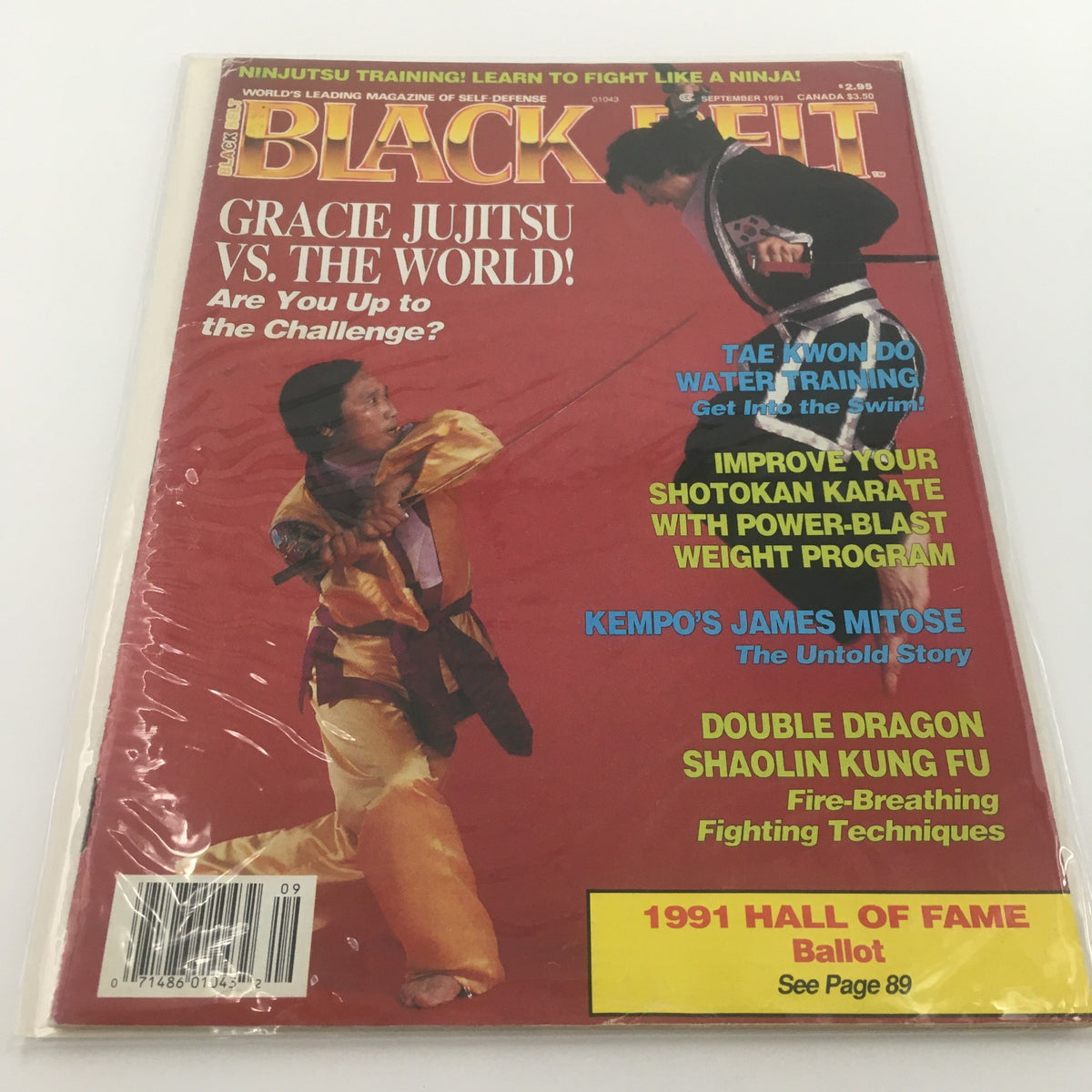
The September 1991 issue of Black Belt belongs to a particularly important moment in martial arts history. By the early 1990s, Gracie Jiu-Jitsu was beginning to move from a relatively specialized subject into a much broader American martial arts conversation. A cover line such as “Gracie Jujitsu vs The World” captures that shift exactly: it reflects a period when style-versus-style debate, realism, and ground fighting were becoming more visible in print before they fully broke into mainstream combat sports culture.
The date matters because September 1991 sits just before the wider public explosion that would come with the early UFC era. Reference sources on mixed martial arts note that the Gracie family’s efforts in the United States during the early 1990s helped bring Brazilian jiu-jitsu to broader North American attention, and Gracie family materials document Rorion Gracie’s teaching and video-production activity in 1991 as part of that expansion. For collectors, that makes this issue more than a standard style feature. It is a printed marker from the moment when Gracie Jiu-Jitsu was being positioned as a challenge to established martial arts assumptions.
Within the broader run of 1991 magazines, this issue stands out because it belongs to the pre-boom phase of a movement that would soon reshape combat sports. Even the surviving period references to this exact issue show how memorable the cover line remained for later readers tracing the rise of Brazilian jiu-jitsu in American martial arts media. That gives the magazine strong archival value for collectors interested in the years just before grappling and style-versus-style competition changed the landscape.
About the Publication
Black Belt was one of the defining American martial arts magazines of the postwar era. It was founded in 1961 by Mitoshi Uyehara and built a long reputation as a broad-based publication covering self-defense systems, training, personalities, history, and developments across many different martial arts. By 1991, it was already an established forum in which practitioners encountered not just their own style, but competing systems and larger arguments about effectiveness, tradition, and innovation. That wide editorial scope helps explain why a cover like “Gracie Jujitsu vs The World” fit so naturally within its pages.
Key Highlights Inside
- September 1991 issue of Black Belt, identified in surviving period references by the cover line “Gracie Jujitsu vs. the World.”
- Especially relevant to collectors interested in the early U.S. rise of Gracie Jiu-Jitsu before the first UFC made the style widely visible to mainstream audiences.
- Its strongest historical value lies in documenting how Black Belt framed the Gracie challenge during a period when style-versus-style debate still carried major editorial force in martial arts magazines.
- The raw listing broadly describes the issue as presenting techniques, contrasting philosophies, and the wider cultural significance of martial arts in the period.
- Because no table of contents is provided here, exact article titles, bylines, and supporting departments should be verified from the issue itself or a contents page rather than inferred beyond the named cover feature.
Condition & Rarity
The source description presents the issue as a good-condition, no-label newsstand example with light wear, slight rips or marks, and bagged-and-boarded plastic protection. In collector terms, newsstand presentation is a meaningful advantage because the cover remains visually unobstructed by an address label. Protective boarding is also a positive preservation detail, especially for a glossy 1991 martial arts magazine whose corners, spine, and cover surface can show handling wear over time. Serious evaluation of any surviving copy would still depend on page completeness, spine integrity, staple security, cover gloss, edge wear, and whether the noted marks materially affect display or readability. For an issue like this, collector appeal usually rests on the strength of the Gracie subject matter, the pre-UFC timing, and the overall quality of survival rather than on age alone.
Looking for More Issues Like This?
Issues like this are often most rewarding when viewed across a wider run, because Black Belt reveals its full importance through the way it tracked changing ideas about technique, realism, and martial arts identity over time. Readers interested in this September 1991 issue will usually get the clearest perspective by comparing it with other Black Belt issues and nearby 1991 magazines.
Seen in that larger frame, this issue becomes part of a broader record of how martial arts publishing documented one of the most important turning points in modern combat-sports culture. For collectors, that wider context is often what makes a single issue especially meaningful.