



Description
Collector's Note – Why This Issue Matters
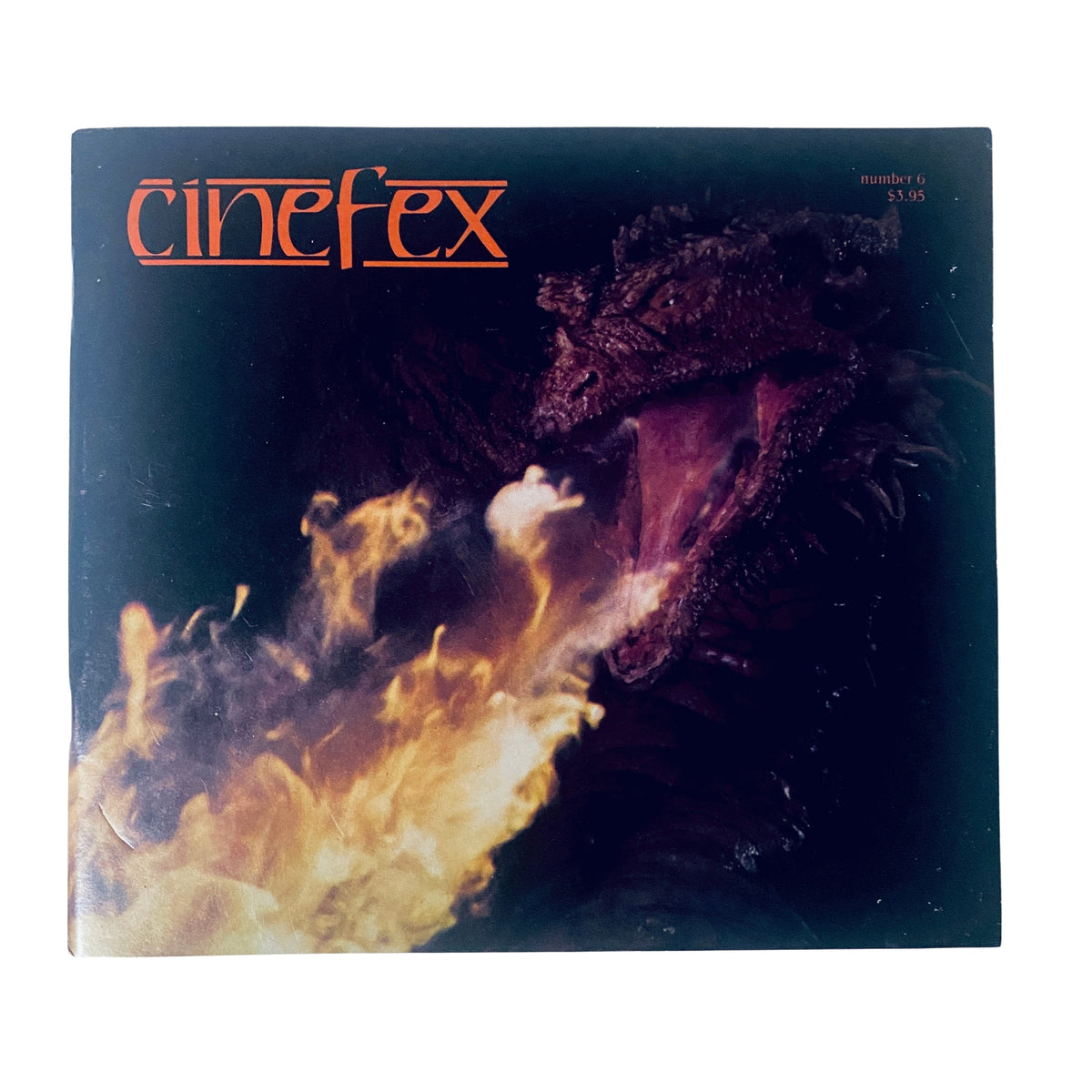
Cinefex Issue No. 6, published in October 1981 and focused on Dragonslayer, is one of the most historically significant entries in the publication's early run — a primary document of two separate but equally consequential technical revolutions in cinema occurring simultaneously, captured in their earliest documented public form. The confirmed "go-motion" feature on Dragonslayer, written by S.S. Wilson with contributions from ILM's Dennis Muren, Phil Tippett, and Ken Ralston, provides the most detailed technical documentation available of go-motion animation at the moment of its development and first major deployment. Go-motion — the technique of mechanically moving a stop-motion puppet during the exposure of each film frame to produce natural motion blur rather than the staccato clarity of traditional stop-motion — was a genuine technical breakthrough, and Dragonslayer's Vermithrax Pejorative remains the most fully realized expression of the technique in cinematic history. The Cinefex feature documenting its creation, with firsthand accounts from the ILM team who developed it, is a primary source of technical film history that no subsequent documentation has superseded. But the issue's other confirmed feature — Peter Sorensen's overview of computer-generated imagery as an emerging field, surveying early advances in computer animation, digital scene simulation, and electronic compositing — may be even more historically significant in retrospect. Published in October 1981, this CGI overview appeared approximately two years before Star Trek II: The Wrath of Khan's Genesis sequence demonstrated CGI's cinematic potential to mainstream audiences, and well before Pixar's short films and Terminator 2's morphing effects made the technology's transformative potential undeniable. For collectors building archives around Cinefex Magazine's complete publishing history, Issue No. 6 documents the precise historical threshold between practical effects' peak and CGI's emergence in the single most important specialist publication for visual effects history.
The confirmed Raiders of the Lost Ark effects feature — Don Shay's examination of the optical and practical effects with contributions from Richard Edlund, Joe Johnston, Bruce Nicholson, and Chris Walas — adds a third historically significant primary source to what is already an extraordinarily rich single issue. Raiders of the Lost Ark had been released in June 1981, just months before this October issue, and the effects documentation appearing here is among the earliest detailed technical accounts of the film's effects work — a movie that would eventually be recognized as one of the greatest action-adventure films ever made. The specific documentation of the climactic Ark sequence's unforgettable optical and practical effects, provided by the ILM practitioners who created them in firsthand accounts to Don Shay, represents primary source technical history of a sequence that has been studied, referenced, and celebrated for more than four decades. An October 1981 Cinefex providing this documentation within months of the film's release gives the issue an immediacy and primary-source authority that later retrospective accounts cannot match. Collectors researching American cinema and visual effects publishing from 1981 will find this issue one of the most substantively documented and historically consequential primary sources from that year's film culture.
The specific practitioner credits across all three features in this issue represent a remarkable concentration of visual effects talent in a single publication: Dennis Muren, Phil Tippett, Ken Ralston, Richard Edlund, Joe Johnston, Bruce Nicholson, and Chris Walas were collectively responsible for some of the most technically significant film work of the following two decades, and their firsthand accounts of their 1981 work — documented at the moment of its creation rather than in retrospect — give this issue a primary-source authority that researchers in visual effects history consistently value.
About the Publication
Cinefex was founded by Don Shay in 1980 as a specialist publication devoted exclusively to the technical craft of motion picture visual effects, filling a niche that no other publication was serving with comparable depth, accuracy, or access to working practitioners. Unlike mainstream entertainment publications, Cinefex engaged directly with the artists, technicians, and supervisors responsible for visual effects work, documenting their methods, innovations, and creative decisions in the kind of technical detail that the film industry's own practitioners recognized as authoritative. By Issue No. 6 in October 1981, the publication had established its editorial identity and its relationship with the visual effects community — a relationship built on trust, technical credibility, and the sustained commitment to serious documentation that made it the definitive archival record of visual effects history from its founding through the digital era. Don Shay's own byline on the Raiders feature in this issue reflects his hands-on editorial involvement in the publication's most significant early entries.
Key Highlights Inside
- S.S. Wilson's Dragonslayer feature with Dennis Muren, Phil Tippett, and Ken Ralston documenting the development of go-motion animation — the first comprehensive technical account of a genuine effects breakthrough, written with direct practitioner access at the moment of the technique's deployment, establishing this as the primary historical source for go-motion's development and the creation of Vermithrax Pejorative.
- Peter Sorensen's CGI overview — "An Apple for the Dreamsmiths" — surveying the emerging field of computer-generated imagery in October 1981: published two years before the first CGI sequence to genuinely impress mainstream film audiences, this article is a primary document of the field at its pre-breakthrough threshold, making it one of the earliest substantive journalistic accounts of what would become the most transformative technology in cinema history.
- Don Shay's Raiders of the Lost Ark effects documentation with Richard Edlund, Joe Johnston, Bruce Nicholson, and Chris Walas — among the earliest detailed technical accounts of a film released just months earlier, providing primary-source documentation of the climactic Ark sequence's effects from the ILM practitioners who created them at the moment closest to the work's completion.
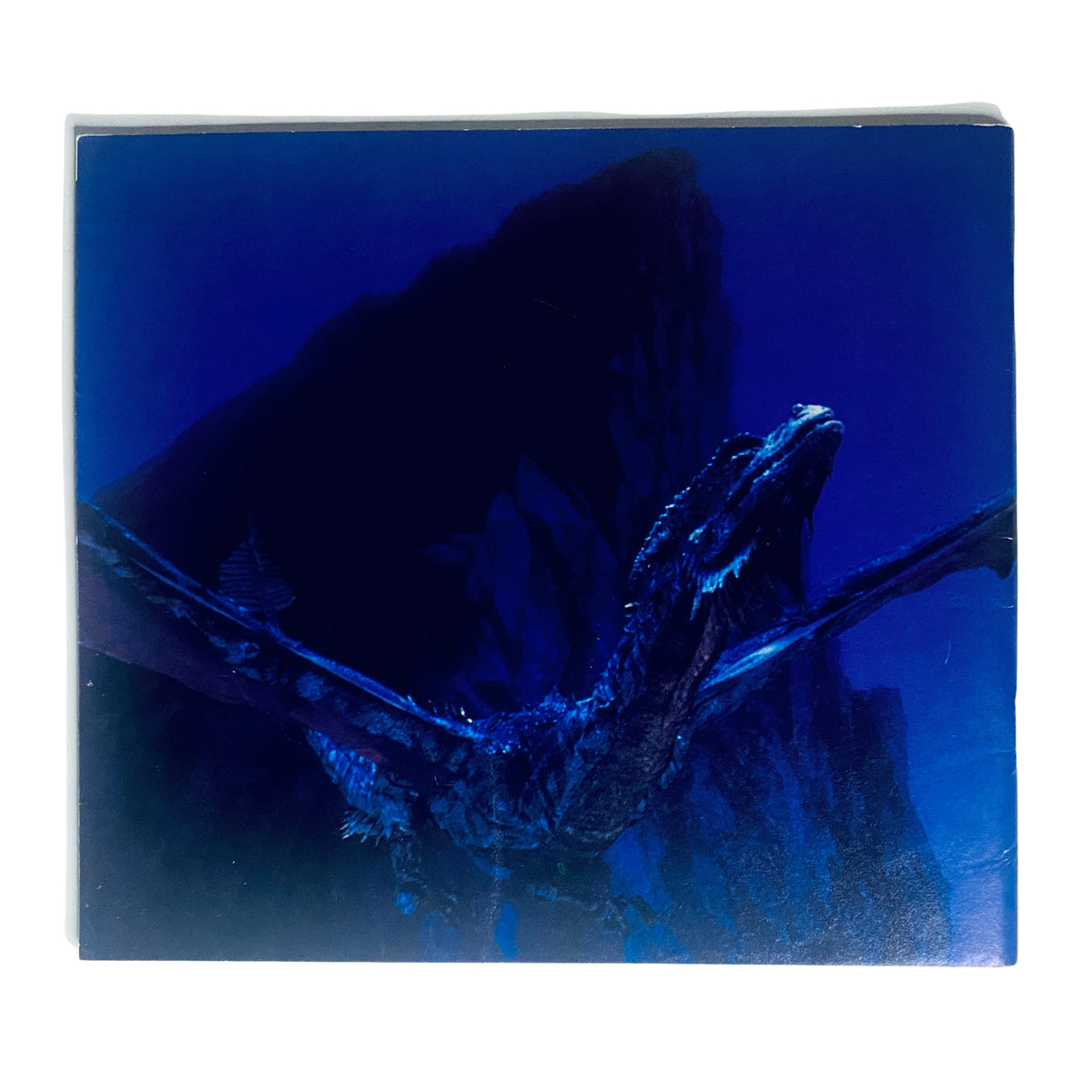
- The confirmed front and back cover imagery of Vermithrax Pejorative from Dragonslayer — the dragon whose creation the issue documents in technical detail — gives surviving copies a visual coherence between cover and content that makes this issue immediately recognizable within the Cinefex archive and within the broader visual effects film history collecting community.
- The concentration of ILM talent across the issue's two primary features — Muren, Tippett, Ralston, Edlund, Johnston, Nicholson, Walas — documents the Industrial Light & Magic team at the moment of their transition from the effects shop that had completed Star Wars and The Empire Strikes Back to the organization that would define visual effects practice for the following two decades.
Condition & Rarity
Surviving copies of this issue are graded at the Very Good level with minor edge wear — a strong condition designation for a forty-four-year-old specialist publication that indicates careful preservation and minimal aging. For a Cinefex from October 1981, Very Good with minor edge wear means a publication that retains cover gloss, spine integrity, and interior page quality without the significant tanning, surface scuffing, or structural damage that affects lower-grade copies from the same era. The confirmed absence of a mailing label indicates newsstand rather than subscriber origin — a meaningful distinction for a specialist publication like Cinefex, which was distributed primarily through specialty film and photography retailers and direct subscription rather than mass-market newsstand channels. The plastic protective sleeve provides appropriate stabilization for a publication of this age, maintaining cover surface quality and preventing further deterioration during handling and storage. Issue No. 6 of Cinefex occupies a specific and sustained collector significance within both the visual effects history collecting community and the broader film memorabilia market — its documentation of go-motion development, CGI's emergence, and Raiders effects work in a single Very Good condition issue is among the most substantively significant combinations of confirmed content in the publication's early archive.
Looking for More Issues Like This?
Cinefex early issues from 1980 through the mid-1980s — particularly those documenting the technical revolutions of the ILM era and the emergence of CGI — are among the most historically significant entries in the publication's complete archive, and Issue No. 6's triple coverage of go-motion, CGI origins, and Raiders of the Lost Ark makes it one of the most content-rich and historically consequential entries from the publication's foundational period. The Cinefex Magazine collection at OriginalMagazines.com is the most focused place to browse available issues across the publication's decades of visual effects documentation. For collectors building a broader picture of American cinema and technical publishing in 1981, the 1981 magazines collection offers a wide cross-section of titles that together capture the full range of that year's American print and film culture at a genuinely transformative moment in cinema history.