





Description
Collector's Note – Why This Issue Matters
The August 31, 1978 issue of Circus belongs to a defining period in late-1970s hard-rock publishing. Its featured names connect two different expressions of the era: the guitar-centered music of Frank Marino and the theatrical spectacle associated with KISS. Rock magazines were then essential sources of artist photography, interviews, tour coverage, and collectible posters, particularly for younger listeners who had limited access to televised performances or specialized music programming. An issue combining Marino with KISS guitarist and vocalist Paul Stanley therefore reflects both musicianship and visual showmanship within the same editorial package. It preserves the way rock personalities were presented to their contemporary audience before music information became instantly available through digital media.
Frank Marino was best known as the guitarist, singer, and leader of the Montreal group Mahogany Rush. His playing drew from hard rock, blues rock, and psychedelic traditions, while his extended performances helped establish his reputation among guitar-focused listeners. In 1978, Marino and Mahogany Rush were active on the international concert circuit and had appeared at California Jam II, giving his magazine prominence a clear connection to the year’s live-rock culture. His presence gives the issue particular relevance to collectors studying the guitar heroes who worked outside the largest mainstream arena-rock acts. It also illustrates the breadth of Circus, which regularly placed heavily promoted stars beside musicians admired especially for instrumental ability.
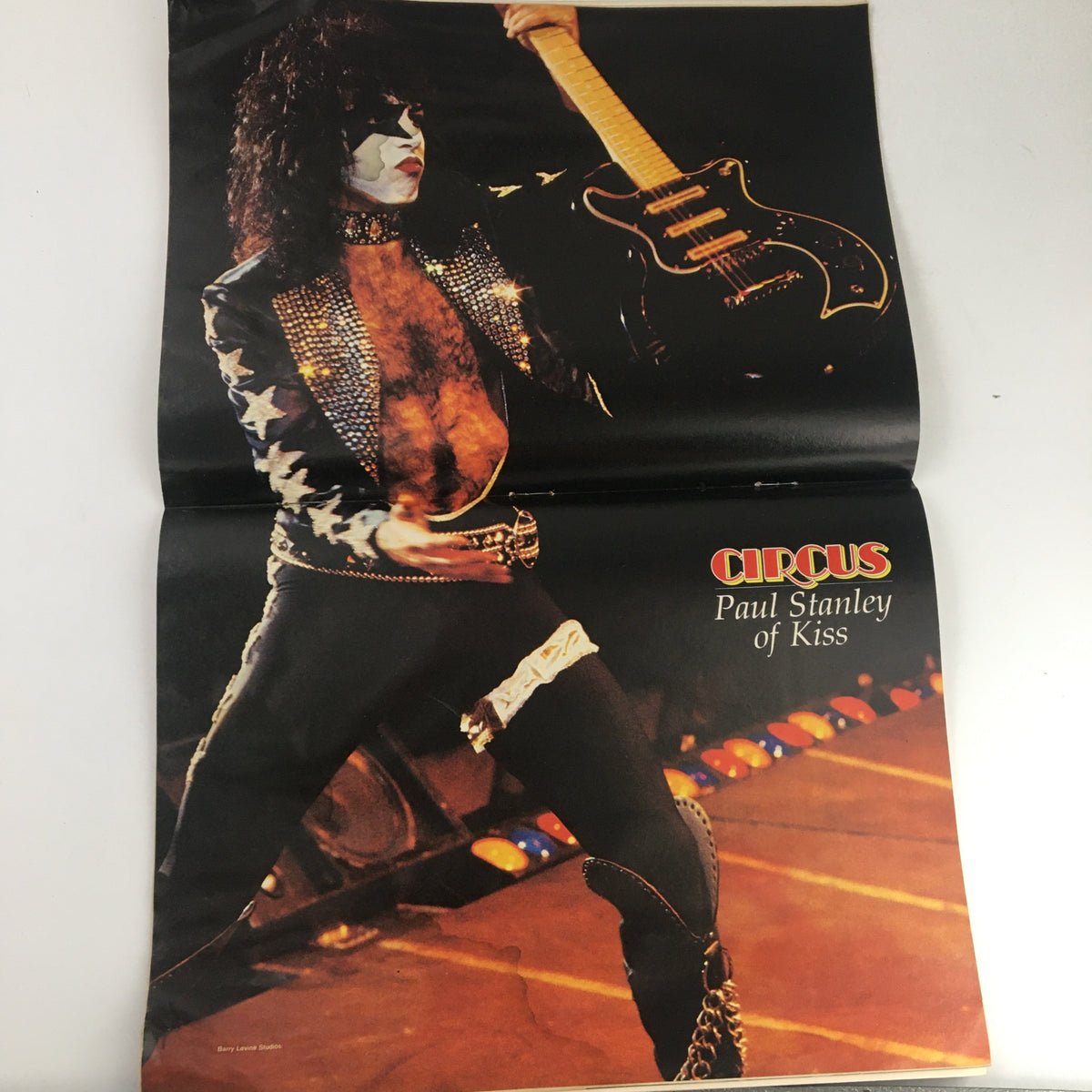
Paul Stanley’s inclusion through the stated poster feature connects the issue to KISS at one of the most heavily publicized moments in the band’s 1970s career. Stanley was a founding member, lead vocalist, rhythm guitarist, songwriter, and the performer behind the band’s “Starchild” stage identity. The issue appeared shortly before the four original KISS members simultaneously released individual solo albums in September 1978, making its date especially meaningful within the group’s chronology. A removable or foldout poster was also an important part of the original reading experience and is now a central completeness point when evaluating surviving magazines. Additional issues documenting the period can be found in the archive of vintage Circus magazines, while the collection of magazines published in 1978 provides a wider view of the year’s music and popular culture.
About the Publication
Circus was an American rock music magazine that began under the title Hullabaloo in 1966 and adopted the Circus name in 1969. Its editorial coverage included musicians, bands, albums, concerts, interviews, reviews, news, and extensive photography. The magazine was especially closely associated with the hard-rock audience, though its subjects also extended into pop, progressive rock, and other areas of contemporary music. Following the merger of the related Circus Raves title into the main publication, Circus appeared on a more frequent schedule during the late 1970s. Bold cover designs, color photographs, and pullout posters made physical presentation an important part of its appeal. Its intended readers were not merely following record releases; they were also learning the personalities, visual identities, and performance styles surrounding their favorite acts. Surviving issues consequently provide a detailed record of how rock culture was packaged and interpreted for a mass audience before cable music television and online media transformed celebrity coverage.
Key Highlights Inside
- The August 31, 1978 issue prominently identifies Frank Marino among its principal featured artists. His presence connects the magazine to the guitar-driven sound of Mahogany Rush and to the continuing importance of extended instrumental performance within 1970s hard rock.
- A Paul Stanley poster is specifically documented as part of the issue. Because posters were often removed for display, the continued presence, attachment, and physical condition of this feature are important when determining whether a surviving example remains complete.
- Paul Stanley’s appearance represents KISS during a year of intense recording, media, merchandising, and promotional activity. The issue predates the September 1978 release of the four original members’ simultaneous solo albums, placing it immediately before a distinctive event in the band’s history.
- The combination of Frank Marino and Paul Stanley reflects two complementary dimensions of late-1970s rock culture. Marino represented a technically focused guitar tradition, while Stanley embodied the songwriting, costume design, visual character, and concert spectacle central to KISS.
- The newsstand format and absence of a mailing label preserve the printed cover without an address block covering its photography or typography. That unobstructed presentation is especially relevant for an image-driven publication in which the cover functioned as part of the magazine’s appeal.
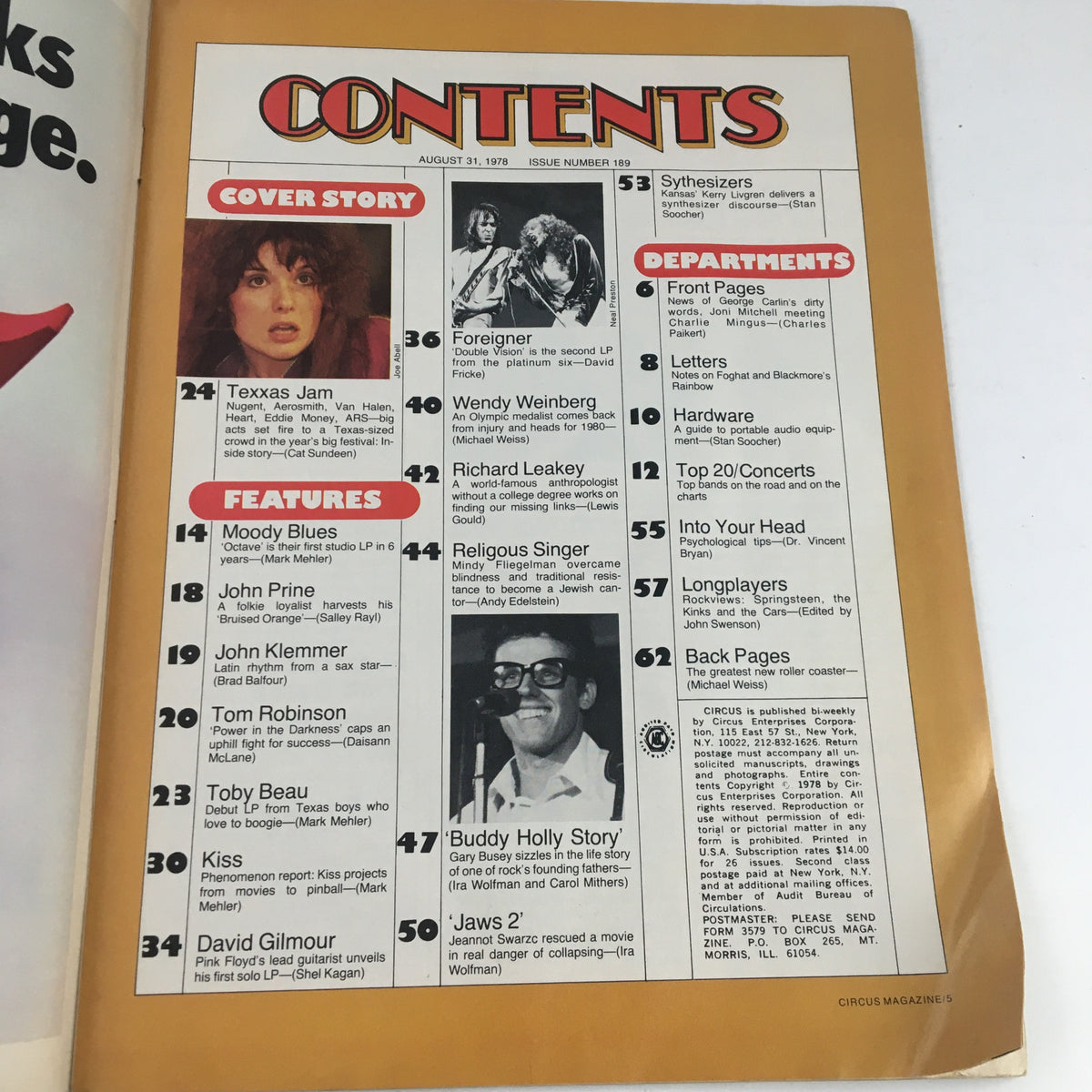
- The supplied description does not provide a complete table of contents or confirm every interview, article, photograph, review, and secondary artist appearing inside. Claims about additional interior material should therefore be based on direct examination of the issue rather than inferred from the featured musicians alone.
Condition & Rarity
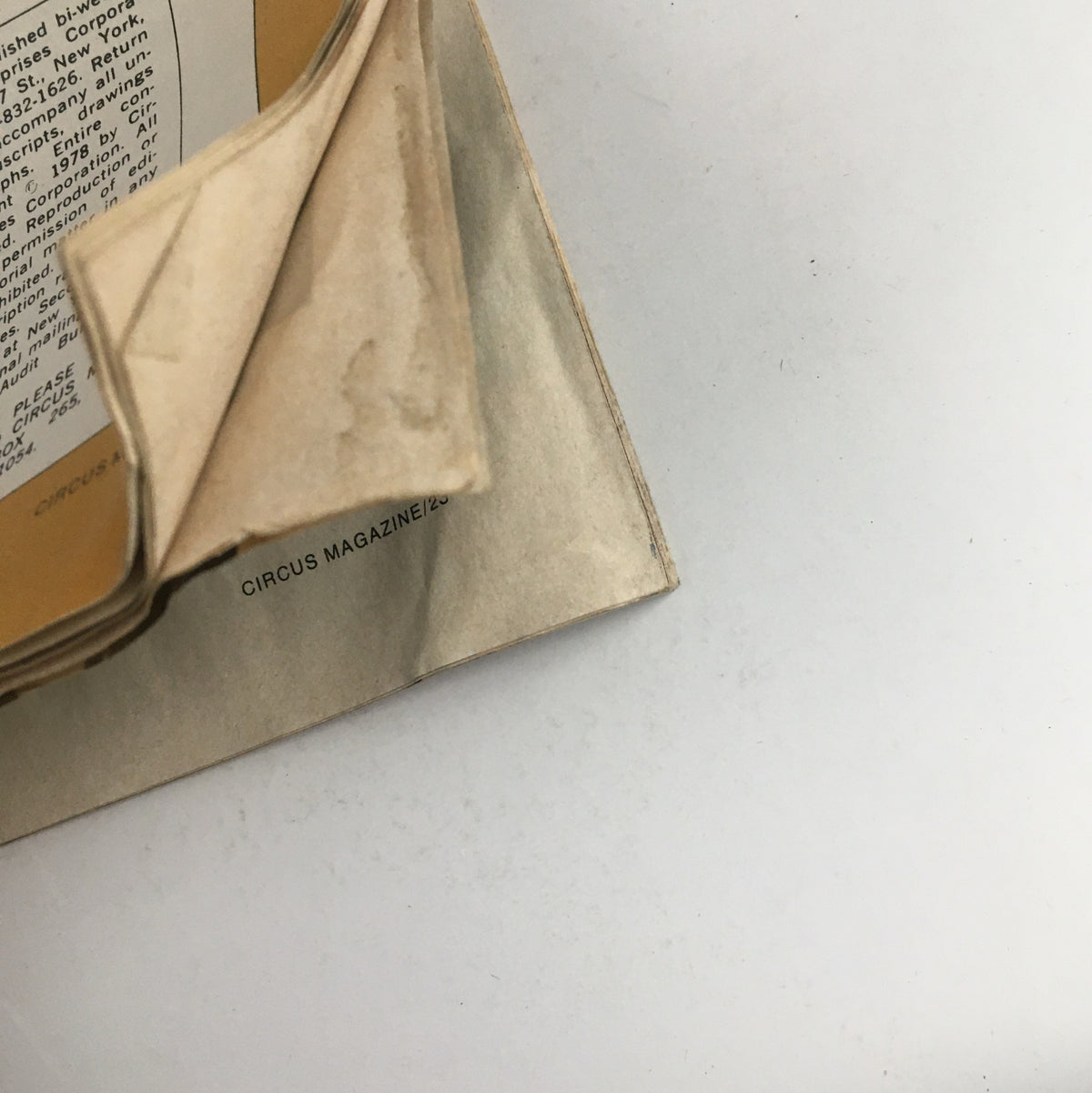
The magazine is described as being in Good condition, with minor wear visible across the publication. More specifically, the listing reports water damage, marks, and creasing at the lower-right area and within the interior. Water exposure is a significant grading factor because it may produce waviness, staining, discoloration, stiffness, or adhesion between pages depending on its severity. The photographs should therefore be examined to determine how far the affected area extends and whether any printed material is obscured. The issue is identified as a newsstand example without a subscriber label, leaving the principal cover design unobstructed. Its stated inclusion of the Paul Stanley poster is an important completeness attribute, although the poster should be checked for folds, tears, detachment, trimming, or other handling damage. No explicit information is given about loose staples, missing pages, writing, or a detached cover, so those points should be verified rather than assumed. The plastic protective covering is a later storage accessory rather than an original part of the magazine, but it can help limit dust, surface rubbing, and additional handling wear.
Looking for More Issues Like This?
The August 31, 1978 issue is a highly specific dated artifact combining Frank Marino coverage with a documented Paul Stanley poster. Complete examples can be difficult to encounter because posters and other detachable features were frequently removed by their original readers. The broader collection of original Circus magazines offers additional issues documenting classic rock musicians, concert culture, interviews, photography, and poster art. Readers interested in the surrounding period can also explore other original magazines from 1978. Comparing publications from the same year provides a richer view of how rock music, celebrity imagery, fashion, and popular entertainment were presented at the end of the 1970s.