

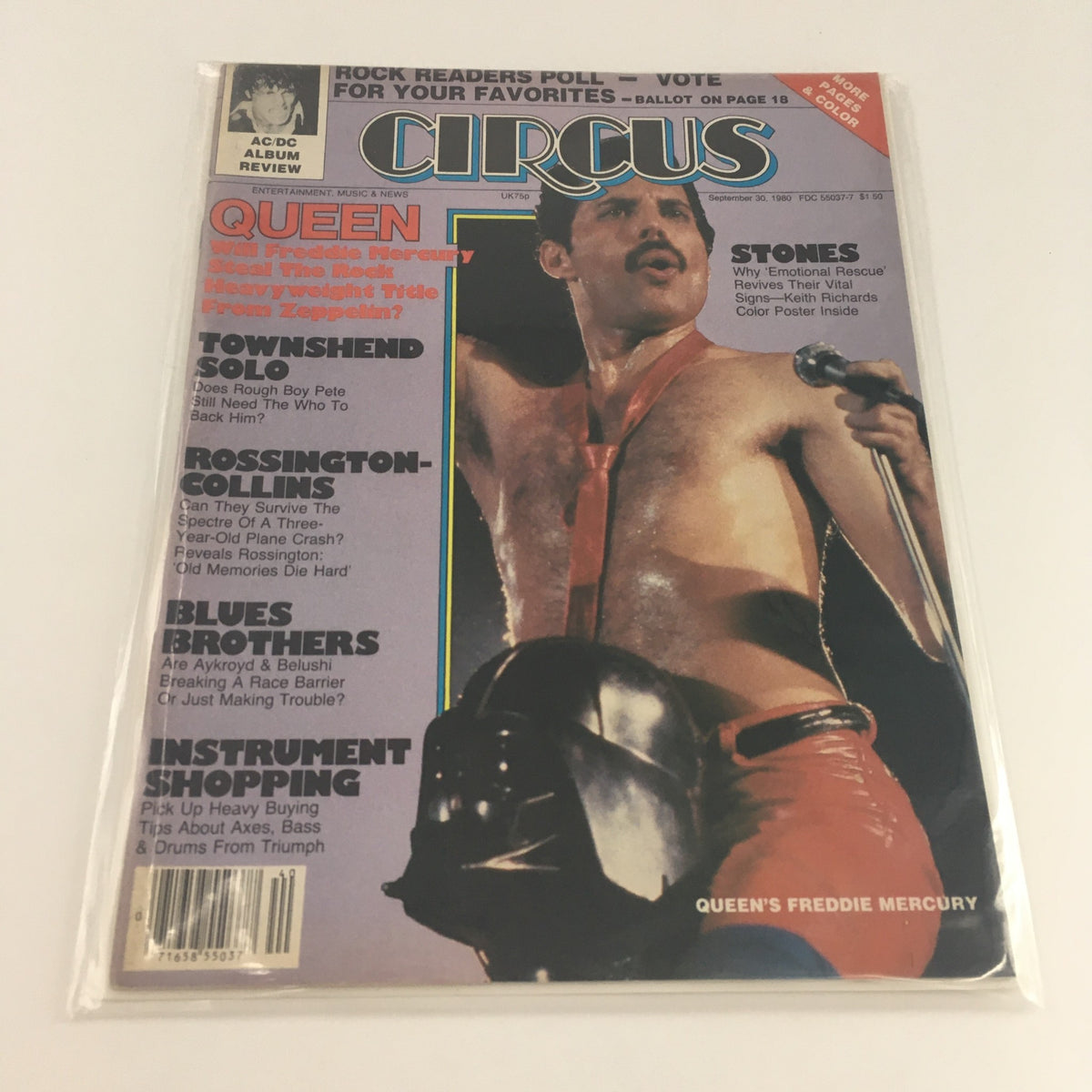


Description
Collector's Note – Why This Issue Matters
September 30, 1980 places this Circus Magazine issue at one of the most creatively extraordinary and commercially dominant moments in Queen's entire career. The band had released The Game in June 1980 — the album that produced both "Crazy Little Thing Called Love" and "Another One Bites the Dust," two of the biggest hits of the year and the songs that finally broke Queen into the American mainstream with the kind of chart dominance their British success had long suggested they deserved. By the time this issue went to press in late September 1980, The Game had reached number one on the Billboard 200, making it Queen's first American chart-topping album, and the band was in the middle of a major North American tour that was generating the kind of arena-filling, critically acknowledged success that rock publications like Circus existed to document and celebrate. A Freddie Mercury feature in a September 1980 Circus is therefore not merely a profile of a rock star — it is a primary document of the man at the precise commercial and artistic peak of his career, published at the moment when his band had definitively answered every remaining question about their American viability. For collectors building an archive of Freddie Mercury magazine features and covers, this issue sits at the intersection of peak creative output and peak mainstream recognition — the sweet spot that the most historically significant music press features invariably occupy.
Freddie Mercury as a subject for rock journalism in September 1980 presented a specific and fascinating set of contradictions that made him unusually compelling editorial material. He was simultaneously one of the most theatrical and visually extravagant performers in rock — the white leotards, the operatic vocal range, the command of enormous arenas — and one of the most private and deliberately guarded celebrities in the music world, particularly regarding his personal life. Rock magazines of the era navigated that tension in different ways, and a Circus feature from this period would have engaged Mercury through the specific lens of the publication's editorial approach: a combination of musical coverage, personality journalism, and the visual documentation of rock performance that Circus had built into its identity across the seventies. The September 1980 date is also notable for what it precedes — the Flash Gordon soundtrack would follow later that year, and within months the band would begin work on the recordings that would eventually produce "Under Pressure" and Hot Space. A feature from this specific window captures Mercury and Queen between milestones, in the middle of their greatest sustained commercial success, which is precisely the kind of in-the-moment documentation that makes music press features from peak periods so valuable as historical records. Collectors researching Circus Magazine issues from the classic rock era will find this September 1980 edition a primary document of that publication's coverage of one of rock's most significant figures at his most publicly triumphant moment.
The broader context of September 1980 in American rock culture deepens this issue's documentary value considerably. The early eighties were a moment of genuine transition in the rock market — the punk and new wave movements had reshaped the critical conversation about what rock could and should be, and bands like Queen who operated at the arena rock scale were navigating a cultural environment that was simultaneously celebrating their commercial success and subjecting their aesthetic to new forms of critical scrutiny. Circus had been covering this transition throughout the late seventies, and its September 1980 treatment of Mercury reflects the specific moment when The Game had made that critical debate temporarily moot — the band had simply produced too many undeniable hits in too short a period for any critical reservations about arena rock excess to carry much weight. That specific cultural context — the critical moment when Queen's commercial dominance overrode the aesthetic objections of the rock press — is one of the more interesting chapters in the band's relationship with American music journalism, and a Circus feature from exactly this moment is a primary source record of it. Collectors researching rock and music magazines from 1980 will find this issue a precisely dated artifact of that remarkable year in Queen's history and in American rock more broadly.
About the Publication
Circus Magazine was an American rock music publication founded in 1966 and published continuously until 2006, positioning itself throughout its run as one of the primary print voices of the American rock audience. By September 1980 it had been covering rock music for fourteen years and had developed a distinctive editorial identity that combined concert and album coverage with personality-driven features, band profiles, and the kind of access journalism — interviews, behind-the-scenes reporting, tour coverage — that its readership of committed rock fans demanded. Its approach was somewhat less critical and more celebratory than publications like Rolling Stone or Creem, reflecting its core audience's interest in their favorite bands rather than in music criticism as such, and this positioning made it a valuable documentary record of how major rock acts were presented to their own fan bases during the genre's commercial peak. Circus's coverage of Queen across the late seventies and early eighties constitutes one of the more sustained and detailed bodies of rock journalism about the band in the American press, and individual issues featuring Mercury represent primary source documents of that ongoing coverage relationship.
Key Highlights Inside
- Freddie Mercury feature documenting Queen's frontman at the precise moment of the band's greatest American commercial success — The Game at number one, "Another One Bites the Dust" dominating radio, and a major North American tour in progress — making this a primary source record of Mercury and Queen as seen by the American rock press at the peak of their mainstream breakthrough.
- Rock journalism content consistent with Circus Magazine's September 1980 editorial scope — the publication in this period was covering the full breadth of the American and British rock landscape at a moment of genuine transition, and the issue's surrounding content would have provided the full contemporary context within which the Mercury feature was positioned for Circus's dedicated rock readership.
- Concert photography and visual documentation consistent with Circus's established editorial approach to rock performance coverage — the magazine's photography of live rock performance was one of its most important editorial assets, and a September 1980 feature on Queen would have been accompanied by the kind of large-format stage and performance imagery that made Circus issues from this era visually distinctive documents of their moment.
- Period advertising representing the rock music consumer culture of Circus's late-1980 readership — the advertising environment of a September 1980 Circus captures the labels, equipment brands, and music consumer products most actively marketing to committed American rock fans at a specific moment in the genre's commercial history, providing documentary material for researchers studying the intersection of rock culture and its commercial infrastructure in the early eighties.
- Note: Specific secondary article titles, additional featured artists, and confirmed interior content details beyond the documented Mercury feature have not been individually verified for this issue. The highlights above reflect Circus Magazine's well-established editorial format, the verified cover feature, and the well-documented Queen career context of September 30, 1980.
Condition & Rarity
Circus Magazine issues from September 1980 present a condition profile shaped by the publication's format, its rock music readership's habits, and the forty-five years that have elapsed since publication. Very Good condition with no discernible wear and tear, stored in a boarded plastic bag, represents a meaningfully above-average survivor for a rock music magazine of this age — the combination of the condition grade and the confirmed protective storage indicates a copy that has been treated as a collectible at some point in its history rather than read actively and stored casually. Bagged and boarded storage is the standard archival practice for comic books and magazines of collector significance, and its application here indicates deliberate preservation that correlates reliably with better cover surface condition, reduced page tanning, and the structural integrity that distinguishes a display-grade copy from a reading copy in the collector market. The absence of a mailing label preserves the full cover design without the adhesive damage or removal marks that affect subscriber copies, identifying this as a newsstand copy and representing the preferred provenance for condition-conscious collectors. For a forty-five-year-old rock music monthly that was printed on paper stock never designed for long-term preservation, Very Good condition with confirmed boarded storage is a strong and credible survivor profile. Collectors evaluating surviving examples of this issue should prioritize cover surface quality and legibility, spine integrity, and the completeness of the Mercury feature pages as the primary condition criteria most relevant to this issue's collector value.
Looking for More Issues Like This?
A Very Good newsstand copy of Circus Magazine from September 30, 1980 with a confirmed Freddie Mercury feature, no label, and boarded protective storage is a specific enough find in the classic rock magazine collecting market that it surfaces infrequently — Queen issues from the peak commercial period of 1980 in confirmed strong condition are among the more actively pursued entries in the Circus back-catalog. If this issue is no longer available, the Freddie Mercury magazine collection at OriginalMagazines.com is the most focused resource for other Mercury and Queen features across publications and years. The full Circus Magazine collection offers surviving issues from across the publication's history for collectors building a broader archive of its classic rock coverage, and the 1980 magazine collection brings together issues from across that year's major music and cultural publications for collectors documenting one of the most commercially extraordinary years in the history of rock music.