


Description
Collector's Note – Why This Issue Matters
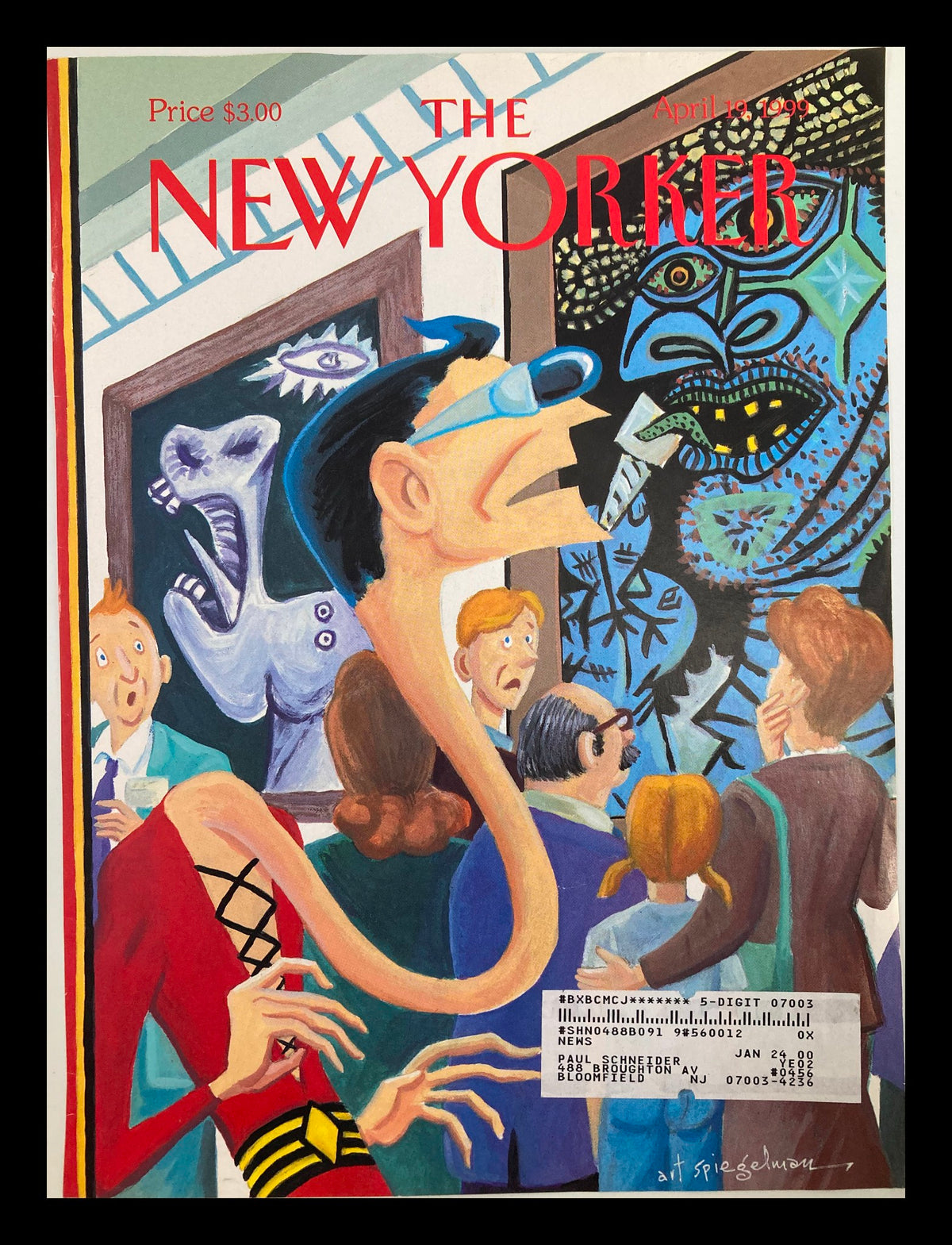
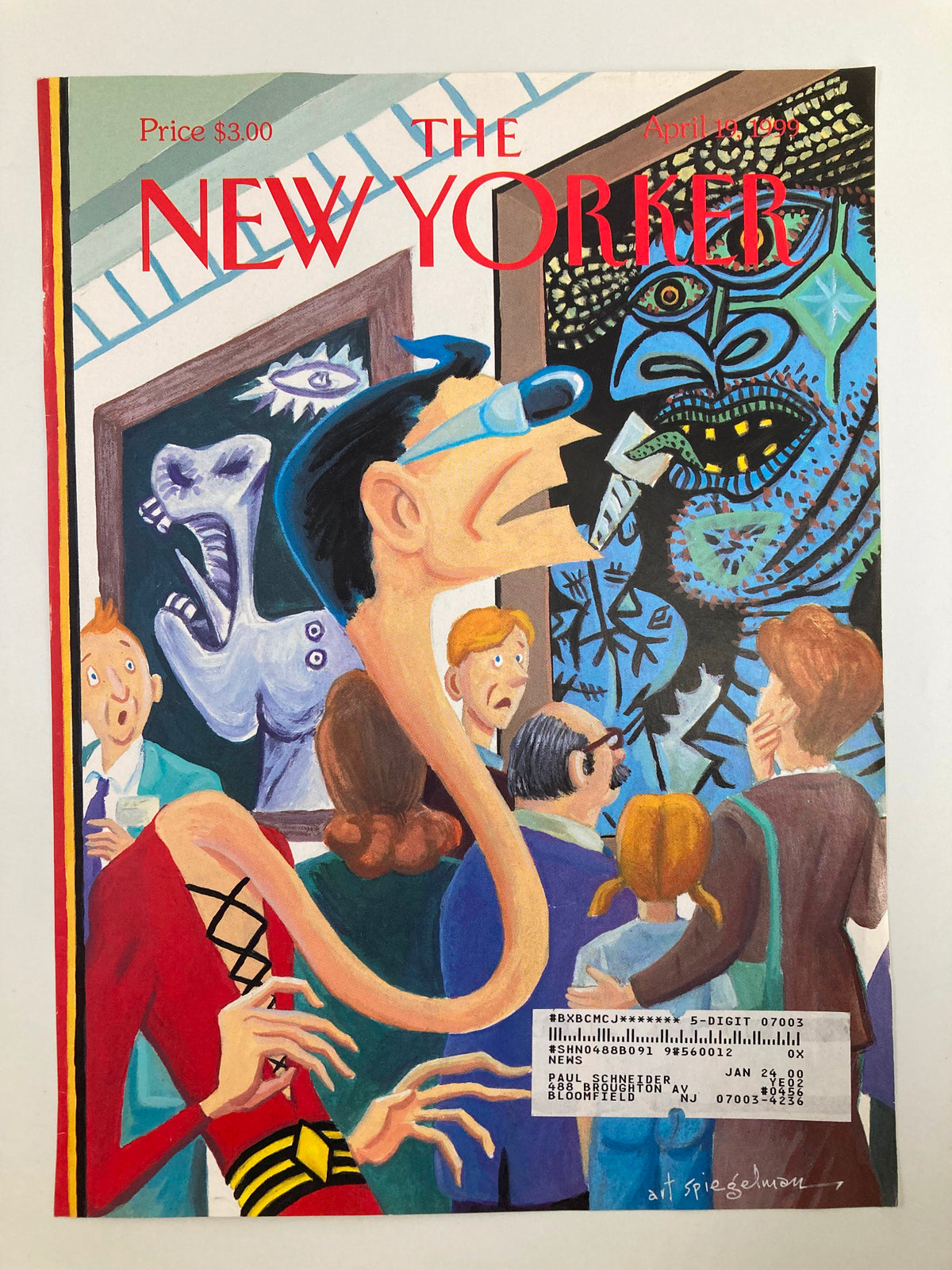
The April 19, 1999 cover of The New Yorker by Art Spiegelman is a significant artifact in the history of the publication's visual identity and in the broader story of one of the most important figures in American comics and illustration. Spiegelman is best known as the creator of Maus — the Pulitzer Prize-winning graphic novel documenting his father's Holocaust survival through the metaphor of mice and cats — but his relationship with The New Yorker in the 1990s produced some of the most culturally provocative covers in the magazine's modern history. He and his wife Françoise Mouly, who served as The New Yorker's art editor beginning in 1993, were central to a deliberate reinvigoration of the magazine's cover art program under Tina Brown's editorship — a period that saw the covers become more conceptually ambitious, more willing to engage directly with political and cultural controversy, and more representative of the full range of contemporary illustration. Spiegelman's individual cover contributions during this period ranged from the deeply controversial to the formally inventive, and his art gallery and museum themed cover from April 1999 sits within a body of work that is among the most studied in the publication's visual archive. Collectors building a focused archive of New Yorker cover art from the 1990s will find the New Yorker magazine collection the most comprehensive resource for surveying this period's distinctive visual output and identifying covers of particular artistic and historical significance.
April 1999 places this cover in the final months of Tina Brown's editorship — she would depart The New Yorker in July 1998 (having been succeeded by David Remnick by the time this issue appeared), making this cover part of the early Remnick era rather than the Brown period. That institutional context matters: Remnick had taken over in 1998 and was in the process of establishing his own editorial vision while maintaining continuity with the cover art program that Mouly had built. A Spiegelman cover in April 1999 represents one of the established contributors from the magazine's recent visual history continuing to work under new editorial leadership, and it is a document of that transition period's visual culture. The art gallery and museum subject matter is particularly fitting for Spiegelman — his work had been exhibited in galleries and his influence on comics as a legitimate art form had been central to the discourse around whether comics deserved museum treatment at all, a question that was actively being answered in the affirmative by institutions including MoMA during this period. Collectors focused on the intersection of comics culture and fine art institution history in the late 1990s will find that 1999 magazine issues document a moment of considerable cultural negotiation about the boundaries between high and low art.
Spiegelman's contributions to The New Yorker's cover art program during the 1990s are now studied as a coherent body of work within both the history of the magazine and the history of American illustration. His willingness to engage directly with cultural and political subjects — and the controversy that several of his covers generated — gave the magazine's visual program a kind of editorial seriousness and cultural engagement that extended the publication's reputation as a place where art and ideas operated at the same level. A cover devoted to the art gallery and museum world, appearing in April 1999, is a relatively gentler entry in his New Yorker portfolio compared to some of his more provocative contributions, but it reflects the same formal intelligence and cultural attentiveness that characterizes his best cover work and that makes his New Yorker covers among the most sought by collectors of the publication's visual history.
About the Publication
The New Yorker was founded in 1925 by Harold Ross and had established itself across the following seven decades as one of the most respected and culturally influential English-language publications in the world, combining long-form journalism, fiction, poetry, criticism, and a distinctive visual identity built around commissioned cover art, cartoons, and illustrations. The magazine's cover art program had been significantly reinvigorated beginning in 1993 under Françoise Mouly's art direction, which brought a more formally adventurous and culturally engaged approach to cover commissions that produced some of the most discussed and collected covers in the publication's modern history. By April 1999, under David Remnick's editorship, the magazine was maintaining the visual ambition of the Mouly-era program while developing the journalistic direction that would define Remnick's long and award-winning tenure. The cover-only format of this particular artifact focuses attention on the illustration as a standalone visual and historical object, evaluated on its own terms as a piece of commissioned magazine art by one of the most significant figures in contemporary American illustration and comics.
Key Highlights Inside
- Cover painting depicting art galleries and museums by Art Spiegelman — a primary artifact of one of the most significant visual contributors to The New Yorker's 1990s cover program, whose work for the magazine under Françoise Mouly's art direction produced some of the most culturally engaged and formally inventive covers in the publication's modern history.
- April 1999 dating places this cover in the early period of David Remnick's editorship, following his 1998 succession of Tina Brown, documenting the visual program's continuity under new editorial leadership and Spiegelman's continued contribution to the magazine's cover art during that transitional period.
- Art gallery and museum subject matter — a thematically resonant choice for Spiegelman specifically, given his central role in the late-twentieth-century discourse around comics as legitimate fine art and his own experience having his work exhibited in institutional contexts that had previously excluded the medium.
- Cover-only format with physical dimensions of 8¼" × 11" — suited to standard framing and display as a piece of commissioned illustration art, with dimensions consistent across the New Yorker's modern cover format and compatible with collected display of multiple covers from the publication's archive.
- Label present on the front and protective plastic covering — standard condition attributes for a subscription-delivered New Yorker cover from this period, with the label documenting original circulation history and the plastic covering indicating deliberate preservation intent.
Condition & Rarity
Good condition with minor wear consistent with age and a label on the front is an honest and straightforward assessment for a New Yorker cover from 1999 that has been maintained as a collectible artifact over twenty-five years. The subscription label on the front cover is the most significant condition detail for display purposes — it is adhesive-applied directly to the cover stock and its placement relative to Spiegelman's illustration determines the degree to which it affects the visual presentation of the artwork, which is best evaluated from the provided photographs. Minor overall wear at twenty-five years of age is the expected physical record of careful storage and does not typically compromise the visual impact of the cover art at normal display distance. The protective plastic covering indicates deliberate preservation intent consistent with treating the cover as a collectible artifact rather than simply discarded reading material — a meaningful positive signal for a cover being evaluated as a piece of illustration art. Good condition for a cover-only artifact of this vintage and purpose accurately represents a piece with genuine display and collecting value alongside its noted condition attributes, and collectors considering it for display or archival purposes should weigh the condition details against the specific significance of Spiegelman's contribution to The New Yorker's visual history.
Looking for More Issues Like This?
Art Spiegelman cover art for The New Yorker from the 1990s is among the most actively sought in the publication's modern visual history, and covers from his period of contribution to the magazine's program are consistently noted by collectors and researchers of both New Yorker history and contemporary American illustration. The broader New Yorker magazine collection is the most reliable starting point for finding other significant covers and full issues from across the publication's history, including other covers from the Mouly art direction era that defined the magazine's visual reinvention in the 1990s. Collectors building a picture of the late-nineties cultural landscape across art, literature, and journalism will find the complete 1999 magazine collection a valuable resource for locating other titles and issues that document this particular year's rich intersection of cultural and artistic currents.