



Description
Collector's Note – Why This Issue Matters
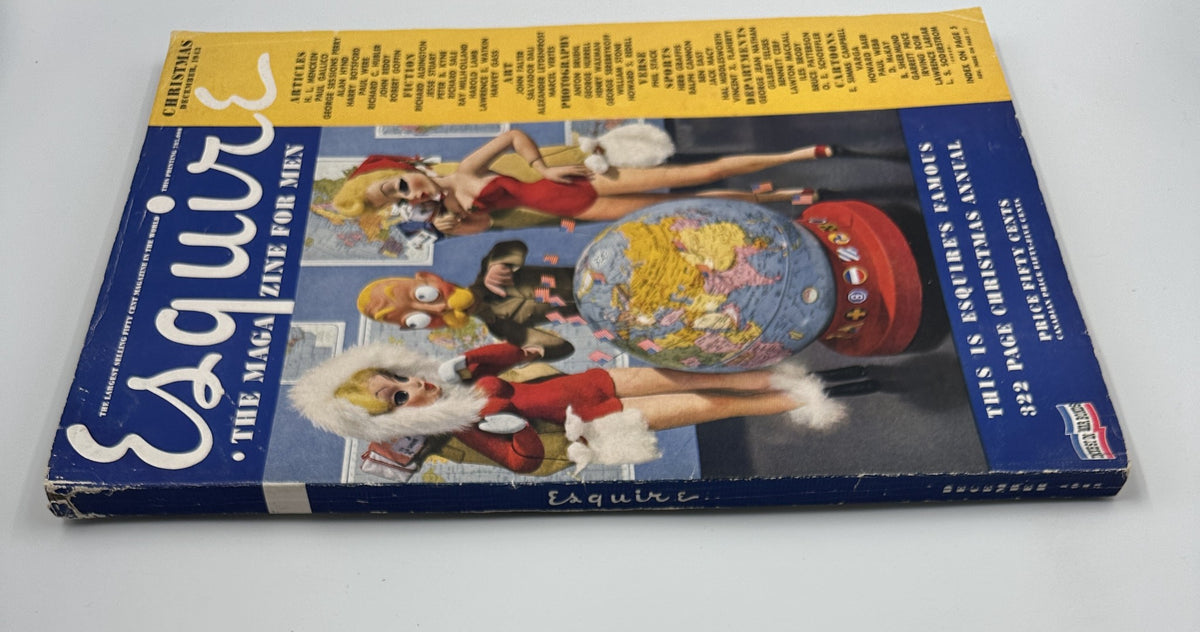
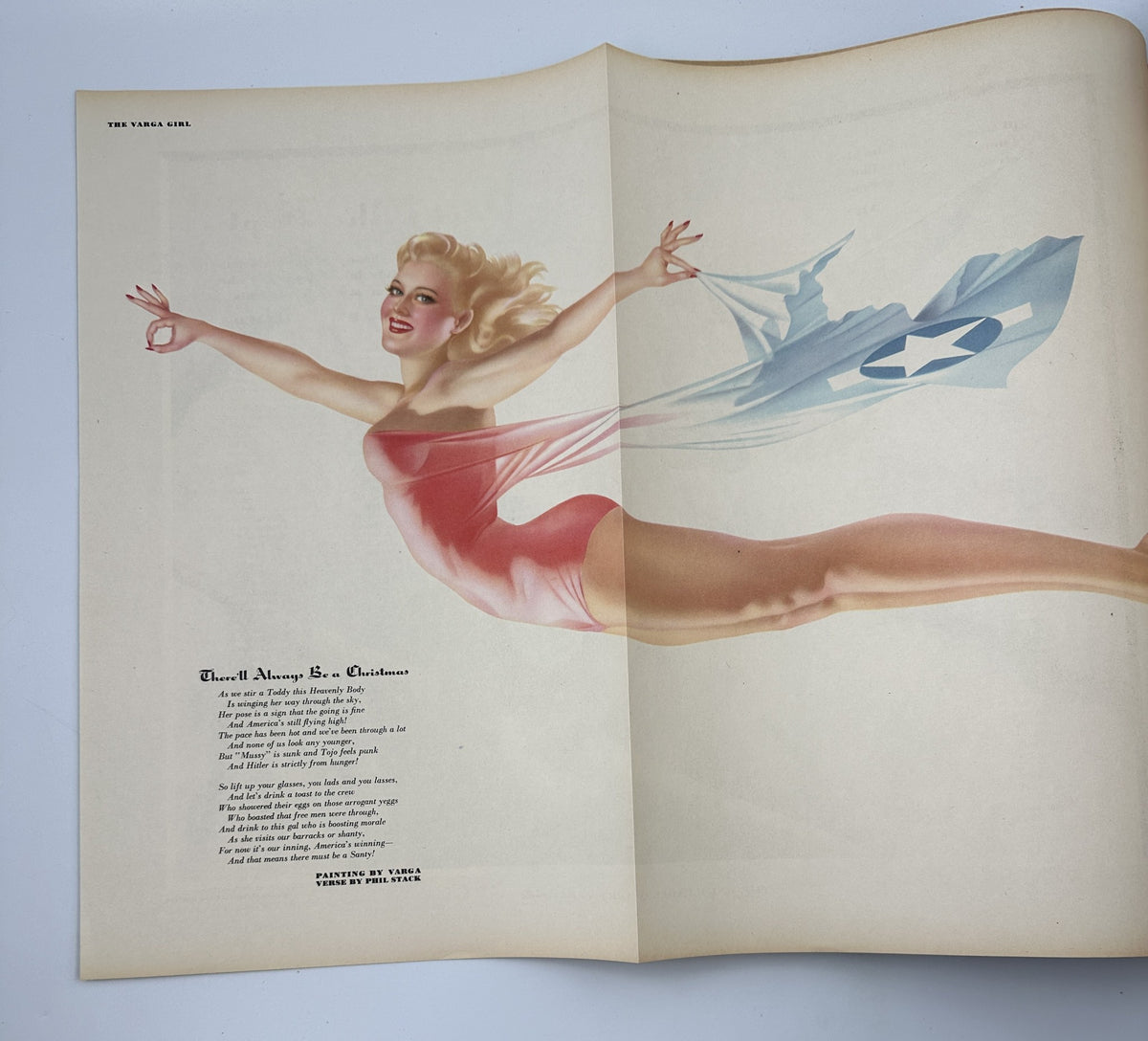
The December 1943 issue of Esquire — the Christmas wartime number — is a primary document of one of the most editorially ambitious men's magazines in American history operating at the absolute peak of its wartime creative ambition. Three confirmed pictorial credits in this single issue represent three of the most significant visual artists working for American magazines in the 1940s: Alberto Vargas's Christmas Varga Girl, Alexander Leydenfrost's wartime aviation painting, and a three-dimensional conceptual work by Salvador Dalí. A confirmed Dalí contribution to a mainstream American magazine in December 1943 — "Allegory of Three United Nations: Three Dimensional Concepts" — is a primary document of the Surrealist master's specific wartime engagement with the Allied cause, at a moment when Dalí was living in the United States and his work was crossing from fine art into commercial American print culture. The Varga Girl's "There'll Always Be a Christmas" — with verse by Phil Stack — is a primary document of the wartime Varga Girl tradition at its most seasonally and culturally freighted: a Christmas pin-up in the middle of a global war, designed for readers whose own Christmases were defined by separation and combat. For collectors building archives of vintage Esquire magazine issues, the confirmed Dalí-Varga-Leydenfrost triple visual credit makes this December 1943 number one of the most artistically documented single issues in the publication's entire wartime run.
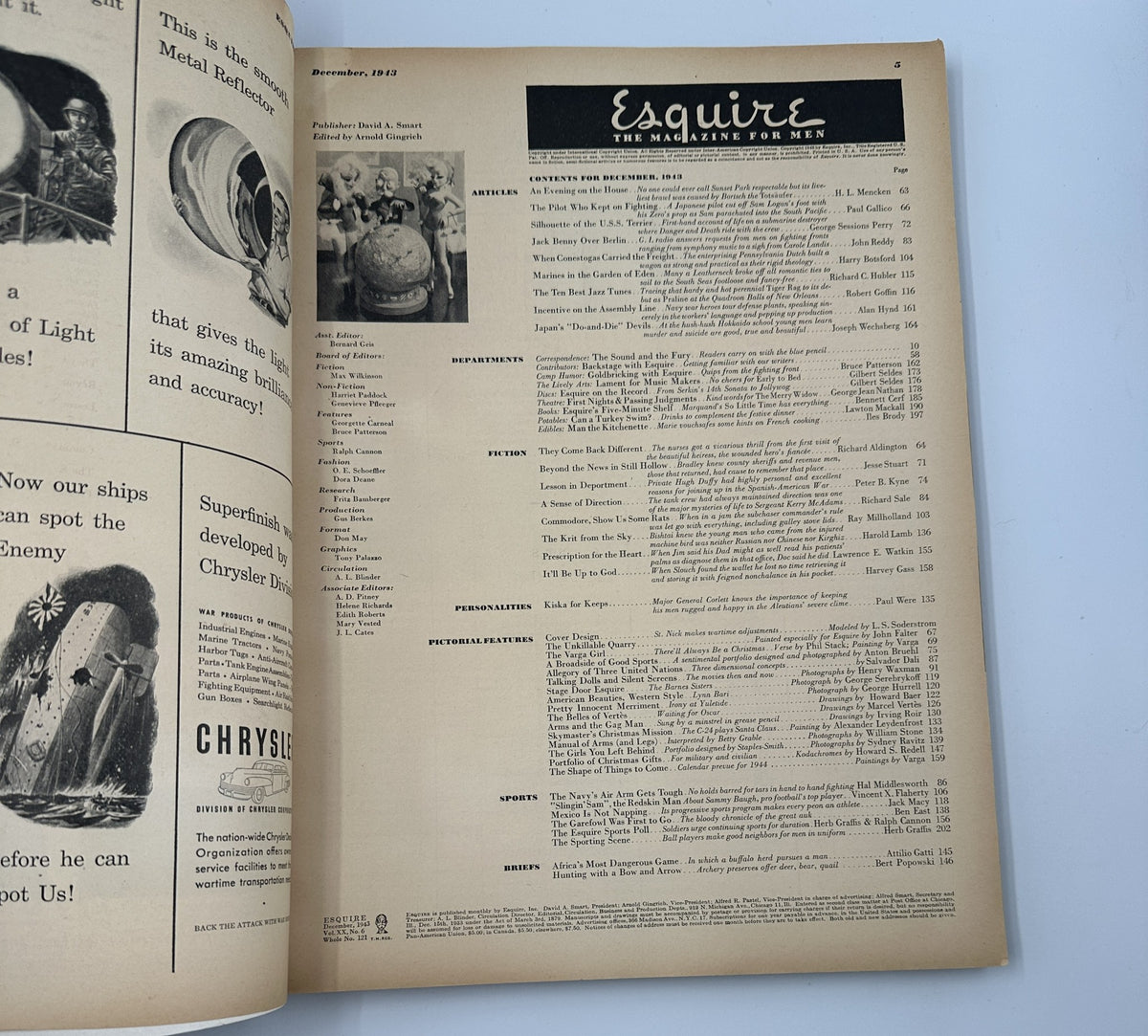
The confirmed literary and journalistic content of this issue is equally exceptional. H. L. Mencken's confirmed contribution — "An Evening on the House" — is a primary document of one of the twentieth century's most celebrated American prose stylists contributing to Esquire during the magazine's most sustained creative period; Mencken's presence in a December 1943 wartime Christmas issue represents the publication's consistent ambition to attract writers of genuine literary stature alongside its entertainment content. Paul Gallico's "The Pilot Who Kept on Fighting" adds a second named byline of recognized quality. The confirmed fiction contributors — Richard Aldington, Jesse Stuart, Peter B. Kyne, and Harold Lamb — collectively represent a literary fiction roster of unusual depth for a monthly men's magazine, and their December 1943 appearances are primary documents of their specific wartime creative output. The "Ten Best Jazz Tunes" feature by Robert Goffin — tracing "Tiger Rag" to its debut at the Quadroon Balls of New Orleans — is a primary document of early jazz historical scholarship published in a mass-market magazine, providing contemporaneous primary source material for jazz historians. The confirmed Betty Grable photographic feature and the Anton Bruehl sports portfolio add further named visual credits to an issue whose pictorial content is among the most specifically documented of any wartime Esquire number. Collectors of 1943 magazines focused on wartime American literary and visual culture will find this issue among the most richly documented in the year's publishing calendar.
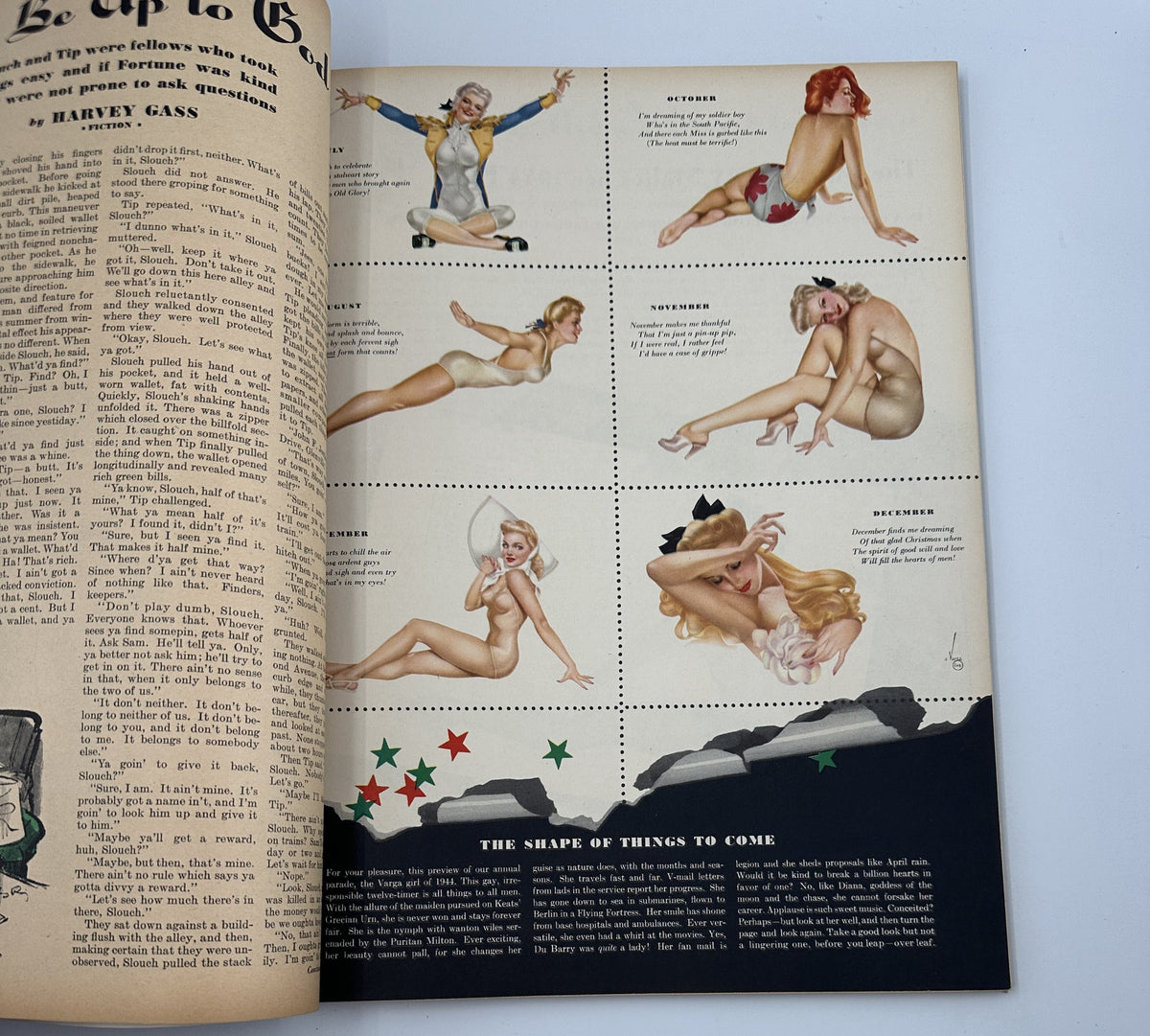
The "Shape of Things to Come: Calendar Preview for 1944 — Paintings by Varga" feature adds a second Varga credit beyond the Christmas Varga Girl, making this issue one of the most extensively Varga-documented single numbers in the wartime run. The Leydenfrost "Skymaster's Christmas Mission: The C-24 Plays Santa Claus" painting documents the specific convergence of wartime military aviation and Christmas iconography that characterized the holiday issues of wartime American publications — a subject Leydenfrost was uniquely positioned to paint with both technical accuracy and visual drama.
About the Publication
Esquire, founded in 1933 by Arnold Gingrich, was by December 1943 one of the most editorially ambitious and commercially successful men's magazines in the United States, with a wartime readership that extended to American servicemen stationed throughout the world. Its editorial formula combined serious literary fiction and non-fiction, sports journalism, jazz and arts criticism, fashion guidance, and the Varga Girl pin-up that had made it simultaneously celebrated and controversial. Its wartime Christmas issues were among its most carefully produced numbers of the year, combining the seasonal pin-up tradition with the full range of literary, journalistic, and visual content that defined the magazine's identity.
Key Highlights Inside
- "Allegory of Three United Nations: Three Dimensional Concepts" — Salvador Dalí (page 91) — A confirmed Dalí visual contribution documenting the Surrealist master's wartime engagement with the Allied cause in a mainstream American magazine context — a primary document of his specific American wartime creative presence.
- The Varga Girl: "There'll Always Be a Christmas" — Varga with verse by Phil Stack (page 75) — A confirmed Christmas Varga Girl representing the wartime pin-up tradition at its most seasonally resonant — a Christmas image designed for readers whose own holidays were defined by combat and separation.
- "Skymaster's Christmas Mission: The C-24 Plays Santa Claus" — painting by Alexander Leydenfrost (page 134) — A confirmed Leydenfrost aviation painting documenting the specific convergence of wartime military aviation and Christmas iconography that characterized wartime American holiday publications.
- "An Evening on the House" — H. L. Mencken (page 63) — A confirmed contribution by one of the twentieth century's most celebrated American prose stylists, providing a primary document of his specific creative output during the wartime period.
- "The Ten Best Jazz Tunes" — Robert Goffin (page 116) — A confirmed early jazz historical scholarship feature tracing "Tiger Rag" to its New Orleans origins, providing contemporaneous primary source material for jazz historians published in a mass-market magazine context.
- "Manuel of Arms (and Legs): Interpreted by Betty Grable" — photographs by William Stone (page 139) — A confirmed Betty Grable photographic feature, documenting the most iconic pin-up figure of the wartime era in a named photographer credit.
Condition & Rarity
Good condition with moderate signs of age and wear — corner creases, spine stress, and light surface wear — and a protective plastic sleeve represents an honest mid-grade assessment for an eighty-plus-year-old monthly men's magazine with this density of confirmed primary visual and literary content. The listing's specific note that only the pinups depicted in photographs are included is a meaningful completeness disclosure for a wartime Esquire whose pin-up content was among the most actively removed by original readers. Corner creases and spine stress are permanent structural factors whose extent should be confirmed from available photographs, particularly relative to the Dalí and Varga Girl pages whose visual content is central to the issue's collector significance. The plastic protective sleeve indicates deliberate preservation.
Looking for More Issues Like This?
Wartime Esquire Christmas issues with confirmed Dalí, Varga, and Leydenfrost pictorial credits alongside H. L. Mencken prose are extraordinarily rare in any publication — this December 1943 number represents the convergence of the wartime men's magazine tradition at its most creatively ambitious and the specific roster of artists and writers who made Esquire's wartime issues historically significant. The broader Esquire magazine archive at OriginalMagazines.com spans many decades of the publication's run and is worth exploring carefully for other wartime Christmas numbers. For collectors focused on the specific literary and visual culture of 1943, the complete 1943 magazine collection covers a range of titles from the year of Allied momentum that set the stage for the war's final phase.