


Description
Collector's Note – Why This Issue Matters
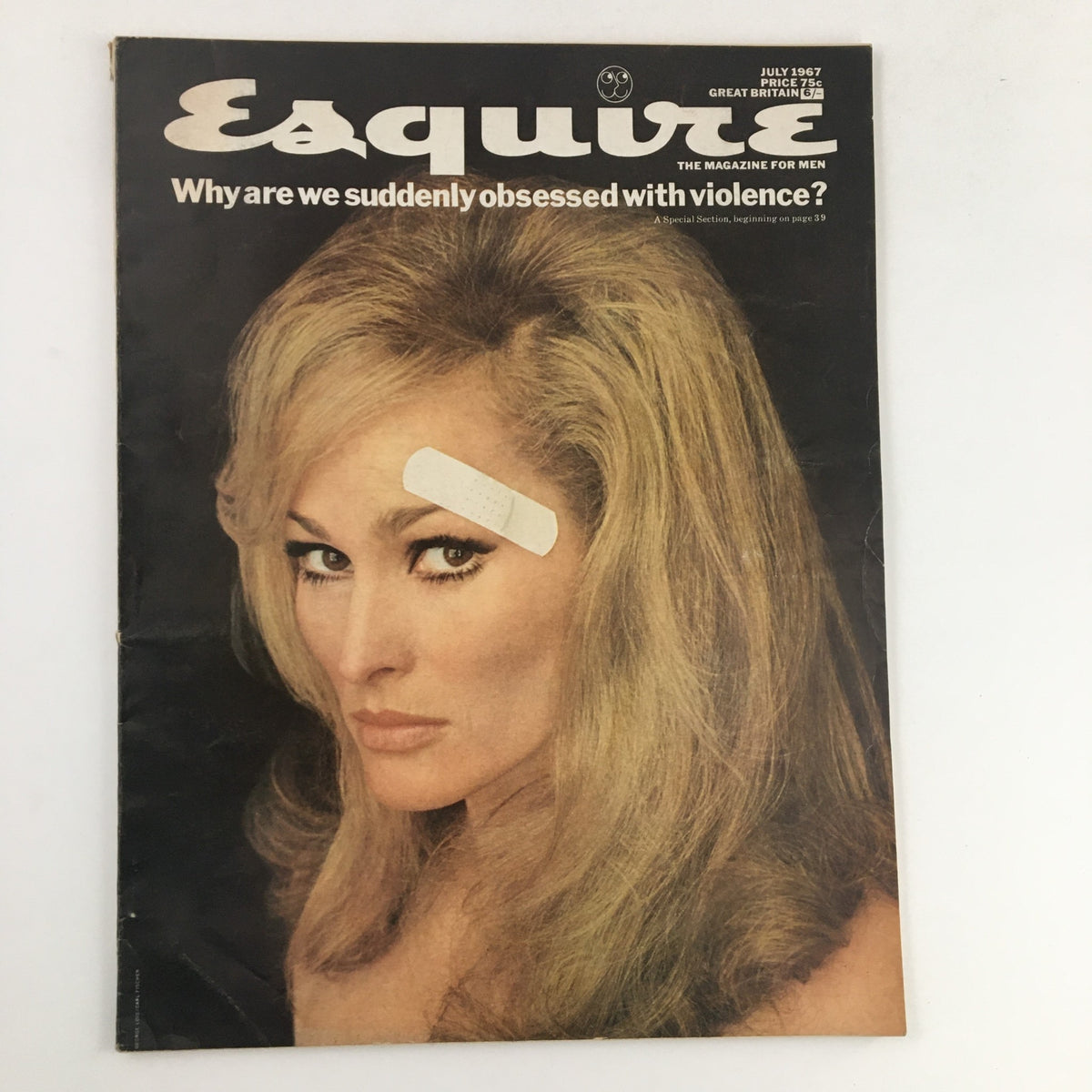
The July 1967 issue of Esquire featuring the article "Why Are We Suddenly Obsessed with Violence" is one of the most historically prescient and most culturally significant single-article covers in the publication's legendary Harold Hayes editorial era — a cover story that was asking the most important question in American culture at the precise moment when the answer was about to become devastatingly clear. July 1967 was the month of the Detroit riots, one of the most destructive civil disturbances in American history, which erupted July 23, 1967 — in the same month this issue was on newsstands. The Newark riots had occurred less than two weeks earlier, in July 12-17. The Esquire editorial team that chose "Why Are We Suddenly Obsessed with Violence" as a July 1967 cover story was therefore asking this question at the precise historical moment when American cities were demonstrating the most visceral possible answer, and the specific combination of the question and the historical context gives this issue a documentary weight that no retrospective account could replicate. This was not analysis after the fact — it was the American cultural press's most analytically serious and most intellectually ambitious magazine engaging in real time with a question that American reality was simultaneously and dramatically answering in the streets of Detroit and Newark. The Hayes-era Esquire — whose New Journalism ambitions and cultural analytical intelligence made it the most significant American magazine of its decade — was at its most historically relevant with this specific July 1967 cover. For collectors building a serious archive of Esquire's most historically charged editorial moments, the Esquire magazine collection at OriginalMagazines.com provides essential depth across the publication's full run, with the summer 1967 issues occupying one of its most historically consequential positions.
The broader context of July 1967 as a specific historical moment gives this issue additional resonance that any serious student of 1960s American history will recognize immediately. The Long Hot Summer of 1967 — with riots in Newark, Detroit, and over 150 other American cities — was one of the most dramatic and most consequential domestic crises in postwar American history, and it was occurring simultaneously with the Vietnam War's most controversial escalation phase, the draft protests, and the Summer of Love's utopian counterpoint in San Francisco. The specific cultural question that Esquire's July 1967 cover was asking — why was American society suddenly obsessed with violence — was being asked in a moment when the specific forms of that violence were most actively and most dramatically visible in American public life. The Hayes-era Esquire had developed a specific editorial voice — combining the New Journalism's narrative ambition with the cultural analysis of its best essayists — that was uniquely equipped to engage seriously with this question, and a July 1967 cover story on the obsession with violence is primary documentation of that editorial intelligence at the moment of its most immediate historical application. The no-label newsstand condition confirmed in the listing preserves the full cover design without subscription label disruption — particularly meaningful for a cover story whose specific question and its relationship to the historical moment are the primary documentary attributes that make this issue significant. The full range of 1967 magazines and publications from this extraordinary year documents American culture at one of its most historically turbulent and most analytically rich moments, and this Esquire cover story sits at the center of that body of material as one of its most precisely historically charged and most intellectually serious primary artifacts.
The specific cultural significance of Esquire's violence question in July 1967 extended beyond the immediate political context into the entertainment and popular culture dimensions of American life that the magazine was most comprehensively positioned to analyze. Hollywood's engagement with violence was undergoing its own transformation in 1967 — Bonnie and Clyde would be released in August 1967, just one month after this issue, inaugurating what film historians recognize as the new American cinema's most explicit engagement with violence as an aesthetic subject. Television news was bringing the Vietnam War's violence into American living rooms in unprecedented ways. The specific obsession with violence that Esquire was documenting in July 1967 was therefore a genuinely comprehensive cultural phenomenon — political, cinematic, televisual, and sociological simultaneously — and the publication's specific editorial intelligence was uniquely positioned to engage with all of its dimensions at once.
About the Publication
Esquire magazine was founded in 1933 and had established itself by the mid-1960s under editor Harold Hayes as the most culturally ambitious and most editorially significant men's general-interest magazine in the United States, its combination of New Journalism long-form reporting, cultural criticism, fiction, and its Annual Dubious Achievement Awards making it the standard against which American magazine journalism was measured during its Hayes-era peak. By July 1967, the publication was at or near the height of its cultural authority, its covers, its features, and its specific editorial voice collectively constituting one of the most significant documentary archives of American cultural and political life during the most turbulent decade of the postwar era.
Key Highlights Inside
- "Why Are We Suddenly Obsessed with Violence" cover story — Long Hot Summer primary journalism documented — The confirmed cover story constitutes primary Esquire documentation of the most culturally urgent question in American public life in July 1967, published in the same month as the Detroit and Newark riots that were providing the most visceral possible answer, preserving primary evidence of the Hayes-era publication's specific analytical intelligence engaged in real time with the most historically immediate and most consequential domestic crisis of the decade.
- July 1967 — Long Hot Summer month documented in primary cultural journalism form — The confirmed July 1967 date places this issue in the specific month of the Detroit riots (July 23-28, 1967) and the immediate aftermath of the Newark riots (July 12-17), making this cover story one of the most historically precisely timed pieces of cultural journalism produced during the entire turbulent decade.
- No-label newsstand edition — full Hayes-era Esquire cover design preserved — The confirmed no-label newsstand origin preserves the full visual integrity of the July 1967 cover design without subscription label disruption, representing a meaningful positive for a publication whose Hayes-era covers were among the most graphically sophisticated and most culturally charged in American magazine design history, with this specific cover story's visual presentation being primary documentation of how the publication was framing its most historically urgent question for its readership.
- 1967 American violence cultural analysis — pre-Bonnie and Clyde, pre-assassination era documented — The confirmed violence obsession cover story documents the cultural conversation about American violence at the specific pre-Bonnie and Clyde (August 1967), pre-assassination (1968) phase when the question was most analytically open — before the subsequent events that would transform the conversation from a cultural question into a historical accounting of its answers.
- Note: Specific article titles beyond the confirmed cover story, contributing writers, and the complete editorial contents of this issue have not been independently verified beyond the listing description. Some marks are noted in the listing and should be assessed from the accompanying photographs. The highlights above reflect what is documentable from the listing and the well-established historical context of Esquire's July 1967 violence cover story.
Condition & Rarity
This issue is described as being in good condition with minor wear consistent with its age, some marks on pages, no newsstand label, and a plastic protective covering — a condition profile that is honest and representative for a cultural journalism publication from nearly sixty years ago. Good condition with minor wear indicates consistent storage care that has preserved the publication above the typical survival condition for a monthly magazine of this era. The marks should be assessed from the accompanying photographs relative to their placement on the cover and primary content pages. The no-label newsstand status is the most significant positive condition attribute, preserving the "Why Are We Suddenly Obsessed with Violence" cover design in complete presentation — particularly meaningful for a cover whose specific question and its historical context are the primary documentary attributes making this issue significant. The plastic protective covering indicates deliberate preservation care. Hayes-era Esquire covers from the Long Hot Summer of 1967 in no-label condition are among the most specifically sought in the publication's collector community, recognized as primary cultural documents of the most historically turbulent and most analytically consequential months of the 1960s.
Looking for More Issues Like This?
Hayes-era Esquire issues from the Long Hot Summer of 1967 — and particularly this July edition asking "Why Are We Suddenly Obsessed with Violence" in the same month the Detroit and Newark riots were providing the most visceral possible answer — are among the most historically charged and most actively sought in the publication's extraordinary archive. If this July 1967 issue is no longer available, the Esquire magazine collection at OriginalMagazines.com is the most comprehensive resource for exploring what else has surfaced from this important publication's most historically significant editorial period. For collectors building a broader documentary record of American cultural journalism, political crisis, and popular life during one of the most consequential years of the twentieth century, the 1967 magazines collection brings together a wide range of primary source material from that extraordinary year.