




Description
Collector's Note – Why This Issue Matters
This June 1942 issue of Esquire arrives during the first half-year of full American involvement in the Second World War, reflected directly in its lead article, "Adjusting Your Nerves to War" by Robert M. Yoder, addressing the psychological dimensions of wartime service for ordinary American men. This wartime focus extends throughout the issue, including "The Eagle Spreads Its Wings" by Robert W. Marks, documenting the rapid American buildup of military air power, and "Streamlined Suits by Uncle Sam," addressing fashion adaptations designed by the War Production Board to conserve textile resources for military production. This combination of serious psychological, military, and fashion-industry wartime analysis reflects Esquire's distinctive editorial approach to documenting total American mobilization during this period.
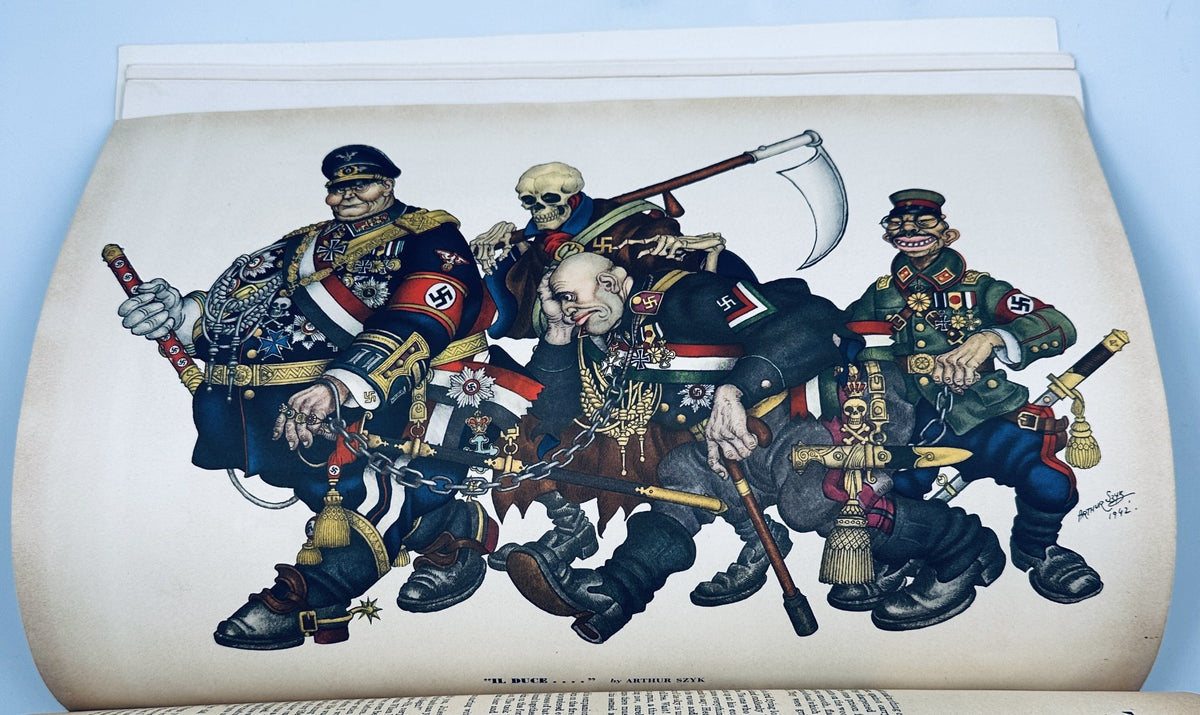
This issue's fiction section includes "The Captain Is a Card" by Nelson Algren, a significant American novelist whose later work, including "The Man with the Golden Arm," would establish him as one of the major figures of twentieth-century American literary fiction. Algren's contribution here, depicting a varied cast of characters under a police show-up's harsh light, reflects the kind of socially observant, character-driven fiction that would come to define his broader literary reputation in subsequent decades. The issue's pictorial features include "Il Duce..." by Arthur Szyk, a Polish-born artist whose satirical anti-Axis caricature work became historically significant wartime propaganda art, directly mocking Italian fascist leader Benito Mussolini within this issue's pages. Szyk's broader body of work attacking Axis leaders through pointed visual satire represents a genuinely notable contribution to American wartime visual culture, and his inclusion here situates this issue within that significant artistic tradition.
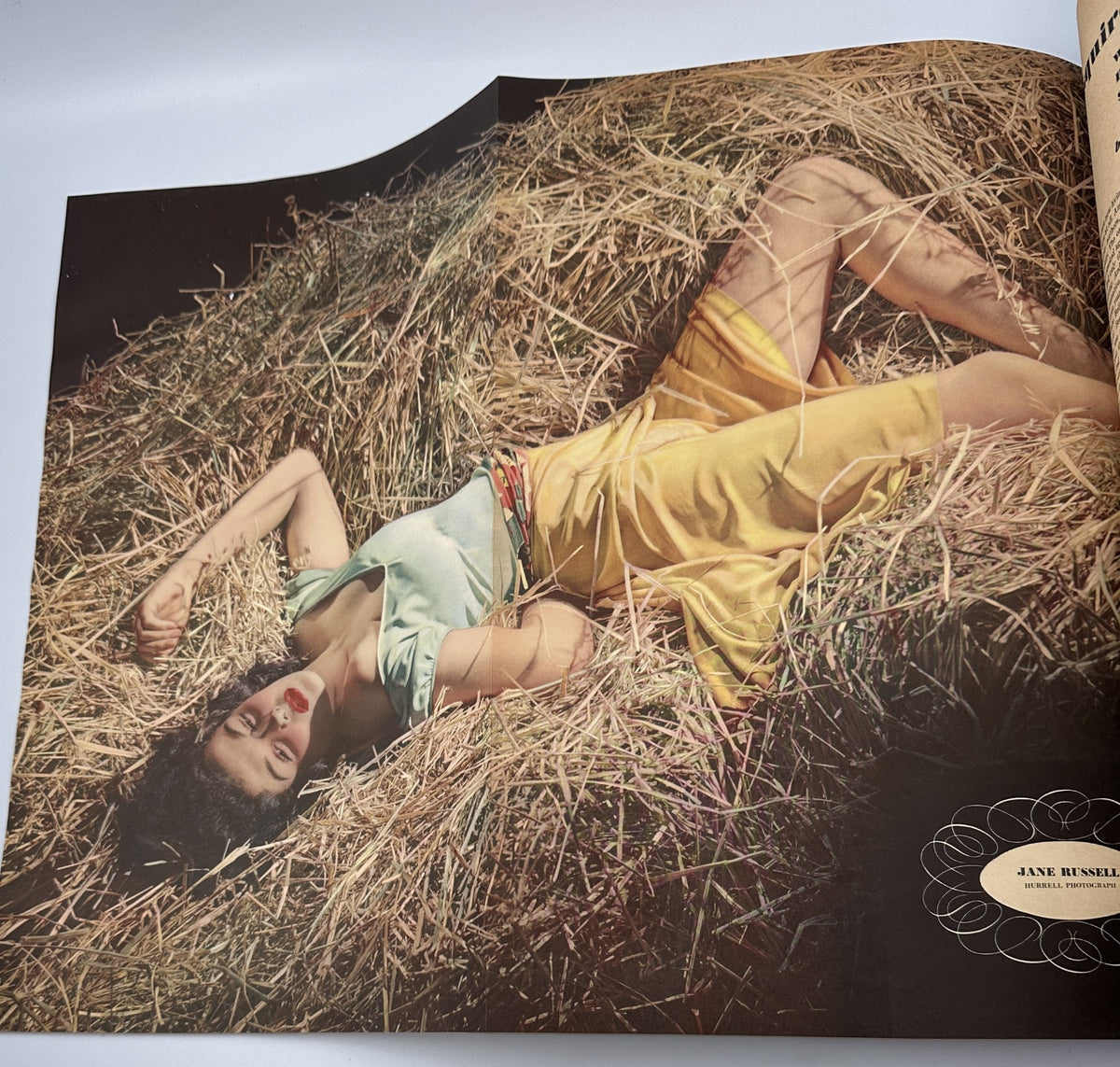
The issue's pictorial content also includes a feature on actress Jane Russell connected to her role in 20th Century-Fox's "The Outlaw," photographed by celebrated Hollywood portrait photographer George Hurrell, whose distinctive lighting and composition style had become closely associated with glamour photography of major studio stars throughout this era. A separate feature, "The Picasso Girl," credited to photographer Erwin Blumenfeld, who would go on to become one of the most significant fashion and portrait photographers of the twentieth century, reflects the issue's substantial visual artistry beyond its written content. The Varga Girl pinup illustration for this issue, titled "Victory for a Soldier," directly connects the magazine's well-documented pinup tradition to contemporary wartime themes.
Taken together, this issue offers an extraordinarily significant cross-section of wartime American culture, combining serious military and psychological analysis, fiction from a major American novelist, and visual art from internationally significant photographers and political caricaturists. It sits within the broader context of 1942 magazines and the long editorial history of Esquire itself, capturing a specific, exceptionally well-documented moment during the first full year of American wartime mobilization.
About the Publication
Esquire was an American men's magazine that built its distinctive editorial identity around combining substantial fiction and journalism with sports coverage, fashion guidance, and its well-known illustrated pinup features, particularly the Varga Girl artwork that became one of the magazine's most historically significant visual contributions. By 1942, Esquire had established itself as a significant venue for both serious wartime journalism and established literary fiction, regularly featuring contributions from writers who would go on to substantial literary careers, alongside access to major Hollywood photographers and internationally significant visual artists. The magazine's combination of war reporting, sports profiles, fiction, and pictorial features reflected a broad editorial ambition aimed at a male readership seeking both substantive content and entertainment within a single publication. Esquire's wartime content frequently addressed the conflict's psychological and material impact on American life, while its pictorial features sometimes incorporated direct anti-Axis political commentary, as reflected in this issue's Arthur Szyk caricature work. This June 1942 issue reflects that established editorial approach during a particularly significant period of American wartime mobilization.
Key Highlights Inside
- "The Captain Is a Card," a short story by Nelson Algren, who would go on to become one of the major figures of twentieth-century American literary fiction through later works including "The Man with the Golden Arm." This piece reflects the kind of socially observant, character-driven fiction that defined his broader literary reputation. It situates the issue within Esquire's substantial commitment to significant literary talent.
- "Il Duce...," a satirical caricature painting by Arthur Szyk, a Polish-born artist whose anti-Axis political art became historically significant wartime propaganda. This piece directly mocks Italian fascist leader Benito Mussolini within the issue's pictorial features. Szyk's broader body of anti-Axis caricature work represents a genuinely notable contribution to American wartime visual culture.
- A pictorial feature on actress Jane Russell, connected to her role in 20th Century-Fox's "The Outlaw," photographed by celebrated Hollywood portrait photographer George Hurrell. This piece reflects the magazine's access to major studio talent and significant Hollywood photographers. Hurrell's distinctive style adds notable artistic and historical weight to this feature.
- "The Picasso Girl," a photographic feature credited to Erwin Blumenfeld, who would go on to become one of the most significant fashion and portrait photographers of the twentieth century. This piece reflects the issue's substantial visual artistry from a photographer whose later career achieved considerable historical significance. It adds further pictorial depth to the issue's already substantial visual content.
- The Varga Girl pinup illustration titled "Victory for a Soldier," with verse by Phil Stack, directly connecting the magazine's well-documented pinup tradition to contemporary wartime themes. The listing notes that only pinups actually depicted in the accompanying photographs are confirmed present in this specific copy. This illustration represents one of the magazine's most historically notable visual contributions of the era.
- "Adjusting Your Nerves to War," the issue's lead article by Robert M. Yoder, addressing the psychological dimensions of wartime service for ordinary American men. This piece anchors the issue's substantial wartime journalism content. It reflects Esquire's willingness to address serious psychological subject matter alongside its lighter entertainment content.
- "Baseball's Thirteen Best Batters," a sports feature by Billy Evans reviewing leading hitters from Ty Cobb to Joe DiMaggio. This piece reflects the issue's substantial sports journalism content alongside its wartime and entertainment coverage. Its historical comparison across eras adds genuine baseball history interest to the issue.
Condition & Rarity
Condition for men's magazines of this age and type is generally assessed through cover and binding integrity, page completeness, and the overall legibility and visual clarity of printed text, fiction, and pictorial content. A complete copy showing moderate signs of age and wear, such as corner creases, spine stress, or light surface wear, reflects wear that is genuinely typical for periodicals approaching eight decades in age, particularly given that wartime paper stock was often produced under material restrictions that affected its long-term durability. A protective plastic sleeve plays a meaningful role in halting further deterioration, guarding against additional humidity exposure and handling wear going forward. Given the issue's substantial and historically significant pictorial content, including its Szyk caricature, Hurrell photography, and Varga illustration, the clarity and condition of these specific visual features carry particular weight when evaluating long-term collectible value, and prospective collectors should review all available photographs closely to confirm which specific pictorial elements are present in any given surviving copy. Collectors evaluating any surviving copy of this issue should weigh overall structural completeness and the continued clarity of its printed text and pictorial content as the primary indicators of long-term collectible and reference value.
Looking for More Issues Like This?
An Esquire issue from June 1942 combining fiction from Nelson Algren with significant wartime political caricature from Arthur Szyk and pictorial content from major Hollywood and fashion photographers represents a genuinely exceptional category of wartime American men's magazine collecting. If this exact issue isn't what you're looking for, the broader Esquire collection spans material from across the magazine's publishing history, offering a wider range of issues and editorial eras for collectors interested in the title's overall legacy, including its well-documented pinup illustration tradition. For those more focused on this specific year, the full range of 1942 magazines brings together material from across that year, spanning multiple publications beyond Esquire alone, including other periodicals documenting wartime American life. Browsing the Esquire collection can be especially useful for collectors building a set around specific literary contributors, photographers, or illustrators across different decades of the magazine's editorial history. Browsing by year, on the other hand, suits collectors more interested in capturing a broader cultural and wartime snapshot of 1942 across different types of periodicals. Either approach offers a practical way to continue exploring material connected to this issue's particular combination of content. Both collections represent solid starting points for finding comparable issues from this historically significant period in American men's magazine publishing.