
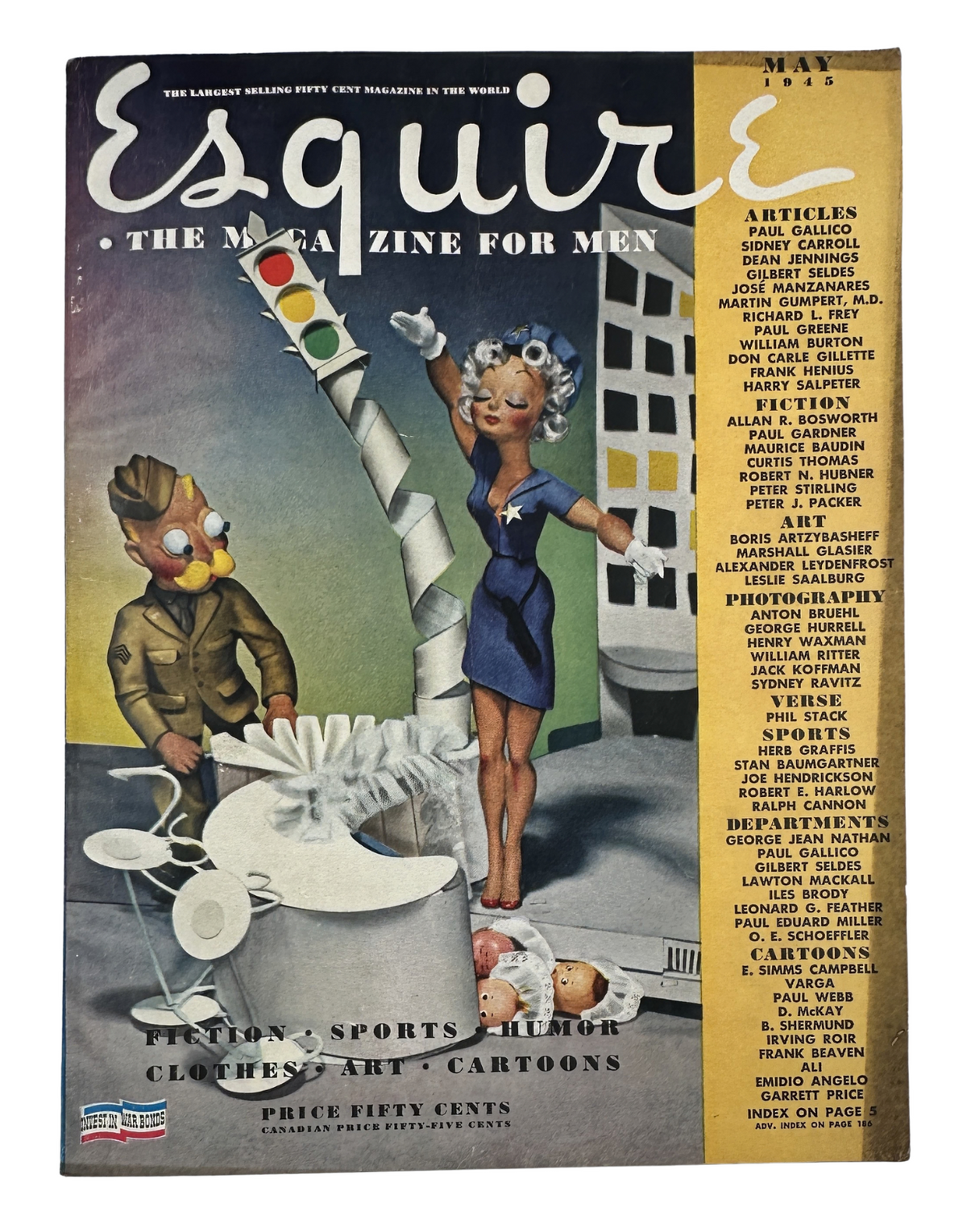


Description
The magazine is in good condition. It is a complete copy but shows moderate signs of age and wear, such as corner creases, spine stress, or light surface wear. The photos show the exact item you will receive. Please review all pictures for full condition details. Combined shipping is available. Each issue ships in a protective plastic sleeve.
Note: The content list below is derived from the issue's directory. Please Note: The only pinups included are those depicted in the photos.
TABLE OF CONTENTS
ARTICLES
Some Private Postwar Planning. Servicemen are asked the question, “What are you going to do when you get home?” and answer variously. — Sidney Carroll — 39
Years for the Asking. Sixteen days your real age may have nothing to do with birthdays, and a test with which you can prove it. — Martin Gumpert, M.D. — 44
Jimmy Doolittle’s American Eagle. Those were the days when Doolittle staked his nerve and his life for the sheer hell of the competition. — Paul Gallico — 46
The Future of Television. Answering some of the questions which make television the most exciting promise of postwar communications. — Gilbert Seldes — 51
Rummy the South American Way. How a Pic-Pac, the card game that Rio likes a buzz-bomb, and promises to spread to the North. — Richard L. Frey — 54
World’s Most Pressured Industry. With professions, classes and groups jumping on them, movies scarcely have room to turn around. — Don Carle Gillette — 62
King of the Keester Bugs. The ex-Racecar Wilson was determined to practice the art of go-cracking the floorboy toy—and almost did. — Dean Jennings — 68
The Rumba Is Not Alone. At least five dances which are also top favorites in Latin America would be excellent fare for any Yankee appetite. — José Manzanares — 73
DEPARTMENTS
Correspondence: The Sound and the Fury. Mail call. — 10
Contributors: Backstage with Esquire. Esq’s authors take a bow. — 34
Opinion: This Man’s World. Scottsdale idea of a silver cup. — Paul Gallico — 65
Anecdotes: Going the Rounds with Esquire. Add these to your repertoire. — 82
The Lively Arts: How to Laugh on the Air. On a bad radio habit. — Gilbert Seldes — 88
Jazz: The Rhythm Section. Of an organization to spread jazz. — Paul Eduard Miller & Leonard Feather — 94
Education: Esquire’s Ready-to-Speak French II. Phrases through soundwriting. — Frank Henius — 98
Potables: Botany Can Be Bracing. Life and loves of friend gin. — Lawton Mackall — 105
Theatre: First Nights & Passing Judgments. Critic fails to be amused. — George Jean Nathan — 106
Edibles: Man the Kitchenette. Noble use for the modest frank. — Iles Brody — 108
Wearables: Summer to Suit. Now’s the time to insure summer comfort. — O. E. Schoeffler — 117
Discs: Esquire on the Record. New platters: sweet and sour. — Gilbert Seldes — 124
FICTION
The Mule Who Didn’t Want Fame. He was Commanding General of the Theater—but he was faced with Frances, the talking, flying mule. — Peter Stirling — 40
You Can Do It in a Mock-Up. Gordon could not see how it could help the training film, but the major wanted to make the jump himself. — Peter J. Packer — 52
Water Over the Saddle. Before Billy could go up the Trail and be a man, he’d have to lick his father who had a twisted leg. — Allan R. Bosworth — 60
A Man With the Right Connections. James Dexter was a young man getting places, and didn’t see his old friends so much any more. — Maurice Baudin — 66
Little Three Fires and the Coyote. The boy had power to commune with things of nature, and thought the coyote his friend. — Robert N. Hubner — 74
Cousin Willie Is a Card. Willie studied cards with his other homework, and he played well even without his late Uncle Benny. — Paul Gardner — 96
A Ticket to Nowhere. By a singular misfortune he had been locked behind bars, and by a stroke of fate he was now emerging into the world. — Curtis Thomas — 110
PERSONALITIES
Earl Wilson: The Midnight Earl. Of the decade’s freest gossip reporter. — Paul Greene & William Burton — 76
The Research Magnificent. Artist Marshall Glasier’s own story. — Harry Salpeter — 93
PICTORIAL FEATURES
Jimmy Doolittle’s “Flying Engine”. Painted especially for Esquire by Boris Artzybasheff. — 47
Varga Girl. Late Spring. Verse by Phil Stack; Painting by Varga. — 49
Broadway for the Boys. Rosita Romero. — Photograph by Ravitz — 58
The Esquire Canteen. Frankie and Johnnie… and friends. — Photograph by Anton Bruehl — 63
American Beauties, Western Style. Esther Williams. — Photograph by Hurrell — 64
American Beauties, Eastern Style. Gale Y’villar. — Photograph by William Ritter — 69
Among Hollywood’s Nebulae. Marilyn Buford. — Photograph by Waxman — 72
Hollywood . . . Set to Music. The ballet comes to Duffy’s Tavern. — Photograph by Jack Kofman — 77
Central Park Rendezvous. Visitors in New York. — Painting by Leslie Saalburg — 80
Esquiregraph No. 7. Ernie Pyle. — Photocollage by Ravitz-Palazzo — 89
Cartoon Spread. Sad Apples in May. — Drawings by Frank Beaven — 90
A Group of Six Paintings. Courtesy of Associated American Artists, Inc. — by Marshall Glasier — 92
Martin Mariner. A Marine Tales & Flying Leap. — Painting by Alexander Leydenfrost — 104
SPORTS
The Return of Hagen’s Ghost. When Hagen mixed sports and London society. — Robert E. Harlow — 42
They’d Rather Hit Triples. Sainworth keeps his team happy—and hitting. — Stan Baumgartner — 59
The All-American Boys’ Ball Game. Announcing the new national contest. — Joe Hendrickson — 81
The Esquire Sports Poll. Mock poll by pollster just returned from overseas. — Herb Graffis — 84
The Sporting Scene. Current gleanings from the sports world. — 86
BRIEFS
You’ll Bust Your Sides Laughing. A type of humor unknowingly started by the Japs. — Parke Cummings — 41
In Lieu of a Written Will. A verbal gift by a dying person is not good. — Renzo Dee Bowers — 61
The Epic Ride of Casey Jones. How Casey became the hero of song and story. — Laurence J. Hathaway — 75
Your Boy and a Summer Camp. There’s a lot to be said for the things it can do. — George Wignall — 83
America’s Most Remarkable Horse. There’ll never be another Goldsmith Maid. — John Durant — 87
My Wife Is a Fat Lady. No mean size; she hasn’t an ounce of meanness. — George Victor Martin — 109
TRENDS IN DRESS
Clothes and Accessories by Goodman, Ravitz, Fenton and Fellows — beginning on 101