



Description
Collector's Note – Why This Issue Matters
The October 1945 issue of Esquire Magazine is a document from one of the most historically charged months in American history. Japan had formally surrendered on September 2, 1945, ending World War II entirely, and by October the United States was in the first weeks of what would become the long, complex process of reconversion — millions of servicemen beginning to return home, wartime industries pivoting back to civilian production, and American culture collectively exhaling after nearly four years of total war mobilization. A general interest men's magazine from October 1945 captures that specific transitional atmosphere: the war over, the future uncertain but suddenly open again, and American masculine culture beginning the process of reorienting itself toward peacetime. No issue published in the months immediately before or after carries quite the same quality of historical pivot.
The confirmed contributors — John R. Tunis and Herb Graffis — place this issue within Esquire's tradition of serious sports writing, a tradition that the magazine had cultivated since its founding and that represented one of its most distinctive editorial offerings. John R. Tunis was one of the most respected sports journalists and novelists of the mid-twentieth century, known for his ability to write about athletics with both technical authority and genuine literary quality. Herb Graffis was a prominent golf journalist and one of the founders of the Golf Writers Association of America, whose contributions to sports publishing in this era were substantial and long-lasting. Their presence in an October 1945 issue is consistent with Esquire's editorial approach in this period: recruiting writers with genuine subject authority rather than relying on house voices. For collectors building a documentary record of American magazine publishing from 1945, this issue sits at the precise hinge point between wartime and postwar American culture.
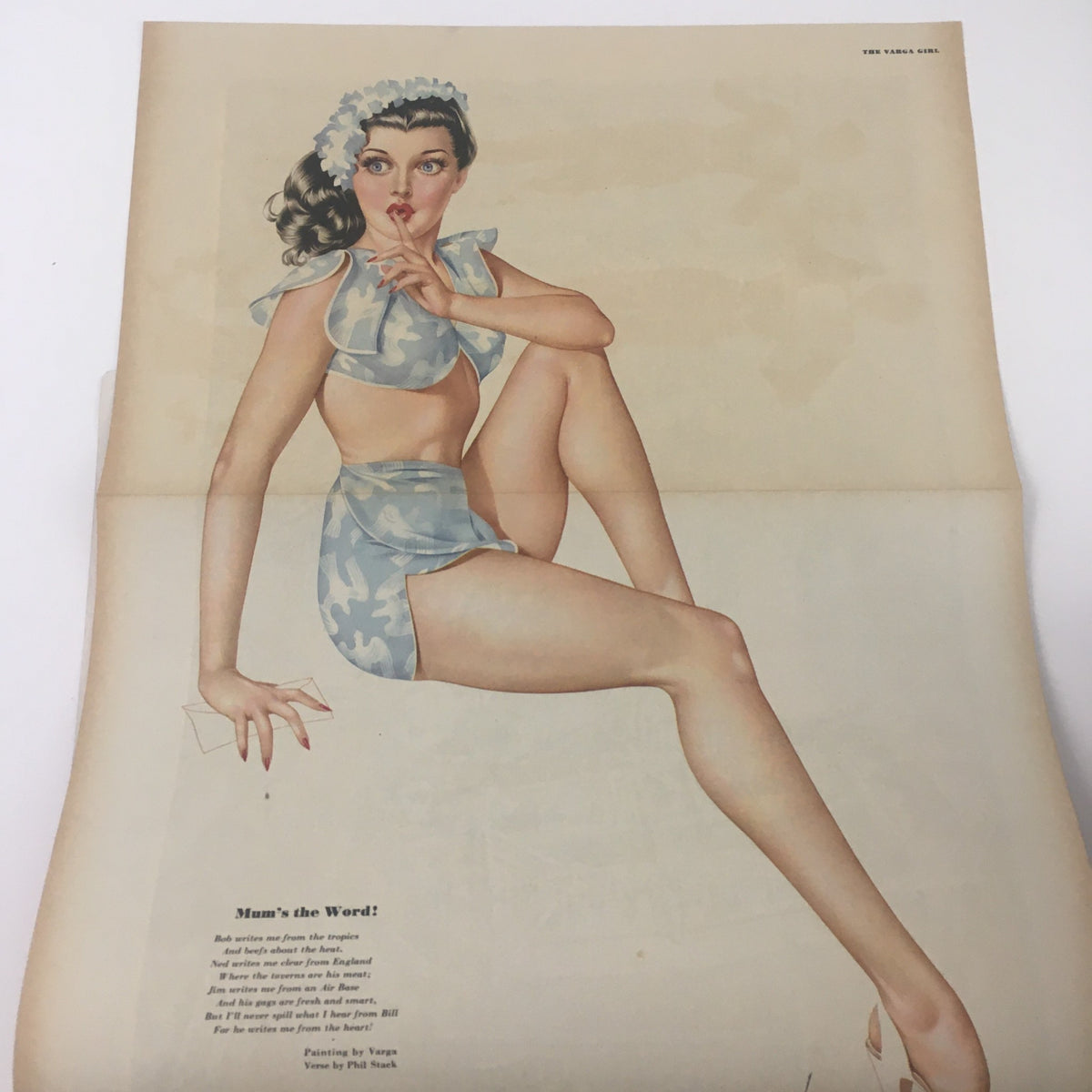
The label-free status of this issue is a meaningful condition attribute for a publication of this age. Esquire in 1945 was one of the most visually ambitious men's magazines in America — its covers during the war years had featured the iconic Petty Girls and Varga Girls, and its interior design set a standard for men's magazine production that its competitors struggled to match. A clean cover without subscriber label obstruction preserves whatever visual content Esquire's art department produced for October 1945 in its full intended form. Collectors who follow the Esquire archive will recognize that issues from the mid-1940s — the wartime and immediate postwar period — occupy a distinct and historically significant category within the title's long collecting history, both for their visual content and for the cultural moment they document.
About the Publication
Esquire was founded in 1933 by Arnold Gingrich and David Smart and had by October 1945 established itself as the premier men's general interest magazine in America — a publication that combined serious literary fiction and journalism with fashion coverage, humor, sports writing, and the pin-up art that had made it both famous and controversial during the war years. Its wartime circulation had been enormous: the magazine was one of the most widely distributed publications among American servicemen, and its literary contributors during the 1930s and 1940s — Hemingway, Fitzgerald, Dos Passos, and many others — had given it a literary credibility that no subsequent men's magazine has fully replicated. By October 1945, Esquire was navigating the transition from a wartime publication to a peacetime one, a shift that would define its editorial identity for the remainder of the decade.
Key Highlights Inside
- John R. Tunis feature: A confirmed contribution from one of mid-century America's most respected sports journalists and novelists, whose work combined athletic authority with genuine literary quality.
- Herb Graffis feature: A confirmed contribution from the prominent golf journalist and future Golf Writers Association of America co-founder, reflecting Esquire's consistent investment in serious sports writing from authoritative voices.
- October 1945 postwar transitional moment: Published in the first full month of peacetime following Japan's formal surrender on September 2, 1945, this issue documents American men's culture at the precise hinge point between wartime mobilization and postwar reconversion.
- Label-free cover: The confirmed absence of a subscriber mailing label preserves the full visual integrity of the October 1945 cover — particularly significant for a publication whose mid-1940s covers are among the most collectible in American magazine history.
- Note: Specific article titles beyond the confirmed Tunis and Graffis contributions, additional features, fiction content, and complete interior details have not been independently verified for this issue. Collectors seeking a full content inventory may wish to consult a university periodicals archive or the Esquire digital archive.
Condition & Rarity
The listing describes this issue as being in good condition with minor wear throughout — an honest and realistic assessment for a magazine now eighty years old. Esquire in 1945 was printed on paper stock of reasonable quality for its era, though not the archival-grade coated stock of later decades, which means aging and surface toning are expected attributes rather than condition failures. Good condition with minor wear indicates a copy that has survived eight decades without major structural damage — no missing pages, no significant moisture damage, and a cover that retains its visual legibility. The absence of a subscriber label is the most significant positive condition attribute, preserving the complete cover design. The plastic protective covering confirms deliberate preservation at some point in the magazine's subsequent history. When evaluating any surviving copy of this issue, the condition of the cover art, the completeness of the Tunis and Graffis contributions, and the overall page integrity and flexibility are the primary assessment criteria.
Looking for More Issues Like This?
A label-free copy of Esquire from October 1945 in good condition — published in the first month of postwar America, with confirmed contributions from two of the era's most respected sports writers — is a find that collectors of mid-century Americana and serious magazine ephemera recognize immediately for its historical and literary significance. If this issue is no longer available, the full Esquire archive at OriginalMagazines.com is the best place to continue exploring the title's remarkable wartime and postwar run. The broader 1945 magazine collection is equally worth browsing for collectors building a comprehensive primary-source record of the most consequential year of the twentieth century.