



Description
Collector's Note – Why This Issue Matters
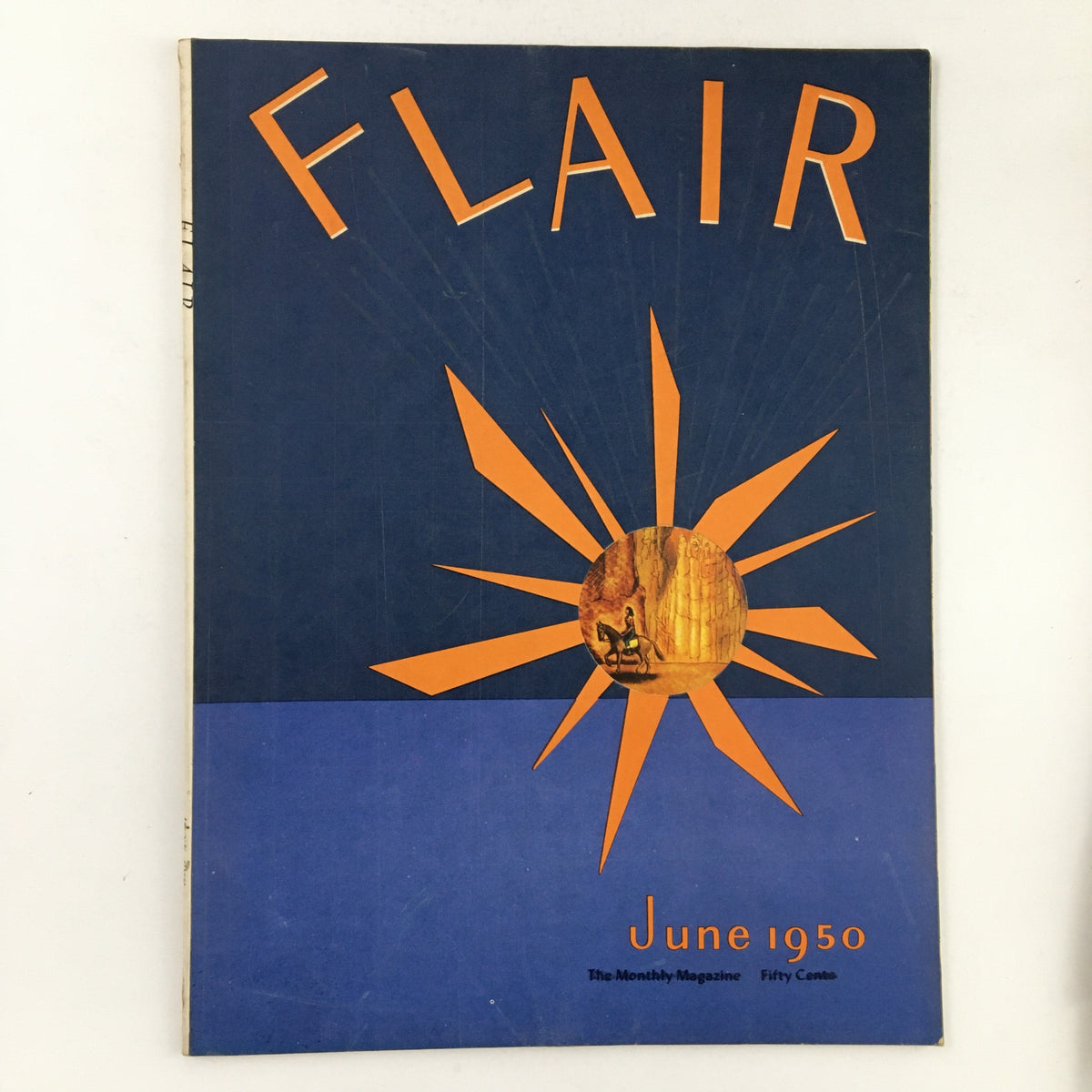
The June 1950 issue of Flair magazine, focused on summer and travel with an emphasis on art photography, is a primary document of one of the most extraordinary and short-lived publishing experiments in the history of American magazines — a publication whose physical ambition, editorial vision, and production innovation were so far in advance of anything the American magazine market had seen that it remains, more than seven decades after its single year of existence, among the most discussed and celebrated magazines ever produced in the United States. Flair was founded and edited by Fleur Cowles, wife of Gardner Cowles Jr. of the Cowles publishing empire, and published for exactly twelve monthly issues from February 1950 through January 1951 before being discontinued on cost grounds — its extraordinary production values, which included die-cut covers, tipped-in inserts, fold-out sections, translucent pages, and materials that no other American magazine of the era was using, made it financially unsustainable despite the genuine cultural prestige it generated in its brief existence. The June 1950 issue is therefore not simply a summer travel number; it is the fifth issue of a publication that existed for only twelve, produced at the precise midpoint of its single year of existence by an editorial team operating with the full creative confidence of a project that had received extraordinary critical attention and had not yet confronted the commercial reality that would end it. For collectors building archives of magazines from 1950, a Flair issue from any month of that year represents the rarest and most collectible American magazine publishing of the entire decade — and the June issue, with its summer and travel focus and confirmed art photography emphasis, represents the publication at the height of its seasonal visual ambition.
The specific focus on summer, travel, and art photography in the June 1950 issue reflects both the seasonal logic of a publication whose editorial calendar was organized around the experiential richness of each month and the broader editorial philosophy that made Flair so consequential in its moment and so influential in the decades that followed. Fleur Cowles's editorial vision was explicitly cross-disciplinary: Flair treated fashion, fine art, literature, travel, and culture as a unified field rather than separate departments, and its approach to photography — which engaged the most significant photographers and artists of the period rather than relying on house staff — gave it a visual authority that the major fashion and lifestyle magazines of the era could not match. A summer and travel issue in June 1950 would have brought that visual ambition to bear on the specific subject of postwar American leisure culture at its most expansive and newly accessible moment: commercial aviation was opening international travel to a broader American middle class than had previously had access to it, the postwar prosperity that would define the 1950s was fully underway, and the cultural appetite for sophisticated travel content that Flair was addressing was at the precise beginning of the sustained expansion that would make it one of the dominant editorial categories of the decade. The art photography confirmed for this issue documents that moment through the specific visual language of a publication whose photographic standards were the most ambitious of any American magazine in 1950 — a primary record of how the postwar summer and travel experience was being imagined and represented at the peak of interwar aesthetic ambition's postwar expression.
The broader context of June 1950 American cultural life gives this issue a further historical dimension worth noting. The Korean War began on June 25, 1950 — within days of this issue's cover date — marking the end of the brief postwar peace and the beginning of what would prove to be a sustained period of Cold War military engagement that would reshape American domestic and foreign policy for the following decade. A Flair summer and travel issue published at the precise moment of that transition documents the specific cultural atmosphere of American aspirational leisure at the last moment before the Korean War's outbreak reintroduced the conditions of military mobilization and international anxiety that the postwar prosperity had seemed to leave behind. The elegance, cosmopolitan confidence, and artistic ambition that the June 1950 Flair embodies are qualities that belong to a specific and historically bounded window — the five years between the end of the Second World War and the beginning of the Korean conflict — and the issue's summer and travel focus captures that window at its most aesthetically concentrated and culturally optimistic expression. Among the twelve issues of Flair's complete run, the June 1950 number occupies a historically specific position that no subsequent issue of the publication could claim.
About the Publication
Flair was an American magazine founded, edited, and largely conceived by Fleur Cowles, published by the Cowles Media Company and existing for exactly twelve monthly issues from February 1950 through January 1951. It was distinguished from every other American magazine of its era — and from most magazines produced before or since — by its extraordinary physical innovation: each issue incorporated die-cut covers, tipped-in inserts of different paper stocks and materials, fold-out sections, translucent pages, and production techniques that transformed the magazine from a publication into an object, a physical artifact whose form was as intentional and considered as its content. Its editorial range was deliberately and ambitiously cross-disciplinary, treating fashion, fine art, literature, interior design, travel, and cultural commentary as aspects of a unified aesthetic sensibility rather than separate editorial departments. Contributors included some of the most significant writers, artists, and photographers of the postwar era, and the magazine's visual standards were consistently the most ambitious of any American publication in its year of existence. Its discontinuation after twelve issues on financial grounds — the production costs of its physical innovations were not sustainable — has made complete runs and individual issues among the most sought-after collecting targets in the entire American magazine market, with the publication's brief existence and extraordinary ambition giving every surviving issue a significance and scarcity that no comparable publication of the period can match.
Key Highlights Inside
- Summer and travel editorial focus — confirmed June 1950 thematic content — A primary Flair document applying the publication's cross-disciplinary editorial ambition and extraordinary visual production standards to the specific subject of postwar American summer leisure and international travel at the precise cultural moment — the summer of 1950 — when commercial aviation and postwar prosperity were opening cosmopolitan travel experiences to a broader American audience than any previous era had produced.
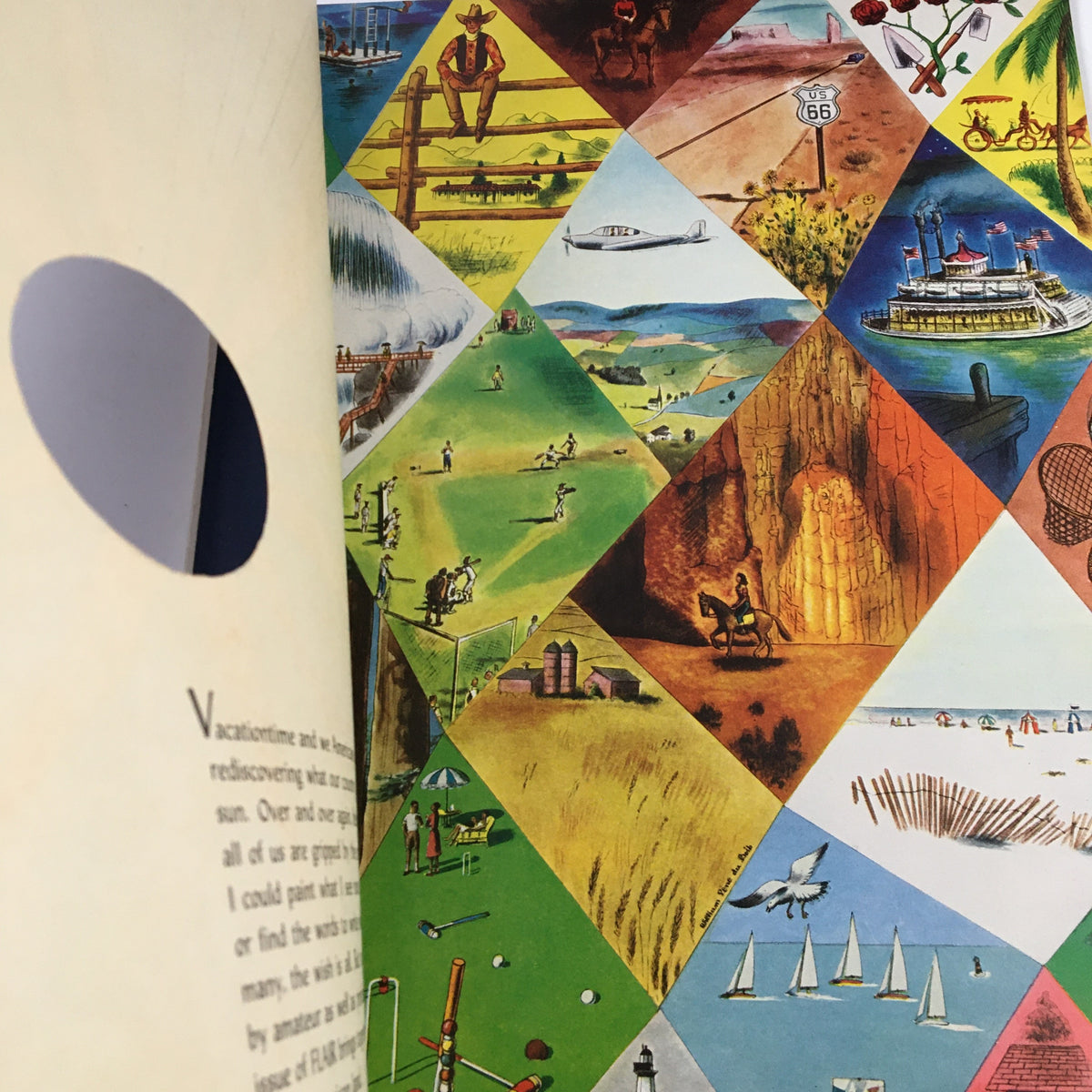
- Art photography — confirmed visual content emphasis — Photography content consistent with Flair's established approach of engaging the most significant photographers of the period rather than relying on standard commercial magazine photography — a primary document of how art photography was being applied to summer and travel subject matter at the specific moment when the publication's visual ambitions were most fully operational and its production resources most comprehensively deployed.
- Issue five of twelve — confirmed position in complete run — Published at the precise midpoint of Flair's single twelve-issue year of existence, this June 1950 issue documents the publication operating with the full creative confidence of a project that had received extraordinary critical attention across its first five months without yet confronting the commercial pressures that would end it — a condition that gives mid-run issues a specific creative energy distinguishable from both the inaugural excitement of the early issues and the elegiac quality of the final ones.
- 1950 summer fashion and lifestyle content — confirmed thematic context — Editorial content reflecting the specific aesthetic moment of summer 1950 American style, when the postwar prosperity that would define the decade was fully underway and the cultural appetite for sophisticated summer and travel content was at the beginning of the sustained expansion that would make it one of the dominant editorial categories of 1950s American magazine publishing.
- Physical production innovations — confirmed publication characteristics — As with all twelve issues of Flair, the June 1950 number's physical construction — which may include die-cut elements, tipped-in inserts, or other production innovations specific to this issue — is itself a primary artifact of the publication's extraordinary approach to the magazine as a physical object, and the preservation of these physical features is a primary condition consideration for collectors evaluating surviving copies.
Condition & Rarity
Surviving copies of this issue described as being in good condition with minor wear characteristic of a seventy-five-year-old publication occupy a meaningful position within the collector grading spectrum for Flair — a publication whose physical complexity creates condition variables that standard magazine grading frameworks do not fully capture. The newsstand origin designation — confirmed by the absence of a mailing label — is particularly significant for a Flair issue, as the publication's die-cut covers and physical innovations were especially vulnerable to damage from the label application and removal processes that subscription copies underwent, making label-free copies not merely preferred but substantially more likely to have preserved the cover's structural and visual integrity in its original form. The protective plastic covering applied during preservation indicates deliberate archival handling that has helped maintain both the primary page content and any physical production features — tipped-in inserts, fold-out sections, or specialty paper elements — that constitute the issue's complete physical form. Condition assessment for Flair issues requires specific attention beyond standard magazine grading: collectors should evaluate the integrity of any die-cut elements, the presence and condition of all tipped-in or inserted materials, the structural soundness of the binding given the additional weight and complexity of the publication's physical construction, and the preservation of any specialty paper stocks whose different aging characteristics may distinguish them from the primary page content. A surviving copy of any Flair issue in good condition with its physical features intact is a meaningful and specifically valuable preservation given the publication's twelve-issue total existence and the inherent fragility of its production innovations across seventy-five years.
Looking for More Issues Like This?
Flair produced only twelve issues across its single year of existence, making every surviving copy from any month of 1950 or January 1951 among the more specifically sought collecting targets in the entire American vintage magazine market — publications whose combination of extraordinary physical ambition, editorial significance, and absolute scarcity of total production gives them a status that no comparably aged consumer magazine can claim. The June 1950 summer and travel issue, with its confirmed art photography emphasis and its position at the midpoint of the publication's complete run, is a particularly purposeful collecting target for serious students of American magazine history, postwar visual culture, and the history of art photography as applied to editorial publishing. For collectors building a broader picture of American publishing culture, visual art, and postwar leisure culture in 1950, the full 1950 magazine archive at OriginalMagazines.com covers the range of publications from a year that sits at the precise opening of the postwar decade's most confident and culturally productive phase — a moment whose documentary significance in American cultural history continues to reward the attention of serious collectors and researchers across multiple disciplines.