




Description
Collector's Note – Why This Issue Matters
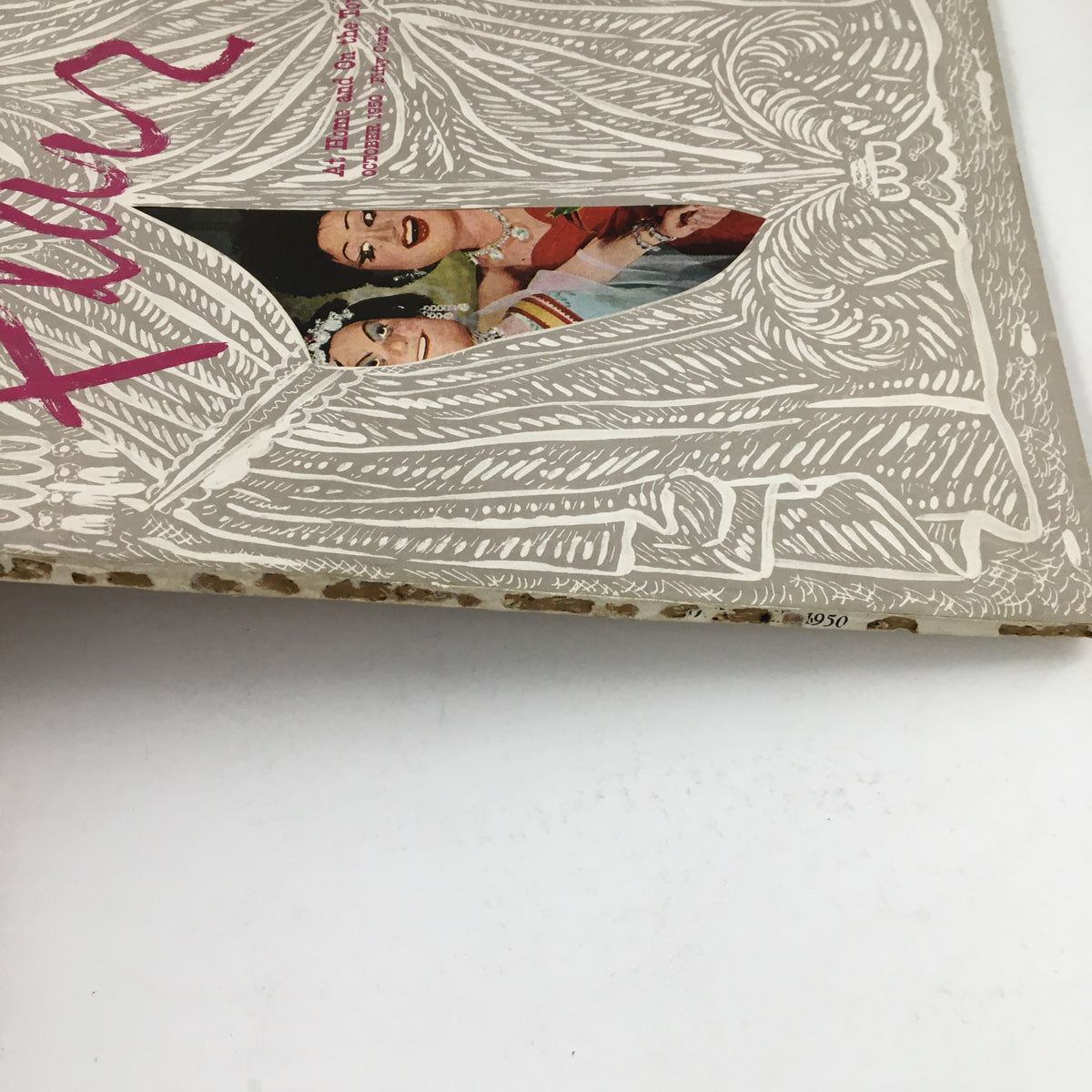
Flair magazine is among the most celebrated and most collectible publications in the entire history of American magazine design — a short-lived monthly that ran for only twelve issues in 1950 and whose combination of editorial ambition, design innovation, and physical production experimentation has made it one of the most sought-after and most studied magazine artifacts of the twentieth century. The October 1950 issue, titled "At Home and On The Town," is the tenth of those twelve issues, published in the final quarter of the publication's single-year run, and its existence in any condition is a meaningful collector finding. Flair was founded and edited by Fleur Cowles, whose vision for the magazine was unlike anything American publishing had produced before or has produced since: each issue incorporated physical design innovations — fold-out pages, die-cut covers, tipped-in inserts, bound-in booklets, unusual paper stocks, and a variety of graphic experiments — that made every issue a physically unique object rather than simply a printed publication. The October 1950 issue's "At Home and On The Town" editorial concept — covering domestic design and social life simultaneously — reflects the specific cultural aspirations of postwar American affluence, the moment when the returning prosperity of the early 1950s was being channeled into the specific aesthetic vocabulary of mid-century modern interior design and the social rituals of entertaining and public life. For collectors building a documentary archive of American design history and mid-century publishing, the full range of 1950 magazines and publications from this year provides essential context for understanding the specific cultural moment this extraordinary publication documented in its brief existence.
The specific editorial focus of the October 1950 Flair — interior design, fashion trends, and entertaining — documents the precise cultural moment when American domestic aspiration was being most actively constructed through the specific aesthetic vocabulary that would define mid-century style for the following decades. October 1950 was the fifth year of the postwar consumer boom, and the American household was in the process of equipping itself with the specific furniture, design objects, and domestic rituals that would constitute the mid-century American interior as a cultural and aesthetic achievement. Flair's specific contribution to this moment was to document it with a visual sophistication and an editorial ambition that no other American publication of the era was bringing to domestic and lifestyle coverage — its contributors included some of the most significant visual artists, writers, and cultural figures of the period, and its physical design experiments gave its lifestyle content a material seriousness that matched the cultural weight of what it was documenting. The no-label newsstand condition confirmed in this listing is a meaningful positive for a publication whose cover design was itself one of its most celebrated features — each Flair cover was a design achievement in its own right, and the die-cut and fold-out elements that characterized many issues are best preserved and most fully appreciated in copies that have not been disrupted by the subscription label application. The binding wear is honest and expected for a publication now seventy-five years old, and the plastic protective covering indicates deliberate preservation care for an object whose physical complexity — the multiple paper stocks, the fold-outs, the inserts — makes careful storage more important than for a standard magazine.
The rarity of complete, intact Flair issues in any condition is worth understanding for collectors approaching this listing. The magazine's physical design ambitions produced publications that were inherently fragile — the fold-outs, the die-cuts, the tipped-in inserts, and the unusual paper stocks all represented potential failure points that decades of storage have realized in many surviving examples. A Flair in good condition with binding wear but physical integrity is a more complete survival than many examples that have lost their fold-outs or had their inserts separated. The twelve-issue run means that the total number of original copies produced across all issues was a fraction of what a longer-running publication would have generated, and the natural attrition of seventy-five years has further reduced the surviving pool. The October 1950 issue occupies a specific position as the tenth of twelve — late in the run, produced as the publication was nearing its conclusion while maintaining the full range of its physical design experiments and editorial ambitions.
About the Publication
Flair magazine was founded, funded, and edited by Fleur Cowles and published for twelve monthly issues in 1950, constituting one of the most ambitious and most celebrated single-year publishing experiments in the history of American magazines. Each issue was physically unique — incorporating die-cut covers, fold-out pages, tipped-in booklets, multiple paper stocks, and design innovations that made Flair as much a designed object as a publication — and its editorial roster included major visual artists, writers, and cultural figures whose contributions gave it an artistic authority that matched its design ambitions. Its audience was the educated, culturally engaged, and affluent American reader who appreciated both the editorial sophistication and the physical beauty of a publication whose production values had no equivalent in the contemporary American magazine market.
Key Highlights Inside
- "At Home and On The Town" editorial focus — postwar American domestic and social life documented — The confirmed "At Home and On The Town" theme preserves primary Flair editorial documentation of the specific cultural moment when postwar American affluence was being channeled into the domestic aesthetic vocabulary and social rituals that would define mid-century American lifestyle culture, captured in the specific visual and editorial voice of the most design-ambitious American lifestyle publication of its era.
- Interior design content — 1950 mid-century modern aesthetic documented — The confirmed interior design coverage preserves primary documentation of the specific furniture, design objects, and domestic aesthetic vocabulary being presented to aspirational American readers in October 1950, at the specific moment when mid-century modern design was establishing the visual language that would define American domestic aspiration for the following decades.
- Fashion and entertaining content — early-1950s social and style culture documented — The confirmed fashion trends and entertaining content preserves primary documentation of the specific social rituals and style vocabulary of early-1950s American public and domestic life, captured in the editorial voice of a publication whose visual sophistication gave its lifestyle coverage an aesthetic authority that contemporary magazines could not match.
- No-label newsstand edition — Flair cover design fully preserved — The confirmed no-label newsstand status preserves the full visual integrity of the October 1950 Flair cover design — which, consistent with the publication's physical design ambitions, may incorporate die-cut, fold-out, or other physical design elements — without subscription label disruption, representing a meaningful positive for a publication whose cover was itself one of its primary design achievements.
- Note: The specific contributors, visual artists, writers, and the complete editorial contents of the October 1950 issue beyond the confirmed "At Home and On The Town" theme and lifestyle focus have not been independently verified beyond the listing description. Given Flair's roster of significant cultural contributors across its full run, the specific contents may be of considerable research interest but cannot be confirmed without physical examination.
Condition & Rarity
This issue is described as being in good condition with minor wear throughout, binding wear, no label, and a plastic protective covering — a condition profile that requires contextual assessment specific to Flair's unusual physical character. For a publication whose design complexity — the potential fold-outs, die-cuts, tipped-in inserts, and multiple paper stocks that characterized different issues — makes physical integrity more consequential and more fragile than for standard magazines, good condition with binding wear but apparent overall preservation represents a meaningful survival. The binding wear is honest and expected for a publication now seventy-five years old. The no-label status is particularly significant for Flair, whose covers were themselves design achievements that subscription labels would have partially obscured. The plastic protective covering indicates deliberate preservation care appropriate to a physically complex object. Collectors evaluating this issue should assess from the accompanying photographs whether the specific physical design elements — any fold-outs, inserts, or die-cut elements — present in the October 1950 issue remain intact, as these elements are the primary physical differentiators of Flair's survival quality and the primary determinants of completeness for research and display purposes.
Looking for More Issues Like This?
Flair magazine issues in any condition from the complete twelve-issue 1950 run are among the most actively sought and most celebrated collectibles in the entire history of American magazine publishing, recognized by design historians, mid-century modernists, and serious magazine collectors as the most physically ambitious and most design-historically significant single-year publishing experiment in American history. If this October 1950 issue is no longer available, the 1950 magazines collection at OriginalMagazines.com brings together a wide range of primary source material from that pivotal year in American design culture, postwar prosperity, and the mid-century aesthetic moment that Flair documented with more visual ambition than any of its contemporaries.