






Description
Collector's Note – Why This Issue Matters
November 1991 was an extraordinary moment in video game history, and this issue of Game Informer captures it with unusual precision. The SEGA Genesis was in the middle of its most competitive stretch against the Super Nintendo, which had launched in North America just two months earlier in September 1991. The console wars were no longer a metaphor — they were a weekly reality playing out on store shelves, in schoolyard arguments, and in the pages of gaming magazines that were themselves a relatively new phenomenon. ToeJam & Earl, released by SEGA in 1991, was one of the more genuinely original titles of the entire 16-bit era: a roguelike co-op adventure featuring two alien characters stranded on a fragmented Earth, built on procedurally generated levels at a time when that concept had no name in consumer gaming. It found a devoted audience immediately and has retained genuine cult status in the decades since. Collectors assembling a complete picture of early 1990s gaming press will find significant material in the Game Informer archive at OriginalMagazines.com, particularly across the publication's formative years.
The significance of a November 1991 Game Informer goes beyond its cover subject. This was the magazine's second year of publication — it launched in 1991 out of a Minnesota-based game retailer called Funcoland — which places this issue within the earliest documented run of what would eventually become one of the highest-circulation magazines in the United States. Early issues are categorically scarce. The publication began as a newsletter-format retailer circular, gradually developing into a full editorial product, and print runs from this founding period were modest by any measure. A copy from this specific window is less a gaming magazine in the modern sense and more a primary document of an industry and a publication both still figuring out what they were. Those researching the gaming culture and broader media landscape of this year can find additional context through the 1991 magazines collection at OriginalMagazines.com.
ToeJam & Earl itself deserves recognition as more than a nostalgic touchstone. Designed by Greg Johnson and Mark Voorsanger, the game was rooted in a genuinely eccentric creative vision — its funk soundtrack, improvisational structure, and deadpan humor were unlike anything else on the Genesis. It was not a massive commercial blockbuster on release, but it built a loyal following that sustained two sequels and a successful Kickstarter-funded revival decades later. Coverage in a gaming magazine from its original release year carries real documentary value for anyone tracing the game's critical and cultural reception at the moment it first appeared.
About the Publication
Game Informer was founded in August 1991 by Funcoland, a Minneapolis-based video game retail chain, initially distributed to the company's customer base as a promotional publication covering game reviews, news, and strategy content. Its early issues were modest in production scale but consistent in focus, targeting an audience of active console and computer game players who wanted coverage beyond what mainstream entertainment press could provide. The magazine survived Funcoland's acquisition by Electronics Boutique and later GameStop, eventually becoming the subscription-based editorial product that reached peak circulations exceeding eight million in the 2010s. Issues from 1991 represent the publication at its absolute origin point — before national distribution, before major advertising relationships, and before the editorial infrastructure that would define its later identity.
Key Highlights Inside
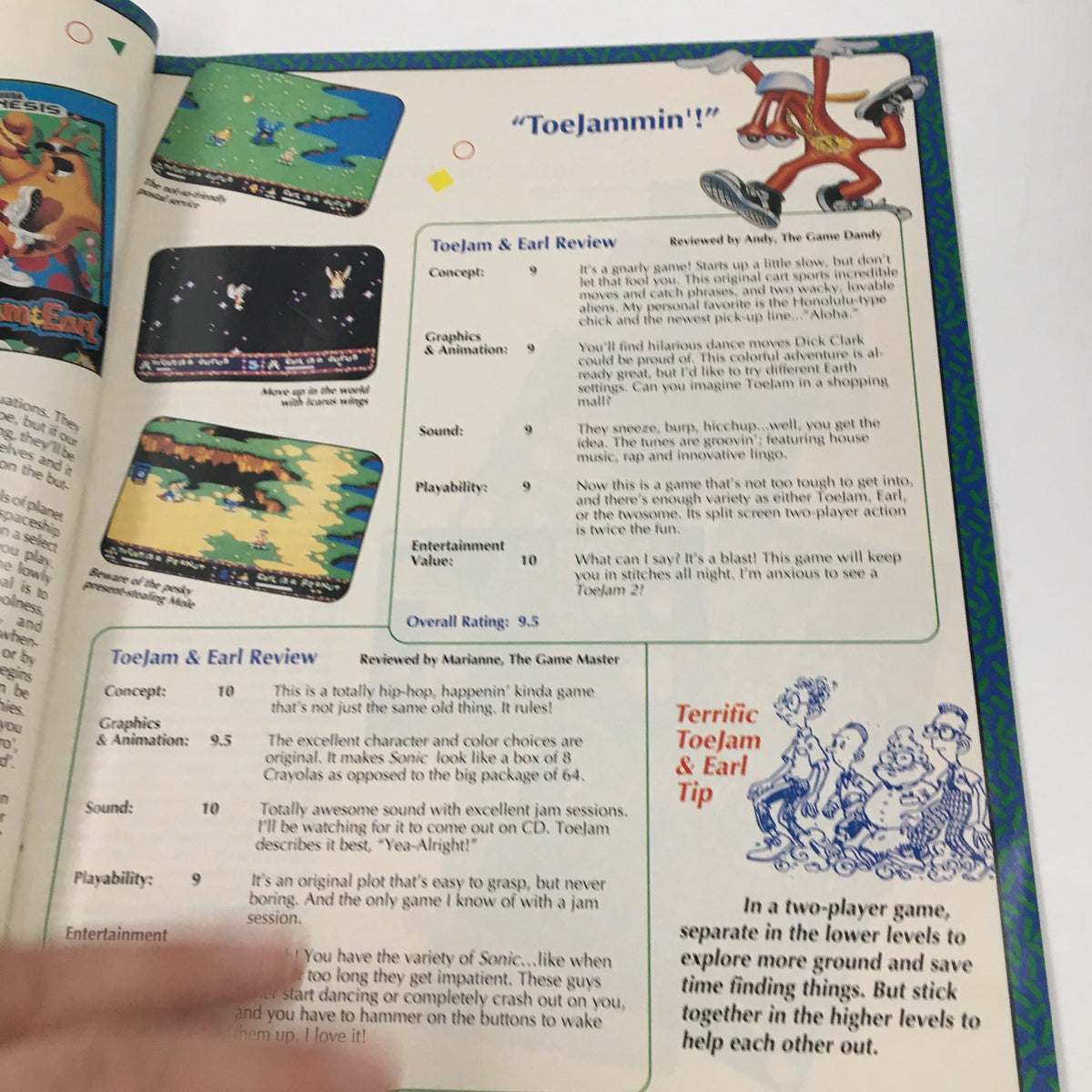
- An in-depth review of ToeJam & Earl for the SEGA Genesis, covering one of the most distinctive and enduringly discussed titles of the 16-bit era at the time of its original release.
- Strategy tips for ToeJam & Earl, providing period-contemporary guidance for a game built on procedurally generated levels — making printed strategy content particularly notable given the game's randomized structure.
- Coverage published during the opening months of the 16-bit console war, with the Super Nintendo having launched in North America just weeks before this issue's publication date.
- An issue from Game Informer's founding year, placing it among the earliest surviving examples of a publication that would go on to become a dominant force in games journalism — making the editorial voice and format here a direct artifact of the magazine's origins.
- Note: Additional specific article titles, reviewed games beyond ToeJam & Earl, and full interior content details have not been independently verified for this issue beyond what appears in the listing. The highlights above reflect confirmed cover content and well-documented context for the publication and period.
Condition & Rarity
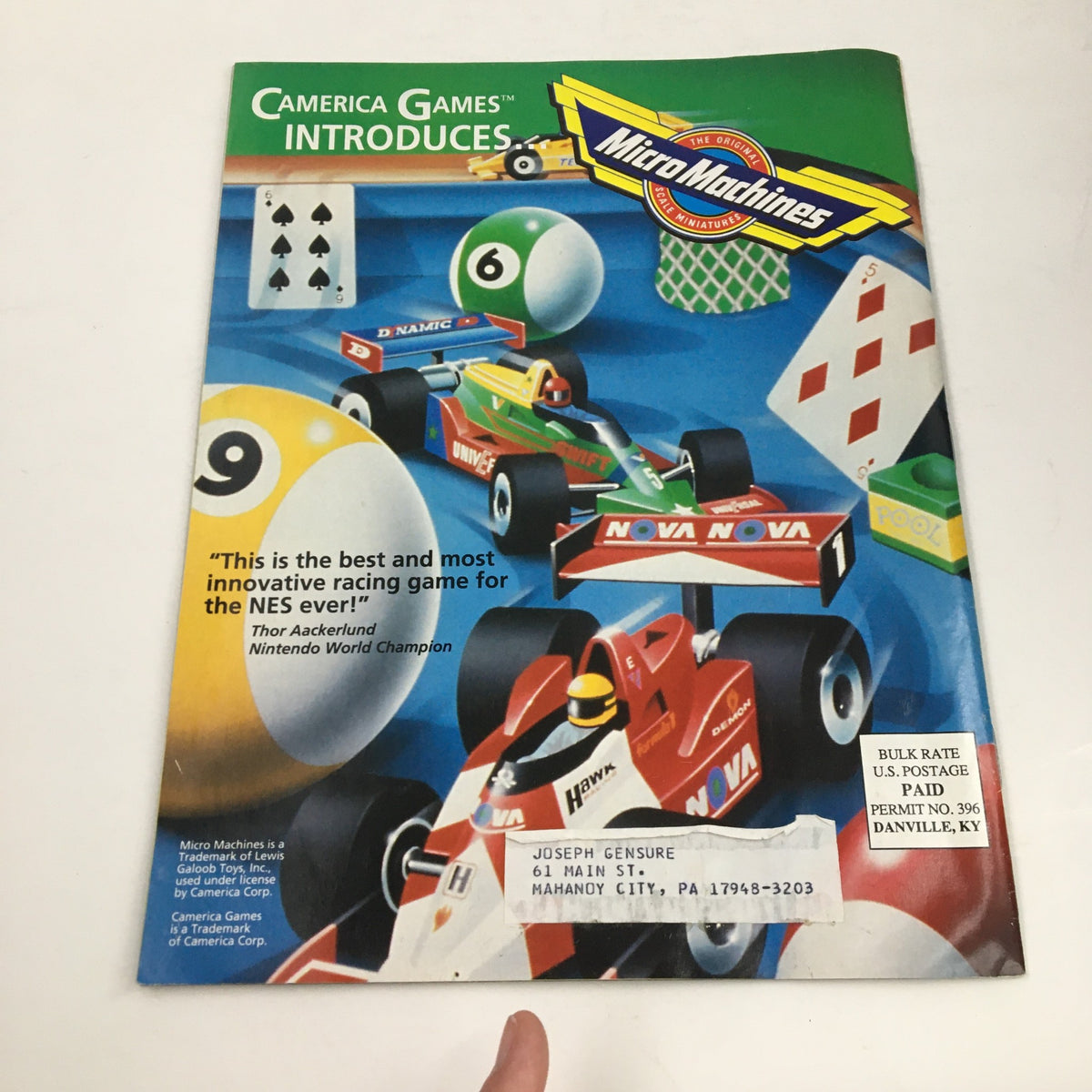
The noted condition describes a complete copy with minor overall wear consistent with its age and a subscriber address label on the back cover. In periodical grading, the presence of an address label is a standard disclosure rather than a serious defect — it confirms the copy entered circulation through direct subscription rather than newsstand retail, which for a publication like early Game Informer distributed primarily through Funcoland's customer base is actually the expected distribution channel. The label affects the back cover only and does not impact the front cover, interior pages, or spine integrity. Minor wear across a thirty-plus-year-old magazine of this type is entirely expected; what matters for collector evaluation is completeness of pages, cover attachment, and legibility of content — all of which the noted condition supports. Given the extremely limited print runs associated with Game Informer's 1991 founding period, any surviving complete copy from this year occupies a different category of scarcity than later issues with mass-market print runs.
Looking for More Issues Like This?
Early Game Informer issues from the founding year are genuinely difficult to locate in any condition — the print runs were small, the original audience treated them as retailer circulars rather than collectibles, and survival rates reflect that. If this particular issue has already been claimed, the Game Informer collection at OriginalMagazines.com is the best place to search for other issues across the magazine's run. For collectors with broader interest in the gaming press and cultural moment of the early 1990s, the 1991 magazines collection offers a wide range of period publications worth exploring alongside it.