




Description
Collector's Note – Why This Issue Matters
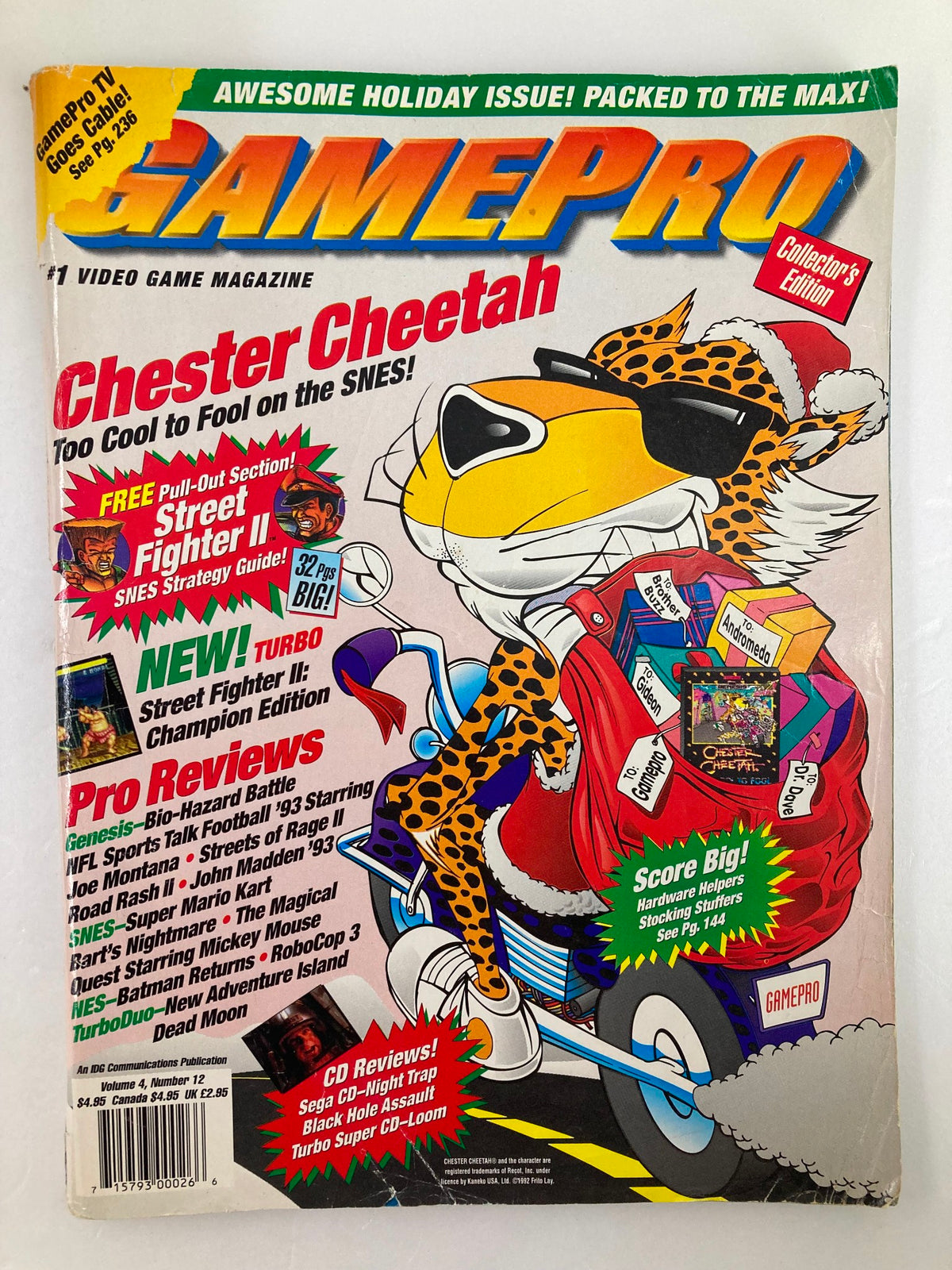
December 1992 is one of the most historically significant months in the history of home video gaming, and this GamePro Magazine issue documents it from the inside. Street Fighter II had been released in arcades in 1991 and its Super Nintendo home port in June 1992 had become one of the best-selling games in the history of the platform — a conversion that demonstrated definitively that the home console market had reached a level of technical sophistication capable of delivering the arcade experience to living rooms. By December 1992 the Street Fighter II phenomenon was at its absolute commercial and cultural peak: the Super Nintendo version had sold millions of copies, the franchise had spawned licensed merchandise across every conceivable category, and the fighting game genre that Street Fighter II had essentially invented was generating imitators and competitors from every major game developer simultaneously. A GamePro guide dedicated to Street Fighter II in December 1992 was therefore not merely a game tips feature but a primary document of the fighting game revolution at the moment of its maximum impact on gaming culture — the point at which Street Fighter II had ceased to be merely a popular game and had become a cultural institution that was reshaping the entire industry. For collectors researching gaming and entertainment magazines from 1992, this GamePro issue is a precisely dated primary artifact of one of the most commercially and culturally significant moments in the history of video gaming.
The Chester Cheetah feature alongside the Street Fighter II content is its own kind of historically interesting document. Chester Cheetah — the Cheetos mascot repurposed as the protagonist of two Sega Genesis and Super Nintendo video games released in 1992 — represents a specific and now-faded strand of early nineties gaming culture: the promotional licensed game, where brand mascots were converted into platform game heroes in hopes of bridging the gap between consumer product marketing and interactive entertainment. Chester Cheetah: Too Cool to Fool and its sequel were moderately successful attempts to capitalize on both the mascot platformer trend (driven by Sonic the Hedgehog's enormous 1991 success) and the broader appetite for new branded gaming properties in the early-console era. A GamePro feature on Chester Cheetah in December 1992 documents that specific commercial-gaming intersection at its most active moment — the period when Frito-Lay and their marketing agency believed that a cheesy snack mascot could anchor a viable gaming franchise. That this kind of licensed promotional game received dedicated GamePro coverage alongside the era-defining Street Fighter II is itself a document of how the early-nineties gaming press covered the full spectrum of commercial gaming rather than only its most artistically significant entries.
GamePro in December 1992 was operating at a specific moment of maximum influence in the gaming press landscape. The publication had been founded in 1988 and by 1992 had established itself as one of the two or three most widely read gaming magazines in the United States, its coverage of both console and arcade gaming giving it a breadth that competitors sometimes lacked. The December 1992 issue — Vol 4, #12, the final issue of the publication's fourth year — would have engaged the full commercial gaming landscape of the holiday season, the most commercially significant moment of the gaming year, in which the Street Fighter II and Chester Cheetah content would have been positioned alongside Christmas buying guides, new platform announcements, and the full range of late-1992 gaming coverage that made the December GamePro one of the year's most content-dense editions. The issue is therefore a comprehensive primary source document of early-nineties gaming culture at its most commercially active annual moment.
About the Publication
GamePro Magazine was an American video game magazine founded in 1988 and published by IDG Communications, establishing itself through the early nineties as one of the most widely read gaming publications in the United States. Its editorial approach combined game reviews, strategy guides, news coverage, and the kind of enthusiast-oriented content that its readership of young, actively gaming Americans demanded, covering the full range of platforms — including NES, Super Nintendo, Sega Genesis, Game Boy, and arcade — with a breadth that distinguished it from some competitors who specialized more narrowly. By December 1992 GamePro was at a commercial and editorial peak, its large format and dense content reflecting the gaming industry's own rapid growth and the expanding appetite of a readership that was consuming gaming culture through every available media channel. Its holiday issues were among its most commercially significant of the year, combining gift guides and major franchise coverage with the kind of seasonal content that made them essential reading for the gaming audience of the early nineties.
Key Highlights Inside
- Street Fighter II strategy guide — a documented comprehensive feature on the most commercially and culturally significant fighting game in the history of the medium, published at the precise moment of its maximum impact on both the gaming industry and popular culture, representing primary source documentation of how the gaming press engaged one of the most consequential game releases in the medium's history at the height of its influence.
- Chester Cheetah gaming feature — coverage of the Frito-Lay mascot's licensed platform games, representing the specific and historically interesting category of promotional licensed gaming that was commercially active in the early nineties and that GamePro covered alongside artistically significant titles, providing a primary document of the commercial-gaming intersection that characterized the early-console marketplace.
- Holiday gaming coverage consistent with GamePro's December 1992 format — the magazine's most commercially significant annual issue would have included buying guides, new release coverage, and the full range of late-1992 gaming content addressing its readership's holiday purchasing decisions across the major platforms of the era.
- Multi-platform gaming coverage consistent with GamePro's established December 1992 editorial approach — the full range of Super Nintendo, Sega Genesis, Game Boy, and arcade coverage that made GamePro one of the most comprehensive gaming publications of its era, documented here at the specific commercial moment of the early-nineties console market's most active holiday season.
- Note: Specific secondary feature titles, reviewed games, and confirmed interior content details beyond the documented Street Fighter II and Chester Cheetah features have not been individually verified for this issue. The highlights above reflect GamePro's well-established editorial format, the verified featured content and volume/issue number, and the historical context of December 1992.
Condition & Rarity
GamePro Magazine issues from December 1992 are approaching their thirty-fourth year of existence — old enough that condition variation is meaningful, particularly for an issue whose Street Fighter II content ensures consistent collector interest from both gaming history enthusiasts and Street Fighter franchise collectors. Good condition with minor marks, front corner creases, and rips — honestly documented in the listing with photographic reference — is a transparent and appropriate assessment for a thirty-three-year-old gaming magazine produced on paper stock never designed for long-term preservation. GamePro in this period was printed on glossy, coated-cover paper with interior newsprint-quality pages that are susceptible to the yellowing, brittleness, and surface oxidation that accumulate over three decades of storage. The condition described reflects a reading and reference copy rather than a display-grade example, with the honest physical evidence of its use history visible in the corner creases and rips. The plastic protective sleeve provides ongoing protection against further deterioration. Collectors evaluating surviving examples of this issue should prioritize the completeness and readability of the Street Fighter II strategy guide content, the overall structural integrity of the binding, and the legibility of the cover design as primary condition criteria, understanding that the documentary and research value of this issue's content is entirely independent of its physical condition grade.
Looking for More Issues Like This?
A December 1992 GamePro with confirmed Street Fighter II guide content and Chester Cheetah coverage is a specifically documented early-nineties gaming magazine find — issues from this peak commercial moment of the Street Fighter II phenomenon surface infrequently in better condition, and complete copies with both documented features intact are the preferred find for serious collectors of early-nineties gaming history. If this issue is no longer available, the 1992 magazine collection at OriginalMagazines.com brings together surviving issues from across that year's major publications for collectors working to document the full breadth of American gaming and popular culture journalism during one of the most commercially and historically significant years in the history of video games.