









Description
Collector's Note – Why This Issue Matters
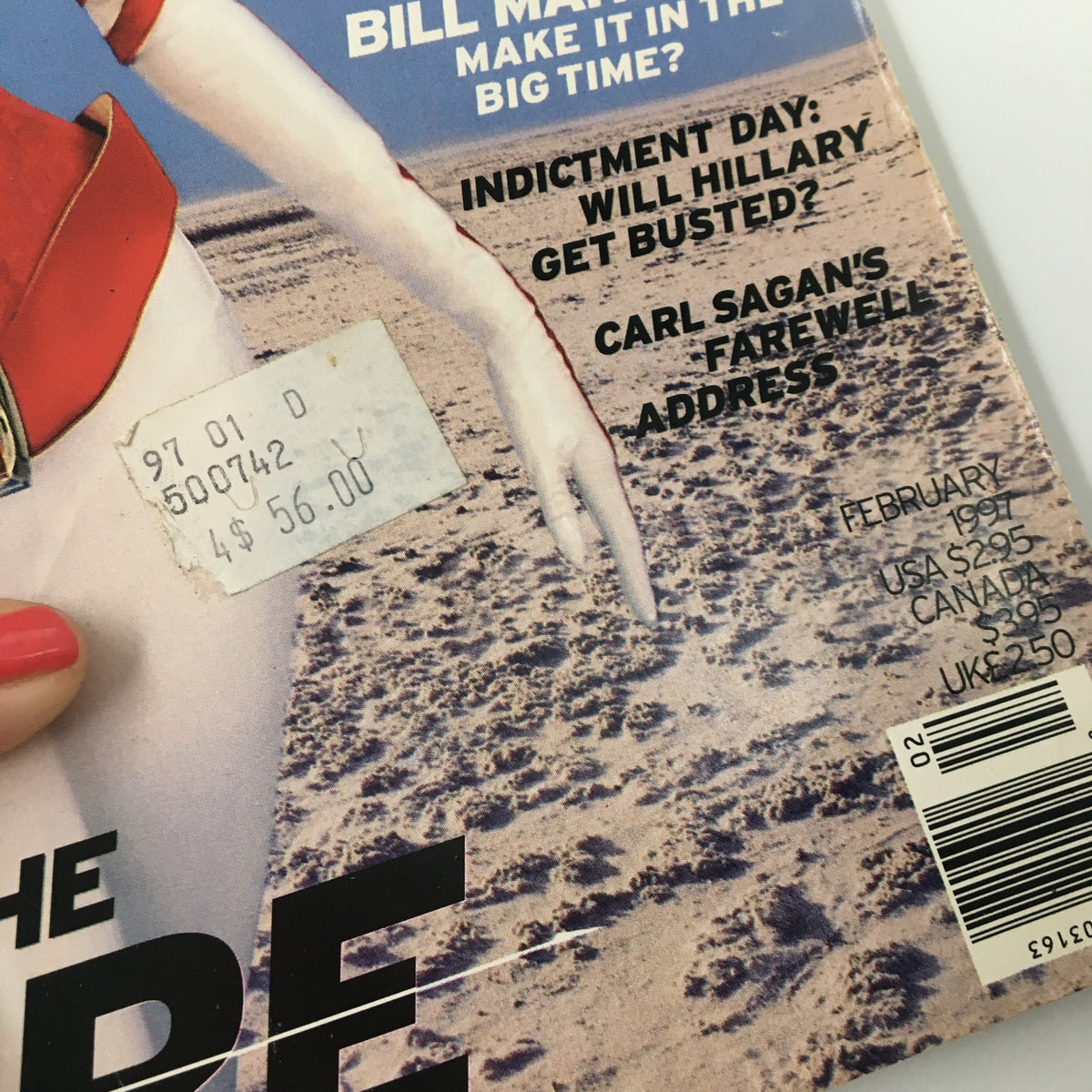
The February 1997 issue of George Magazine is one of the more conceptually loaded covers in the publication's five-and-a-half-year run. Dutch supermodel Karen Mulder appears on the front in the magazine's signature mode: a glamour figure deployed as the visual hook for a politically substantive interior. Mulder was at the height of her career in the mid-1990s, a fixture of the Victoria's Secret runway and the international fashion circuit, and her presence on a political magazine cover was precisely the kind of productive provocation that George's founder, John F. Kennedy Jr., had built his editorial identity around. The message was implicit but clear — politics and celebrity were not separate conversations in 1997, and George refused to pretend otherwise.
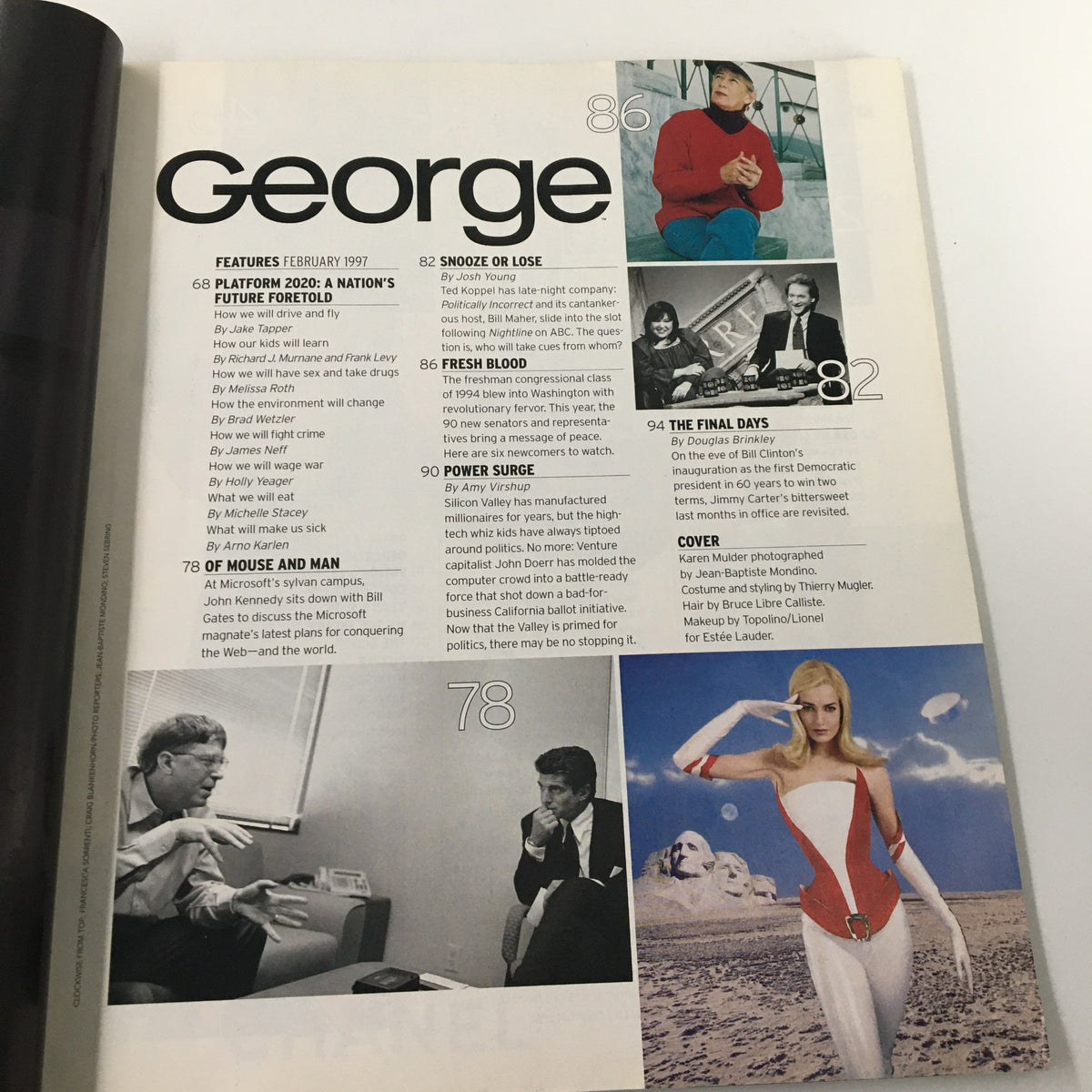
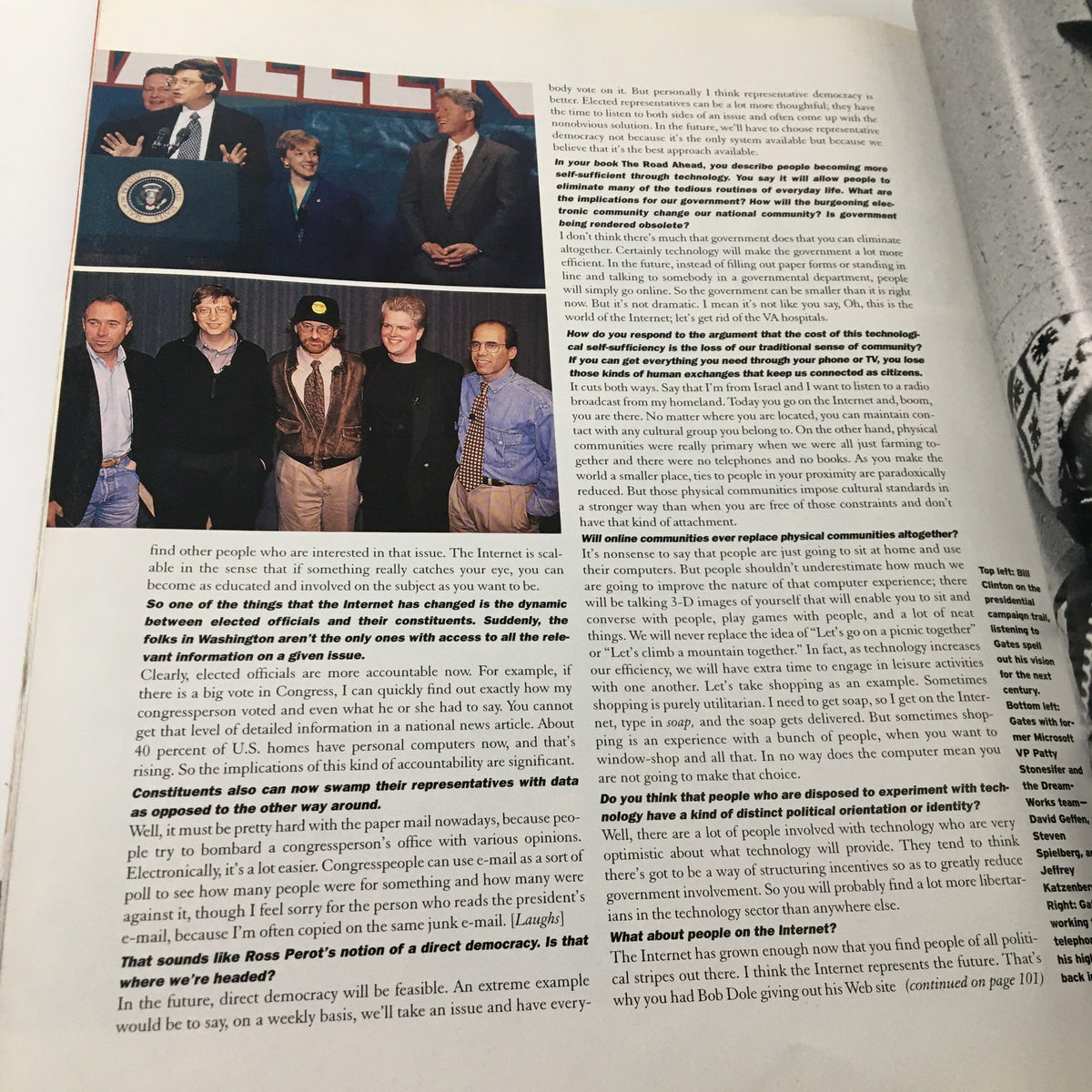
The figures named inside — Bill Gates and Jimmy Carter — anchor the issue to two of the defining stories of the late Clinton era. Gates in early 1997 was the world's wealthiest private citizen and already beginning to attract serious federal antitrust scrutiny; the Department of Justice investigation that would consume his public image for the next several years was gathering momentum. Carter, meanwhile, had spent nearly two decades transforming the meaning of a post-presidency through the Carter Center's election monitoring work, his Habitat for Humanity involvement, and diplomatic interventions in North Korea and Haiti. His inclusion in a pop-culture-inflected political magazine speaks to how thoroughly he had rehabilitated his public standing since leaving office in 1981. Collectors building a comprehensive archive of the George Magazine run will find this issue representative of the title at its most editorially confident.
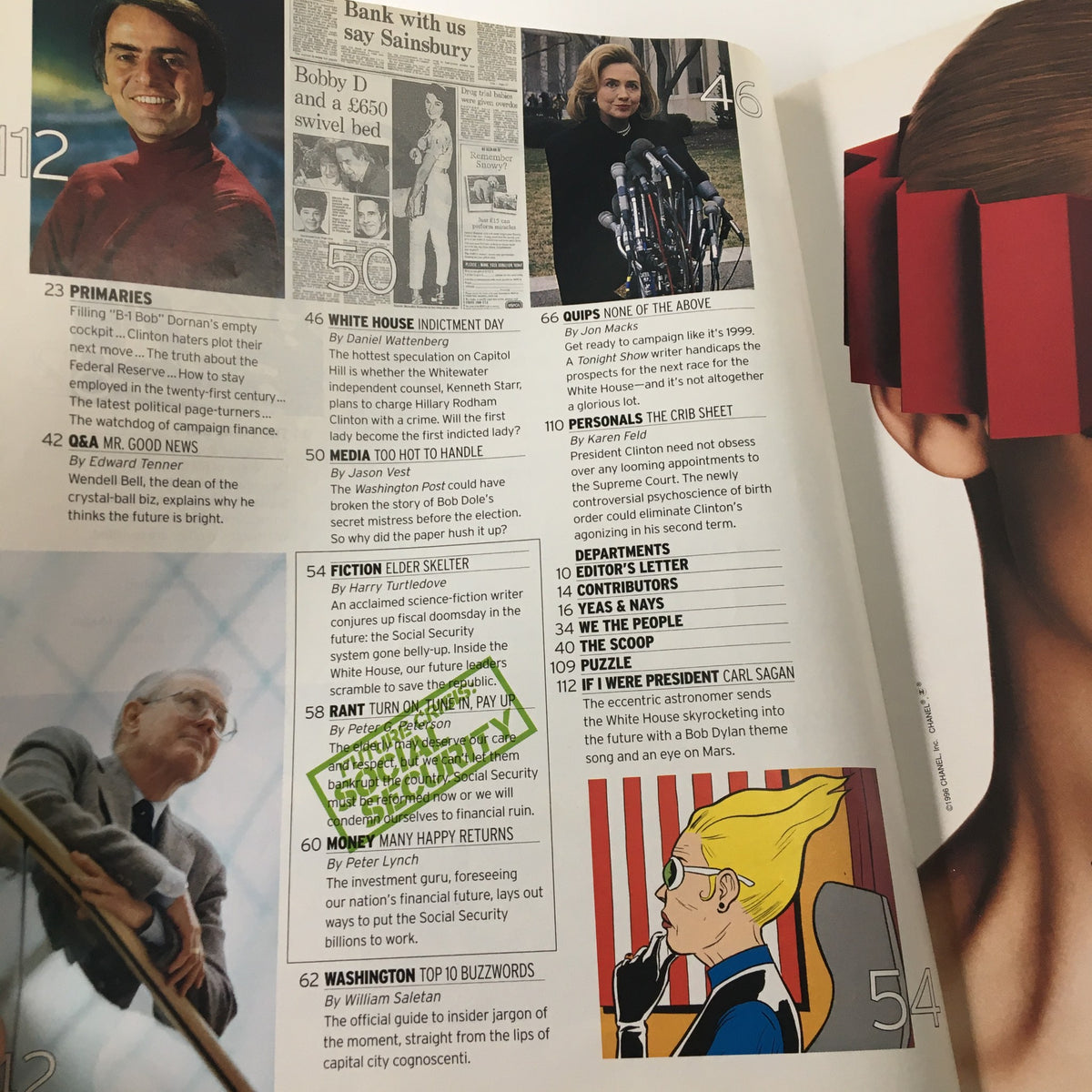
Worth noting for researchers: Carl Sagan, who also appears in some listings of this issue's interior content, had died on December 20, 1996 — less than two months before this cover date. If Sagan material appears inside, it would constitute one of the earliest major magazine treatments of his legacy following his death, giving the issue additional historical weight beyond its cover figures. The confluence of technology, politics, science, and fashion in a single February 1997 issue is not accidental; it reflects exactly the editorial ambition that made George a document of its decade. Anyone tracing that decade through print will want to cross-reference this against the broader 1997 magazine landscape, where the cultural tensions George was mapping were playing out across dozens of competing titles.
About the Publication
George Magazine was founded by John F. Kennedy Jr. and business partner Michael Berman, launched in September 1995 and published by Hachette Filipacchi Media. It occupied a genuinely novel position in American publishing: a glossy, mass-market monthly that treated politics as a cultural subject worthy of the same visual ambition and personality-driven framing as entertainment journalism. Each issue featured celebrity cover subjects — often styled in historical or political costume — paired with substantive reporting on power, policy, and public life. At its circulation peak the magazine reached approximately 400,000 readers, drawing an audience that was politically engaged but had little appetite for the text-heavy style of traditional policy publications. Kennedy's death in July 1999 marked the beginning of the end; George ceased publication in January 2001, leaving a defined run that now serves as a primary source on how Americans discussed the intersection of celebrity and governance during the Clinton years.
Key Highlights Inside
- Karen Mulder cover: Mulder's appearance follows George's established visual formula — a supermodel or celebrity as the entry point for readers who might not otherwise pick up a political monthly. Her styling and the cover composition are part of the magazine's deliberate strategy of making governance feel culturally relevant rather than remote.
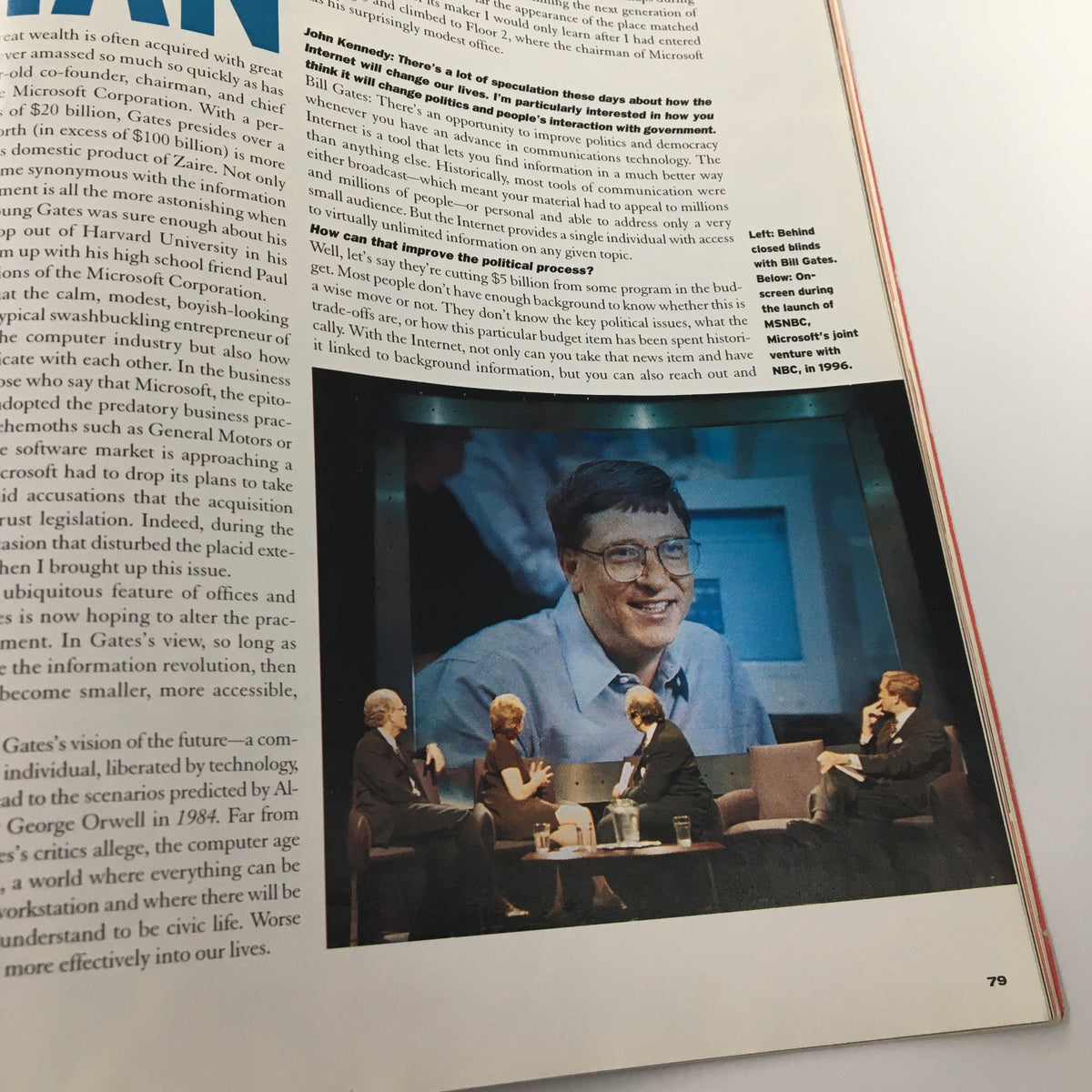
- Bill Gates feature: Gates in February 1997 was simultaneously the most celebrated entrepreneur in the world and a figure increasingly under regulatory pressure. Any George treatment of him at this moment would have engaged that duality — the mythologized founder and the emerging antitrust target.
- Jimmy Carter profile: By 1997 Carter's post-presidential reputation had become one of the great rehabilitations in American political life. The Carter Center, Habitat for Humanity, and his role in international diplomacy during the early 1990s had reframed him as a model for what an ex-presidency could accomplish.
- Condition note — price sticker on front cover: This issue is documented as carrying a price sticker affixed to the front cover, a detail that distinguishes it from other surviving copies and is worth flagging for collectors who prioritize surface condition on cover art.
- Interior content beyond named figures: Specific article titles and additional features beyond the named cover subjects have not been independently confirmed for this issue. The above reflects what is historically verifiable from the cover date and listed personalities.
Condition & Rarity
This issue is described as good condition with minor wear consistent with nearly three decades of age — a reasonable baseline for a 1997-era glossy publication stored without archival intervention. The presence of a protective plastic covering indicates it has been handled with some collector awareness at some point in its life, which typically correlates with better interior page condition. The most significant condition note for this particular copy is the price sticker affixed to the front cover; in collector-grade evaluation of periodicals, stickers on cover art represent a meaningful detractor, as removal risks surface damage and leaving them in place partially obscures the original printing. Prospective collectors should weigh this against the overall page integrity and the no-label status, which remains a positive attribute — newsstand copies without mailing labels are consistently preferred over subscriber copies in the vintage magazine market, as labels are permanent and cover-art-obscuring by nature. Among surviving copies of this February 1997 issue, condition variables to prioritize are spine integrity, page completeness, and the extent of any toning or moisture damage to the coated cover stock.
Looking for More Issues Like This?
Clean, no-label copies of George from 1997 surface less frequently than their cultural significance might suggest — the magazine had a loyal readership but not the kind of mass preservation that accompanied, say, a major news weekly. If this particular issue is unavailable, the Karen Mulder magazine archive is a logical next stop for collectors drawn to her cover appearances across the decade, and the full George Magazine collection at OriginalMagazines.com catalogs additional issues from across the Kennedy era of the publication. For anyone building a broader picture of the period, the complete 1997 magazine collection offers contemporaneous titles across politics, culture, technology, and fashion.