








Description
Collector's Note – Why This Issue Matters
The February 1997 issue of George Magazine is one of the more densely populated in the publication's run when it comes to named cover figures. Supermodel Karen Mulder holds the cover — a signature George move, casting one of the era's most recognizable fashion figures as the visual gateway to a politically substantive interior. Mulder in 1997 was at the height of her international profile, a constant presence on the Victoria's Secret runway and in the major European fashion shows, and her appearance on a political monthly was precisely the kind of productive collision that founder John F. Kennedy Jr. had built the magazine's identity around. The implicit editorial argument was one George made repeatedly and without apology: glamour and governance were not separate conversations, and the magazine would hold them in the same frame.
The interior cast named in this listing adds a dimension absent from some other surviving copies' documentation. Bill Gates appears here alongside Bill Maher — a pairing that sharpens the issue's cultural personality considerably. Gates in February 1997 was the world's wealthiest private citizen and already navigating the early pressure of federal antitrust scrutiny that would consume his public image through the end of the decade. Maher, meanwhile, was in the middle of his long run hosting Politically Incorrect, then airing on ABC after its move from Comedy Central in 1997 — a show whose entire premise, mixing celebrity guests with political commentary, mirrored George's own editorial DNA. The presence of both men in this issue is not incidental. It reflects George at its most self-aware, assembling figures whose work occupied exactly the intersection the magazine claimed as its territory. Collectors building a serious archive of the full George Magazine run will find this issue's interior cast among the more specifically interesting of the period.
Jimmy Carter, named in some other listings of this same issue, does not appear in this listing's documented content — a useful reminder that individual copies may carry different documentation depending on the source, and that the named figures here (Gates and Maher) represent what is confirmed for this specific example. The February 1997 date remains significant regardless: it sits in the immediate aftermath of Carl Sagan's death in December 1996, during Bill Clinton's second inauguration month, and at a moment when the technology industry was reshaping public life fast enough that a pop-culture political magazine found it impossible to ignore. Anyone tracing that period through print will find the 1997 magazine landscape a rich archive of how those forces were being processed in real time.
About the Publication
George Magazine was founded by John F. Kennedy Jr. and business partner Michael Berman, launched in September 1995 and published by Hachette Filipacchi Media. It occupied a genuinely novel space in American publishing: a glossy, mass-market monthly that treated politics as a cultural phenomenon worthy of the same visual ambition and celebrity-driven framing as entertainment journalism. Each issue paired a high-profile cover subject — often from fashion, film, or television — with substantive reported features on power, policy, and public figures. The magazine's audience was politically curious but stylistically engaged, readers who might not otherwise pick up a policy journal but found the George formula genuinely compelling. At its circulation peak the magazine reached approximately 400,000 readers. Kennedy's death in July 1999 began the publication's decline; George ceased print operations in January 2001, leaving a defined five-and-a-half-year run that now serves as a primary source on celebrity-political culture during the Clinton years.
Key Highlights Inside
- Karen Mulder cover: Mulder's front-page placement follows George's established visual strategy — a supermodel or entertainment figure as the entry point for readers who might not seek out a political monthly unprompted. Her styling and cover composition are part of the magazine's documented aesthetic identity across its run.
- Bill Gates feature: Gates in early 1997 was simultaneously the most celebrated entrepreneur in the world and a figure whose relationship with federal regulators was becoming the decade's defining business story. Any George treatment of him at this moment engaged that duality directly.
- Bill Maher feature: Maher's inclusion is editorially apt. Politically Incorrect had moved to ABC in January 1997 — the same month as this issue's publication — giving him a dramatically expanded national platform. A George profile or interview at this precise moment would have been timely in the most literal sense, catching him at the threshold of his widest mainstream exposure.
- Subscriber copy with original address label: This issue retains its original mailing label, with a removable protective label placed over it to prevent damage. This distinguishes it as a subscriber copy rather than a newsstand edition — a condition attribute with specific implications for collector evaluation.
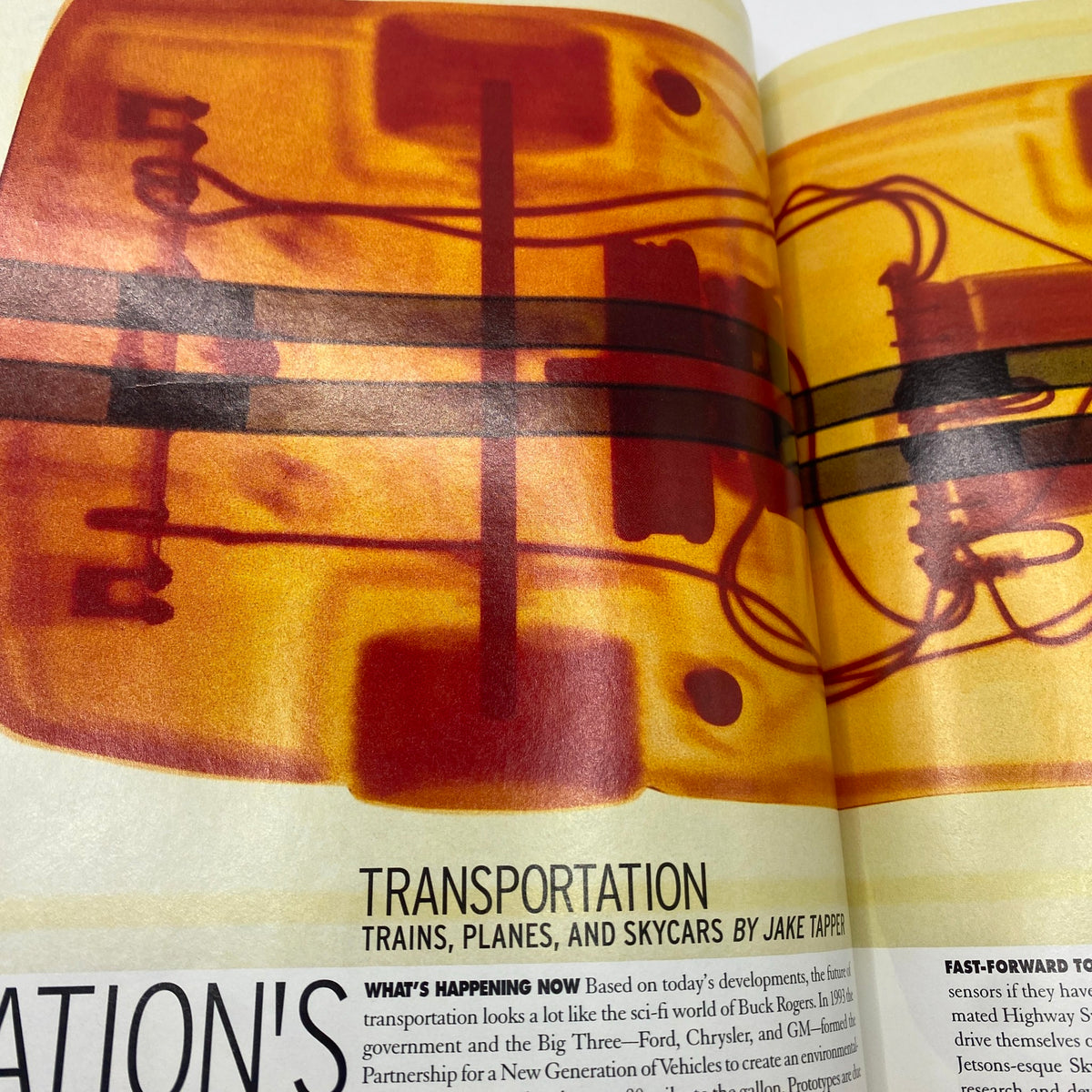
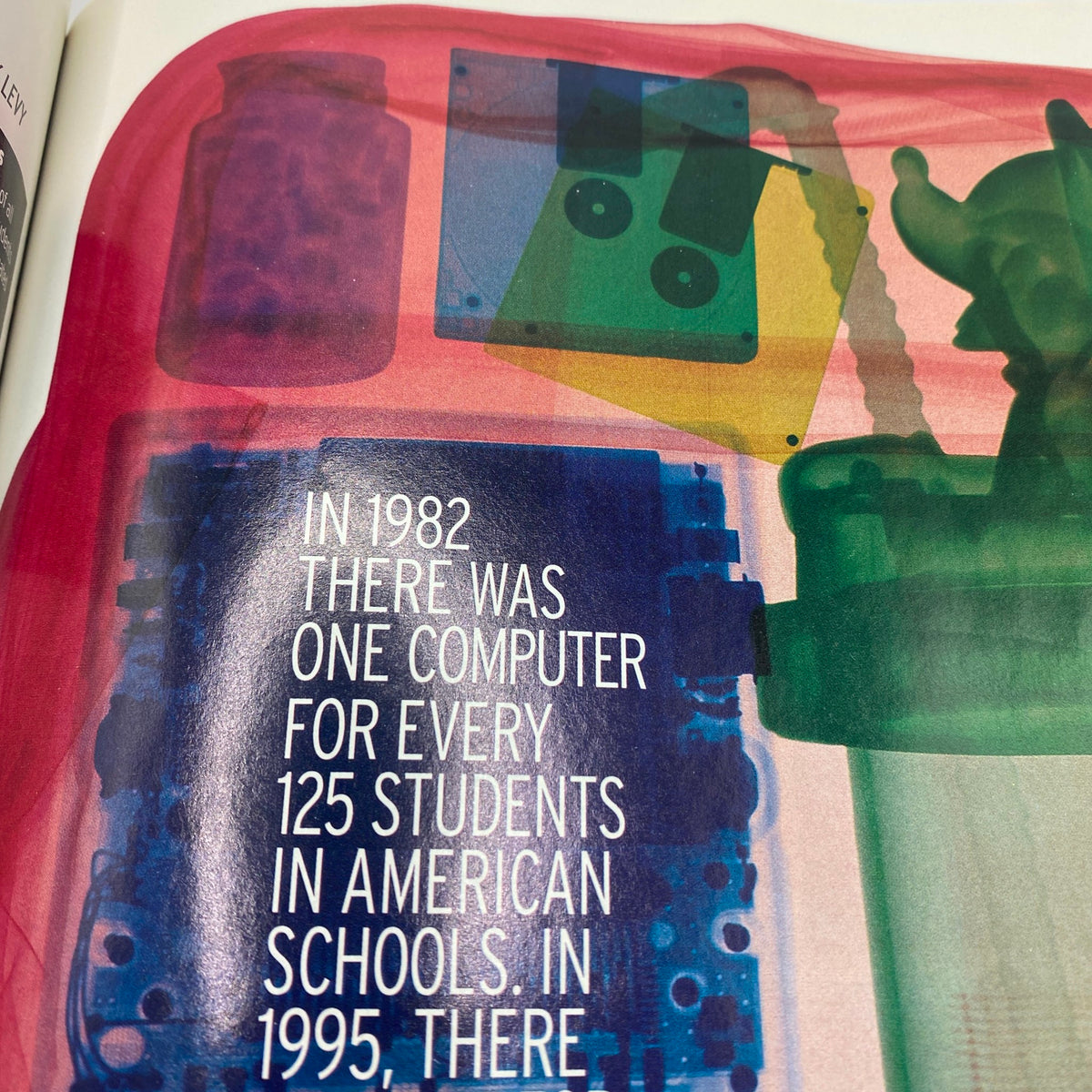
- Additional interior content: Specific article titles and features beyond the named figures have not been independently confirmed for this issue. The above reflects what is verifiable from the listing, the cover date, and documented publication history.
Condition & Rarity
This issue is graded very good — a meaningful step above the good-condition copies of this same issue that appear elsewhere in the market, and a grade that for a 1997-era glossy publication typically indicates minimal handling wear, no significant creasing, and intact spine integrity. The edge wear noted is consistent with normal shelf aging on coated magazine stock of this period and does not affect the reading or display quality in any meaningful way. The most notable condition attribute here is the original address label, which confirms this as a subscriber copy mailed directly to its first owner. In vintage periodical collecting, subscriber copies with intact labels are evaluated differently from newsstand editions: the label is permanent and partially obscures cover art, which is a detractor for display-focused collectors, but the label itself is also historical documentation — it records the original recipient and mailing date in a way that no newsstand copy can. The removable protective label placed over the original is a thoughtful preservation measure, shielding the original ink from further abrasion without adding permanent damage. Collectors assessing this issue should examine the cover stock beneath the protective layer and the spine for any moisture or stress lines, as these are the primary aging vectors for subscriber copies stored in their original mailing condition.
Looking for More Issues Like This?
Very good condition copies of George from early 1997 — particularly subscriber copies with intact original labels — are a specific and uncommon find, and this issue's combination of named interior figures makes it one of the more documented examples of the February 1997 edition. If it's no longer available, the Karen Mulder magazine archive at OriginalMagazines.com is the natural next stop for collectors focused on her cover appearances, and the full George Magazine collection covers the breadth of the Kennedy era across all five-plus years of publication. The complete 1997 magazine collection offers broader contemporaneous context for anyone building a picture of the period across politics, culture, and celebrity.