


Description
Collector's Note – Why This Issue Matters
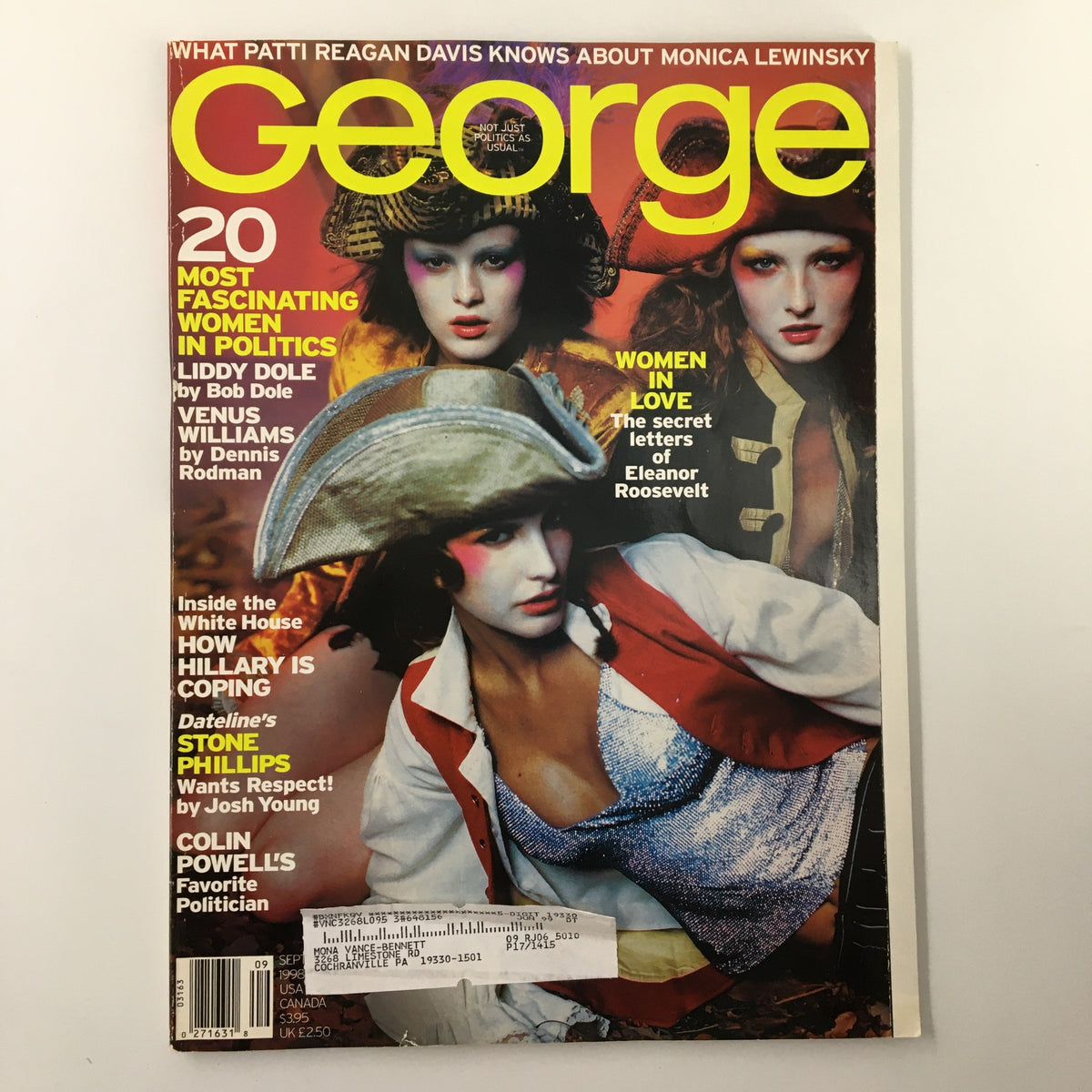
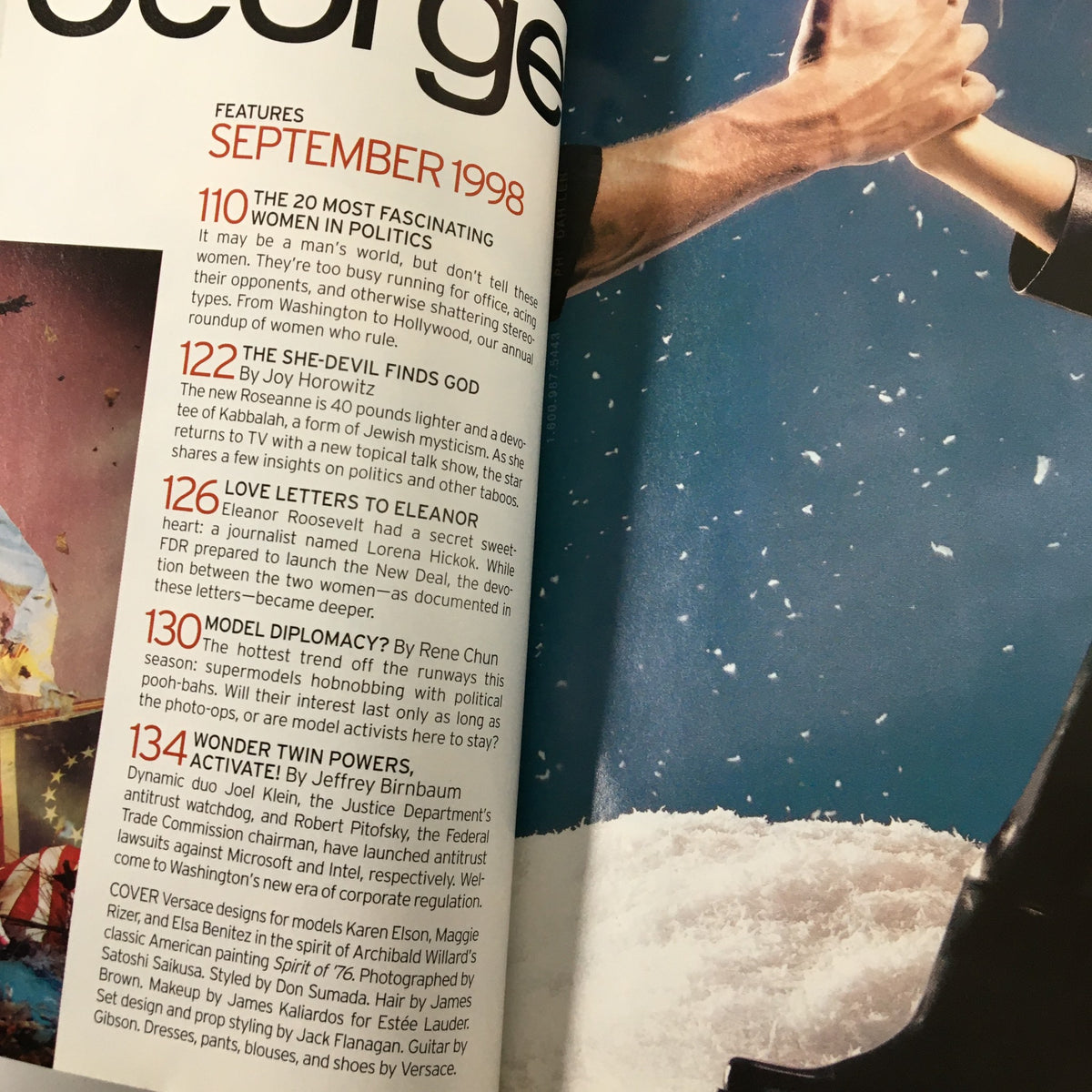
The September 1998 issue of George Magazine with the confirmed feature "The Secret Letters of Eleanor Roosevelt" is a primary document of John F. Kennedy Jr.'s publication at a specific and historically resonant moment — one that reveals the deliberate editorial strategy of a magazine founded by a Kennedy bringing primary source documentation of Roosevelt-era American political history to a 1990s readership for whom Eleanor Roosevelt's legacy carried particular contemporary resonance. Eleanor Roosevelt had been the most politically active First Lady in American history, a human rights champion whose influence extended well beyond her White House years through her work at the United Nations and her advocacy for civil rights — and a figure whose personal correspondence, when it surfaced in any form, consistently generated significant scholarly and popular attention. A George feature framed as "secret letters" in September 1998 reflects Kennedy's specific editorial sensibility: the treatment of historical political figures with the same intimate, revelatory approach that celebrity journalism applied to contemporary figures, making American political history accessible and emotionally engaging to readers who might not seek it out in more conventional historical formats. For collectors building archives of the complete George Magazine run, the September 1998 issue represents the publication in its most historically ambitious editorial register — using primary source documentary material to connect the Kennedy-era readership to the Roosevelt era in ways that only a publication with Kennedy's specific biographical authority could fully carry off.
The September 1998 date situates this issue in the specific context of the Clinton impeachment proceedings, which had been initiated in the House Judiciary Committee following the release of the Starr Report on September 11, 1998 — just as this issue was being distributed. The specific choice to feature Eleanor Roosevelt's private correspondence in this particular month carries an inadvertent but historically significant resonance: Roosevelt had navigated the intersection of public duty and private life — including her own complex marriage to Franklin — with a dignity and purposefulness that was frequently invoked as a counterpoint to the tabloidized coverage of the Clintons' marriage throughout the Lewinsky scandal. A George feature on Eleanor Roosevelt's "secret letters" in September 1998, whatever its specific content, participated in a broader cultural conversation about privacy, public life, and the nature of political marriage that was being conducted with unusual intensity in exactly the weeks this issue appeared. Collectors focused on 1998 magazines as documents of American political and cultural life will find this issue positioned at one of the year's most historically acute intersections of past and present.
The Kennedy-Roosevelt connection adds a further biographical dimension that would not have been lost on George's readership. Eleanor Roosevelt had been a significant figure in the political world of John F. Kennedy Sr., having supported Adlai Stevenson over Kennedy in the 1960 Democratic primary before eventually becoming a supporter. The younger Kennedy's editorial decision to feature Roosevelt's private correspondence in his magazine carried an implicit familial as well as political resonance — a second-generation Kennedy engaging with a figure who had been a complicated presence in his father's political rise, now treating her legacy with the historical seriousness and intimate access that defined his publication's approach to American political history.
About the Publication
George Magazine was founded in September 1995 by John F. Kennedy Jr. and co-founder Michael Berman, published by Hachette Filipacchi Media, with Kennedy serving as editor-in-chief. Its founding editorial premise — treating politics and political history with the same engaging, personality-driven, culturally sophisticated journalism applied to celebrity — gave it a distinctive identity in the American magazine landscape. By September 1998 the publication was in its third year of mature operation, and features like the Eleanor Roosevelt letters piece represent its editorial ambition at its most historically serious: primary source political history rendered accessible and relevant to a readership formed by late-1990s celebrity journalism conventions. The magazine ceased publication following Kennedy's death in July 1999, making its complete run a finite and specifically bounded archive of late-1990s American political cultural journalism.
Key Highlights Inside
- "The Secret Letters of Eleanor Roosevelt" — confirmed feature — Primary George documentation of Roosevelt's private correspondence, published in the specific month of the Clinton impeachment proceedings' initiation and participating in a broader cultural conversation about public life, private correspondence, and political marriage that was at maximum intensity in September 1998.
- September 1998 — Starr Report release and impeachment context — Published in the same month the House Judiciary Committee initiated impeachment proceedings following the Starr Report's September 11 release, giving the Roosevelt correspondence feature an inadvertent but historically significant resonance with the contemporary political moment it was being read against.
- Kennedy editorial engagement with Roosevelt legacy — A second-generation Kennedy's editorial treatment of Eleanor Roosevelt's private correspondence carried biographical and political resonances specific to the Kennedy family's documented relationship with Roosevelt-era Democratic politics, giving this feature a dimension unavailable to any other publication of the period.
- John F. Kennedy Jr. editorial era — penultimate year of publication — Published ten months before Kennedy's July 1999 death would end George, representing the publication in its most historically ambitious editorial phase and providing primary documentation of the specific approach to political history that defined Kennedy's mature editorial vision.
Note: The specific content of the Eleanor Roosevelt letters, their provenance, and additional interior features beyond the confirmed cover story have not been provided in the available listing. The highlights above reflect only what is verifiable from the listing and well-documented public record surrounding this issue and its historical moment.
Condition & Rarity
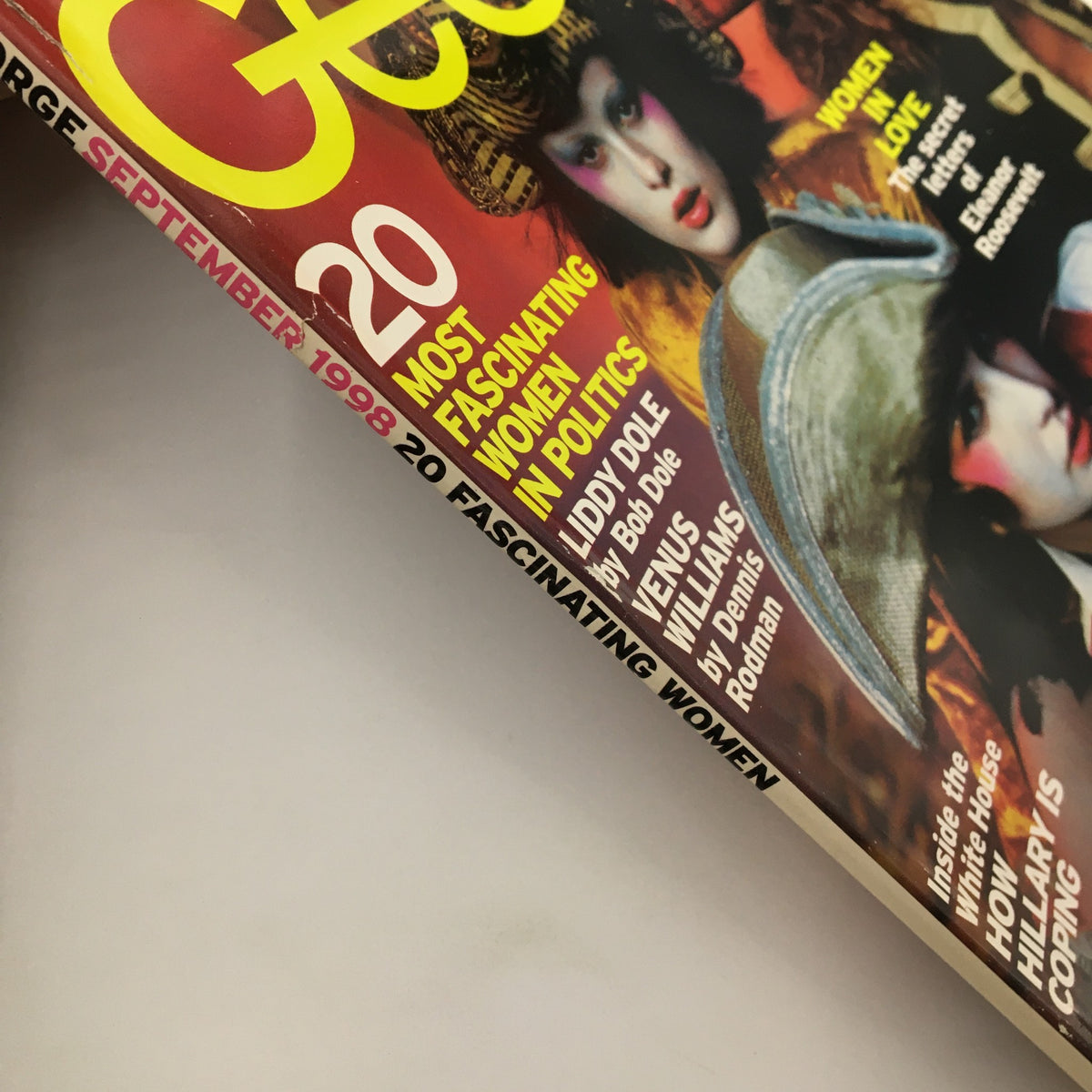
Good condition with a confirmed front cover label, minor wear throughout, and plastic protective covering represents a standard mid-grade assessment for a 27-year-old monthly magazine. The confirmed subscription label on the front cover is the primary visual condition factor — its placement relative to the cover imagery should be assessed from available photographs for collectors for whom unobstructed cover display is a priority. Minor wear throughout on a coated-stock publication of this age is a minimal structural condition factor. The plastic protective covering indicates deliberate preservation. Good condition implies cover color retention, page integrity, and fully readable interior content — the attributes that preserve the issue's value as both a research document of late-1990s American political cultural journalism and as an archive piece for collectors building comprehensive George runs. The publication's complete four-year existence makes every surviving issue part of a finite and bounded archive whose collecting significance has increased in the years since its end.
Looking for More Issues Like This?
George Magazine issues from the publication's historically ambitious final phase — particularly those engaging with American political history through primary source documentation as the September 1998 Eleanor Roosevelt feature does — represent a specific and intellectually grounded collecting category within Kennedy's finite four-year archive, and the issue's specific September 1998 positioning within the Clinton impeachment month gives it a historical situatedness that most comparable historical features in the run do not share. The complete George Magazine collection at OriginalMagazines.com spans the publication's full run from its 1995 founding and is the most direct resource for collectors building a comprehensive archive of Kennedy's editorial vision. The full 1998 magazine collection covers the broader publishing landscape from the year whose political turbulence gave George's founding premise — politics as culture, history as celebrity — its most consequential real-world test.