


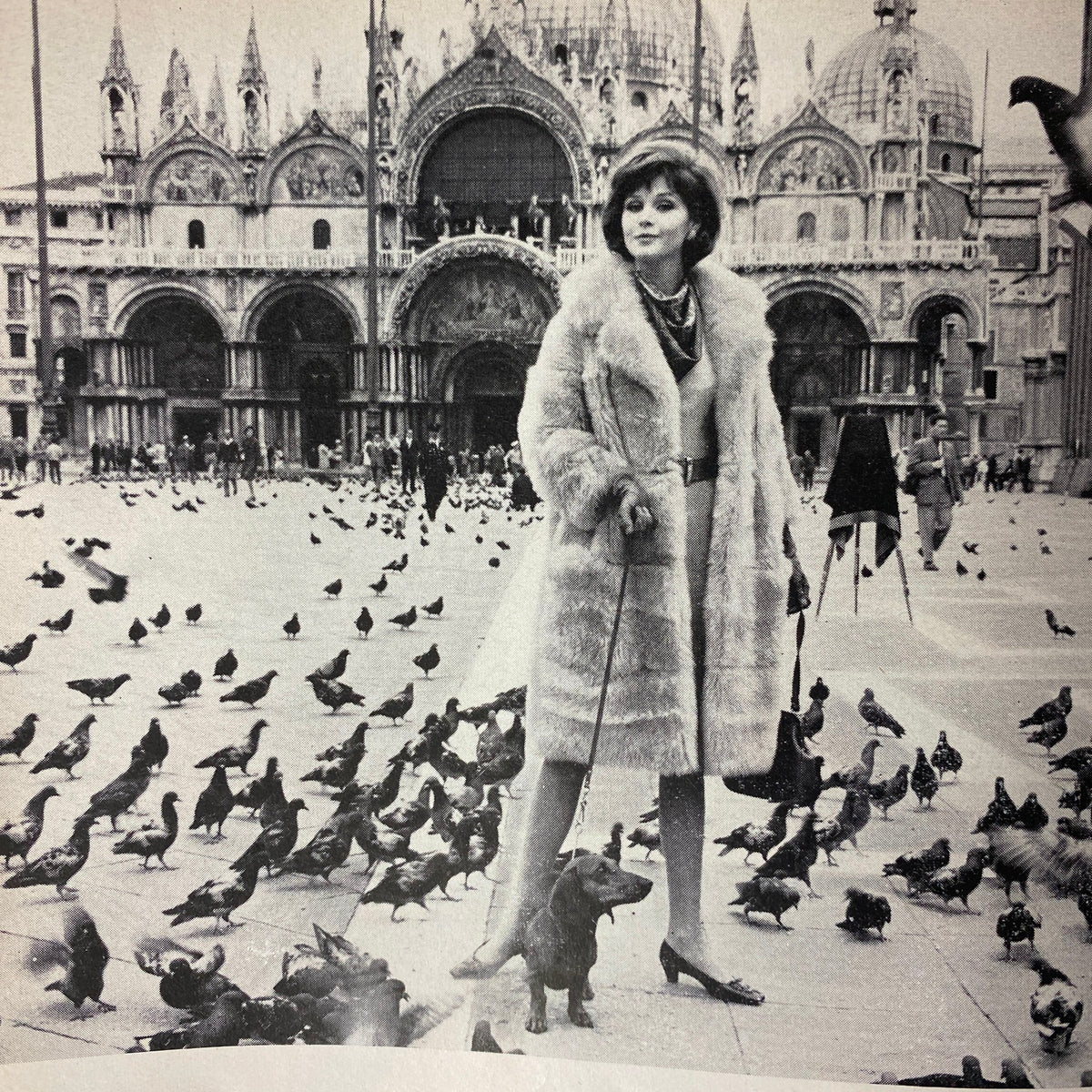


Description
Collector's Note – Why This Issue Matters
This September 1962 issue of Glamour arrives during the magazine's well-established identity as "the magazine for the girl with a job," a positioning the title adopted in 1943 under editor Elizabeth Penrose and maintained for decades afterward, repositioning what had originally launched in 1939 as Glamour of Hollywood, a celebrity-focused publication and the only magazine Condé Nast himself personally created. By 1962, Glamour had spent nearly twenty years building its reputation specifically around the practical fashion and beauty needs of working women, a readership that had expanded dramatically during World War II and continued growing through the postwar decades as more American women remained in the workforce. This September issue's focus on "the how-to of great American looks" reflects exactly the kind of accessible, instructional fashion content the magazine had built its identity around, translating seasonal style trends into practical guidance rather than purely aspirational editorial fantasy. September issues in particular have long held special significance within fashion magazine publishing, traditionally serving as a title's largest and most substantial issue of the year, timed to capture the crucial fall fashion season when readers were making significant wardrobe decisions for the months ahead.
The early 1960s represented a notable transitional period in American fashion, as the decade's early years still carried forward many of the structured, tailored sensibilities of the 1950s while beginning to show early signs of the looser, more youth-oriented styles that would define fashion later in the decade. A "great American looks" framing suggests an editorial emphasis on a distinctly domestic fashion identity, separate from the European haute couture influence that dominated higher-end fashion magazines, instead celebrating ready-to-wear American design and the practical, work-appropriate styling that had always been central to Glamour's mission. This emphasis on coats, suits, dresses, and separates reflects the kind of versatile, mix-and-match wardrobe building that service-oriented fashion magazines specialized in, helping readers maximize a working wardrobe's value rather than showcasing single, unrepeatable couture looks. For collectors and fashion historians, an issue from this specific moment offers a useful window into how mainstream American style was being defined and packaged for a broad working readership just before the more dramatic stylistic shifts of the mid-to-late 1960s.
For collectors, this issue offers solid value as a representative artifact of Glamour during its long-running and historically significant identity as a magazine built specifically for working women, capturing the practical, accessible fashion guidance that distinguished the title throughout the mid-twentieth century. That combination of substantial September-issue content and the magazine's consistent service-journalism mission gives this issue real value within the broader landscape of Glamour magazine collecting, where issues from this working-women era remain historically significant within the broader story of American women's magazine publishing.
About the Publication
Glamour, launched by Condé Nast in 1939 as Glamour of Hollywood, began as a celebrity-focused publication chronicling the lifestyles of film stars before undergoing a significant repositioning in 1943 under editor Elizabeth Penrose, who renamed the title simply Glamour and adopted the subtitle "For the girl with a job." This shift reflected the dramatic wartime expansion of women in the American workforce, with millions of new working women representing a significant and previously underserved magazine readership. Under this new identity, Glamour built its editorial mission around practical fashion, beauty, and lifestyle content specifically tailored to the needs of employed women, distinguishing itself from more purely aspirational fashion publications by emphasizing accessible, actionable style guidance. The magazine's format typically combined seasonal fashion features with beauty and grooming advice, helping readers translate broader style trends into wearable, work-appropriate wardrobes throughout the postwar decades. This sustained focus on serving a working female readership, maintained consistently from the 1940s through the following decades, established Glamour as a significant and historically notable title within the broader landscape of twentieth-century American women's magazine publishing.
Key Highlights Inside
- A feature titled "The How-To of Great American Looks," addressing practical fashion guidance for the fall season. This kind of instructional framing was characteristic of Glamour's broader mission to serve working women with accessible, actionable style advice. The emphasis on American style specifically reflects the magazine's longstanding focus on domestic ready-to-wear fashion over European couture influence.
- Fashion coverage addressing coats, suits, dresses, and separates suited to a versatile working wardrobe. This kind of mix-and-match styling guidance reflected the practical needs of Glamour's core readership of employed women. Seasonal wardrobe-building content of this kind was a recurring strength of the magazine's service journalism throughout this period.
- Beauty and hair content including seasonal transformation guides and skincare advice. Beauty service journalism was a consistent companion to Glamour's fashion coverage, addressing the full scope of personal presentation for its working readership. This combination of fashion and beauty guidance was central to the magazine's broader editorial identity.
- Substantial seasonal content consistent with September's traditional status as a fashion magazine's largest annual issue. September issues across the fashion magazine industry have long served as a title's primary vehicle for fall season coverage. This timing reflects the issue's likely emphasis on comprehensive seasonal wardrobe planning for readers.
Condition & Rarity
Surviving copies of this issue are generally evaluated using the same standards collectors apply across vintage fashion magazines: cover gloss and corner sharpness, spine integrity, absence of subscription labels or mailing stickers, and overall page condition free of tears, foxing, or moisture damage. A copy described as being in good condition, with a blurred address label on the cover, would be considered a reasonable survivor for a magazine now approaching sixty-five years old. The presence of an address label, even if blurred or altered, is a common characteristic of subscription copies from this era and is generally treated by collectors as an expected feature of surviving mid-century issues rather than a significant flaw, though unlabeled newsstand copies are often considered more visually desirable when available. A plastic protective sleeve is a standard and effective safeguard for an issue of this age, helping prevent further handling wear and environmental damage, though it has no bearing on the underlying grade of the magazine itself. As a substantial September issue, this copy may have originally been a notably thick publication relative to other months, and collectors should expect spine wear consistent with handling a larger, heavier issue over decades. Given the issue's significance within Glamour's working-women editorial era, collectors focused on mid-century American fashion history or women's magazine publishing may weigh its content particularly heavily relative to minor cosmetic considerations like the address label. Pages free of brittleness, significant yellowing, or prior tape repairs remain the broader benchmark for a well-preserved copy of any magazine from this era.
Looking for More Issues Like This?
A September 1962 issue of Glamour, published during the magazine's long and historically significant run as "the magazine for the girl with a job," offers genuine substance for collectors interested in mid-century American fashion and women's magazine history. If this particular issue isn't available, it's worth browsing the broader Glamour magazine collection for other issues spanning this title's long and influential run. Collectors focused on the era itself may also want to look through the full range of 1962 magazines for other issues from that transitional year in American fashion and culture. Each of these collections offers a different way into the period, whether the interest lies in this specific title's editorial history or the broader cultural snapshot of a single year. A single year's worth of magazines often tells a fuller story than any one issue alone, particularly for a year positioned at the cusp of significant stylistic change in American fashion. Browsing by publication can also help collectors trace how Glamour's working-women editorial mission evolved across the decades following this issue's publication. Whichever angle appeals most, these collections are a useful starting point for going deeper into this period of American fashion and magazine history.