


Description
Collector's Note – Why This Issue Matters
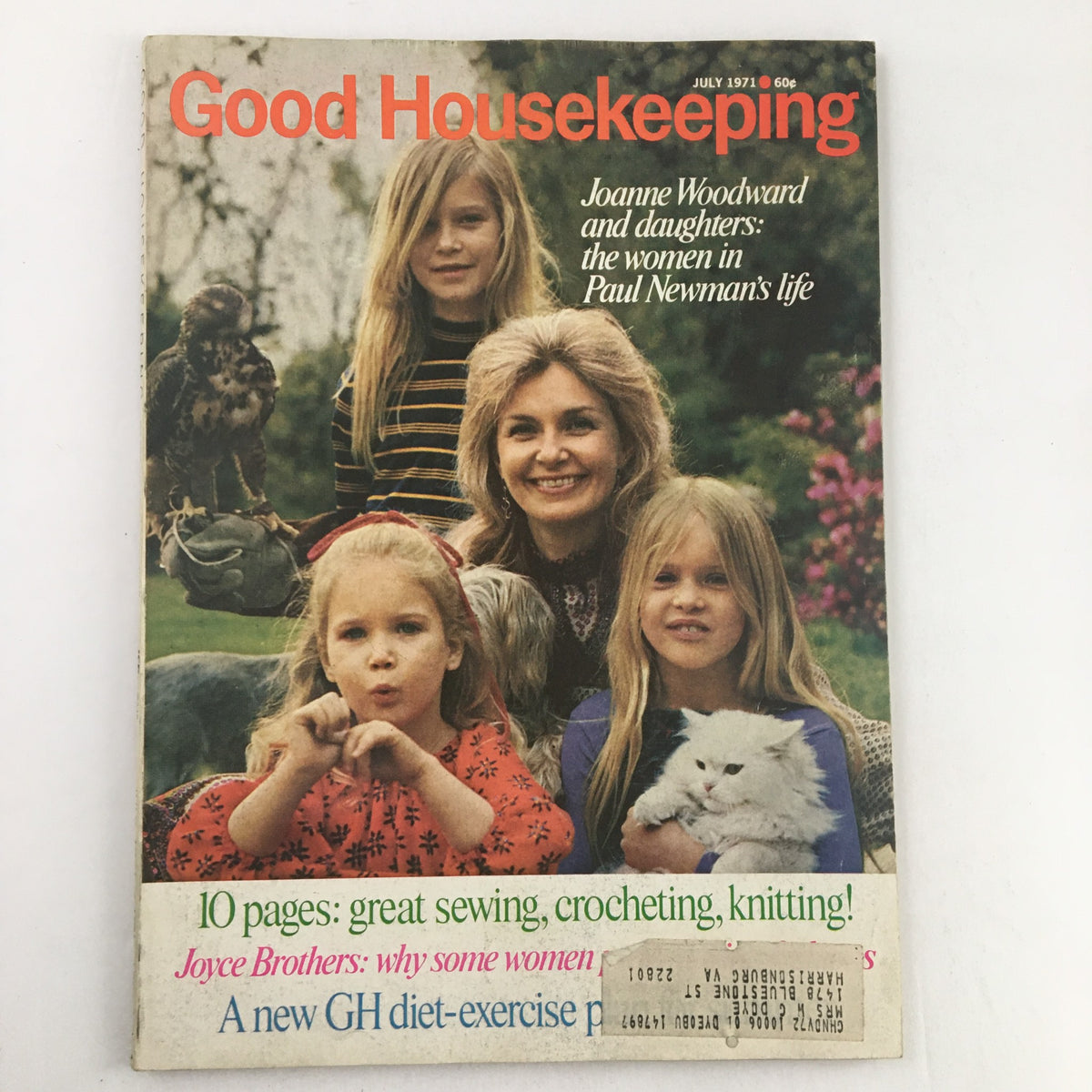
The July 1971 issue of Good Housekeeping featuring Joanne Woodward is a document of one of Hollywood's most intellectually serious and enduringly fascinating partnerships. By 1971, Woodward and Paul Newman had been married for thirteen years — a marriage that was already remarkable by Hollywood standards for its stability, its mutual creative respect, and its deliberate distance from the more performative aspects of celebrity life. Woodward had won the Academy Award for Best Actress in 1958 for The Three Faces of Eve and had built a career defined by psychological complexity and craft rather than conventional glamour. A Good Housekeeping cover and interview in 1971, with a feature on the Newman daughters, represents Woodward choosing to present a specific and carefully curated face to mainstream American women's magazine readership: actress, mother, wife, and figure of substance in an era when Hollywood's relationship with domestic life was undergoing considerable strain.
The early 1970s context matters here. Hollywood was in the middle of its New American Cinema revolution — the era of The Godfather, Klute, and McCabe & Mrs. Miller — and the old studio system's model of carefully managed celebrity domesticity was giving way to something rawer and less controlled. Against that backdrop, Woodward's presence on the cover of Good Housekeeping with a feature on her daughters reads as a conscious statement about a different kind of Hollywood life: committed, family-centered, and grounded. For collectors browsing vintage Good Housekeeping issues from the early 1970s, this cover represents the magazine at its most culturally interesting — navigating the intersection of celebrity, domesticity, and the shifting values of American womanhood at the decade's opening.
Paul Newman's name in the feature is itself significant. By 1971 Newman was among the biggest stars in American cinema — fresh from Butch Cassidy and the Sundance Kid (1969) and about to make The Sting — and the decision to frame the interior feature around his daughters rather than his own celebrity reflects the editorial intelligence of the placement. This is Woodward's issue, not Newman's. She is the subject, the professional, the mother, the cover figure. The daughters provide a domestic anchor for a story that is fundamentally about a woman who had managed to be both a serious actress and a present parent in an industry that rarely accommodated both. Among the wider archive of magazines from 1971, this issue offers a particularly layered window into how mainstream American media understood and presented women's lives at the start of the decade.
About the Publication
Good Housekeeping was founded in 1885 and by the mid-twentieth century had become one of the most widely read women's magazines in the United States, built around a editorial mix of homemaking, cooking, fashion, health, and celebrity profiles aimed at married American women managing households and families. Its famous Good Housekeeping Seal, introduced in 1909, gave the magazine an unusual degree of consumer authority, and its editorial voice consistently positioned it as a trusted advisor on domestic life. By 1971 the magazine was navigating a significant cultural transition — the women's liberation movement was reshaping its readership's expectations and self-image — and its celebrity cover choices increasingly reflected an interest in women who combined professional achievement with family life, rather than simply domestic figures or pure entertainers.
Key Highlights Inside
- Cover feature: Joanne Woodward, Academy Award-winning actress and wife of Paul Newman, photographed for a mainstream women's magazine audience at a moment when her combination of serious career and family life made her a figure of particular cultural interest.
- An exclusive interview with Joanne Woodward discussing her career and family life, as noted in the listing.
- A feature on the daughters of Paul Newman and Joanne Woodward, presenting the family dimension of one of Hollywood's most enduring and respected marriages.
- Articles and editorial content reflecting early 1970s American domestic culture, family values, and the evolving role of women in both professional and home life.
- Period advertising documenting the consumer landscape of 1971 — household products, fashion, food, and beauty — consistent with Good Housekeeping's broad advertiser base during this era.
- Specific additional articles and features beyond those confirmed in the listing are unverified for this issue; the above points reflect what is documented in the listing description.
Condition & Rarity
This issue presents as a subscriber copy, identified by the presence of an address label on the front cover — a standard condition attribute for Good Housekeeping issues of this era, which circulated primarily through home delivery subscriptions rather than newsstand sales. Address labels on women's service magazines from the early 1970s are common and widely accepted by collectors as a period-authentic characteristic rather than a detraction, particularly when the label does not obscure the cover subject. Minor wear, light marks, and some writing are consistent with a magazine that has been in circulation and storage for more than fifty years. The plastic protective covering confirms preservation intent. When evaluating any surviving copy of this issue, the key collector considerations are the legibility of the Joanne Woodward cover photograph, the condition of the spine, and the integrity of the interior pages — particularly the confirmed interview and family feature, which represent the primary research and collecting interest in this edition.
Looking for More Issues Like This?
Joanne Woodward covers are relatively uncommon in the vintage magazine market, and this 1971 Good Housekeeping placement — with its Newman family feature — is a particularly distinctive find for collectors of Hollywood celebrity coverage or early 1970s women's magazines. The Good Housekeeping collection at OriginalMagazines.com spans decades of the publication and is worth exploring for other notable celebrity covers from this era. For a broader look at the cultural landscape of the early 1970s in print, the 1971 magazine collection brings together original issues from across the American publishing landscape of that year.