
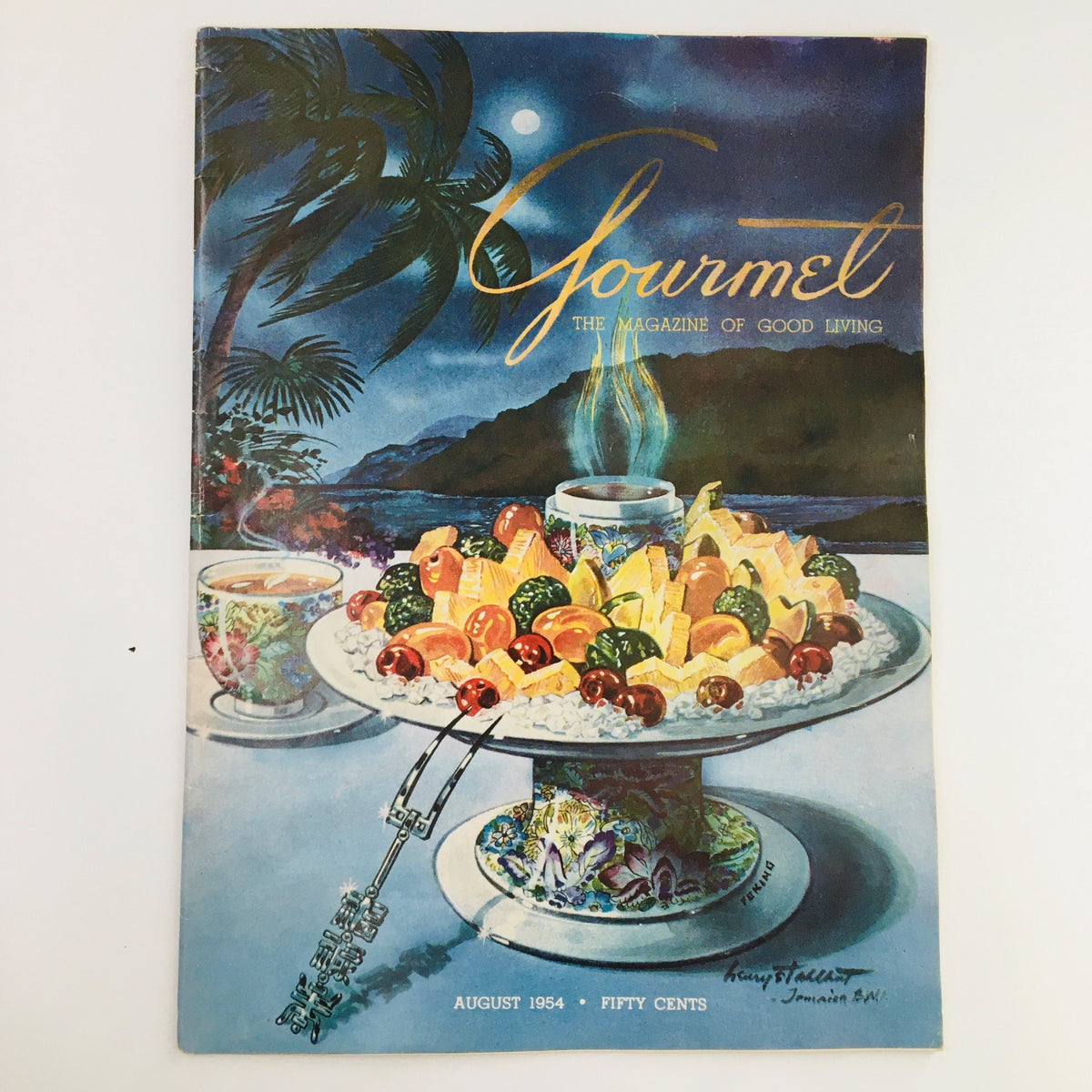


Description
Collector's Note – Why This Issue Matters
Gourmet magazine’s August 1954 issue, identified as Volume 14, Number 8, belongs to an important period in American culinary publishing. The listing gives the issue the title “They Called It Kill Devil,” a phrase that strongly suggests a food, drink, place, or historical feature, though the exact subject is not confirmed from the description alone. That uncertainty matters, because the issue should not be treated as if its interior article has been fully inspected. What can be said is that the title reflects Gourmet’s broad editorial style, which often combined recipes, travel, cultural history, dining, and literary food writing. By 1954, American readers were increasingly interested in food as culture rather than only household necessity. For collectors of vintage Gourmet magazine issues, this August 1954 number represents the magazine during a mature postwar moment. It documents how mid-century food publishing helped introduce readers to taste, travel, refinement, and culinary curiosity.
The issue matters because Gourmet occupied a different position from ordinary recipe magazines. It spoke to readers who wanted to understand food through pleasure, history, hospitality, regional identity, and international influence. The listing describes the issue as offering recipes and stories that reflect the spirit of the 1950s, which fits the magazine’s reputation as a food-and-culture publication. In the postwar years, American food culture was changing through travel, rising affluence, entertaining at home, imported ingredients, restaurant interest, and growing curiosity about regional cuisines. A 1954 issue of Gourmet sits directly inside that transformation. It belongs to a period when “gourmet” taste was being introduced to a broader American readership through print. Without confirmed recipe titles or article names beyond “They Called It Kill Devil,” the issue is best understood as a culinary-history artifact rather than a fully itemized contents record.
As an August 1954 artifact, this magazine preserves a world of mid-century dining before later food television, online recipes, and modern restaurant media changed how culinary knowledge circulated. Readers encountered food culture through printed essays, carefully written recipes, illustrations, advertisements, and travel-oriented features. The issue’s confirmed volume and number make it useful for collectors who organize Gourmet chronologically or by early postwar editorial period. Its subject language also reflects the magazine’s habit of making food sound like a story, not merely a set of instructions. Collectors researching original magazines from 1954 often look for issues that show how American leisure, taste, domestic aspiration, and worldliness appeared in print. This Gourmet issue fits that interest especially well. It is a period document of how culinary sophistication was being packaged for readers in the middle of the twentieth century.
About the Publication
Gourmet was one of the most influential American food magazines of the twentieth century. It was known for treating food as culture, travel, history, hospitality, and pleasure rather than only as daily meal preparation. Its audience included serious home cooks, hosts, travelers, restaurant enthusiasts, collectors of recipes, and readers interested in refined domestic life. By the 1950s, the magazine had established a voice that was more literary and cosmopolitan than many general household publications. Its editorial format commonly included recipes, dining essays, regional and international food writing, entertaining ideas, culinary history, and advertising aimed at readers with an interest in quality and taste. That made Gourmet especially important in shaping postwar American ideas about sophisticated eating. The magazine helped introduce readers to cuisines, ingredients, and dining customs that may have been outside their everyday experience. A 1954 issue titled “They Called It Kill Devil” fits the publication’s tendency to frame food and drink through narrative and cultural atmosphere. For collectors, vintage Gourmet magazines preserve not only recipes, but also the language and aspirations of American culinary life. They are valuable records of how food became a subject of educated curiosity and style.
Key Highlights Inside
- The issue is dated August 1954. That places it in the postwar period when American culinary publishing was expanding beyond basic household instruction. For collectors, the date helps anchor the magazine within the mid-century rise of food as culture and lifestyle.
- The listing identifies the issue as Volume 14, Number 8. Volume and issue numbers are useful for collectors who organize magazine runs chronologically. They also help distinguish this issue from other Gourmet magazines published in the same year.
- The issue is titled “They Called It Kill Devil” according to the listing. That is the strongest confirmed editorial detail associated with the magazine. The exact article subject is not described in the listing, so it should not be expanded into a specific food, drink, location, or historical claim without direct inspection.
- The listing describes the issue as offering a glimpse into culinary culture of the 1950s. That makes it relevant to collectors interested in postwar foodways, entertaining, recipes, and the growth of gourmet taste in American households. Specific recipe titles, menus, chefs, restaurants, or travel destinations are not confirmed from the provided description.
- The magazine is described as featuring recipes and captivating stories. That broad combination fits Gourmet’s editorial identity as a food publication with literary and cultural interests. The listing does not identify individual recipe names or story authors.
- The issue is connected to evolving tastes and trends in cuisine during the 1950s. This supports its value as a culinary-history object rather than merely a collectible cover. Any detailed claims about exact trends inside the issue should remain unmade unless the contents are reviewed directly.
- The listing describes the magazine as shedding historical light on the culinary arts and gourmet culture of the 1950s. That makes it useful for collectors who study how food was presented as sophistication, travel, hospitality, and aspiration. It also places the issue within the broader story of postwar consumer taste.
- The issue is described as having no label. A no-label example can be appealing because the cover design remains visually uninterrupted. This is especially relevant for collectors who value display quality and original cover presentation.
- The condition is classified as Good with minor wear typical for age. That is an important collector detail because food magazines were often handled in kitchens, used for recipes, and stored casually. Any surviving example should be evaluated for both visual appeal and completeness.
Condition & Rarity
Condition for an August 1954 Gourmet magazine should be evaluated with attention to both physical preservation and practical use history. The listing classifies the issue as Good. It also notes minor wear typical for its age, which is expected for a magazine published in the mid-1950s. Food magazines were often read, saved, marked, clipped, or used near kitchens and dining spaces, so surviving examples can show more handling than purely display-oriented periodicals. The no-label detail is favorable for cover presentation because the original cover surface remains unobstructed. A clean cover is especially useful for collectors who value Gourmet as both a culinary publication and a design object. The plastic protective covering mentioned in the listing is relevant as a storage measure that can help reduce additional handling wear. However, protective covering does not verify page completeness, binding strength, or the absence of interior markings. Collectors should still inspect any surviving example for clipped recipes, missing pages, moisture exposure, food stains, spine wear, paper toning, cover attachment, and edge condition. Because the issue’s appeal depends on its culinary contents as well as its date and title, completeness is especially important.
Looking for More Issues Like This?
The August 1954 Gourmet issue titled “They Called It Kill Devil” is the kind of magazine that appeals to collectors of food history, mid-century design, and postwar domestic culture. Its value comes from the way it preserves culinary writing at a time when American readers were becoming increasingly curious about taste, travel, entertaining, and refined eating. When the exact issue is difficult to locate, related issues from the same publication can help build a richer picture of the magazine’s editorial world. Collectors may want to browse more Gourmet magazine back issues to compare recipes, culinary essays, travel features, advertising, and the evolving language of American food culture. That broader run is especially useful because Gourmet documented cooking and dining with unusual consistency and style. For a wider historical frame, magazines published in 1954 can also help place this issue within its original year. Looking across the year shows how food, fashion, travel, advertising, entertainment, and domestic aspiration appeared together in print. A single culinary issue becomes more meaningful when viewed beside other publications from the same moment. For collectors interested in the history of American taste, this issue is a focused reference point. It shows how mid-century food magazines helped turn cooking and dining into subjects of culture, memory, and serious collecting.