




Description
Collector's Note – Why This Issue Matters
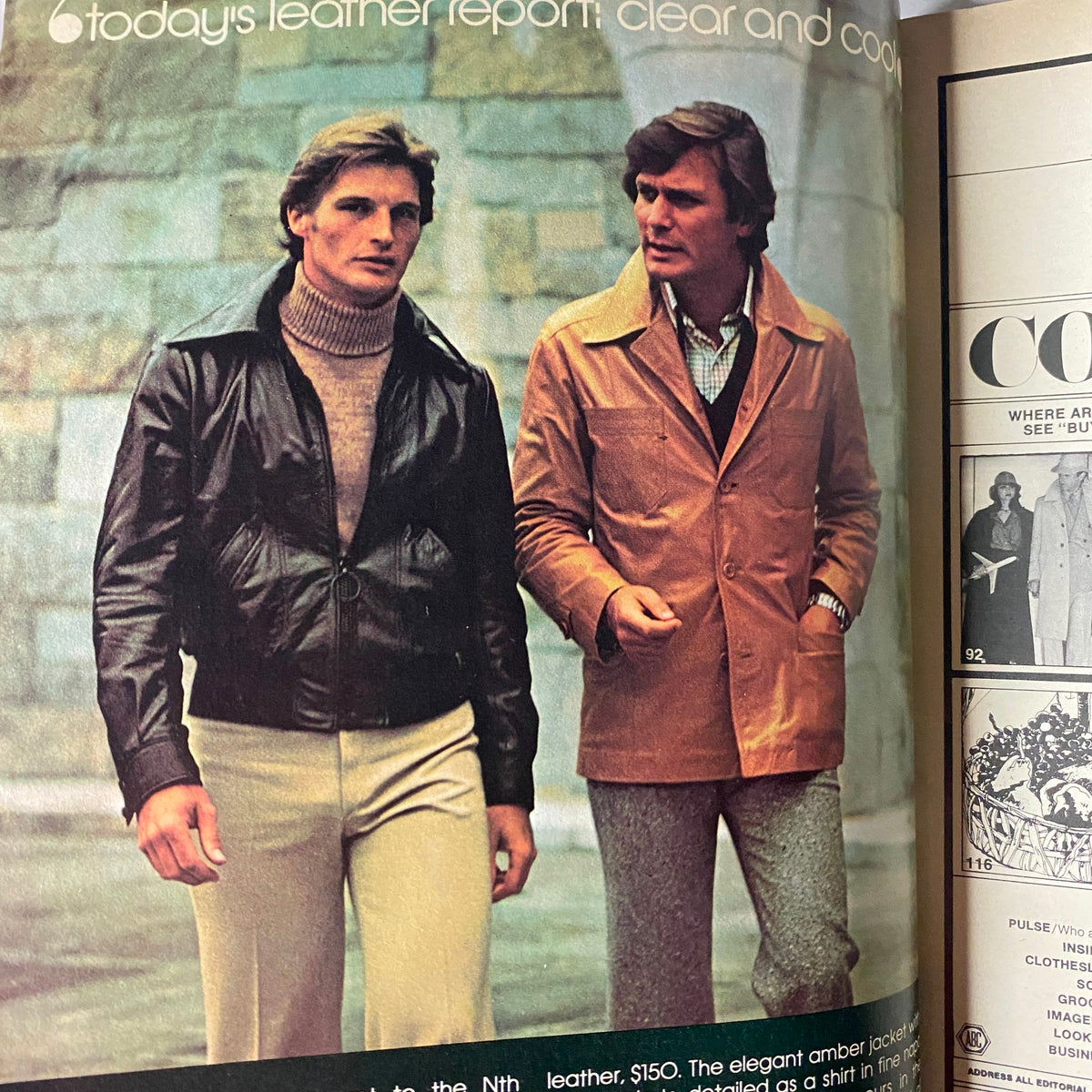
The October 1975 issue of GQ: Gentlemen's Quarterly, featuring Nina Gaidarova and Paul Palmero on the cover with a deep focus on French and Parisian fashion, is a primary document of American men's fashion publishing during one of the most interesting and underappreciated periods in the category's history. By October 1975, GQ was in the midst of its pre-Condé Nast period — the magazine would not be acquired by Condé Nast until 1983 — and was operating as a publication in active editorial evolution, working to position American men's fashion consciousness in relationship to European style authority in ways that no other American men's publication was attempting with comparable seriousness. The confirmed editorial framework of this issue — built almost entirely around French fashion, Parisian culture, and European style sophistication — reflects GQ's deliberate strategy of using European fashion credibility to elevate American men's engagement with clothing and style beyond the purely functional. The mid-1970s were a specific and interesting moment for men's fashion: the excesses of 1960s and early-1970s peacock fashion were subsiding, the more structured and European-influenced aesthetic that would eventually produce the power-dressing sensibility of the 1980s was beginning to emerge, and a publication that could mediate between American men and the European fashion world that they were increasingly interested in but lacked direct access to was providing a genuinely valuable editorial service. For collectors building archives around GQ's complete publishing history, October 1975 is a well-situated primary document of the magazine's editorial ambitions during its pre-acquisition independent period.
The confirmed table of contents for this issue — documented in unusual detail through the provided fashion highlights and feature articles — reveals an editorial scope that goes considerably beyond routine men's fashion coverage. The Paris-focused editorial framework is comprehensive: "The French Direction," "Paris When It Glitters," "Paris Matchless," "French Provincial," and "French Toasting" together constitute a sustained meditation on French culture, cuisine, wine, and fashion that was as much a cultural education project as a practical fashion guide. That editorial ambition — using a fashion magazine to provide American men with substantive cultural context for the style choices being advocated — is characteristic of GQ's mid-1970s editorial identity at its most distinctive. The confirmed "Supplemental Knowledge" feature on vitamins and health trends and the hair styling product coverage alongside the fashion content also document the mid-1970s expansion of men's lifestyle magazine content beyond clothing into the grooming, health, and personal care territory that would eventually define the men's lifestyle magazine category in the following decade. Collectors researching American men's lifestyle and fashion publishing from 1975 will find this issue one of the more substantively documented primary sources from the year, given the unusually detailed confirmed table of contents.
Nina Gaidarova and Paul Palmero's joint cover appearance reflects GQ's mid-1970s practice of featuring male and female models together on covers that presented an idealized vision of sophisticated modern life — a presentation strategy that was itself part of the magazine's broader project of repositioning men's fashion engagement within a culturally aspirational rather than purely practical framework. The dual-model cover format carried an implicit editorial argument: that being a well-dressed man was part of a broader lifestyle rather than an isolated vanity, and that the European aesthetic being advocated in this issue was accessible to the American man who paid attention to the right guidance.
About the Publication
GQ — Gentlemen's Quarterly — was founded in 1931 as Apparel Arts, a menswear trade publication, before evolving through multiple incarnations into the consumer-facing men's lifestyle magazine that Condé Nast would acquire in 1983. By October 1975, GQ was operating in its independent pre-acquisition period, developing the editorial voice and the reader relationship that would eventually make it one of the most commercially successful and culturally influential men's publications in American history. The magazine's mid-1970s editorial approach combined fashion coverage — heavily influenced by European and particularly French style authority — with lifestyle, grooming, food, and cultural content aimed at the educated, professionally ambitious American man who wanted to engage with his appearance and his broader life as a coherent aesthetic project. Its October issues were among its more carefully produced fall fashion editions, with significant advertising investment from the season's major menswear brands and editorial content calibrated to the most commercially active fashion buying period of the year.
Key Highlights Inside
- The comprehensive French and Parisian editorial framework — "The French Direction," "Paris When It Glitters," "Paris Matchless," "French Provincial," and "French Toasting" — constitutes one of the more sustained single-issue engagements with French fashion and culture in GQ's mid-1970s archive, reflecting the publication's deliberate strategy of using European aesthetic authority to elevate American men's fashion consciousness at a specific transitional moment in the decade's style history.
- "Scarf Laws" and "Europe is Wearing…" document the specific fall 1975 accessory and fashion trends that GQ was advocating for its readership — primary documents of how an influential American men's publication was translating European fashion signals for domestic consumption at a specific moment in the mid-1970s aesthetic evolution.
- "Supplemental Knowledge" on vitamins and health trends documents the mid-1970s expansion of men's lifestyle magazine content into wellness territory — an early example of the health and grooming content integration that would eventually become a defining characteristic of the men's lifestyle magazine category in the following decades.
- The wine coverage in "French Toasting" — focused on great-value French wines — reflects the mid-1970s explosion of American interest in wine culture that would produce the wine boom of the late 1970s and early 1980s, and documents GQ's characteristic engagement with lifestyle sophistication as a dimension of the well-dressed man's broader cultural identity.
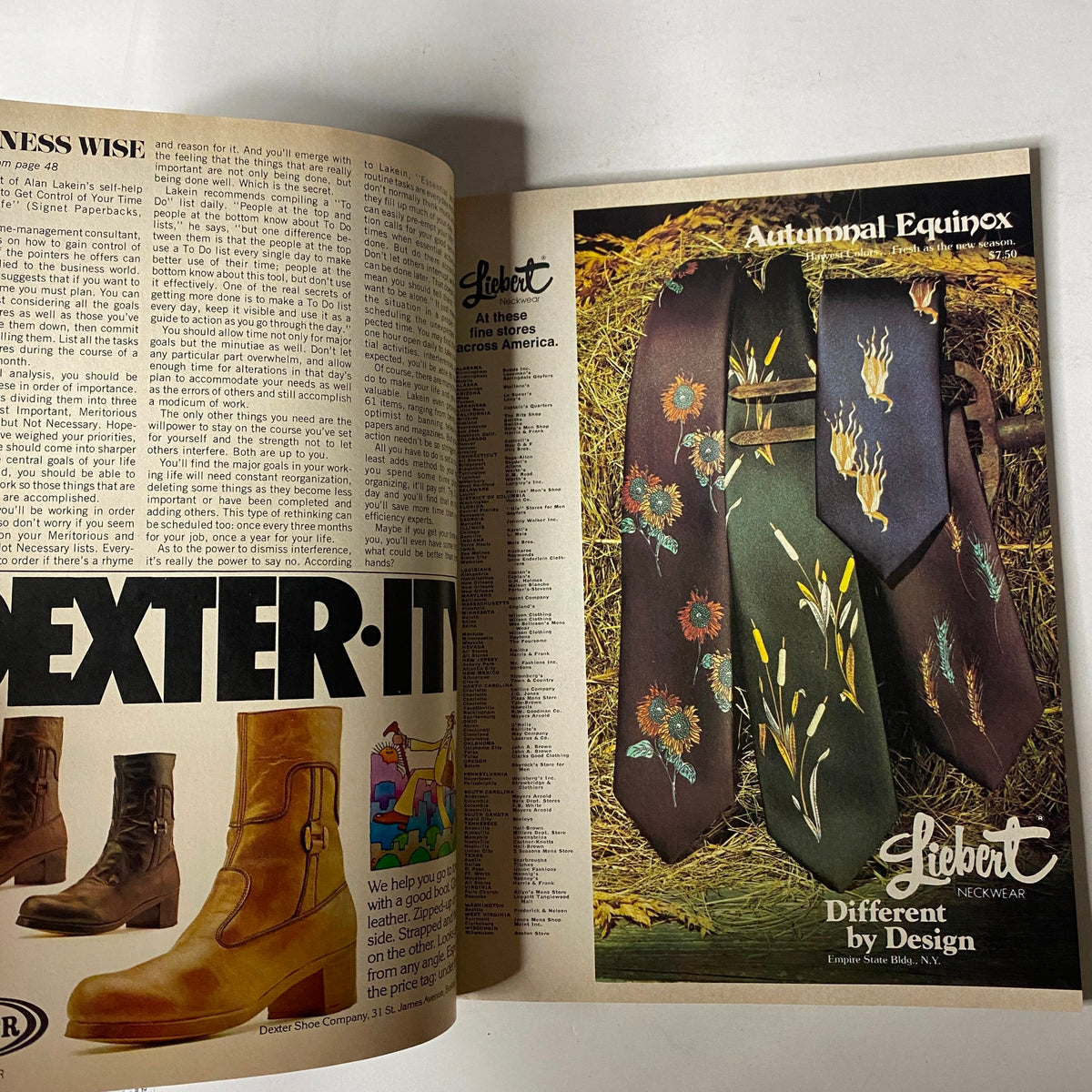
- The extensive departments section — covering Pulse, Sounds, Groomed, Business Wise, Selling Yourself, Shaping Up, and more — confirms this issue's breadth as a full-spectrum men's lifestyle publication rather than a narrowly fashion-focused title, and provides a primary source record of the mid-1970s men's lifestyle magazine category at its most ambitious editorial expression.
Condition & Rarity
Surviving copies of this issue are graded at the Good level with typical age-related wear — a condition designation that indicates a complete and readable publication showing honest aging consistent with fifty years of existence. For a GQ from October 1975, Good condition is a workable survival grade for both research and collection purposes: the magazine was produced on a combination of coated stock for photography and lighter paper for text sections, a format that ages unevenly and is susceptible to tanning and edge brittleness over time. The confirmed table of contents provided in the listing represents an unusual degree of editorial documentation that allows collectors and researchers to verify specific content rather than inferring it — the fashion features and article titles confirmed here make this issue more researchable than most surviving GQ issues from the same period. The plastic protective covering provides appropriate stabilization for a publication of this age, helping to prevent further cover surface deterioration and spine damage during handling and storage. Condition assessment from the provided photographs is the appropriate standard for a publication of this age, where specific degrees of cover wear, interior page tanning, and spine integrity require direct visual evaluation.
Looking for More Issues Like This?
GQ issues from the mid-1970s pre-Condé Nast period — particularly those with comprehensive Paris and French fashion editorial frameworks and confirmed detailed tables of contents — are among the more substantively documented and historically specific entries in the publication's long archive of men's fashion journalism, and the October 1975 issue is one of the more richly confirmed examples from this underappreciated period of GQ's editorial history. The GQ collection at OriginalMagazines.com is the most comprehensive place to browse available issues across the publication's decades of American men's fashion documentation. For collectors building a broader picture of American men's lifestyle and fashion publishing in 1975, the 1975 magazines collection offers a wide cross-section of titles that together capture the full range of that mid-decade year's American print and fashion culture.