
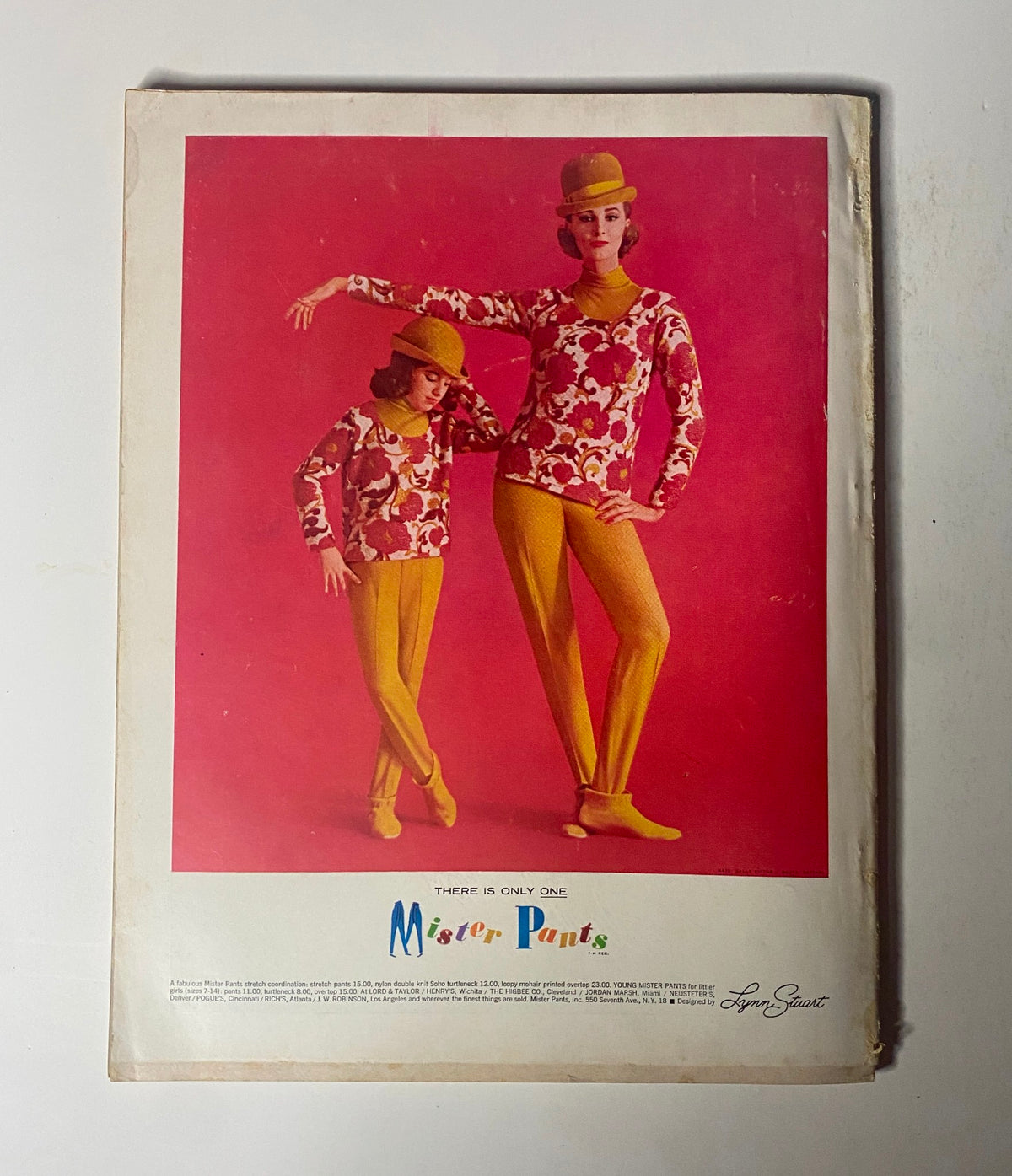


Description
Collector's Note – Why This Issue Matters
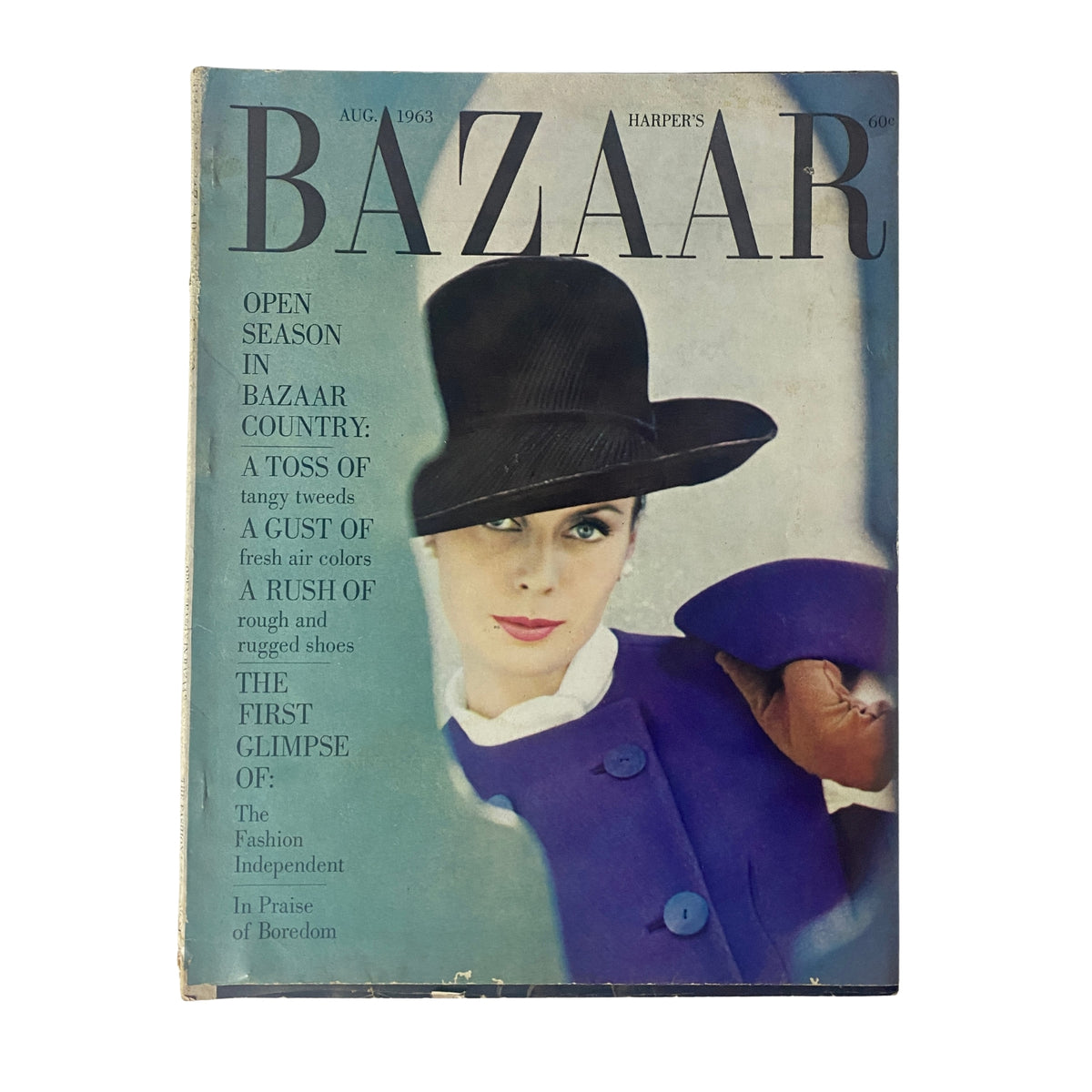
August 1963 represents Harper's Bazaar at a genuine peak. The magazine was operating under the creative direction of Marvin Israel, and the photographers and writers passing through its pages were among the most significant in American cultural life. This particular issue is built around a single sustained fashion concept — "Bazaar Country" — a city-meets-rural aesthetic that previewed the fall season through a lens of confident, slightly theatrical American style. The cover photograph is the work of Lillian Bassman, one of the most distinctive voices in mid-century fashion photography, whose painterly approach to image-making set her apart from virtually every contemporary. Her cover image here — a model in a bold violet ensemble anchored by a velvet sombrero, white silky suit, and wide-lapel collar — is exactly the kind of work that has made Bassman's Harper's Bazaar output so prized by collectors of fashion photography. The garments carry credits to Rihani and Jon, with accessories from Sally Victor, Trifari, and Kalay, and the look was stocked at Bonwit Teller, Woodward & Lothrop, Hudson's, and I. Magnin — a roster of department stores that itself documents the geography of American luxury retail in the early 1960s.
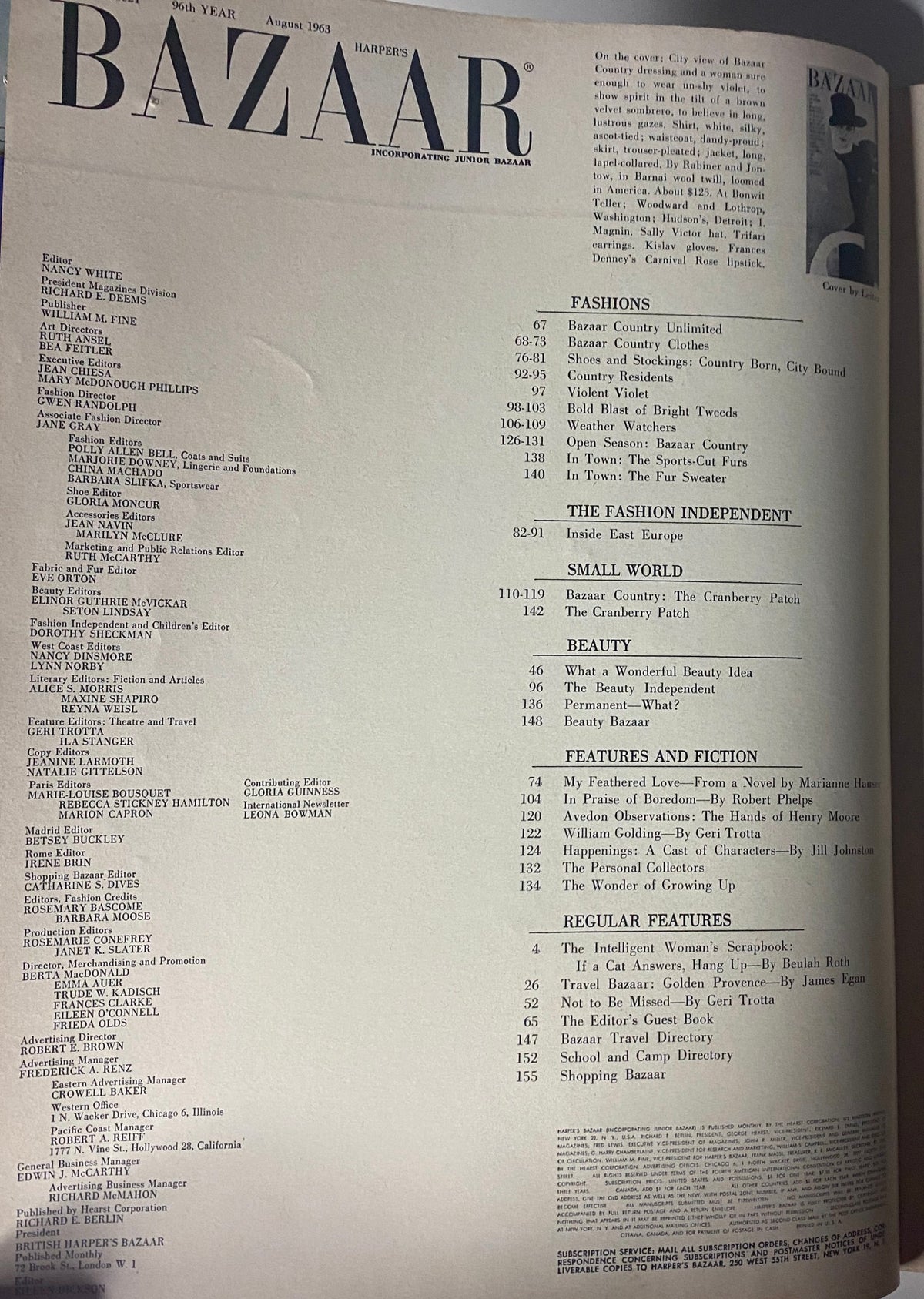
The interior is equally rich. Richard Avedon's "Observations" feature — here focused on the hands of sculptor Henry Moore — represents the kind of unexpected editorial crossover between fashion and fine art that defined Bazaar's ambition in this era. William Golding, who had published Lord of the Flies just nine years earlier and would go on to win the Nobel Prize in Literature in 1983, receives a profile by Geri Trotta. The "Inside East Europe: Fashion behind the Curtain" feature is a document of its Cold War moment, examining style on the other side of an ideological divide that dominated the decade. And Jill Johnston's "Happenings: A Cast of Characters" places the issue squarely within the emerging New York avant-garde — Johnston was one of the sharpest chroniclers of downtown arts culture, and her presence in Bazaar's pages is a reminder of how seriously the magazine took its role as a connector between high fashion and broader intellectual life. Collectors exploring the Harper's Bazaar archive will find this issue among the more editorially complex examples from the decade.
The early 1960s occupy a specific and irreplaceable position in fashion history — the last years of a certain kind of structured, craft-intensive American elegance before the mid-decade disruptions that would transform the industry entirely. This issue's fall preview, with its tweeds, furs, transitional outerwear, and country-inflected tailoring, captures a sensibility that was already beginning to feel the pressure of change. For anyone building a serious documentary collection of magazines from 1963, this issue represents the fashion establishment at full confidence, one season before everything started to shift.
About the Publication
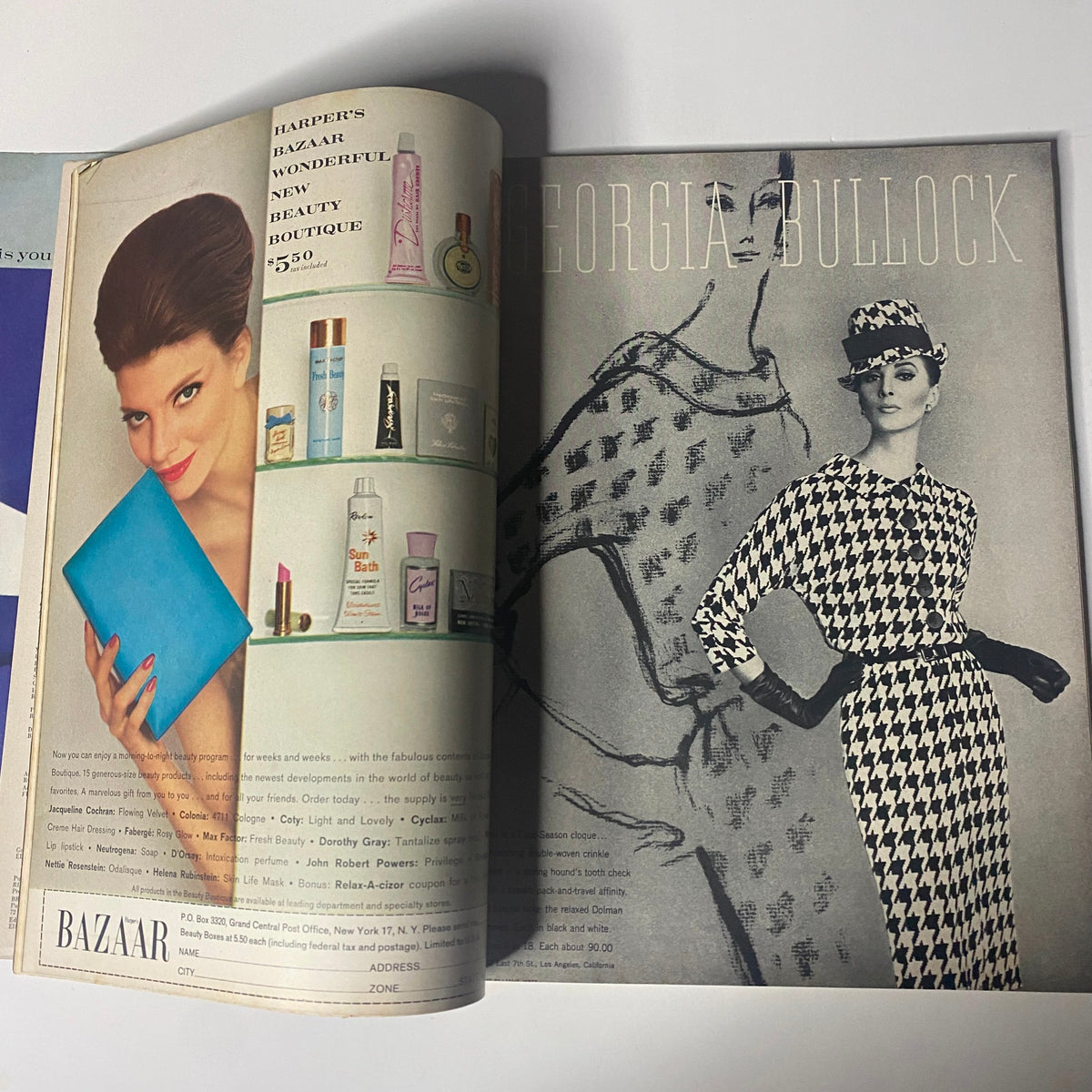
Harper's Bazaar, founded in 1867, is the oldest fashion magazine in the United States. By the early 1960s it had spent decades establishing itself as the more intellectual and artistically ambitious counterpart to Vogue, cultivating relationships with photographers like Richard Avedon, Lillian Bassman, and Louise Dahl-Wolfe, and publishing fiction and criticism alongside its fashion coverage. Its audience was the educated, style-conscious American woman — a reader presumed to be interested in ideas as well as clothes, in world affairs as well as beauty. The magazine's editorial format in this period combined extensive fashion photography with literary fiction, cultural profiles, travel writing, and beauty features, producing issues that functioned simultaneously as style documents and general-interest cultural reviews.
Key Highlights Inside
- Lillian Bassman cover photograph — The cover image, featuring a model in a violet velvet sombrero and wide-lapel white suit, is credited to one of Harper's Bazaar's most celebrated photographers, whose work from this era is now collected and exhibited independently of its original editorial context.
- Avedon Observations: The Hands of Henry Moore (p.120) — Richard Avedon's editorial contribution turns from fashion to fine art, focusing on the sculptor Henry Moore in a feature that exemplifies the magazine's consistent effort to bridge fashion photography and broader cultural documentation.
- William Golding profile by Geri Trotta (p.122) — A profile of the British novelist, author of Lord of the Flies, situates this issue within Bazaar's tradition of serious literary coverage alongside its fashion content.
- Inside East Europe: Fashion Behind the Curtain (pp.82–91) — A Cold War-era feature examining fashion and style in Eastern Europe, reflecting the geopolitical preoccupations of the early 1960s and Bazaar's appetite for international reporting with an unexpected angle.
- Happenings: A Cast of Characters by Jill Johnston (p.124) — Johnston, a significant figure in New York's avant-garde arts writing, contributes a piece that connects the magazine to the downtown cultural scene emerging in the early 1960s.
- Bazaar Country fall fashion preview — The issue's organizing concept spans multiple features across more than sixty pages, offering one of the more sustained single-theme fashion presentations in the magazine's early-decade run.
Condition & Rarity
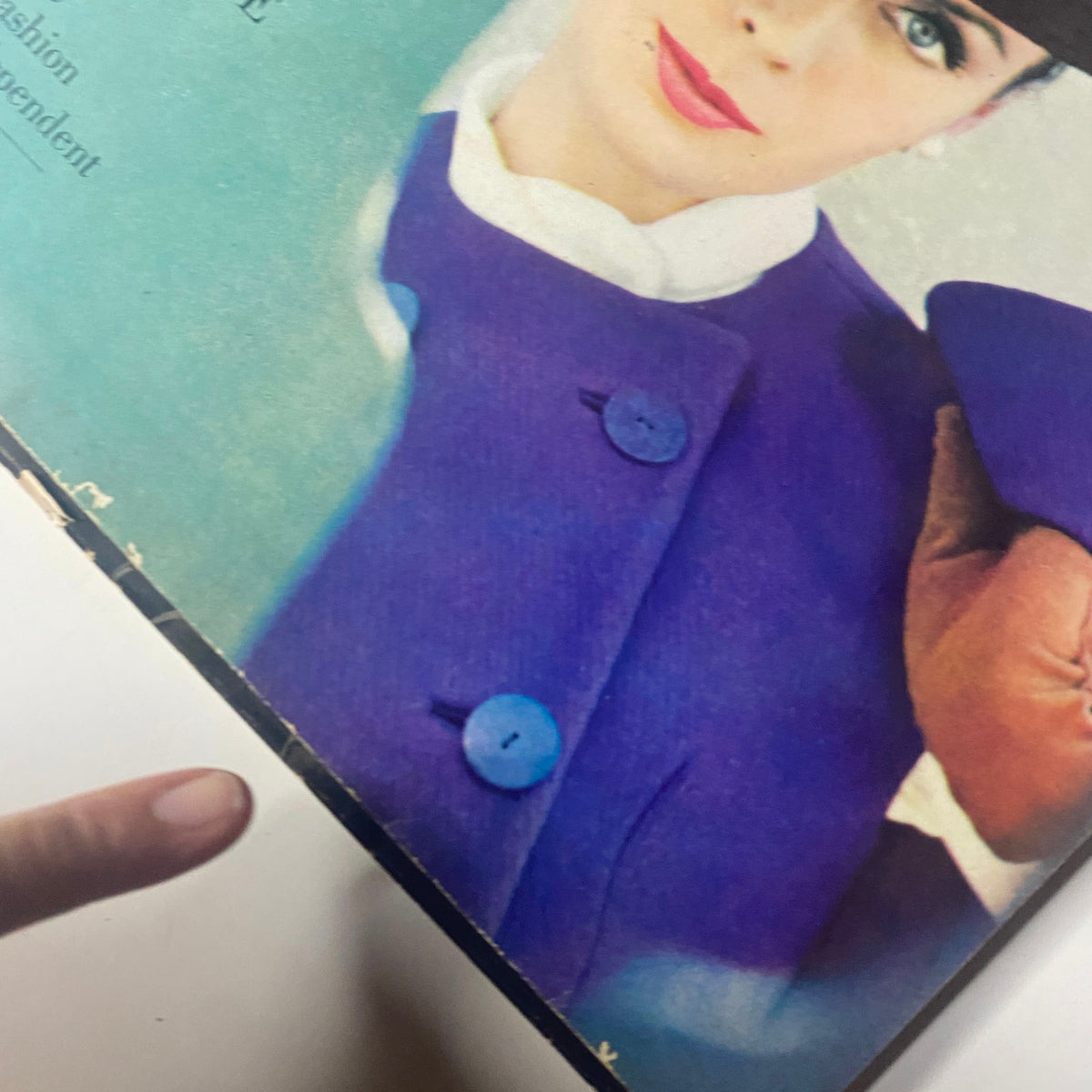
Harper's Bazaar issues from 1963 were printed on coated stock that ages more gracefully than the newsprint-adjacent paper used by many contemporaneous publications, but sixty-plus years still exact a toll on unrestored copies. Good condition for an issue of this age implies intact pages, readable text, and a cover that retains its image quality without significant soiling or tears — meaningful attributes for an issue whose cover photograph is itself a primary collector draw. The absence of a mailing label is a notable positive: subscription copies of Bazaar from this era frequently carry address labels directly over the cover image, and their removal, if attempted, often damages the underlying surface. A label-free copy preserves the full integrity of Bassman's cover photograph without compromise. Protective plastic covering indicates deliberate storage at some point in the issue's history, which generally corresponds to better preservation of interior page quality. For collectors prioritizing display, the condition of the cover and the spine — both subject to stress from shelving and handling — are the critical evaluation points.
Looking for More Issues Like This?
Early 1960s Harper's Bazaar issues with significant photographic credits and strong editorial content are among the more actively pursued items in vintage fashion magazine collecting, and this one has more than most to recommend it. The full Harper's Bazaar collection at OriginalMagazines.com is the natural place to continue exploring — it spans multiple decades and includes many of the landmark issues from the magazine's most celebrated eras. For collectors focused specifically on the cultural and fashion moment this issue belongs to, the 1963 magazine archive gathers contemporaneous material across publications and provides useful context for just how much was happening in print that particular year.