




Description
Collector's Note – Why This Issue Matters
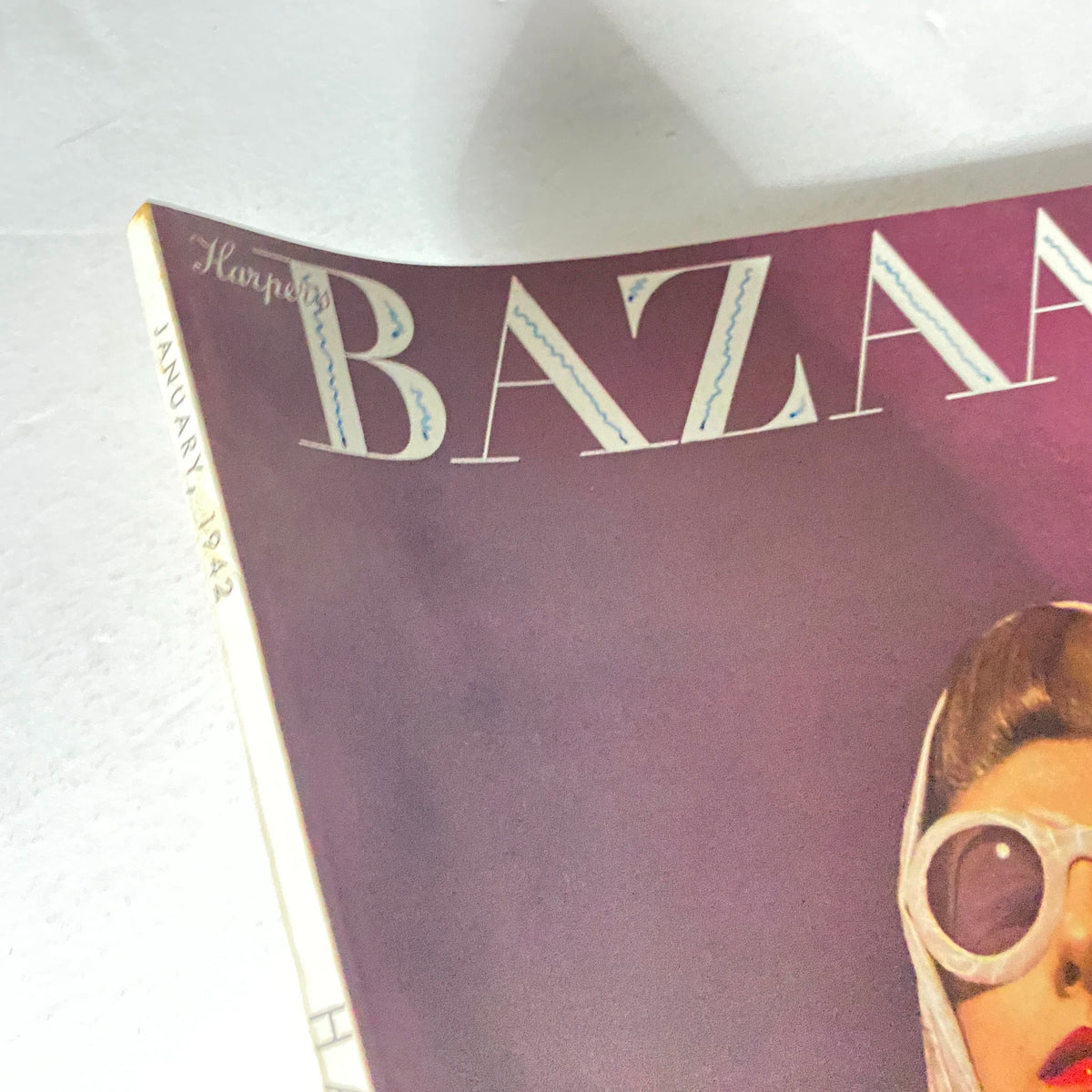
The January 1942 issue of Harper's Bazaar arrives from one of the most psychologically complex moments in American cultural history — the first weeks after Pearl Harbor. The United States had entered the Second World War on December 8, 1941, just weeks before this issue went to press, and the January 1942 Harper's Bazaar was among the first issues of any major American fashion magazine to be produced with the full knowledge that the country was at war. What makes this issue particularly remarkable is how it navigated that reality. Rather than abandoning its editorial identity, the magazine maintained its commitment to elegance, travel, and fashion while weaving wartime realities into its content — a balancing act that defines the editorial voice of American luxury publishing throughout the war years and makes issues from this precise window historically distinctive. The "Little Norway in Canada" theme, centered on Mont Tremblant in Quebec, reflects this navigation directly: with European travel impossible and the world at war, the magazine redirected its readers' aspirational gaze toward accessible North American destinations that still carried a flavor of the international sophistication its readership expected. Collectors building archives of wartime American fashion and luxury publishing will find the Harper's Bazaar magazine archive at OriginalMagazines.com an invaluable resource for this period.
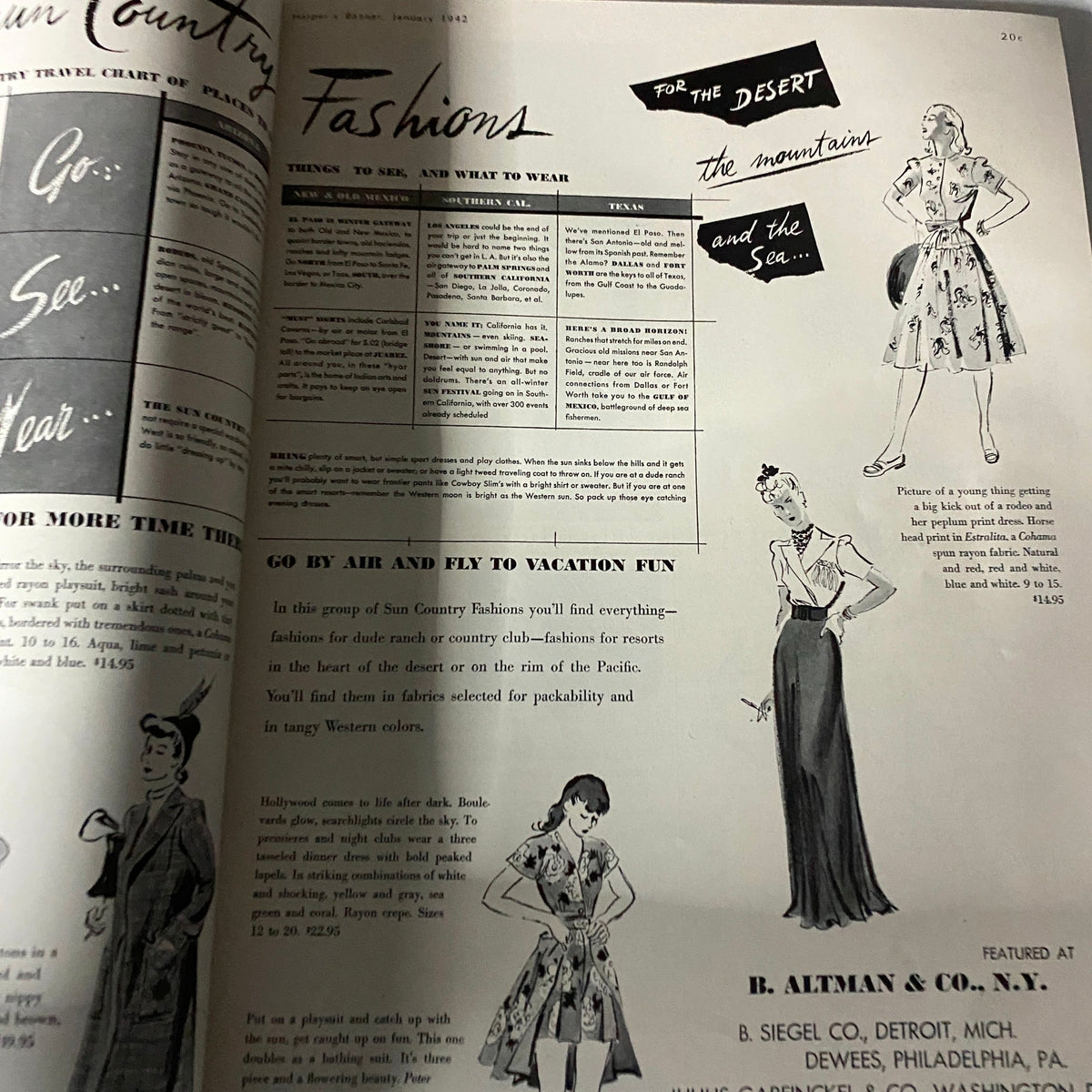
The "Little Norway" framing carries its own historical resonance beyond the travel content. Norway had been under Nazi occupation since April 1940, and Norwegian exile communities — including the Norwegian Air Force training program established in Canada, which was literally nicknamed "Little Norway" — were a recognized and symbolically significant presence in the Allied war effort. Whether Harper's Bazaar's use of the phrase was a direct reference to the Norwegian exile presence in Canada or primarily a description of the Norwegian-influenced resort character of the Mont Tremblant region, either reading places the issue in direct dialogue with the geopolitical realities of January 1942 in a way that purely domestic fashion content does not. The specific articles named in the listing — "Flight to the Valley of the Sun," resort hat coverage, and the fiction piece "Love is for Lovers" by Mary Lavin — are consistent with Bazaar's established format of blending literary fiction with fashion and travel editorial. Mary Lavin was an Irish short story writer of genuine literary distinction who was publishing in major American magazines during this period, and her presence in a January 1942 Harper's Bazaar reflects the magazine's longstanding commitment to serious literary content alongside its fashion coverage. The 1942 magazine archive at OriginalMagazines.com offers broader context for understanding how American publications across multiple genres navigated the first full year of American involvement in the war.
About the Publication
Harper's Bazaar is an American women's fashion magazine founded in 1867, making it the oldest fashion magazine in the United States. By January 1942 it was operating under the art direction of Alexey Brodovitch, who had taken the role in 1934 and was in the process of transforming the magazine's visual identity into one of the most sophisticated and influential in the history of American magazine design. Its audience was affluent, educated, and cosmopolitan — women who followed both fashion and culture, and who expected their fashion magazine to engage seriously with literature, art, and ideas alongside its coverage of clothing and lifestyle. The magazine's wartime issues are among the most editorially rich of its entire publishing history, as the constraints of the era forced its editors and art directors to find new creative solutions within a changed world.
Key Highlights Inside
- "Little Norway in Canada" — the issue's central editorial theme, focused on Mont Tremblant, Quebec, offering resort fashion and travel content redirected toward North American destinations as European travel became impossible under wartime conditions.
- "Flight to the Valley of the Sun" — a travel feature identified in the listing, consistent with Harper's Bazaar's established format of pairing aspirational travel editorial with fashion coverage.
- "Love is for Lovers" by Mary Lavin — a fiction piece by the Irish short story writer, whose presence reflects Bazaar's consistent commitment to publishing serious literary work alongside its fashion and lifestyle content.
- Resort hat and fashion coverage — documenting the specific aesthetic direction of early 1942 resort fashion at the moment American luxury consumption was beginning to adjust to wartime realities.
- No subscriber label on the cover — indicating newsstand origin and providing the clean cover presentation preferred in collector grading over labeled subscriber copies.
- Excellent condition with light age-typical wear — an unusually strong condition grade for a magazine of this vintage, suggesting careful storage throughout its eighty-plus-year history.
Condition & Rarity
Excellent condition with light wear typical for its age is a strong and meaningful condition grade for a magazine published in January 1942 — now more than eighty years ago. For a glossy-stock fashion magazine of this era, excellent condition implies intact covers with retained color and surface quality, crisp interior pages without significant toning or brittleness, and a spine that has not been compromised by rolling or moisture damage. Light wear is the honest acknowledgment that no unrestored eighty-year-old magazine is without the physical signatures of its age, and its presence alongside an otherwise excellent grade indicates a copy that has been well stored rather than heavily used. The absence of a subscriber label is a meaningful additional positive — it identifies this as a newsstand copy, avoids any cover surface disruption, and represents the preferred collector state for issues of this era. Plastic protective covering provides ongoing preservation benefits. Harper's Bazaar issues from the first months of American involvement in World War II are collected both as fashion history documents and as primary sources of American cultural life under wartime conditions, and copies in excellent condition from this window are uncommon finds.
Looking for More Issues Like This?
A no-label January 1942 Harper's Bazaar in excellent condition is a genuinely rare find — wartime issues of major fashion magazines in strong condition don't surface often, and this one carries an unusually specific and historically layered editorial identity. If it's no longer available, the Harper's Bazaar archive at OriginalMagazines.com is the most comprehensive source for the magazine across its publishing history, with particular depth in the wartime and mid-century issues. Collectors drawn to the full cultural landscape of America's first year at war will also find the 1942 magazine archive rich with primary sources from one of the most consequential years of the twentieth century.