




Description
Collector's Note – Why This Issue Matters
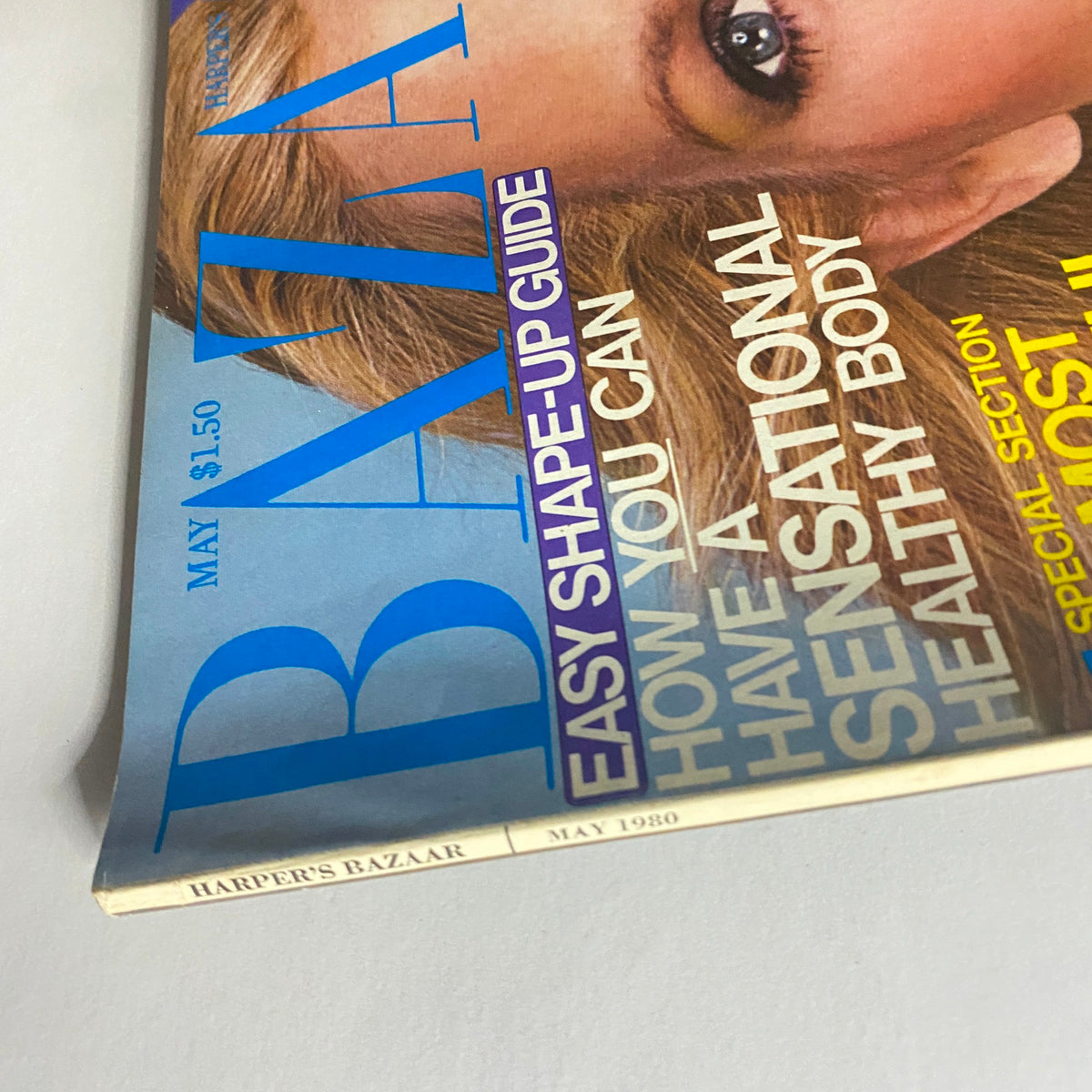
The May 1980 issue of Harper's Bazaar arrived at a genuinely transitional moment in American fashion culture. The late 1970s obsession with natural, unstructured dressing was giving way to something harder-edged and more deliberately sculpted — the power-dressed, fitness-conscious aesthetic that would define the decade ahead. This issue, themed "The Body in Fashion," sits precisely at that hinge point, documenting the cultural shift toward physical idealism that would shape beauty standards well into the 1990s. Features like "The Best Bodies in America" weren't simply fitness content; they were cultural statements reflecting a society beginning to treat the body itself as a fashion accessory. The timing of a May issue compounds this significance — spring and early summer editions of major fashion titles have historically carried the heaviest editorial investment of the year, making them disproportionately important as records of where the industry stood at any given moment. For collectors focused on the broader arc of 20th-century fashion publishing, the Harper's Bazaar archive offers an unbroken visual record of exactly these kinds of pivotal moments.
The cover model for this issue is Shelley Smith, one of the prominent faces working the top editorial and commercial circuits in the late 1970s and early 1980s. Her appearance on a May cover — traditionally a high-visibility seasonal issue tied to the transition into summer — reflects her standing in the industry at the time. Beyond the cover, the issue's editorial mix is characteristic of early-1980s Bazaar: fashion reportage, beauty instruction, and the kind of long-form cultural feature that distinguished the magazine from its competitors. The inclusion of "Mind Control: How the Cults Work" alongside fashion content is a telling detail — Bazaar under this era's editorial direction was not purely a style book, but a general-interest women's magazine that took social and cultural journalism seriously. This willingness to place hard social commentary directly beside aspirational fashion photography is something that serious collectors of the title look for, and it appears here in full force. Collectors building a focused run of 1980 magazines will find this issue representative of the broader editorial ambitions of the period.
What makes a themed issue like this particularly valuable as a reference document is the coherence it brings to its fashion coverage. When an entire issue is organized around a single idea — the body, fitness, physical presentation — the photography, styling, and editorial copy reinforce each other in ways that a standard monthly rarely achieves. The result is something closer to a curated exhibition than a typical magazine, with every element pulling in the same thematic direction. This issue functions as a time capsule not just of what people were wearing in May 1980, but of how they were being told to think about their bodies and their appearance. The fragrance and makeup coverage fits neatly into that same framework — beauty in this issue is treated as an extension of physical self-presentation, not a separate category. That combination of fashion documentation and cultural commentary is precisely what elevates certain vintage issues above the level of simple ephemera.
About the Publication
Harper's Bazaar, founded in 1867, is the oldest fashion magazine in the United States and one of the most internationally influential style publications in history. By 1980, it had long established its editorial identity as a magazine for sophisticated, fashion-forward women — its audience skewed toward readers who viewed clothing and beauty as matters of genuine cultural interest rather than mere trend-following. The magazine's visual language during this period was shaped by high-end photography and a design sensibility that prioritized elegance over accessibility. Its photographers and art directors during the mid-to-late twentieth century set industry standards that competitors spent decades trying to match. Unlike its chief rival Vogue, which leaned heavily into aspirational fantasy, Bazaar of this era frequently engaged with real-world concerns alongside its fashion content, resulting in the kind of tonal range visible in this very issue. That editorial philosophy — rigorous about style, but unwilling to ignore the world outside the studio — gives issues from this period a depth that makes them compelling reading even today.
Key Highlights Inside
- "The Body in Fashion" — The issue's central theme, examining the emerging cultural emphasis on physical fitness and body image as integral components of personal style in the early 1980s. This framing was ahead of the mainstream curve; the full explosion of fitness culture in American media was still a year or two away, making this issue an early document of a shift that would soon become impossible to ignore.
- "The Best Bodies in America" — A feature that reflects the era's growing intersection of fitness culture and fashion, documenting how physical idealism was being reframed as an aesthetic pursuit. The very existence of this feature in a high-fashion title signals how thoroughly the wellness conversation had begun penetrating spaces previously devoted to clothing and accessories alone.
- "Mind Control: How the Cults Work" — A long-form cultural feature demonstrating the magazine's editorial range beyond fashion, touching on one of the significant social anxieties of the late 1970s and early 1980s. The cult phenomenon loomed large in the American public consciousness following several high-profile events in the preceding years, and Bazaar's willingness to engage with it directly speaks to the publication's broader journalistic ambitions.
- Summer fashion coverage — Seasonal clothing editorial including options under the $175 price point, offering a precise snapshot of both style and consumer economics of the period. That specific price threshold is itself a piece of historical data, providing collectors and fashion historians with a concrete reference point for mid-market fashion spending in 1980.
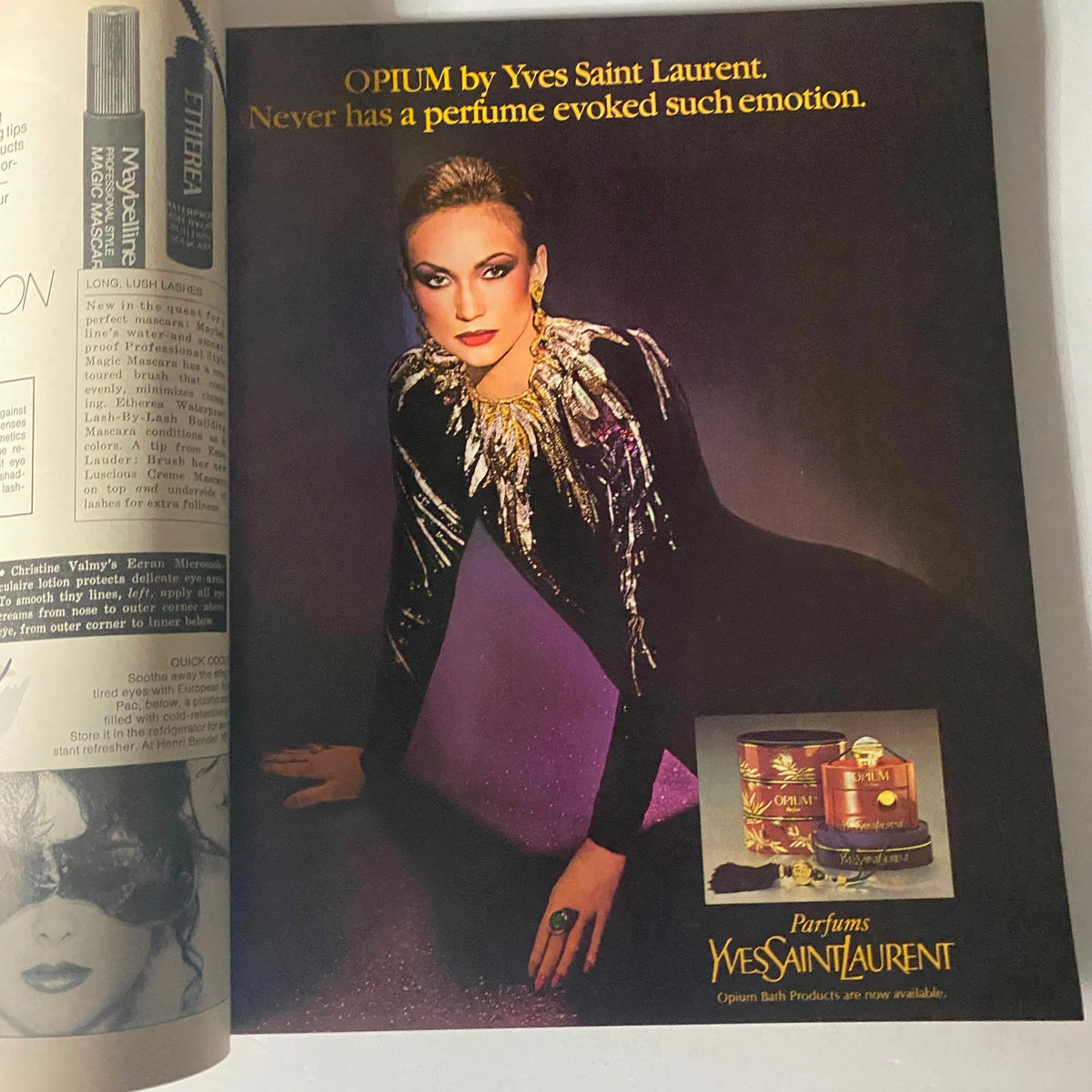
- Beauty and fragrance features — Coverage of contemporary fragrance and makeup, including insight into the working methods of leading makeup artists of the era. Beauty editorial of this period is among the most visually distinctive content in vintage fashion magazines, reflecting color palettes and techniques that are now recognized as defining markers of the early 1980s aesthetic.
- Shelley Smith cover — An original newsstand cover appearance by a recognized editorial model of the period, photographed in the high-production style characteristic of Bazaar's seasonal issues. Cover appearances of this caliber represent the magazine at its most carefully composed, making them the single most referenced element when collectors and researchers seek out a specific issue.
Condition & Rarity
Surviving copies of this issue are described as Very Good, showing only minor edge wear consistent with normal handling and storage across more than four decades. For a newsstand-origin magazine of this age and paper stock, that represents genuinely solid preservation. Glossy fashion magazines from this period are particularly susceptible to spine stress, corner blunting, and moisture-related toning — a copy exhibiting only edge wear and no noted interior damage to pages or photographs is meaningfully above average for the grade. The coated paper stock used in high-end fashion titles of this era can develop tanning or brittleness when stored in fluctuating humidity, so copies that have avoided those conditions carry additional value to condition-conscious collectors. The presence of a protective plastic covering on surviving copies further supports long-term stability, preventing the surface abrasion and atmospheric exposure that account for most condition deterioration in stored periodicals. Collectors evaluating any copy of this issue should look closely at the spine integrity and the condition of the cover photography, as these are the first areas to show age on high-gloss fashion publications of this era.
Looking for More Issues Like This?
A May 1980 Bazaar in this condition is not an easy find — themed issues with strong cover subjects tend to be pulled from collections and rarely re-enter the market in solid grades. If this particular issue is currently unavailable, the broader Harper's Bazaar collection at OriginalMagazines.com spans decades of the publication's history and is worth browsing for comparable issues from the same editorial era. Collectors focused specifically on the early 1980s fashion moment will also find the full 1980 magazine collection a useful resource — that year produced a remarkable range of issues across multiple titles that collectively document the aesthetic transition the decade opened with. Whether you are building a focused Bazaar run or assembling a broader survey of early-1980s print culture, both collections are worth exploring in depth.