


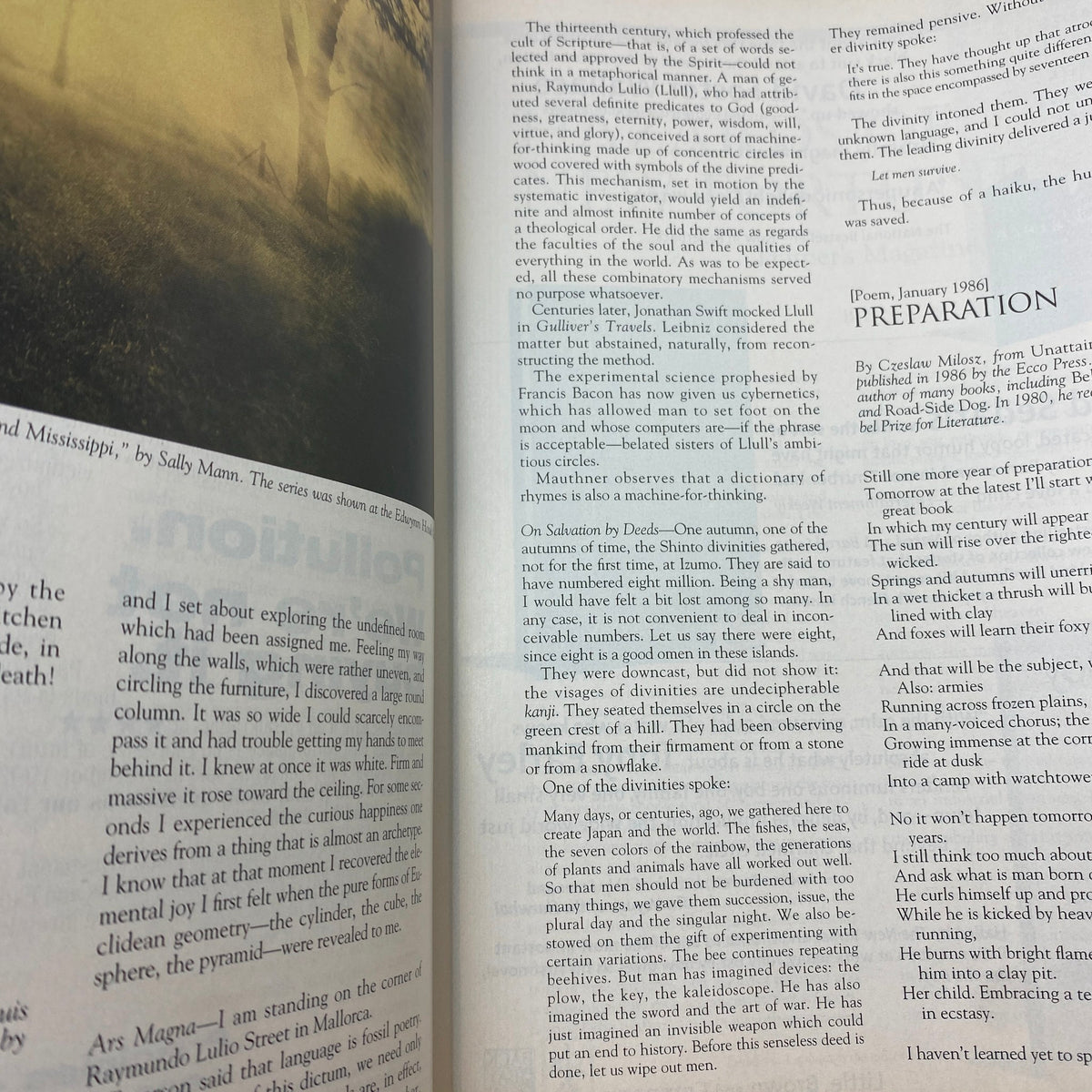


Description
Collector's Note – Why This Issue Matters
This Summer 2000 issue of Harper's Magazine marks the publication's sesquicentennial, a genuinely significant milestone given that Harper's, launched in June 1850, holds the distinction of being the oldest continuously published monthly magazine in the United States. The magazine's first press run of 7,500 copies sold out immediately upon release, and within six months circulation had already reached 50,000, establishing from its earliest days a readership appetite that the publication would sustain across a century and a half of American cultural and political change. By 2000, Harper's had long since built a reputation as a venue for serious literary and political essay writing, having published work by figures ranging from Herman Melville and Mark Twain in its nineteenth-century pages to contemporary essayists shaping the magazine's identity at the turn of the millennium. This anniversary issue arrived under editor Lewis H. Lapham, who led Harper's for roughly three decades across two tenures and is widely credited with reviving the magazine's fortunes and reputation beginning in the 1970s. The sesquicentennial milestone prompted Harper's to introduce new editorial features that year, including an Archive section and a Weekly Review, alongside the simultaneous publication of An American Album, a 712-page illustrated anthology spanning the magazine's full history with an introduction by Lapham himself. This combination of institutional milestone and active editorial reinvention makes the Summer 2000 issue a particularly meaningful artifact within the magazine's long publishing history.
The issue's roster of contributors reflects the caliber of writing Lapham had cultivated at Harper's by this point in his editorship. Tom Wolfe, in particular, had a long and significant relationship with the magazine under Lapham, who published some of Wolfe's most provocative work during his tenure and was credited by Wolfe himself, in turn, with a meaningful influence on his literary sensibility. Russell Banks, a major American novelist known for his unflinching examinations of working-class life and personal struggle, represented exactly the kind of serious literary voice Harper's had built its modern reputation around publishing. The inclusion of pieces addressing democracy, culture, and the broader human experience reflects the essay-driven, idea-focused editorial approach that Lapham had championed since his redesign of the magazine in the 1980s, which explicitly favored work that incited imaginative engagement over straightforward information delivery. For an anniversary issue specifically, assembling writers of this caliber would have served a clear editorial purpose: demonstrating that Harper's remained vital and relevant at 150 years old, not merely commemorating its historical significance but actively reaffirming its continued role in American letters.
For collectors, this issue offers a meaningful convergence of institutional history and substantive literary content, marking a genuine milestone in American magazine publishing while showcasing contributors who represented the strongest of Harper's editorial tradition at the turn of the millennium. That combination of anniversary significance and genuine literary substance distinguishes this issue from a purely commemorative or nostalgic special edition, giving it real standing within the broader Harper's Magazine collecting landscape, where anniversary issues of this kind mark important inflection points in a publication's institutional story.
About the Publication
Harper's Magazine, launched in New York City in June 1850 by the publishing firm Harper & Brothers, holds the distinction of being the oldest continuously published monthly magazine in the United States, a title it has maintained across a century and a half of American cultural, political, and literary history. The magazine built its early reputation through serialized English literature and the work of major American writers including Mark Twain, Henry James, Jack London, and Winslow Homer, gradually establishing itself as a venue for serious essay writing, fiction, and cultural commentary rather than purely commercial or entertainment-focused content. Under longtime editor Lewis H. Lapham, who led the magazine across two extended tenures between 1976 and 2006, Harper's underwent a significant editorial revival that introduced signature features including the Harper's Index, Annotations, and Readings sections, reflecting Lapham's explicit philosophy that the magazine should incite imaginative engagement rather than simply deliver information. By 2000, the magazine's monthly format combined substantial essays on politics, culture, and society with fiction, criticism, and the kind of first-person literary journalism that Lapham had championed throughout his editorship, distinguishing Harper's from more conventional news or general-interest publications. This combination of historical longevity and sustained editorial ambition is part of what makes Harper's a frequently cited touchstone in discussions of serious American magazine journalism, and its sesquicentennial milestone in 2000 represented a significant moment in that ongoing institutional story.
Key Highlights Inside
- An essay by Tom Wolfe, a longtime and significant Harper's contributor under editor Lewis Lapham. Lapham published some of Wolfe's most provocative work during his editorship and was credited by Wolfe with a meaningful influence on his literary development. Wolfe's inclusion in this anniversary issue reflects his standing as one of the magazine's most notable modern-era contributors.
- An essay by Russell Banks, a major American novelist known for unflinching examinations of working-class life and personal struggle. Banks's inclusion alongside Wolfe reflects the caliber of literary voice Harper's sought for its sesquicentennial issue specifically. This pairing of distinct literary sensibilities was characteristic of the magazine's broader editorial approach under Lapham.
- "In Praise of Illiteracy," a piece offering a provocative perspective consistent with Harper's tradition of essay writing that challenges conventional thinking. Titles of this kind reflect the magazine's longstanding editorial preference for argumentative, idea-driven content over straightforward reporting. This approach was central to Lapham's vision for the magazine throughout his editorship.
- "A Punt Is a Pass Is a Kick," a feature addressing sport through the kind of literary, observational lens Harper's regularly applied to American cultural subjects. The magazine frequently used seemingly minor cultural touchpoints as a launching point for broader commentary on American life. This piece reflects that recurring editorial approach.
- Content reflecting on democracy, culture, and the human experience, consistent with the magazine's broader essay-driven editorial mission at the turn of the millennium. This kind of substantive cultural and political commentary was central to Harper's identity under Lapham's editorship. The sesquicentennial framing gave these pieces additional weight as a reflection on the magazine's continued relevance after 150 years.
- Editorial features tied to the magazine's sesquicentennial milestone, including the introduction of new sections such as Archive and the Weekly Review. These additions accompanied the broader anniversary celebration and reflected the magazine's active reinvention rather than purely nostalgic commemoration. The milestone also coincided with the publication of An American Album, a 712-page anthology spanning the magazine's full history.
Condition & Rarity
Surviving copies of this issue are generally evaluated using the same standards collectors apply across vintage literary and general-interest magazines: cover gloss and corner sharpness, spine integrity, absence of subscription labels or mailing stickers, and overall page condition free of tears, foxing, or moisture damage. A copy described as being in very good condition, with minor wear on the edges, would be considered a strong example for a magazine now a quarter-century old. A plastic protective sleeve is a standard and effective safeguard for issues of this vintage, helping prevent further handling wear, UV exposure, and humidity damage, though it has no bearing on the underlying grade of the magazine itself. As with most literary magazines from this period, unlabeled newsstand copies tend to be more desirable to collectors than subscription copies, since they typically present cleaner covers without label residue or address imprinting. Given this issue's specific significance as Harper's sesquicentennial commemoration, collectors focused on the magazine's institutional history or on contributors like Tom Wolfe and Russell Banks may weigh the issue's content and milestone status particularly heavily relative to minor cosmetic considerations. Anniversary and milestone issues of long-running literary magazines often attract sustained collector interest well beyond their immediate publication period, given their documented place within a title's broader institutional narrative. Pages free of yellowing, brittleness, or prior tape repairs remain the broader benchmark for a well-preserved copy of any magazine from this era.
Looking for More Issues Like This?
A Harper's Magazine issue marking the publication's sesquicentennial, featuring contributions from writers as significant as Tom Wolfe and Russell Banks, represents a genuinely meaningful milestone issue for collectors of serious American literary and political magazines. If this particular issue isn't available, it's worth browsing the broader Harper's Magazine collection for other issues spanning this title's long and historically significant run, including other notable issues from Lewis Lapham's influential editorship. Collectors focused on the era itself may also want to look through the full range of 2000 magazines for other issues capturing the broader cultural and literary landscape at the turn of the millennium. Each of these collections offers a different way into the period, whether the interest lies in this specific title's institutional milestone or the broader cultural snapshot of a single pivotal year. A single year's worth of magazines often tells a fuller story than any one issue alone, particularly for a year marking the turn of a new millennium across so many areas of American cultural life. Browsing by publication can also help collectors trace how Harper's editorial voice and contributor roster evolved across Lapham's three decades at the magazine's helm. Whichever angle appeals most, these collections are a useful starting point for going deeper into this significant period of American literary magazine history.