
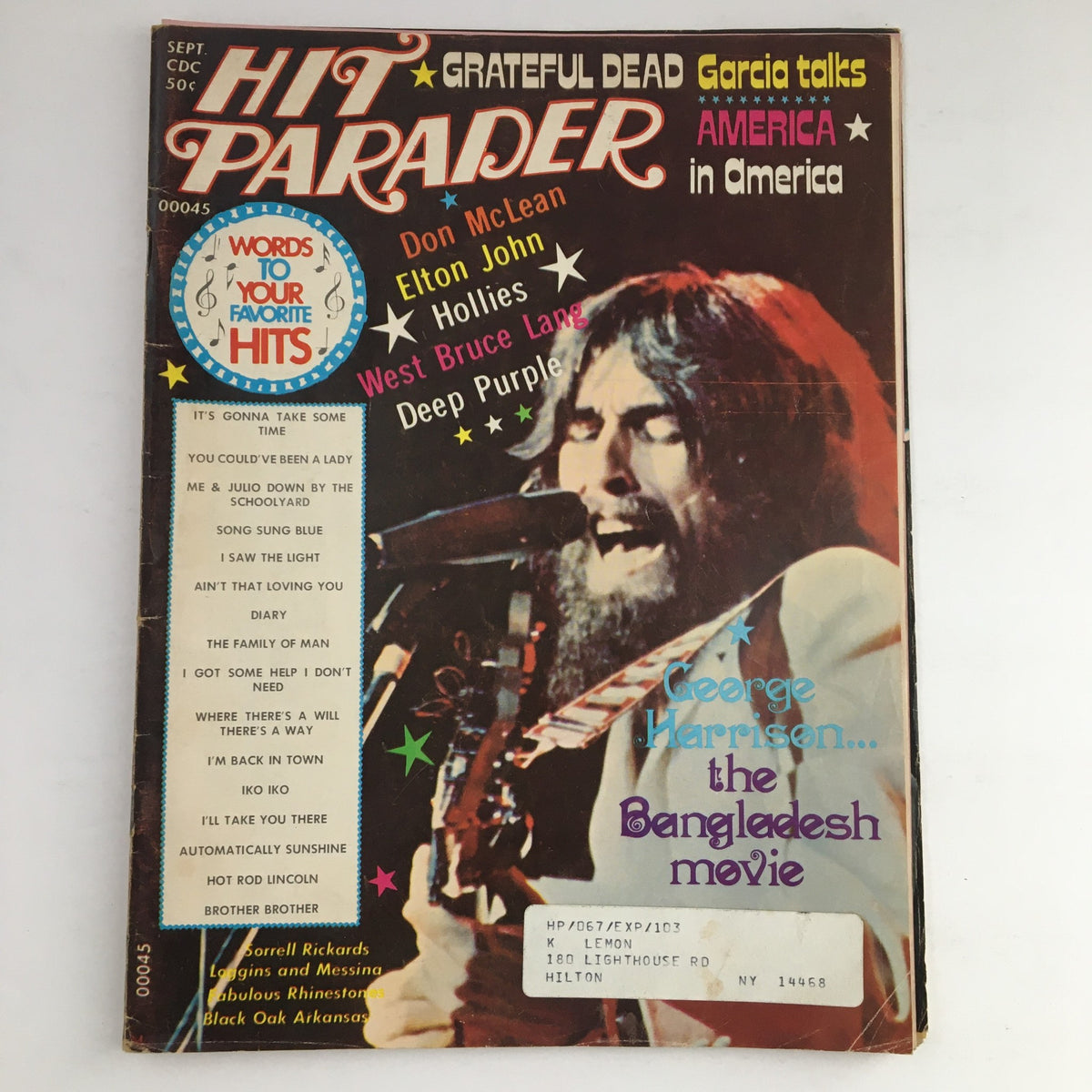
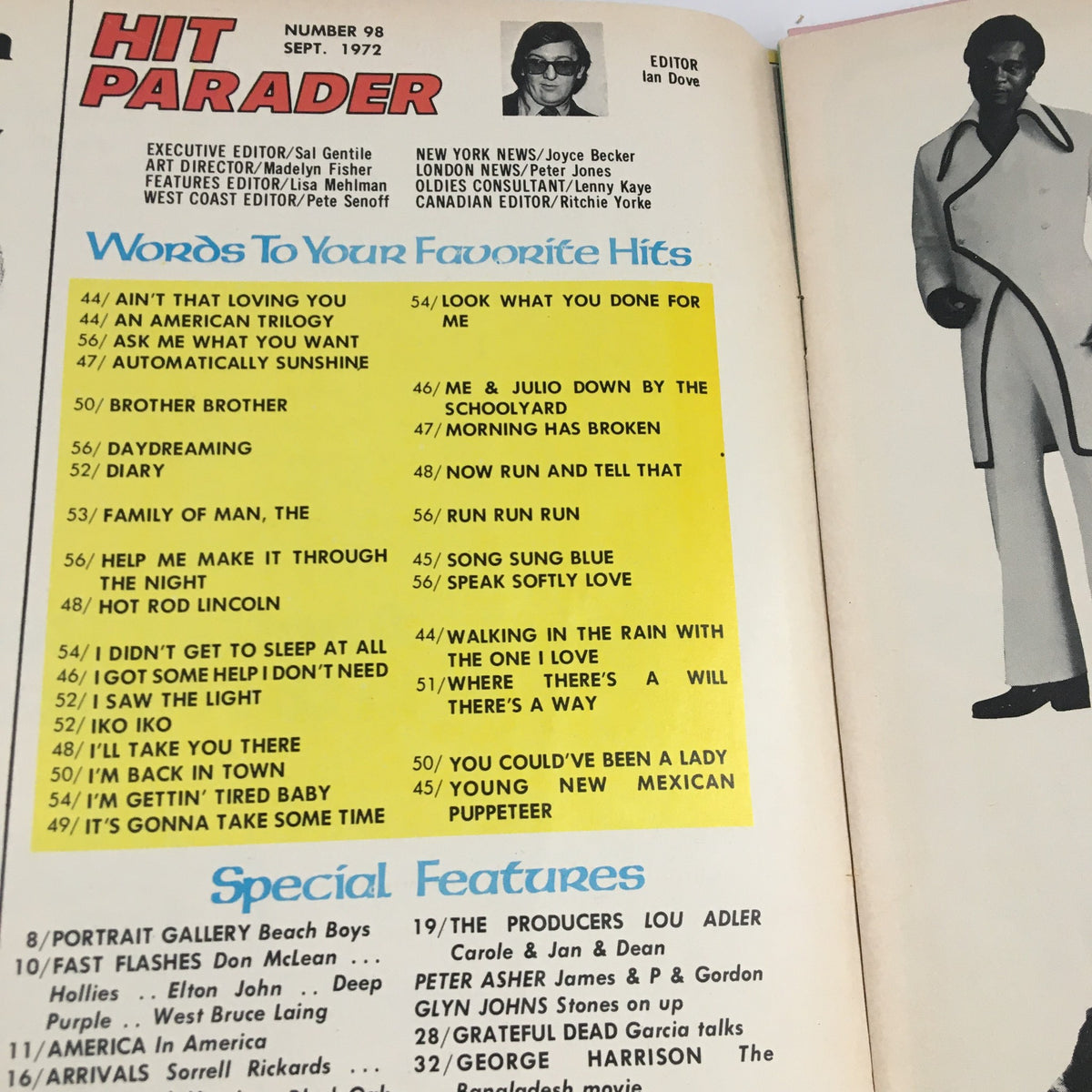
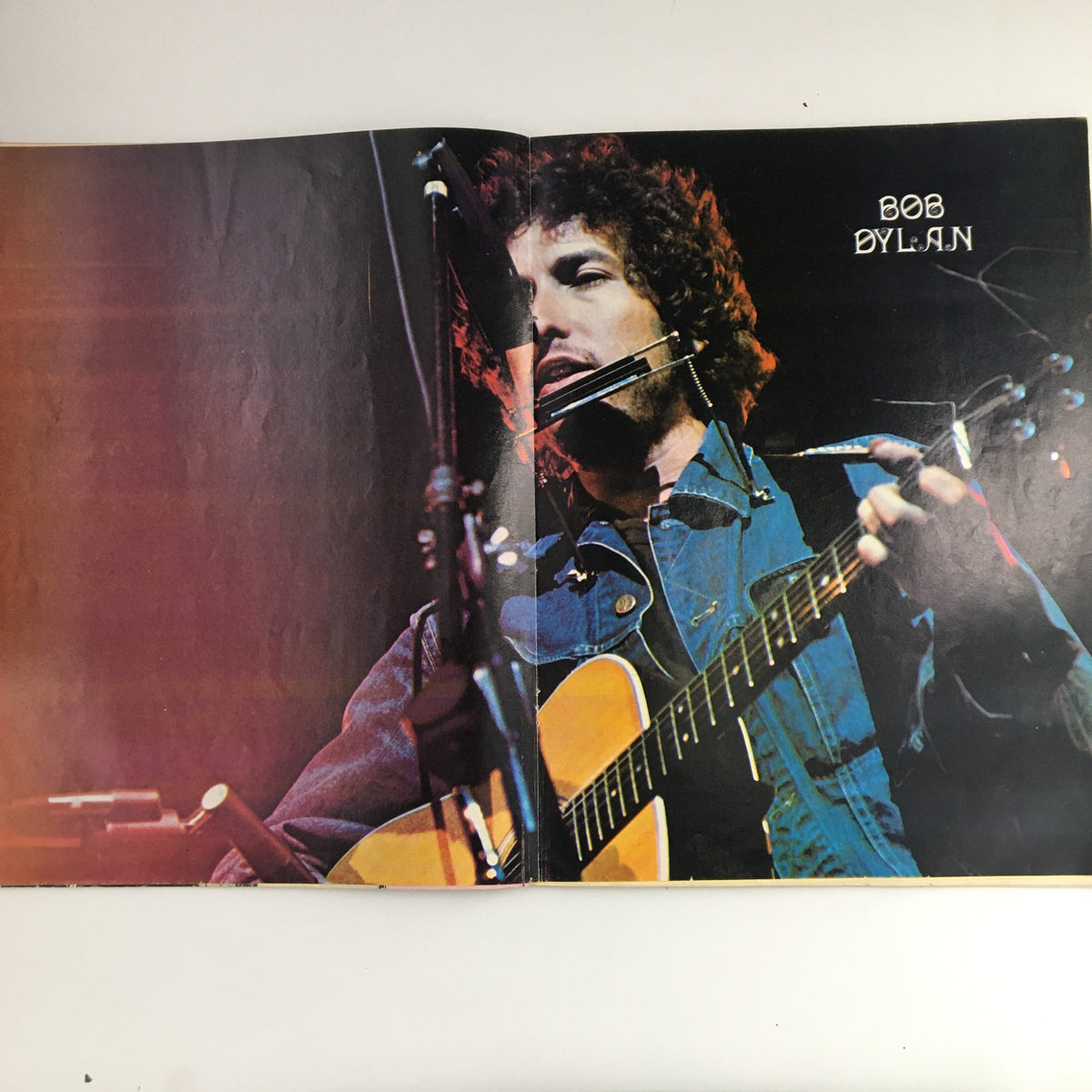


Description
Collector's Note – Why This Issue Matters
The September 1972 issue of Hit Parader magazine belongs to a defining period in rock journalism, when popular music magazines were becoming more than fan publications. By the early 1970s, rock music had developed its own historical memory, its own serious critics, and its own mythology. Artists were no longer discussed only as chart performers or teen idols; they were treated as songwriters, cultural voices, political observers, and figures whose albums could mark generational change. This issue reflects that larger shift through its association with George Harrison, Don McLean, and Bob Dylan, three names deeply connected to the transformation of popular music from entertainment into cultural literature.
George Harrison’s presence gives the issue a strong post-Beatles significance. By September 1972, Harrison had already established himself as a major solo artist after the enormous impact of All Things Must Pass and the high-profile cultural reach of the Concert for Bangladesh. His post-Beatles career was especially important because it changed how the public understood him: no longer simply the “quiet Beatle,” he emerged as a songwriter, guitarist, spiritual seeker, and organizer capable of shaping rock music on his own terms. A 1972 Hit Parader issue featuring Harrison therefore sits within a key period when Beatles-era identities were being redefined in the pages of the music press.
Don McLean’s inclusion places the issue squarely inside the singer-songwriter moment of the early 1970s. His song “American Pie” had become one of the era’s most recognizable musical statements, combining nostalgia, loss, rock history, and cultural reflection in a way that invited listeners to interpret it almost like a poem. In a magazine context, McLean represented the kind of artist who showed how lyrics had become central to rock’s authority. Readers were not only following melodies and performers; they were studying meanings, symbols, and emotional connections to the recent past. That makes his appearance alongside Harrison and Dylan especially appropriate, because all three figures were associated with songwriting as a serious cultural act.
Bob Dylan’s presence adds still another layer of importance. By 1972, Dylan had already reshaped the expectations placed on popular song, bringing folk traditions, literary ambition, social commentary, and personal myth into rock and popular music. His name in a Hit Parader issue from this period signals the magazine’s connection to a readership that cared about influence, language, and artistic reputation. As part of the broader archive of magazines published in 1972, this issue preserves a moment when rock journalism was documenting artists who had already become part of modern music history while still remaining active subjects of fan curiosity, debate, and interpretation.
About the Publication
Hit Parader was a long-running American music magazine that became closely associated with rock, pop, lyrics, artist features, interviews, photographs, and youth music culture. In earlier decades, the title had roots in popular-song coverage, but by the late 1960s and early 1970s it had become an important periodical for readers following rock artists, singer-songwriters, major bands, and the changing sound of contemporary music. Its audience included fans who wanted access to musicians beyond radio play, collectors who saved issues for photographs and posters, and readers interested in the lyrics, personalities, and cultural significance of popular music. The magazine’s format often combined artist profiles, interviews, photos, song-related material, and fan-oriented features, giving it a dual identity: it was both a popular entertainment magazine and a printed record of how major artists were presented to the public at the time. For collectors studying early-1970s music culture, Hit Parader issues are valuable because they capture the language, visual style, and editorial priorities of rock journalism during the album era.
Key Highlights Inside
- September 1972 issue of Hit Parader, placing it within the early-1970s period when rock magazines were documenting the rise of album culture, singer-songwriters, and serious music fandom.
- Features George Harrison, connecting the issue to the post-Beatles period when Harrison was being recognized as a major solo artist with his own musical, spiritual, and cultural identity.
- Includes Don McLean, whose early-1970s visibility was strongly tied to the impact of “American Pie” and the era’s growing interest in reflective, lyrically driven songwriting.
- Includes Bob Dylan, one of the most influential songwriters in modern popular music and a central figure in the development of folk-rock, lyrical rock journalism, and artist-centered music criticism.
- The listing describes the issue as containing articles, interviews, and photos celebrating the early-1970s music scene, though specific interior article titles are not confirmed from the listing details.
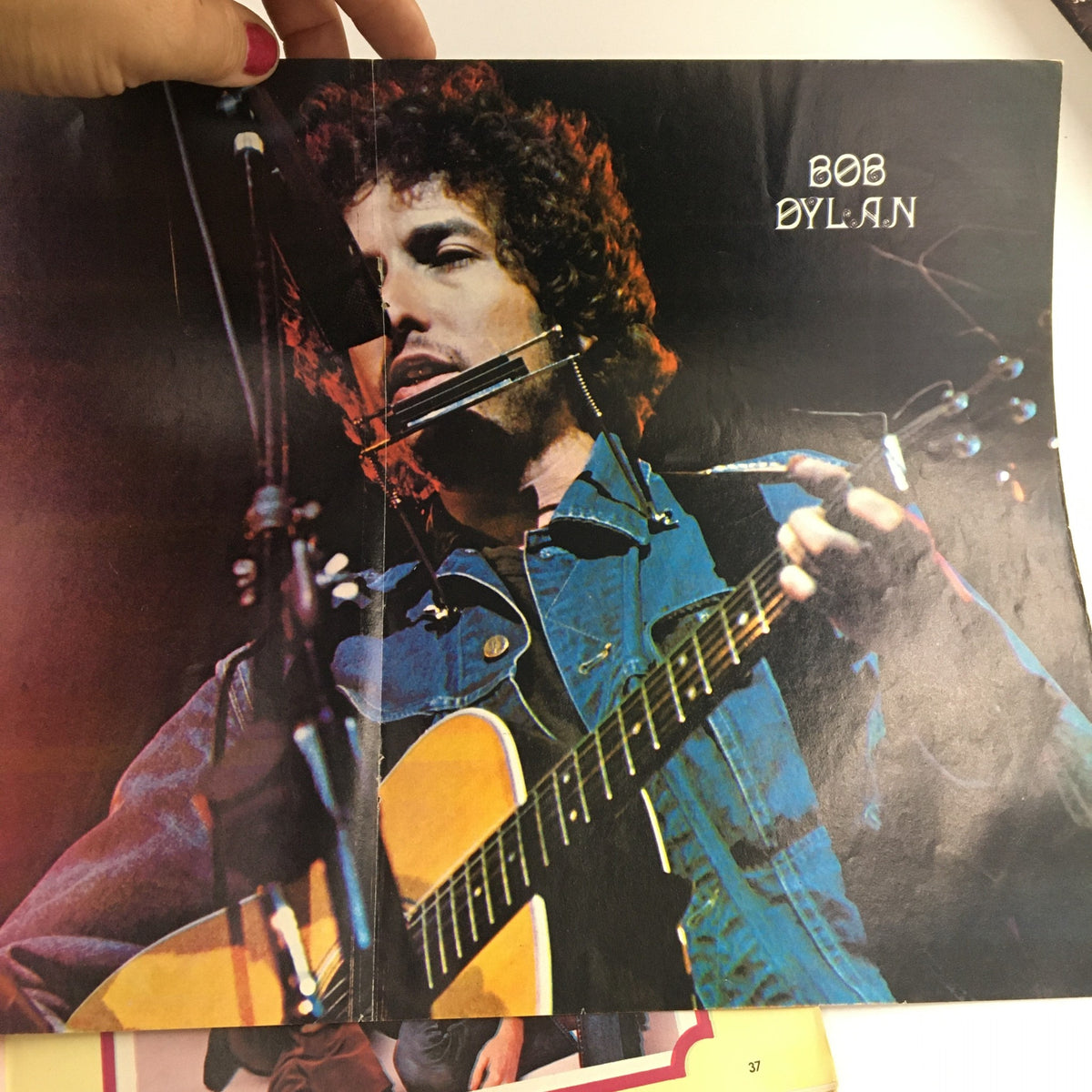
- Includes a poster, with the listing noting that the poster is detached, making it an important condition and completeness detail for collectors evaluating the issue.
Condition & Rarity
Collector evaluation of the September 1972 Hit Parader issue should take into account the stated good condition, minor wear, front address label, plastic protective covering, and detached poster. Minor wear is common for music magazines from the early 1970s because they were often handled repeatedly, read by multiple people, stored in bedrooms or record rooms, and saved for artist photographs, lyrics, or posters rather than preserved under archival conditions. Edge wear, light creasing, corner softness, and general handling marks are typical signs of age for magazines that circulated among active music fans. A front address label is a subscription-related feature and can affect cover presentation, especially for collectors who prefer clean newsstand covers, but it also forms part of the magazine’s original distribution history and should be evaluated honestly rather than ignored.
The detached poster is one of the most important collector details for this issue. Posters were a major reason many readers saved music magazines, and their presence can significantly shape how a vintage issue is evaluated. A detached poster may still be valuable as part of the magazine’s surviving material, but it should be distinguished from a poster that remains firmly bound in its original position. Collectors assessing completeness should look at whether the poster is present, whether it is fully intact, whether any folds or tears are visible, and whether its removal affected the binding or neighboring pages. The listing confirms the poster is included but detached, which is the correct kind of detail to preserve in a collector-grade description.
The plastic protective covering is a positive preservation note because it can help limit additional dust exposure, surface rubbing, and casual handling damage. Still, long-term condition assessment depends on the underlying magazine itself: cover attachment, spine stability, page completeness, paper tone, staple strength, interior cleanliness, and the absence of moisture damage, writing, heavy creasing, missing pages, or major tears. For a 1972 music magazine associated with George Harrison, Don McLean, and Bob Dylan, condition is especially tied to both cover presentation and interior completeness, because collectors may value the issue for its artist coverage, its period photography, and the included poster material.
Looking for More Issues Like This?
Early-1970s music magazines featuring artists such as George Harrison, Don McLean, and Bob Dylan can be tough to find because they appeal to several collecting audiences at once. Beatles collectors, classic rock historians, singer-songwriter enthusiasts, Bob Dylan researchers, and vintage magazine collectors may all be drawn to the same issue for different reasons.
Readers looking for related music coverage may want to explore the broader Hit Parader magazine collection for additional issues documenting major artists, changing rock trends, and the visual culture of music publishing. The title is especially useful for tracing how musicians were presented to fans during the years when rock journalism was becoming a serious part of popular culture.
For collectors who organize by year, the 1972 magazine collection offers useful context from the same period. Looking across that year helps place this issue within the wider print world of classic rock, post-Beatles careers, folk-influenced songwriting, and the growing seriousness of music journalism in the early 1970s.