


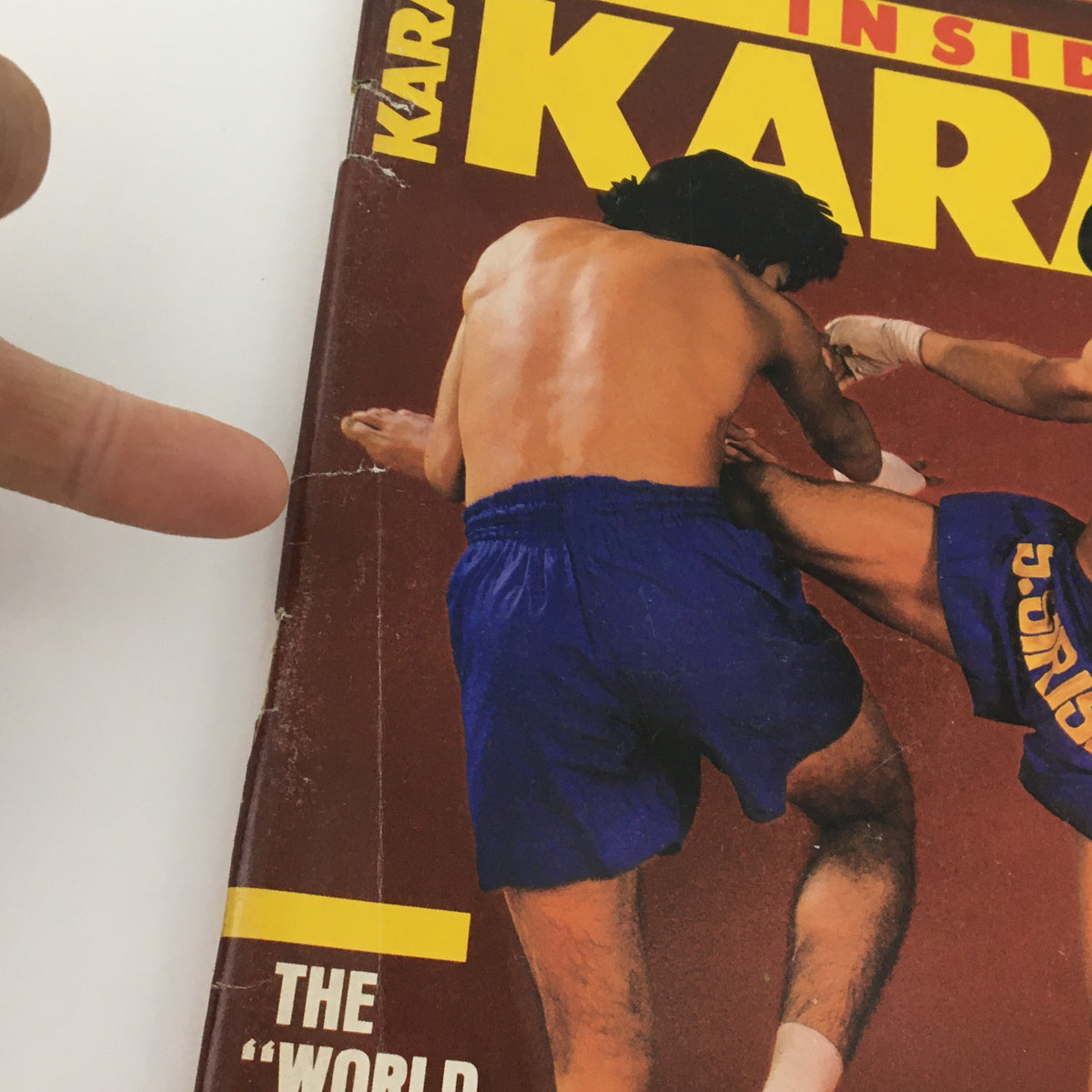


Description
Collector's Note – Why This Issue Matters
The May 1988 issue of Inside Karate magazine is notable for its stated focus on Thai martial arts and street-fighting techniques. The listing identifies “Thai Martial Arts” and “Street Lethal Ring Deadly” themes, placing the issue within the late-1980s martial-arts press fascination with practical self-defense, combat effectiveness, and striking systems outside the standard karate framework. Thai martial arts, especially Muay Thai, were increasingly drawing attention from Western martial artists because of their powerful kicking, kneeing, elbowing, clinching, conditioning, and ring-tested approach to combat. A 1988 issue covering Thai martial arts therefore reflects a period when readers were looking beyond familiar dojo systems to understand more direct and physically demanding fighting methods. It also shows how martial-arts magazines used bold language and hard-edged themes to speak to readers interested in real-world application as well as formal training.
For collectors of vintage Inside Karate magazine issues, this issue is meaningful because it documents the way karate-focused magazines broadened their scope during the 1980s. American martial-arts readers were interested in tournament fighting, traditional forms, weapons, self-defense, kickboxing, and street-survival material, often within the same publication. The listing notes articles, tips, visuals, and discussion of street-fighting techniques, though it does not confirm specific article titles, named instructors, page counts, or complete interior contents. That means the issue should be evaluated from its confirmed date, publication, Thai martial-arts focus, street-fighting theme, condition notes, and preservation details. This is a useful example of how martial-arts publishing responded to reader demand for material that felt practical, intense, and connected to combat outside a controlled training hall.
The issue also belongs within the broader archive of magazines published in 1988, a time when martial-arts knowledge still circulated primarily through schools, seminars, books, VHS tapes, and print magazines. Before online video and digital forums, a magazine issue could introduce readers to unfamiliar systems, training ideas, and combative approaches that were difficult to see in person. As a collector artifact, this May 1988 issue preserves the late-1980s language of practical martial-arts publishing, where “street,” “lethal,” and “deadly” themes reflected reader interest in realism and self-protection. It is especially useful for understanding how Thai martial arts and street-defense topics were framed for English-language martial-arts audiences before mixed martial arts made cross-style striking and clinch work more familiar. The issue also helps document the pre-MMA curiosity about what worked across different ranges, rulesets, and self-defense situations.
About the Publication
Inside Karate was a martial-arts magazine aimed at readers interested in karate, self-defense, tournament fighting, instructors, training methods, weapons, conditioning, and related fighting systems. Its audience included students, instructors, competitors, school owners, collectors, and martial-arts enthusiasts who relied on print magazines to follow techniques, trends, personalities, and debates beyond their local schools. By the late 1980s, karate magazines often covered more than traditional karate alone, reflecting the wider martial-arts marketplace of kickboxing, kung fu, taekwondo, jujutsu, weapons training, and practical self-defense. This broader editorial approach helped readers compare systems and consider how different methods might apply in competition or personal protection. Issues from this period are useful to collectors because they preserve the pre-digital martial-arts conversation: the terminology, photographs, advertisements, article framing, and training concerns that shaped how practitioners understood effectiveness. A Thai martial arts and street-fighting issue is especially relevant because it shows how the magazine engaged with harder-edged combat topics during a period of growing interest in realistic self-defense. Complete issues can also preserve the surrounding ads, school listings, equipment promotions, and visual style that help explain the martial-arts marketplace of the late 1980s.
Key Highlights Inside
- May 1988 issue of Inside Karate magazine, a specialist martial-arts publication from the late 1980s.
- Identified in the listing as covering Thai martial arts, connecting the issue to Muay Thai and related Southeast Asian striking traditions.
- Features street-fighting and self-defense themes according to the listing, reflecting late-1980s interest in practical combat applications.
- The listing notes articles, tips, and visuals, though specific article titles, instructor names, photographs, and full interior contents are not confirmed.
- Described as good condition, with minor wear typical for its age.
- Includes an address label on the front, a relevant presentation detail for collectors evaluating cover display quality.
- Bagged and boarded in protective plastic according to the listing, a useful preservation detail for a vintage martial-arts magazine.
- The listing notes loose binding, which should be considered carefully when evaluating structure and long-term handling stability.
- Useful as a reference issue for collectors studying Inside Karate, Thai martial arts, street-defense publishing, late-1980s martial-arts culture, and pre-digital training media.
- Represents the kind of 1980s martial-arts coverage that emphasized practical self-defense, striking systems, and real-world effectiveness alongside traditional training.
- Best evaluated through the confirmed publication date, title, Thai martial-arts subject, street-fighting theme, address-label detail, loose binding note, and stated condition details rather than unverified interior claims.
Condition & Rarity
Collector evaluation for this issue should note the described good condition, with minor wear typical for its age, an address label on the front, and loose binding. The address label is a meaningful presentation detail because it can interrupt the cover image or text, which may matter for display-focused collectors. The loose binding is more structurally important: even when pages are present, looseness can affect handling, page alignment, and long-term preservation. The magazine is described as bagged and boarded in protective plastic, which is useful for storage, but grading should still focus on the magazine itself: cover surface, spine integrity, staple condition, page completeness, edge wear, tears, creases, marks, paper quality, and whether any photographs, advertisements, or instructional pages have been clipped or removed. For martial-arts magazines, completeness is especially important because technique articles and photo sequences often carry the main research value. A surviving example with all pages intact remains useful even with an address label or loose binding, but collectors should handle it carefully and verify that the Thai martial-arts and street-fighting material is complete. Because loose binding can worsen with repeated handling, archival storage and minimal stress on the spine are especially important. The issue’s collector value is strongest when the cover remains presentable, the interior pages remain complete, and the stated topic material is still fully intact.
Looking for More Issues Like This?
Late-1980s martial-arts magazines focused on Thai fighting systems and street-defense themes can be especially rewarding because they show how readers explored practical combat before online instruction and mixed martial arts changed the conversation. Related material can be explored through the broader Inside Karate magazine collection or by comparing this issue with other titles from the 1988 magazine collection. Those related archives help place the May 1988 issue within the wider print record of karate, Muay Thai influence, self-defense culture, and late-1980s martial-arts publishing. They are also useful for comparing how different martial-arts magazines framed realism, striking methods, street-defense language, and cross-style training before the modern combat-sports era became mainstream.