



Description
Collector's Note – Why This Issue Matters
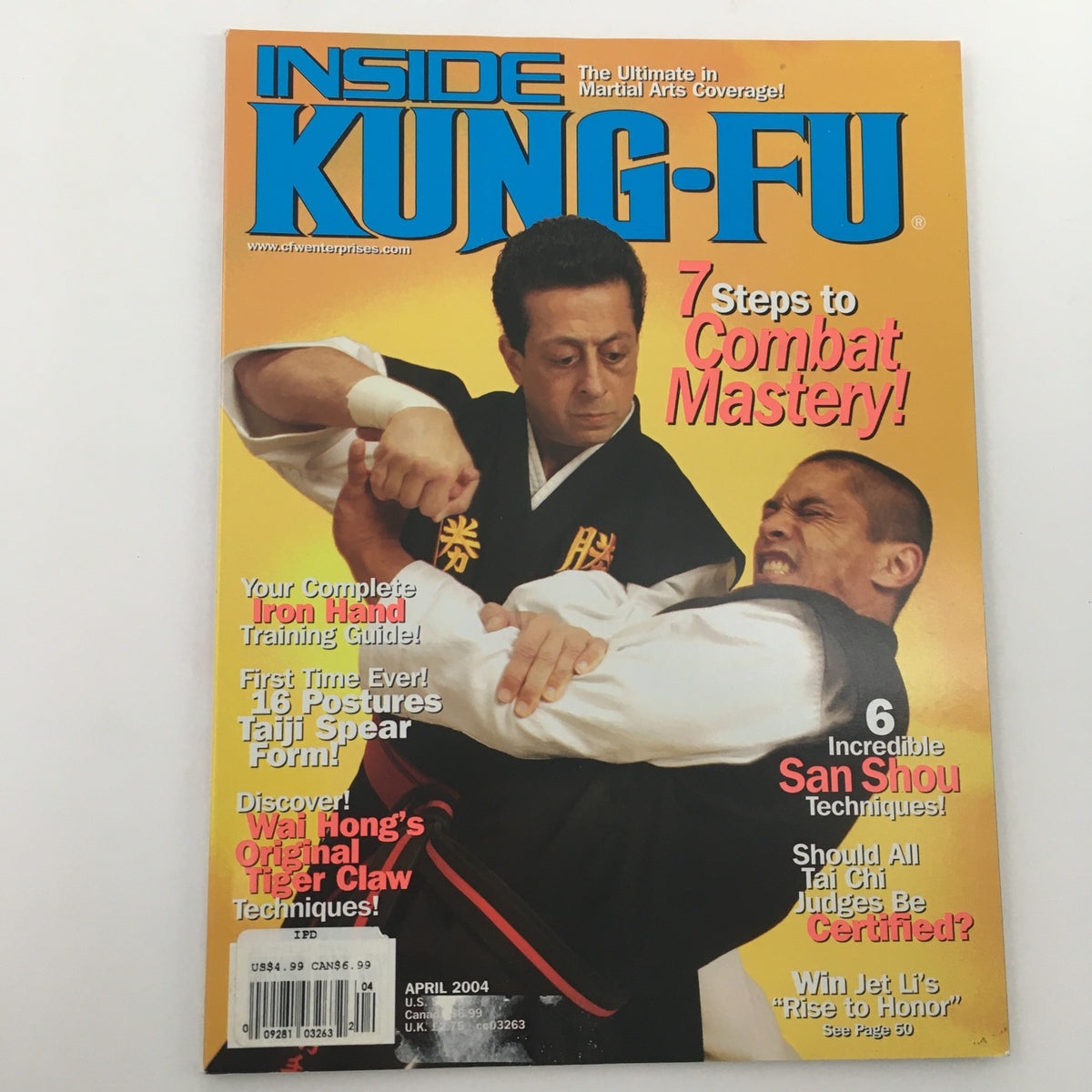
The April 2004 issue of Inside Kung-Fu magazine documents a later and highly interesting stage in American martial arts publishing. By the early 2000s, martial arts magazines were no longer simply introducing kung fu to Western readers as an unfamiliar or exotic practice. Instead, they were helping preserve and interpret established systems, teachers, lineages, and training methods for an audience that had grown up with decades of martial arts cinema, school advertisements, tournament culture, instructional books, and specialty magazines. This issue’s focus on Wai Hong’s Original Tiger Claw places it firmly within that preservation-minded side of martial arts history, where the emphasis is not only on fighting technique but also on lineage, continuity, and the cultural memory of traditional Chinese martial arts.
Wai Hong is a significant name in the history of Chinese martial arts in America, particularly through his association with Fu Jow Pai, commonly known as Tiger Claw kung fu. Tiger-style systems are often recognized for their powerful gripping, tearing, clawing, and close-range striking methods, along with the disciplined body mechanics and traditional training values associated with Southern Chinese martial arts. A cover story centered on “Wai Hong’s Original Tiger Claw” gives this April 2004 issue a strong collector identity because it points to a named teacher and a recognizable martial arts tradition rather than a generic technique theme. For serious collectors, issues like this are useful because they capture how a specific martial system was being presented to readers at a specific moment in print history.
The year 2004 also gives the issue added context. Martial arts culture at the time was shifting quickly. Traditional kung fu, karate, and taekwondo schools were still deeply visible in American communities, while mixed martial arts, internet forums, video instruction, and modern combat-sport coverage were changing how many people discussed effectiveness, training, and fighting theory. In that environment, a traditional-system feature in Inside Kung-Fu served a different function than a tournament report or celebrity profile. It helped keep older martial arts knowledge in circulation and gave readers a printed reference point for a system rooted in history and formal instruction. As part of the broader record of magazines published in 2004, this issue reflects the coexistence of old and new martial arts worlds during the early twenty-first century.
For collectors of martial arts periodicals, this issue matters because it sits at the intersection of tradition, print culture, and early-2000s martial arts identity. A magazine like this preserves more than a cover subject; it preserves the language of the period, the editorial priorities of the publication, and the types of teachers and systems that still commanded attention among serious readers. When viewed alongside other issues of Inside Kung-Fu, the April 2004 issue helps document how traditional Chinese martial arts continued to be framed for practitioners, historians, and enthusiasts long after the first major wave of kung fu popularity in the West.
About the Publication
Inside Kung-Fu was one of the major American martial arts magazines of the late twentieth and early twenty-first centuries, serving readers who wanted focused coverage of kung fu, karate, kickboxing, self-defense, weapons, conditioning, martial arts philosophy, and the personalities associated with different fighting systems. Its audience included students, instructors, school owners, traditional stylists, competitive martial artists, action-film fans, and collectors who followed martial arts through print. The magazine typically blended cover features, instructional material, personality profiles, technique discussions, historical commentary, and broader cultural reporting. That format made it both a practical resource for readers interested in training and a documentary record of how martial arts were explained, debated, and preserved for an English-language audience. In the early 2000s, when print magazines still played an important role despite the rise of online discussion, Inside Kung-Fu remained a recognizable title for readers interested in the deeper traditions behind martial arts practice.
Key Highlights Inside
- April 2004 issue of Inside Kung-Fu, placing it within the magazine’s early-twenty-first-century coverage of traditional martial arts culture.
- Features the stated cover story on Wai Hong’s Original Tiger Claw, giving the issue a clear subject focus tied to a named martial arts figure and a recognizable kung fu tradition.
- Connects to Fu Jow Pai, commonly associated with Tiger Claw kung fu, a Chinese martial arts system known for its emphasis on powerful clawing, gripping, striking, and disciplined traditional training.
- Reflects an era when martial arts magazines were balancing traditional kung fu coverage with a changing combat-sports landscape shaped by mixed martial arts, video instruction, and online martial arts communities.
- The listing describes the issue as containing detailed martial arts articles, technique-oriented material, and discussion of martial arts traditions and philosophies, though specific interior article titles beyond the Wai Hong feature are not confirmed.
- Serves as a useful reference issue for collectors interested in how traditional Chinese martial arts systems were documented in American martial arts print culture during the early 2000s.
Condition & Rarity
Collector evaluation of the April 2004 Inside Kung-Fu issue should take into account the stated very good to excellent condition, light wear typical for its age, smooth edges, visible front address label, and bagged-and-boarded protection. For magazines from this period, an address label is a common subscription-related feature and should be understood as part of the magazine’s original distribution history. It may affect the visual presentation of the cover, especially for collectors who prefer unobstructed newsstand examples, but it does not automatically diminish the historical usefulness of the issue as a reference object. Light wear is also typical for martial arts magazines, which were often read, stored in training spaces, referenced for techniques, or passed among practitioners rather than preserved immediately in archival conditions.
The bagged-and-boarded presentation is an important preservation detail because it helps reduce additional bending, corner softening, surface abrasion, dust exposure, and handling damage. In collector terms, the strongest surviving examples of early-2000s martial arts magazines are generally evaluated by cover brightness, spine strength, staple integrity, page completeness, edge sharpness, and freedom from moisture damage, writing, heavy creasing, or staining. For an issue centered on Wai Hong’s Original Tiger Claw, cover clarity is especially important because the named feature is central to the issue’s historical identity. Any surviving example with clean pages, intact binding, and only light age-related wear would be considered more desirable than one showing heavy handling, loose pages, major tears, or significant cover obstruction beyond the noted address label.
Looking for More Issues Like This?
Specific early-2000s martial arts issues centered on traditional kung fu masters and systems can be difficult to locate consistently, especially when the feature connects to a recognizable lineage such as Tiger Claw kung fu. Collectors researching related material may want to browse the broader Inside Kung-Fu magazine collection for additional issues documenting martial arts schools, instructors, training methods, and cultural debates across different decades.
For readers who organize periodicals by year or cultural moment, the 2004 magazine collection is also a helpful place to explore. Looking across magazines from the same year can give collectors a wider sense of what martial arts, fitness, combat sports, entertainment, and popular culture looked like in print during the early twenty-first century.
Even when one exact martial arts issue is a tough find, related issues from the same publication or publication year can help build a richer archive around it. For collectors studying traditional kung fu in American magazine culture, nearby issues often provide valuable context about the teachers, systems, and editorial priorities that shaped the conversation.