
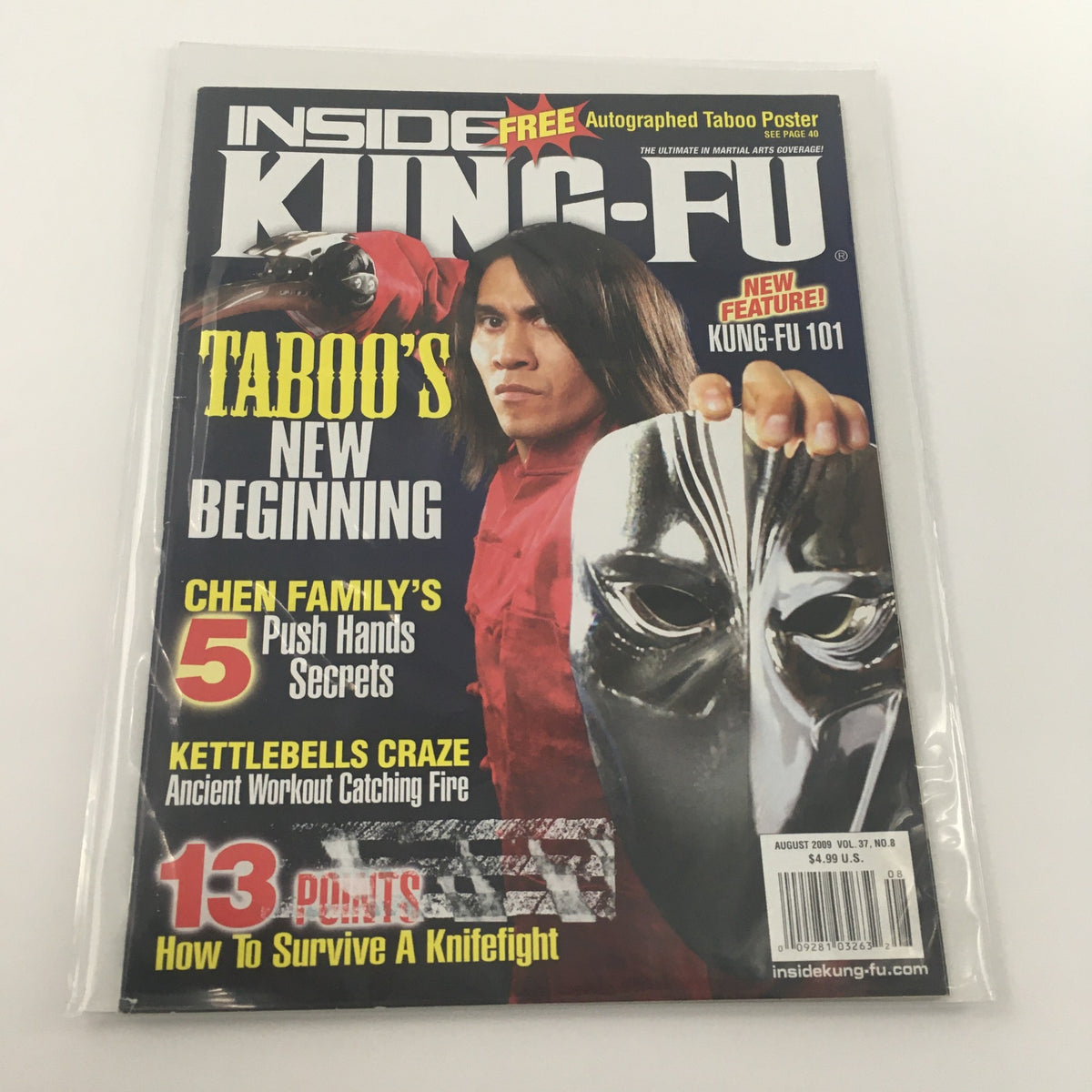


Description
Collector's Note – Why This Issue Matters
Inside Kung-Fu Magazine’s August 2009 issue reflects a late-print-era moment in martial arts publishing, when traditional Chinese martial arts were being discussed by readers who had access to both long-standing print instruction and the growing influence of online martial arts communities. The listing identifies the central feature as “Chen Family’s 5 Push Hands Secret,” tying the issue to Chen-style Taijiquan and the practice of push hands, a training method associated with sensitivity, structure, balance, timing, and applied body mechanics. For collectors of vintage Inside Kung-Fu Magazine issues, this subject matter is especially relevant because Chen family material represents one of the historically significant streams within Chinese internal martial arts. The issue also captures a period when serious martial arts magazines still served as curated gateways into specialized knowledge that was not always easy to locate in one place.
Chen-style Taijiquan is widely recognized as one of the oldest major Taijiquan traditions, with the Chen family lineage often discussed as foundational to later Taijiquan development. Push hands occupies an important place within that tradition because it bridges solo form practice and partner-based martial understanding. A magazine issue centered on the Chen family’s push-hands knowledge therefore speaks to a serious practitioner audience rather than only casual martial arts fandom. It also reflects the continuing appeal of traditional kung fu systems in the 2000s, a period when readers were increasingly comparing classical methods, sport applications, self-cultivation, and practical fighting concepts. For collectors, the appeal lies not only in the named topic but in the way the issue preserves how traditional internal training was framed for an English-language martial arts readership.
As part of the broader record of 2009 magazines, this issue captures the final years of a print culture that had long served martial artists before video platforms and social media became dominant sources of instruction and debate. Inside Kung-Fu’s August 2009 focus on push hands shows how specialized martial knowledge was still being preserved, packaged, and circulated through magazine features. For collectors, that makes the issue a useful artifact of both Chinese martial arts transmission and the changing media landscape around traditional practice. It stands at the edge of two eras: the older magazine-based world of martial arts learning and the newer digital environment where lineage, technique, and interpretation would be debated more publicly and more rapidly.
About the Publication
Inside Kung-Fu Magazine was a long-running martial arts publication devoted primarily to Chinese martial arts, while also engaging with broader training culture, self-defense, philosophy, weapons, forms, masters, and combat methods. Its audience included kung fu practitioners, Taijiquan students, instructors, collectors, and martial arts readers interested in both historical traditions and modern applications. The magazine’s editorial format typically included feature articles, technical instruction, profiles, photographs, training concepts, and discussions of lineage, philosophy, and practice. For many readers before the full dominance of online video, publications like Inside Kung-Fu were a major way to encounter systems, teachers, and training methods outside one’s local school. Today, its issues remain valuable as print records of how martial arts knowledge was presented to serious readers in the decades before martial arts media became overwhelmingly digital. In that sense, the magazine is useful not only as a martial arts collectible, but also as a record of how Chinese martial arts were translated, explained, and preserved for a broad English-language audience.
Key Highlights Inside
- August 2009 issue of Inside Kung-Fu Magazine, identified in the listing as a newsstand issue.
- Features “Chen Family’s 5 Push Hands Secret,” according to the listing.
- Connects the issue to Chen-style Taijiquan and push hands training, a central partner-practice method in internal martial arts.
- The listing notes discussion of techniques, art, and philosophy behind the martial practice, though specific article titles beyond the Chen family push-hands feature are not confirmed.
- Relevant to collectors interested in Chinese martial arts, Taijiquan, internal training methods, and the late print era of martial arts magazines.
- Described as bagged and boarded, with boarded plastic protection noted for preservation and display.
Condition & Rarity
The listing describes the August 2009 issue as being in very good condition, with minimal wear typical for its age and an appearance resembling like-new condition. It is also described as bagged and boarded in protective plastic, which is a storage method commonly used to help maintain cover flatness, reduce handling wear, and protect against surface abrasion. Because the listing identifies the issue as a newsstand example, collectors would typically note the absence or presence of any mailing label, barcode placement, cover gloss, spine stress, corner wear, and page completeness when evaluating condition. For martial arts magazines from the 2000s, preservation can vary because many were still purchased for active reading and training reference rather than long-term archival storage. A clean, well-protected issue with a focused Chen family push-hands theme is especially relevant to collectors who value technical subject matter as much as cover presentation. Bagged-and-boarded storage is also meaningful because late-period magazines can still develop spine bends, corner dings, or surface scuffing when stored loosely with other publications.
Looking for More Issues Like This?
Issues focused on traditional kung fu systems, Taijiquan, and specialized training methods such as push hands can be challenging to track because they appeal to both magazine collectors and active practitioners researching lineage-based material. Readers interested in related coverage may want to browse the broader Inside Kung-Fu Magazine collection for more issues centered on Chinese martial arts, internal training, and notable teachers.
For a wider view of the same publishing year, the 2009 magazines collection can help place this issue within the late-2000s magazine landscape, just as print martial arts media was giving way to a more digital era of instruction, discussion, and collecting. That broader context is useful for collectors who want to understand not only the issue’s subject matter, but also its place near the end of the traditional martial arts magazine era.