


Description
Collector's Note – Why This Issue Matters
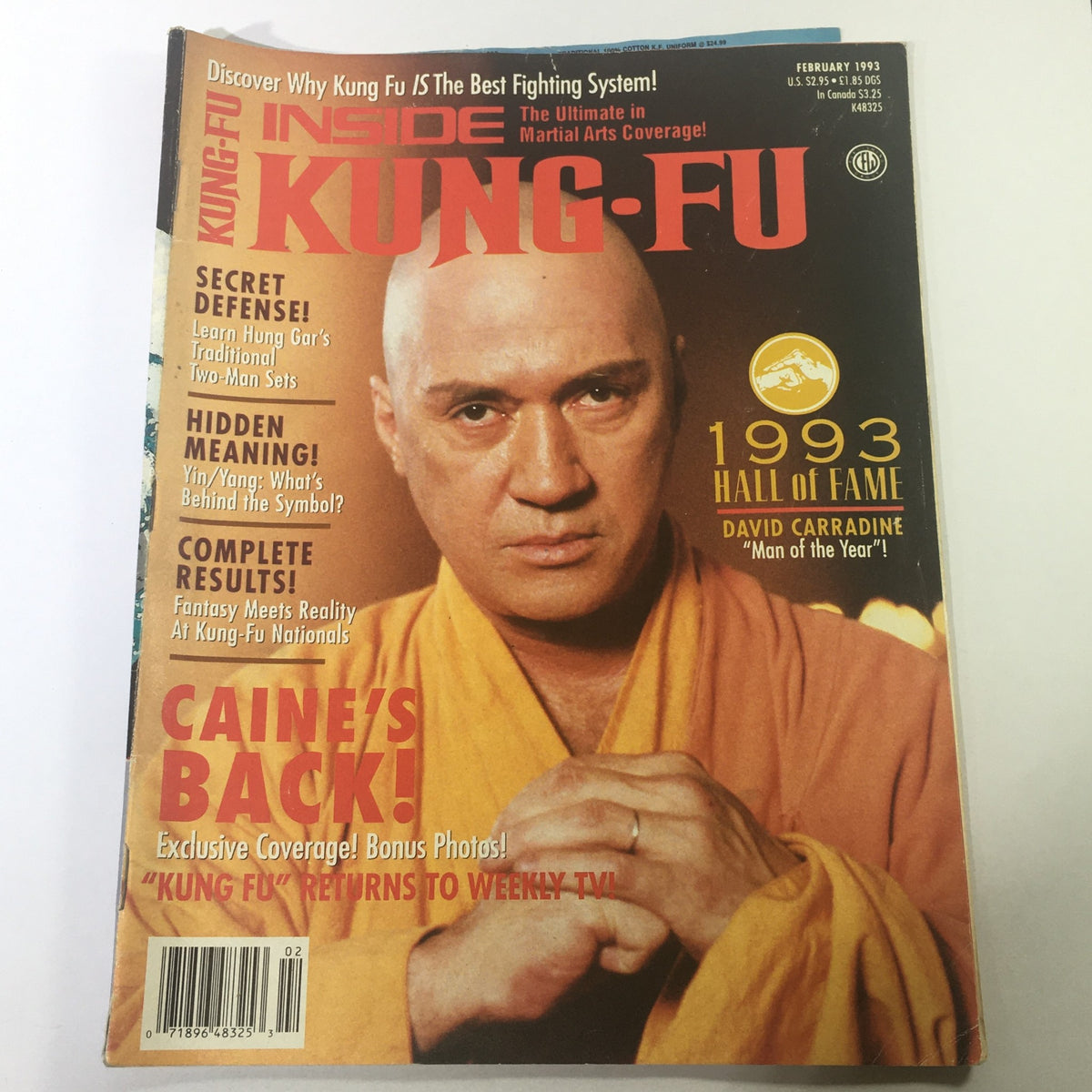
The February 1993 issue of Inside Kung Fu magazine is notable for its stated focus on Hung Gar two-man sets and David Carradine, two subjects that connect different sides of martial arts culture: traditional training practice and popular media influence. Hung Gar is a major Southern Chinese martial art known for strong stances, powerful hand techniques, structured forms, and a deep association with traditional kung fu pedagogy. Two-man sets are especially important because they show how solo movements can be translated into timing, distance, application, and partner-based training. For collectors of vintage Inside Kung Fu magazines, this issue reflects the magazine’s role as a bridge between serious technical instruction and the wider martial arts culture that surrounded film, television, and public fascination with kung fu. It also preserves a moment when printed technique features were one of the main ways readers could encounter detailed martial arts instruction outside their own schools.
The inclusion of David Carradine gives the issue a strong pop-cultural dimension. Carradine became closely associated with martial arts in American popular culture through the television series Kung Fu, which helped introduce many Western viewers to ideas of Eastern philosophy, wandering warrior mythology, and stylized martial discipline. While Carradine was not the only reason martial arts gained visibility in the United States, his screen image became part of the broader cultural pathway through which many readers first encountered kung fu themes. A 1993 issue pairing traditional Hung Gar material with a Carradine feature demonstrates how martial arts magazines could speak to both practitioners and fans drawn in through entertainment media. That pairing is especially revealing because it shows the dual readership of the period: students seeking practical knowledge and enthusiasts interested in the personalities who shaped martial arts in popular imagination.
The February 1993 date places the issue in an important period for martial arts publishing. By the early 1990s, readers had access to more martial arts schools, instructional books, videos, tournaments, and film references than earlier generations, but print magazines still played a central role in organizing that knowledge. Within the broader field of original magazines from 1993, this issue helps document how martial arts were presented as technique, heritage, philosophy, fitness, and entertainment all at once. It is a useful artifact for understanding how traditional Chinese martial arts and screen-based martial arts culture remained connected in the pre-internet era. For researchers and collectors, the issue helps preserve the texture of a time when martial arts communities were built through schools, seminars, specialty magazines, mail-order advertisements, and shared fascination with both lineage and screen mythology.
About the Publication
Inside Kung Fu was a specialty martial arts magazine aimed at practitioners, instructors, students, collectors, and fans interested in kung fu, karate, kickboxing, weapons, self-defense, martial arts philosophy, training methods, and notable figures in the fighting arts. Its editorial format commonly blended technique instruction, personality features, interviews, cultural discussion, photographs, product advertising, and coverage of martial arts trends. By the 1990s, magazines like Inside Kung Fu remained important sources of martial arts knowledge and community identity, especially before online video platforms made demonstrations and archival interviews easy to access. For collectors, complete issues preserve the language, imagery, advertising, training priorities, and cultural assumptions of their period. They also reveal how martial arts publishing balanced practical instruction with the celebrity and entertainment influences that helped bring new readers into the martial arts world. A complete issue from this period can therefore be read as both a training-era reference and a cultural document, showing how martial arts were marketed, practiced, admired, and interpreted by readers in the early 1990s.
Key Highlights Inside
- February 1993 issue of Inside Kung Fu magazine, published during a period when martial arts print culture remained a major source of instruction and community identity.
- Features stated content on Hung Gar two-man sets, connecting the issue to traditional Chinese martial arts training methods and partner-based application.
- Includes a special feature on David Carradine, identified in the listing as a cultural figure associated with martial arts through film and television.
- Relevant to collectors interested in kung fu magazines, Hung Gar, partner training, martial arts media history, and early 1990s martial arts publishing.
- Reflects the magazine’s blend of practical martial arts instruction, cultural discussion, entertainment influence, and reader interest in both traditional systems and screen-based martial arts figures.
- Identified as a newsstand copy with no label, giving the cover a cleaner presentation than a mailed subscription copy.
- The listing notes minor edge wear, small rips, marks, a rip on the back, and a plastic protective covering.
- Interior details beyond the stated Hung Gar two-man sets and David Carradine feature are not fully confirmed from the listing, so no additional article titles are attributed here.
Condition & Rarity
Surviving examples of the February 1993 Inside Kung Fu should be evaluated by cover presentation, page completeness, spine stability, edge wear, surface marks, small rips, back-cover damage, and the presence or absence of a mailing label. The listing describes the issue as having minor edge wear, small rips, marks, and a rip on the back. It is also identified as a newsstand copy with no label, which is a meaningful collector detail because the cover can present without a subscription label interrupting the design. A plastic protective covering is noted, which may help with storage and handling, though it should be treated as preservation packaging rather than a formal condition grade. For martial arts magazines from the 1990s, handling wear is common because many copies were read actively by students, instructors, and enthusiasts looking for training ideas or reference material. A complete issue remains useful to collectors when the interior pages are readable, the binding is stable, and the stated Hung Gar and David Carradine content can still be studied in context. The back-cover rip should be noted as part of the physical history of the magazine, but it does not necessarily eliminate reference value if the issue remains complete and structurally sound. For technique-focused magazines, collectors often weigh both visual presentation and practical readability, since the instructional and historical content is a major part of the appeal.
Looking for More Issues Like This?
This February 1993 Inside Kung Fu issue may be sold out, and examples that combine traditional kung fu instruction with martial arts entertainment history can be especially interesting to collectors. Readers looking for related material can browse more collectible Inside Kung Fu issues to compare training features, cover subjects, interviews, and the way martial arts publishing evolved through the 1980s and 1990s. Looking across multiple issues can also show how the magazine balanced traditional Chinese systems, practical self-defense, celebrity features, and the growing influence of martial arts media.
For broader context around the same year, the collection of 1993 magazines offers a useful way to study how print culture documented martial arts, film, fitness, sports, entertainment, and popular culture in the early 1990s. Together, these issues help place the February 1993 Inside Kung Fu within the wider magazine landscape of its time, especially for collectors who value martial arts periodicals as both instructional references and cultural artifacts.