


Description
Collector's Note – Why This Issue Matters
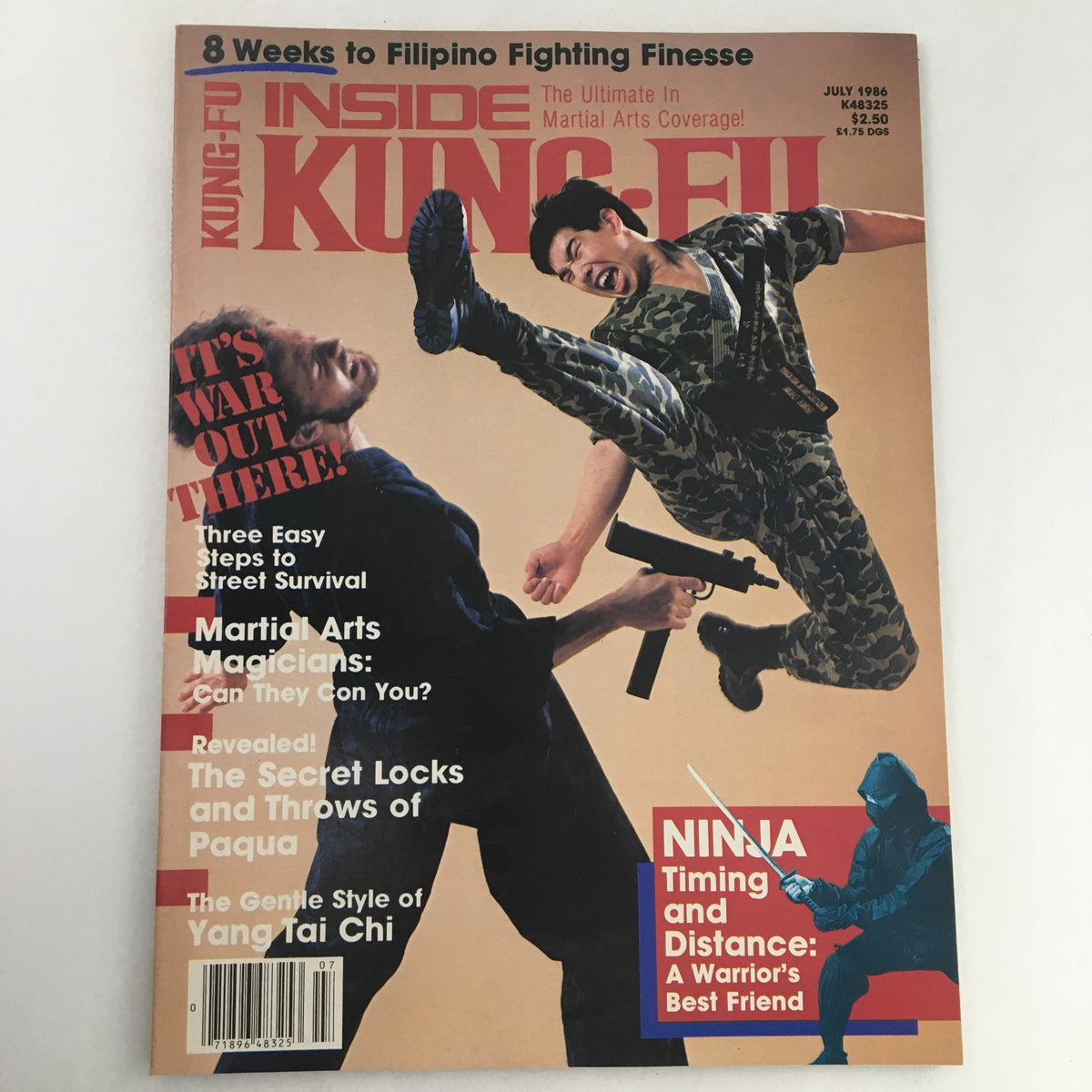
Inside Kung-Fu Magazine July 1986 Vol. 13 No. 7 stands as a focused martial arts periodical issue from a period when American readers were expanding their understanding of Asian fighting systems beyond tournament karate, kung fu cinema, and hard-style self-defense. Its stated cover theme, “The Gentle Style of Yang Tai Chi,” places the issue within an important cultural moment: by the mid-1980s, tai chi was increasingly being studied not only as a health practice, but also as a sophisticated internal martial art with deep Chinese lineage and technical structure. The issue reflects a point in martial arts publishing when readers were looking for instruction, cultural context, and serious discussion of systems that had often been simplified in popular media.
Yang-style tai chi is one of the most widely practiced branches of tai chi chuan, historically associated with the Yang family and especially with the broad public transmission of the art through teachers such as Yang Chengfu. Its emphasis on smooth, rounded, continuous movement made it especially approachable to Western students, while still retaining its roots in martial method, body mechanics, balance, and internal power. That combination of accessibility and depth is part of what made Yang Tai Chi a meaningful subject for a magazine like Inside Kung-Fu. For collectors researching American martial arts publishing, this July 1986 issue belongs naturally beside other issues in the Inside Kung-Fu magazine archive, where the magazine’s role in documenting martial arts culture across decades becomes clearer.
The date also matters. In 1986, martial arts media in the United States occupied a distinctive space between traditional instruction, celebrity-driven fighting culture, tournament coverage, and growing curiosity about Chinese internal systems. An issue centered on Yang Tai Chi reflects that broader shift in readership: serious practitioners were looking for history, lineage, technique, and philosophical grounding, not simply action imagery. The cover topic suggests an editorial interest in the quieter, more technical side of martial arts practice, a side that was becoming increasingly visible to English-language readers. As a 1986 martial arts magazine, it also fits within the broader collecting context of vintage magazines from 1986, a year when specialty newsstand titles served as important printed records for niche communities.
About the Publication
Inside Kung-Fu was an American martial arts magazine founded in the 1970s and known for covering kung fu, wushu, self-defense, martial arts personalities, training methods, tournaments, weapons, and related film culture. Its audience included practitioners, instructors, collectors, and enthusiasts who wanted more technical and cultural depth than mainstream sports magazines typically provided. By the 1980s, Inside Kung-Fu had become one of the recognizable specialty titles documenting the martial arts world for English-language readers. The magazine’s format typically combined cover-feature subjects, instructional material, personality-driven coverage, photographs, and commentary on trends within the martial arts community. For collectors, issues of Inside Kung-Fu are valuable not only as magazines, but also as period documents showing how martial arts were presented, taught, discussed, and popularized before the internet changed the way training information circulated.
Key Highlights Inside
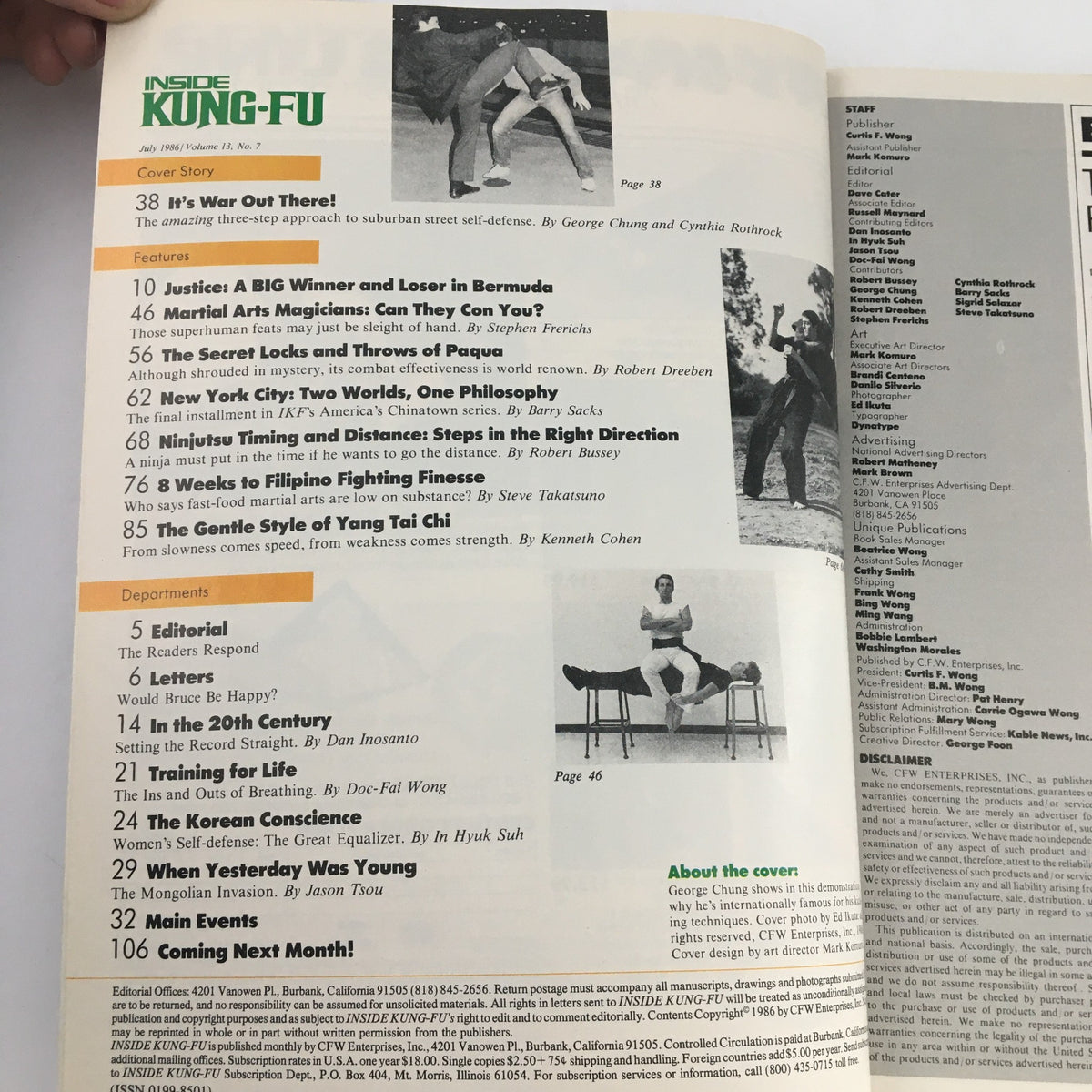
- July 1986 issue of Inside Kung-Fu Magazine, identified as Vol. 13 No. 7, placing it within the publication’s established 1980s run.
- Cover theme focuses on “The Gentle Style of Yang Tai Chi,” giving the issue a clear connection to Chinese internal martial arts rather than only external fighting systems.
- The listed subject connects the issue to Yang-style tai chi, one of the most widely practiced tai chi traditions and a major point of entry for Western students interested in tai chi chuan.
- The listing describes the issue as emphasizing the principles and techniques associated with Yang Tai Chi, including the calm, harmonious qualities commonly associated with the style.
- The issue belongs to a period when martial arts magazines helped introduce readers to training systems, terminology, and cultural frameworks that were not always easily accessible through local instruction.
- The listing also notes martial arts-era photography and discussion of figures within the martial arts community, though specific article titles and interview subjects are not confirmed from the provided details.
Condition & Rarity
Collector-grade evaluation for this issue centers on several stated attributes: very good to excellent condition, minimal wear, newsstand quality, no mailing label, intact readability, and protective plastic covering. For vintage martial arts magazines, a no-label newsstand example is often preferred because the cover art and typography remain unobstructed by subscription markings. Minor age-appropriate wear is normal for a 1986 softcover periodical, especially one originally sold and handled as a disposable newsstand publication rather than as a long-term collectible. Strong page integrity, clean presentation, and preservation in plastic are all meaningful factors when assessing surviving examples of specialty martial arts publications. In this category, condition matters because martial arts magazines were frequently read, transported to dojos or training spaces, clipped for reference, or stored without archival protection. A well-preserved example of this issue is therefore best understood in terms of completeness, cover cleanliness, lack of label residue, and the degree to which ordinary handling wear has been minimized.
Looking for More Issues Like This?
Focused Yang Tai Chi issues from 1980s martial arts magazines can be difficult to track down because they appeal to both martial arts historians and tai chi practitioners. Readers researching related material may want to browse the broader Inside Kung-Fu collection for comparable training-era issues, cover subjects, and martial arts personalities. The wider run helps show how the magazine balanced technical instruction, cultural coverage, and the evolving interests of martial arts readers across different disciplines.
For collectors building a year-based archive, the 1986 magazine collection is also a useful place to find publications from the same cultural moment, when niche print magazines documented communities that were often only lightly covered elsewhere. Browsing by year can be especially helpful for understanding how martial arts coverage sat alongside broader 1980s publishing trends in sports, fitness, film, celebrity culture, and specialized enthusiast magazines.