



Description
Collector's Note – Why This Issue Matters
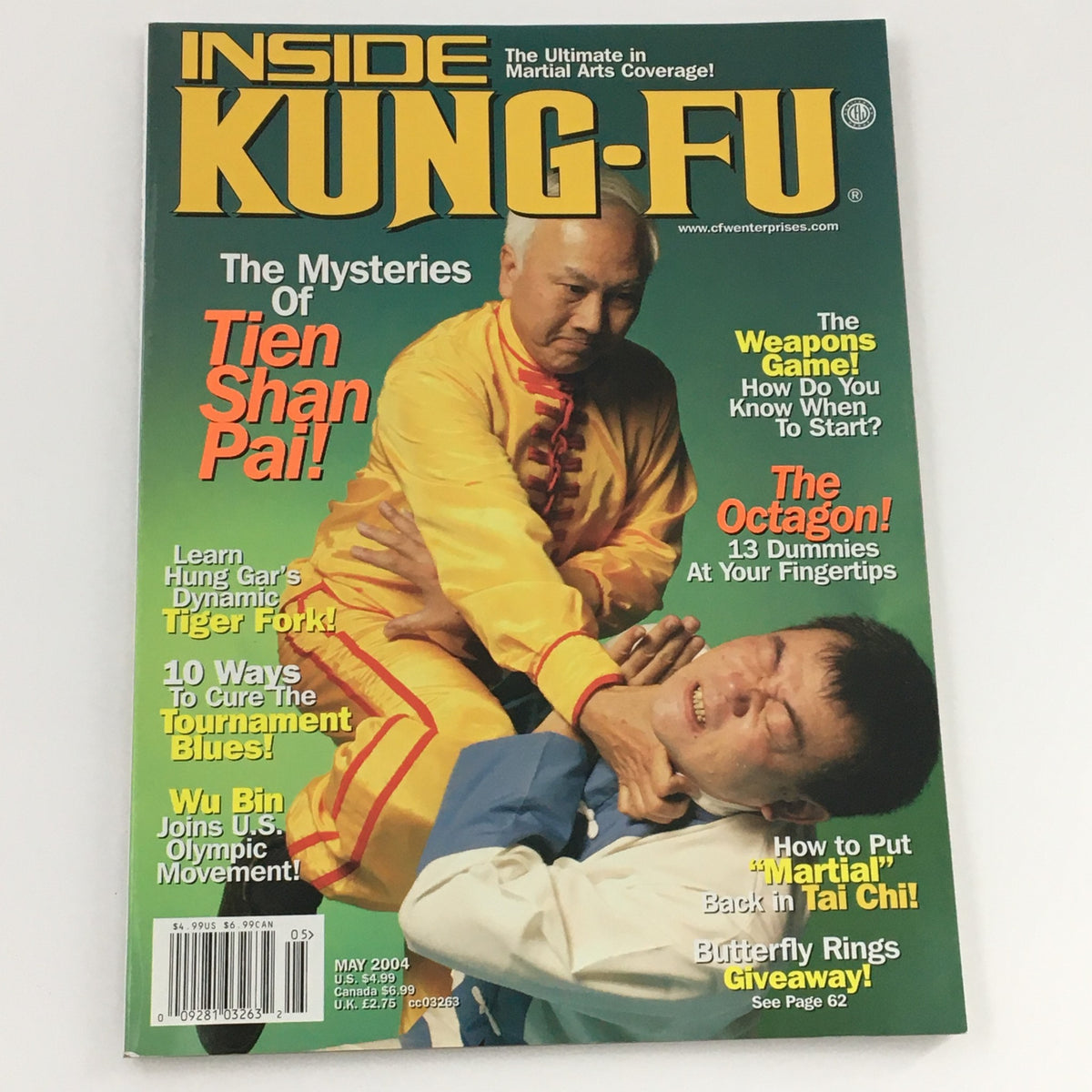
The May 2004 issue of Inside Kung-Fu magazine is significant for its stated focus on “The Mysteries of Tien Shan Pai,” a subject that gives the issue a more specialized value than a general martial-arts feature. Tien Shan Pai is a Northern Chinese martial-arts system associated with forms, fighting methods, and traditional training culture. Because the listing identifies this issue as a deep dive into that style, it belongs to the part of martial-arts publishing that helped preserve lesser-known systems for readers outside their immediate school networks. For collectors, that system-specific focus is important: it anchors the issue to a named kung fu tradition rather than a broad or generic discussion of martial arts. It also reflects the role print magazines continued to play in documenting martial lineages that were not always widely visible in mainstream sports or entertainment media.
By 2004, martial-arts media was changing rapidly. Online forums, DVDs, and early digital resources were becoming more important, yet specialist magazines still played a meaningful role in documenting instructors, training concepts, cultural background, and traditional systems. Within the archive of Inside Kung Fu magazine back issues, this issue reflects the title’s continuing interest in Chinese martial arts at a time when mixed martial arts, reality-based self-defense, and cross-training were increasingly visible. A feature on Tien Shan Pai therefore helps preserve the quieter but essential side of the martial-arts landscape: lineage, philosophy, technique, and style identity. It shows how traditional kung fu publications continued to serve readers who valued cultural depth and historical continuity as much as practical application.
The issue also fits within the broader world of magazines published in 2004, when print magazines were still important reference objects even as internet research was becoming more common. The listing describes the issue as representing early-2000s martial-arts culture and a merging of traditional wisdom with modern interpretation. That makes it useful for collectors studying how kung fu magazines presented older systems to contemporary readers. It is especially relevant for anyone interested in how lesser-known Chinese martial arts were framed, explained, and preserved in print during the final years of strong specialist magazine circulation. As a dated artifact, the issue captures a moment when martial-arts knowledge was moving from print to digital spaces, but magazines still carried authority, structure, and editorial context.
About the Publication
Inside Kung-Fu was an American martial-arts magazine known for covering Chinese martial arts, kung fu systems, instructors, training methods, weapons, self-defense, martial philosophy, tournament culture, and related martial-arts personalities. Its readership included students, instructors, school owners, collectors, martial-arts film fans, and practitioners interested in both technique and cultural background. By the early 2000s, the magazine remained valuable because it continued to document traditional systems while the broader martial-arts world was becoming increasingly influenced by mixed martial arts, digital video, and online debate. Issues from this period are useful to collectors because they preserve photographs, terminology, instructor perspectives, advertisements, and training discussions in their original print context. A Tien Shan Pai-focused issue is especially meaningful because it shows the magazine’s role in giving space to systems that may not have received frequent mainstream coverage. For modern researchers, that makes the issue a printed snapshot of how kung fu traditions were introduced to serious readers before digital archives became the dominant way of finding martial-arts information. The magazine’s specialist focus also gave readers a way to compare styles, teachers, and training philosophies through a curated editorial lens. That makes complete issues valuable not only for their main features, but also for the surrounding material that reveals the martial-arts marketplace and reader interests of the period.
Key Highlights Inside
- May 2004 issue of Inside Kung-Fu magazine, a specialist martial-arts publication focused on kung fu and Chinese martial-arts culture.
- Identified in the listing as featuring “The Mysteries of Tien Shan Pai,” connecting the issue to a specific kung fu system rather than general martial-arts coverage.
- The listing notes comprehensive coverage, insights, and expert commentary on the artistry and philosophy behind Tien Shan Pai, though specific article titles and page details are not confirmed.
- Reflects early-2000s martial-arts publishing, when traditional systems were still being documented in print alongside newer training trends and digital-era discussion.
- Newsstand edition, a useful format detail for collectors evaluating original retail circulation and cover presentation.
- Useful as a reference issue for collectors studying Tien Shan Pai, kung fu systems, Chinese martial-arts publishing, and early-2000s martial-arts culture.
- Represents the type of system-specific coverage that helped connect readers to martial traditions beyond the most widely publicized styles.
- Relevant to collectors interested in how martial-arts magazines balanced philosophy, technique, lineage, and modern reader expectations during the early 2000s.
- Best evaluated from the confirmed date, publication, Tien Shan Pai subject, newsstand status, and stated condition details rather than unverified interior claims.
Condition & Rarity
Collector evaluation for this issue should note the described very good condition, minimal signs of wear, no visible damage, and “appears like new” presentation. The listing identifies it as a newsstand edition and states that it is bagged and boarded in protective plastic, which are useful preservation details for a magazine from the early 2000s. A newsstand edition can be desirable because it reflects original retail distribution and often presents without subscriber-label interruption, though grading should still focus on the magazine itself rather than the bag or board. Important condition points include cover gloss, spine stability, page completeness, staple condition, corner sharpness, paper quality, interior cleanliness, and whether any photographs, advertisements, or feature pages have been clipped or removed. Martial-arts magazines were often used as practical references by students and instructors, so examples preserved with little visible handling wear have stronger archival and display value. For an issue centered on Tien Shan Pai, completeness is especially important because the collector interest depends on preserving the full context of the style-specific coverage, images, and surrounding editorial material. Collectors should also examine whether the boarded storage has kept the cover flat and whether the spine remains free from stress or rolling. Even for a relatively modern issue, strong preservation matters because specialist martial-arts magazines were frequently handled, shared, and studied rather than stored untouched.
Looking for More Issues Like This?
Specialized kung fu issues focused on systems such as Tien Shan Pai can be rewarding finds because they document traditions that may not appear often in mainstream martial-arts coverage. Collectors interested in related material may want to browse the broader Inside Kung Fu magazine collection or compare this issue with other titles from the 2004 magazine collection. Those related archives help place this May 2004 issue within the wider early-2000s print record of kung fu, traditional training, martial philosophy, and specialist magazine publishing. They are also useful for comparing how different issues documented individual systems, instructor perspectives, and the transition from print-based martial-arts research to the growing digital landscape of the period.