




Description
Collector's Note – Why This Issue Matters
The July 1981 issue of Inside Wrestling magazine belongs to a pivotal period in professional wrestling history, just before the national expansion and cable-television boom that would reshape the industry later in the decade. The listing identifies Bob Backlund versus Hulk Hogan as a central matchup and also notes Ted DiBiase, placing the issue in a highly revealing early-1980s wrestling context. Backlund was strongly associated with the World Wrestling Federation championship picture during this era, while Hogan was still developing the public identity that would make him one of the most famous wrestling figures of the 1980s. A magazine issue connecting those names in 1981 preserves a moment before Hogan’s later mainstream explosion, when wrestling magazines helped establish reputations and storylines for readers following the sport through print. It also shows how wrestling media treated major matchups as both athletic contests and character-driven dramas, long before the industry’s later saturation on national television.
For collectors researching Hulk Hogan magazine appearances, this issue has particular interest because it captures Hogan during an earlier stage of his career, before the full arrival of Hulkamania as a national pop-culture phenomenon. The listing’s spelling “Bob Buckland” appears to refer to Bob Backlund, the major wrestling figure associated with this period; however, the page should be evaluated from the listing’s stated matchup and the confirmed context of early-1980s wrestling coverage. Ted DiBiase adds another layer of significance, since he would later become widely known as “The Million Dollar Man,” one of wrestling’s defining character-driven performers of the late 1980s. In July 1981, those names together reflect a wrestling world in transition, where territorial-era storytelling, magazine coverage, and emerging national stars were beginning to overlap. For serious collectors, that transitional quality is especially important because it places familiar later icons inside an earlier printed context, before their reputations had fully hardened into wrestling mythology.
The issue also fits naturally within the broader archive of Inside Wrestling magazine back issues and magazines published in 1981. Wrestling magazines of this period were essential because fans did not yet have instant online access to results, interviews, photographs, or promotional history. They carried the emotional drama of the sport through covers, captions, photo layouts, profiles, rankings, and feud coverage. A July 1981 issue featuring Hogan, Backlund, and DiBiase is therefore valuable not only for the named wrestlers, but also as a record of how professional wrestling was presented to serious fans just before the industry’s next major transformation. It preserves the vocabulary, visual style, and fan-facing storytelling of a moment when print magazines still shaped how audiences understood rivalries, title pictures, and the rise of future stars.
About the Publication
Inside Wrestling was one of the best-known American professional wrestling magazines, aimed at fans who followed wrestlers, championships, rivalries, territories, match results, interviews, rankings, and behind-the-scenes personality coverage. Its readership included young fans, longtime wrestling followers, collectors, and viewers who used magazines to keep track of a sport that was still highly regional in many respects. Before the internet and before national weekly television fully centralized wrestling culture, magazines like Inside Wrestling served as a crucial bridge between promotions and fans. They helped turn wrestlers into larger-than-life figures through photography, dramatic headlines, and feature writing that treated feuds and matchups as unfolding athletic drama. Issues from the early 1980s are especially useful because they preserve the language and visual style of wrestling journalism before the boom years of national cable exposure. For modern collectors, a complete issue offers evidence of how wrestling stars were framed while their reputations were still being built in real time. The magazine also reflects the kayfabe-era tone of wrestling publishing, when storylines, rivalries, and wrestler personas were commonly presented with dramatic seriousness. That makes issues like this valuable not only as sports memorabilia, but also as documents of entertainment history, fan culture, and pre-digital wrestling media.
Key Highlights Inside
- July 1981 issue of Inside Wrestling magazine, a major professional wrestling publication from the early 1980s.
- Identified in the listing as featuring Bob Buckland versus Hulk Hogan; the name appears to refer to Bob Backlund, a major wrestling figure of the period.
- Includes a profile of Ted DiBiase according to the listing, connecting the issue to another important wrestling personality whose later fame would grow substantially during the decade.
- Features Hulk Hogan before his mid-1980s mainstream pop-culture breakthrough, making the issue relevant to collectors studying early Hogan magazine coverage.
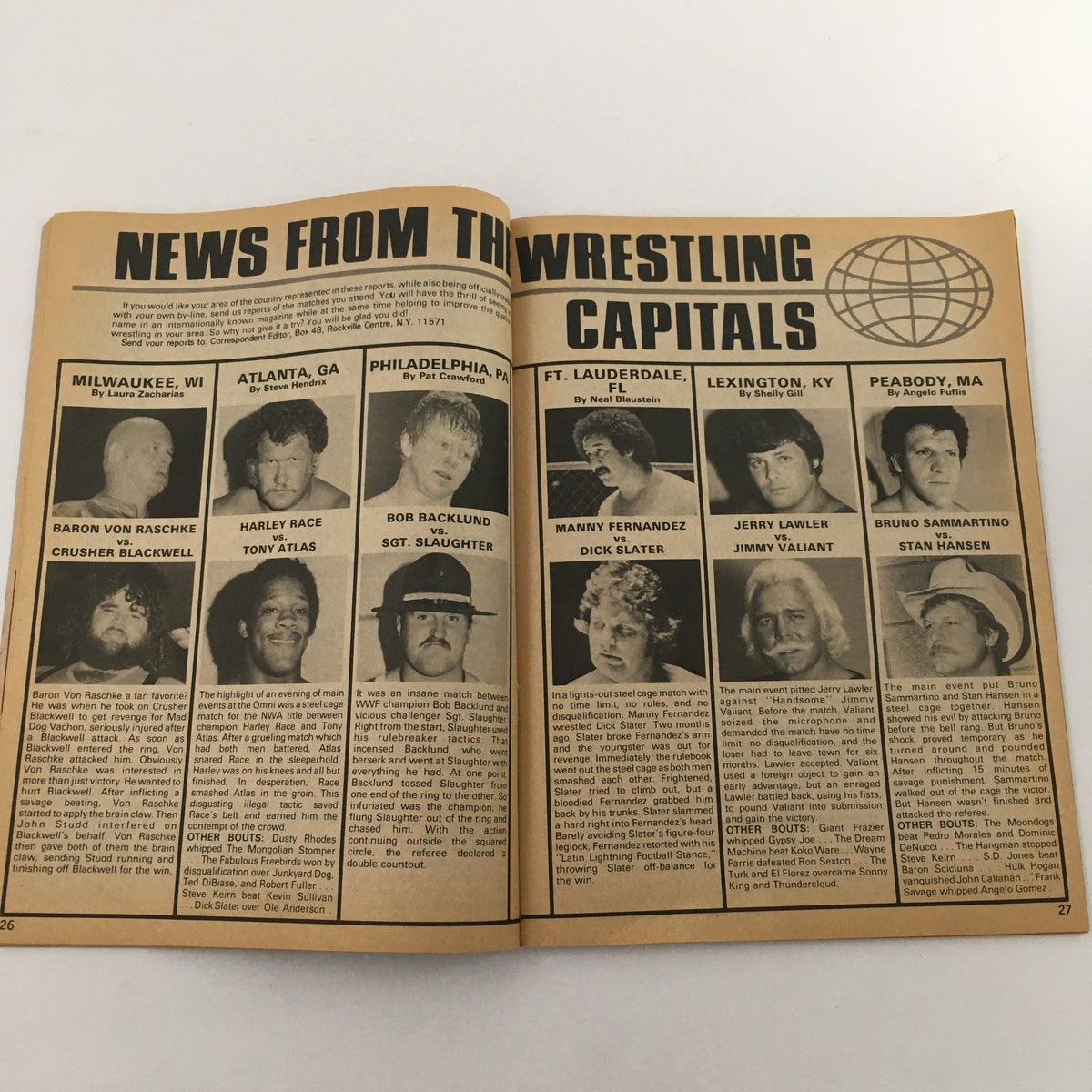
- The listing notes articles and photographs capturing competition and wrestling personalities, though specific article titles, match details, and complete interior contents are not confirmed.
- Newsstand issue with no label, giving the cover a cleaner presentation for collectors who value unobstructed wrestling-magazine artwork and headlines.
- Useful as a reference issue for collectors studying Hulk Hogan, Bob Backlund, Ted DiBiase, early-1980s wrestling media, and the transition from territorial wrestling coverage toward national wrestling celebrity.
- Represents the kind of wrestling magazine that helped fans follow rivalries, personalities, and championship narratives before digital archives and modern wrestling-news cycles existed.
- Relevant to collectors comparing how wrestling publications presented emerging stars, reigning champions, and future character-driven performers during the early 1980s.
Condition & Rarity
Collector evaluation for this issue should note the described good overall condition, with light wear typical for its age, including possible small rips, edge wear, creases, and marks. The listing identifies it as a newsstand issue with no label, an important presentation detail because the cover remains free from subscriber-address markings. The included plastic protective covering is useful for storage and handling, though grading should still focus on the magazine itself: cover surface, spine stability, staple condition, page completeness, paper toning, edge wear, creases, tears, markings, and whether any photographs, rankings, posters, or feature pages have been clipped or removed. Wrestling magazines from the early 1980s were often read heavily by fans, passed around, saved for photos, or clipped for wrestler images, so complete interiors are especially important. For an issue tied to Hogan, Backlund, and DiBiase, completeness matters because the full context of the features and surrounding wrestling coverage helps establish its reference value. A no-label example with stable binding and readable pages remains useful to collectors even when ordinary age-related wear is present. Collectors should also check the centerfold area, staple tension, and any photo-heavy sections, since wrestling magazines were frequently handled for images as much as text. In an issue connected to multiple major names, the preservation of the complete page sequence is especially important for both display value and historical research.
Looking for More Issues Like This?
Early-1980s wrestling magazines featuring Hulk Hogan before his full national breakthrough can be especially rewarding for collectors because they show how his image developed before later nostalgia fixed it in place. Related material can be explored through Hulk Hogan magazine appearances, the broader Inside Wrestling magazine collection, or other titles from the 1981 magazine collection. Together, those archives help place this July 1981 issue within the wider print record of professional wrestling’s transition from regional spectacle to national pop-culture force. They are also useful for comparing how wrestling magazines documented future icons before their most famous characters and storylines became fully established.