

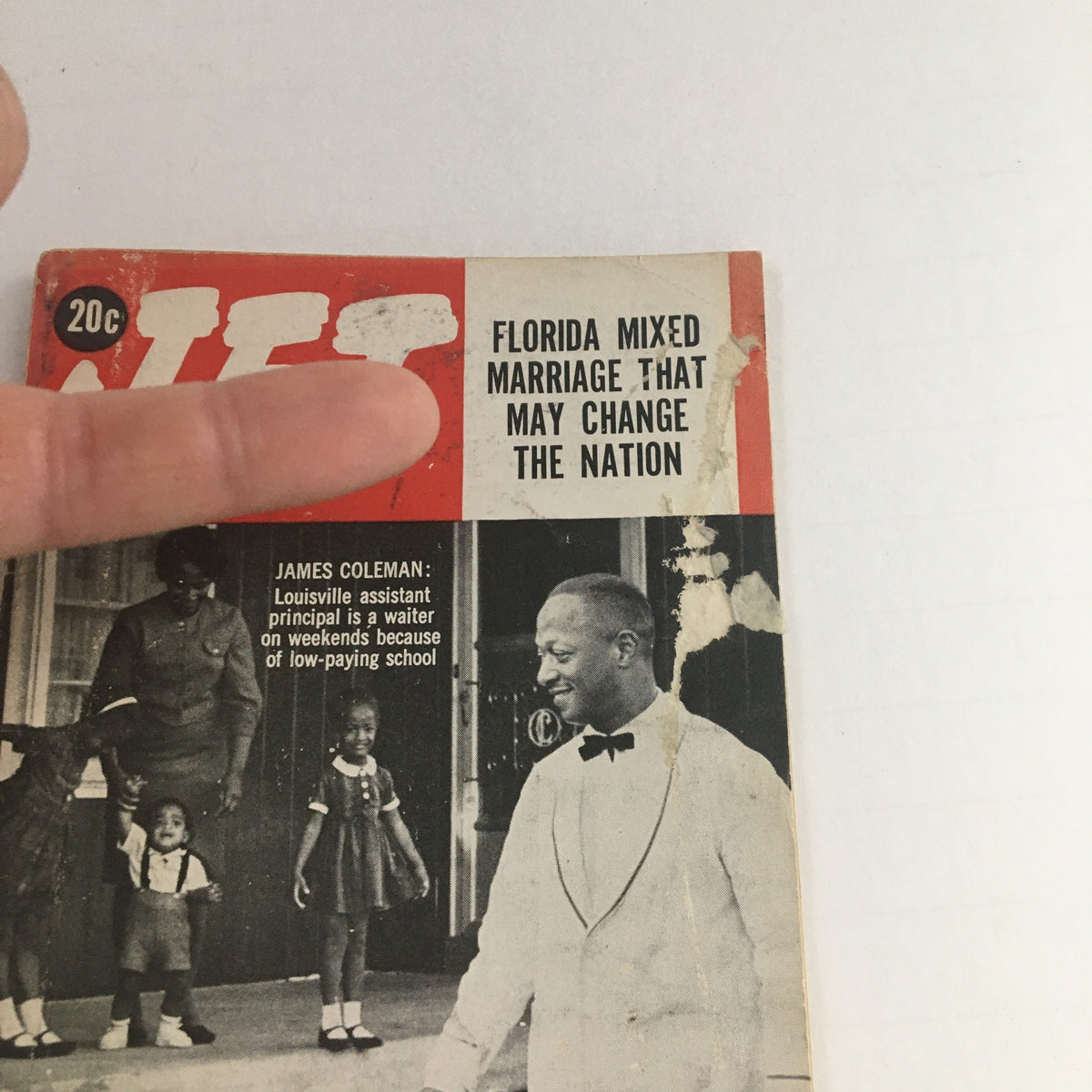


Description
Collector's Note – Why This Issue Matters
This December 17, 1964 issue of Jet arrives during one of the most consequential years in the magazine's history, a year that saw the passage of the Civil Rights Act and continued national upheaval over school desegregation, voting rights, and racial equality across the United States. Jet, founded in 1951 by John H. Johnson, had spent the prior decade establishing itself as an essential weekly chronicle of African American life, covering both the triumphs and the struggles of the civil rights era with a directness that distinguished it from mainstream news magazines of the period. A cover story centered on a schoolteacher fits naturally within that editorial mission, since education, and the fight for equal access to it, remained one of the defining battlegrounds of the civil rights movement throughout the 1960s. Issues from this period regularly highlighted individuals whose personal stories intersected with the broader social currents of the moment, using a single figure's experience to illuminate larger questions facing Black communities nationwide.
The specific details of this particular cover story are not independently confirmed beyond what the listing identifies, namely a featured schoolteacher named James Coleman. Readers and collectors should treat the substance of this individual story as something to be discovered within the issue itself rather than something that can be reliably summarized in advance, since detailed, issue-by-issue archives of Jet's 1960s content are not comprehensively available outside of the original print runs. What can be said with confidence is that Jet's editorial approach during this period consistently combined news coverage of national civil rights developments with more personal, human-interest profiles, often spotlighting individuals navigating the realities of segregation, integration, or community leadership in their own towns and schools.
For collectors, this issue represents a window into Jet's distinctive role at the height of the civil rights era: a small-format, weekly publication that gave sustained, dedicated coverage to stories the mainstream press often overlooked or minimized. Issues from late 1964 in particular capture a pivotal moment, arriving just months after the Civil Rights Act's passage and amid ongoing efforts to determine what that legislation would mean in practice for schools and communities across the country. That historical proximity is part of what gives issues of Jet from this period their lasting research and collecting value, regardless of how widely documented any single cover story may be today.
About the Publication
Jet, launched in November 1951 by the Johnson Publishing Company under founder John H. Johnson, was created to address a glaring gap in American media: the consistent underrepresentation of Black Americans in mainstream news coverage. Published weekly in Chicago in a compact, digest-sized format, Jet built its identity around timely reporting on news, culture, and entertainment relevant to the African American community, becoming an essential source for coverage of the civil rights movement from its earliest years. The magazine's format combined hard news on civil rights developments with entertainment coverage, celebrity features, and human-interest stories, all delivered in a brisk, accessible style suited to its weekly publication schedule. Throughout the 1960s, Jet's willingness to give sustained attention to civil rights events and personalities made it an indispensable record of the era for its readership and remains a primary historical source for researchers today.
Key Highlights Inside
- Cover story on schoolteacher James Coleman. The specific details of this individual's story are not confirmed beyond the cover identification itself. Readers are encouraged to view the issue directly for the full context of the feature.
- Editorial content characteristic of Jet's coverage during the height of the civil rights era. Issues from this period regularly combined national civil rights reporting with personal profiles of individuals navigating the era's social changes. This approach was central to Jet's identity as a publication throughout the 1960s.
- Additional interior articles and features for this specific issue are not independently confirmed beyond the cover story. Comprehensive, issue-level archives of Jet's 1960s content are not widely available outside of the original print runs. Collectors should treat any further interior content as unconfirmed rather than assumed.
Condition & Rarity
Surviving copies of this issue are generally evaluated using the same standards collectors apply across vintage digest-sized magazines: cover and spine integrity, the presence or absence of a subscription label, and overall page condition free of significant tears, foxing, or moisture damage. A copy described as being in good condition, with minor wear and the noted marks and small rips, would be considered a representative survivor for a weekly digest-format magazine now well over sixty years old, an age at which some structural wear is common rather than exceptional. The absence of a newsstand label is generally regarded as a desirable trait among collectors of this title, since labeled copies often carry mailing residue or staple holes from subscription handling. A plastic protective sleeve is a standard and effective safeguard for issues of this vintage, helping prevent further handling wear, UV exposure, and humidity damage, though it has no bearing on the underlying grade of the magazine itself. Jet's small, digest-sized format and lightweight paper stock made it especially prone to spine wear and minor tearing over decades of handling, which is part of why well-preserved copies from the 1960s are comparatively difficult to find today. Pages free of brittleness and excessive yellowing remain the benchmark for a well-preserved copy of any Jet issue from this era, minor imperfections notwithstanding.
Looking for More Issues Like This?
A Jet issue from the heart of the civil rights era, just months after the passage of the Civil Rights Act, is a meaningful find for collectors and researchers interested in this pivotal period of American history. If this particular issue isn't available, it's worth browsing the broader Jet magazine collection for other issues spanning this title's long and historically significant run. Collectors focused on the era itself may also want to look through the full range of 1964 magazines for other issues from the same pivotal year. Each of these collections offers a different way into the period, whether the focus is this specific title's sustained civil rights coverage or the broader cultural and political snapshot of a single year. A single year's worth of magazines often captures a fuller picture of a historical moment than any one issue on its own, particularly for a year as consequential as 1964. Browsing by publication can also help collectors and researchers trace how Jet's coverage of civil rights developments evolved week to week throughout the decade. Whichever angle appeals most, these collections are a useful starting point for going deeper into this important period of American history.