
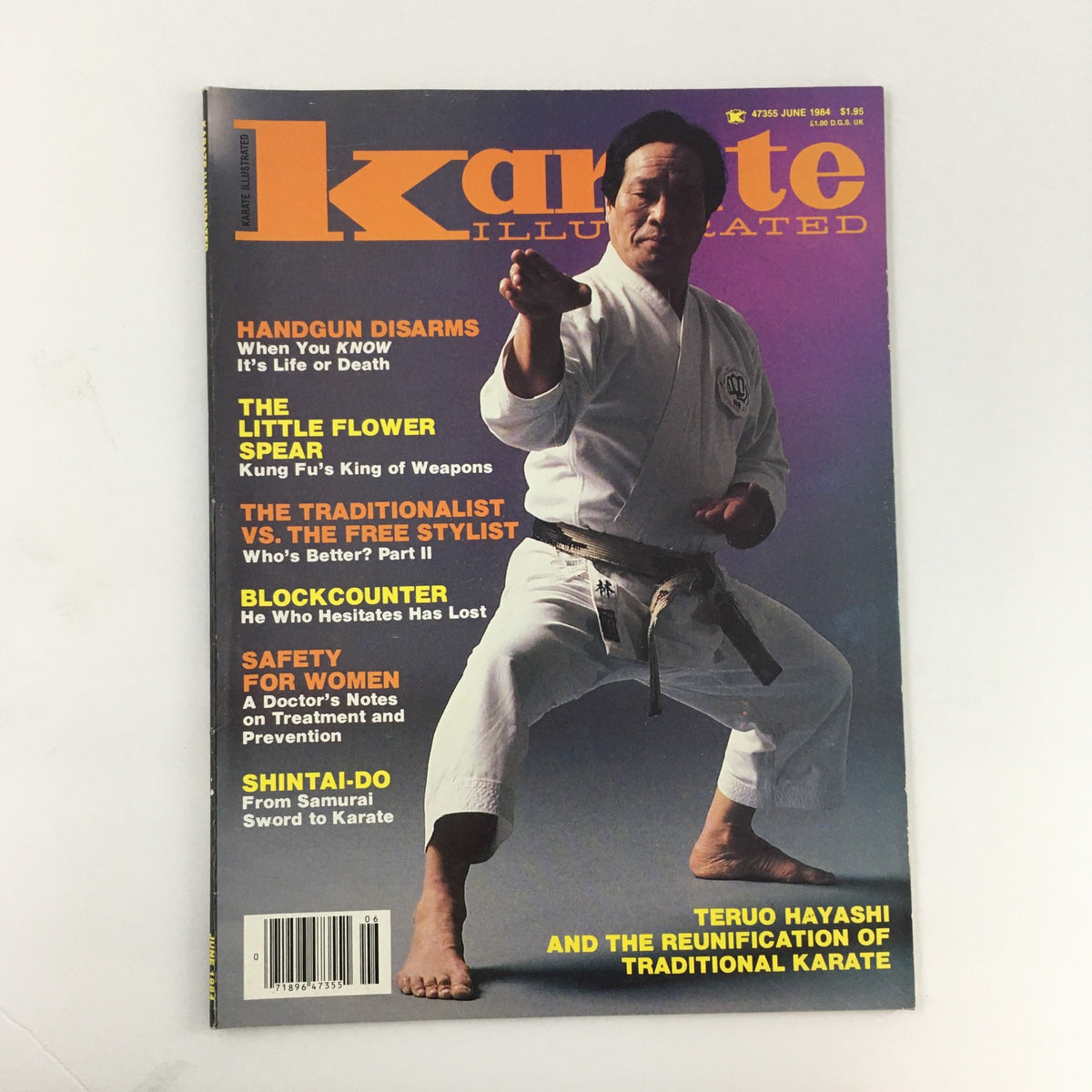


Description
Collector's Note – Why This Issue Matters
Karate Illustrated Magazine June 1984, Volume 15, Number 6, is identified in the listing as featuring Teruo Hayashi on the cover. Hayashi was a significant figure in the karate world, and his presence gives this issue a clear martial arts collecting focus. By 1984, karate had already developed a strong international profile, with American readers encountering the art through dojos, tournaments, demonstrations, instructional writing, and specialized martial arts magazines. This issue belongs to that print culture, when magazines helped preserve training philosophies, competitive trends, and the public identities of respected martial artists. A cover appearance by a named karate figure also makes the issue easier to identify within a collector’s run, especially for readers who organize martial arts magazines by instructor, style, or featured personality. It is the kind of issue that helps document how karate was represented in print during the height of 1980s martial arts enthusiasm.
The June 1984 issue is especially relevant because it reflects karate during a period of expansion and refinement in the United States and beyond. Martial arts magazines of the 1980s served as practical resources for students while also documenting the personalities, schools, and ideas shaping the discipline. For collectors of vintage Karate Illustrated magazines, a dated issue with a named cover figure such as Teruo Hayashi offers a useful reference point for studying how karate was presented to serious readers during the era. The listing’s reference to techniques, philosophies, competition highlights, and training tips places the issue within the instructional and community-oriented role that martial arts periodicals served. These magazines were not merely entertainment objects; they were part of how practitioners encountered ideas beyond their own schools and local training circles.
Within the broader field of original 1984 magazines, this issue represents a specialized but culturally important part of the decade’s publishing landscape. The early and mid-1980s were a strong period for martial arts visibility, shaped by training schools, tournament circuits, instructional media, and popular entertainment. Even when specific interior article titles are not confirmed, the issue’s date, volume number, cover subject, and no-label newsstand presentation make it a meaningful artifact of karate publishing history. It also reflects a moment when martial arts magazines still functioned as primary reference sources for many readers, offering photographs, commentary, and training perspectives in a pre-digital format. For collectors, that combination of period design, named martial artist, and confirmed publication details gives the issue lasting documentary value.
About the Publication
Karate Illustrated was a martial arts magazine aimed at readers interested in karate training, competition, instruction, personalities, and the broader martial arts community. Its audience included students, instructors, tournament followers, collectors, and readers who wanted practical and cultural insight into the discipline. The magazine’s editorial format typically centered on martial artists, training methods, competitive developments, technical discussion, photographs, and articles connected to the evolving world of karate. By the 1980s, publications like Karate Illustrated played an important role in linking local martial arts communities to a wider national and international conversation. They helped readers compare styles, follow recognized figures, and understand the changing place of karate within sport, self-defense, and personal discipline. For collectors today, the magazine is valuable because it preserves how martial arts were discussed, photographed, promoted, and studied during a period of especially strong public interest.
Key Highlights Inside
- June 1984 issue of Karate Illustrated, identified as Volume 15, Number 6. The volume and issue number are important for collectors who organize martial arts magazines chronologically or verify specific gaps in a publication run.
- Features Teruo Hayashi on the cover, as stated in the listing title and description. His name gives the issue a clear subject focus for collectors of karate history, martial arts personalities, and 1980s specialty sports publishing.
- The listing describes the issue as offering insight into the techniques and philosophies that shaped martial arts in the 1980s. That description fits the broader function of karate magazines as both instructional resources and cultural records for practitioners.
- Interior material is described generally as including competition highlights, training tips, and articles reflecting the dynamic spirit of karate. Specific titles for those features are not provided, so the content should be described in general terms rather than treated as a confirmed table of contents.
- Described as a newsstand edition with no label, an important collector detail because a clean cover presentation helps preserve the visual impact of the Teruo Hayashi cover. No-label examples are often preferred by collectors who value display quality and uninterrupted cover art.
- Specific interior article titles, bylines, or full feature names are not confirmed in the provided listing, so those details should not be assumed without direct inspection. The reliable confirmed identifiers are the date, volume and issue number, Teruo Hayashi cover, no-label status, Very Good/Excellent condition, and plastic protection.
Condition & Rarity
Collector-grade evaluation of this June 1984 issue should focus on the condition of the Teruo Hayashi cover, spine stability, page completeness, edge wear, surface marks, creasing, and any signs of handling or storage wear. The listing describes the magazine as Very Good/Excellent with light wear typical for its age, which suggests a strong surviving example rather than a heavily worn reading copy. The newsstand, no-label attribute is significant because it means the cover is not interrupted by a mailing label, a detail collectors often value when the cover subject is a named martial artist. The protective plastic covering mentioned in the listing is a storage measure that helps limit additional handling wear, though it should be understood as later protection rather than an original publication feature. For martial arts magazines from the 1980s, complete interiors, clean covers, readable photographs, and intact bindings are especially important because these publications were often handled actively by students and enthusiasts rather than stored immediately as collectibles. Light wear is expected for a magazine of this age, but heavier defects such as missing pages, clipped photographs, detached covers, water damage, or heavy spine splitting would be more serious concerns. In any surviving copy of this issue, the combination of a clean no-label cover and complete interior content would be central to its collector appeal.
Looking for More Issues Like This?
Specific issues of Karate Illustrated with named martial artists on the cover can be difficult to locate consistently, especially when collectors are searching by month, volume number, or no-label presentation. Readers interested in related martial arts periodicals can browse collectible Karate Illustrated magazines to compare other issues from the same title and tradition. That broader collection is a helpful place to study how karate figures, training themes, and competition culture were documented across different years.
Collectors studying the broader decade may also find value in the archive of vintage 1984 magazines, where this issue fits into the wider world of 1980s sports, fitness, martial arts, entertainment, and specialty publishing. Looking across the year can help place this June issue within the larger print culture that shaped how martial arts were documented and remembered. For researchers who collect by date as much as by title, year-based browsing can reveal useful connections between martial arts magazines and the larger media environment of the mid-1980s.