
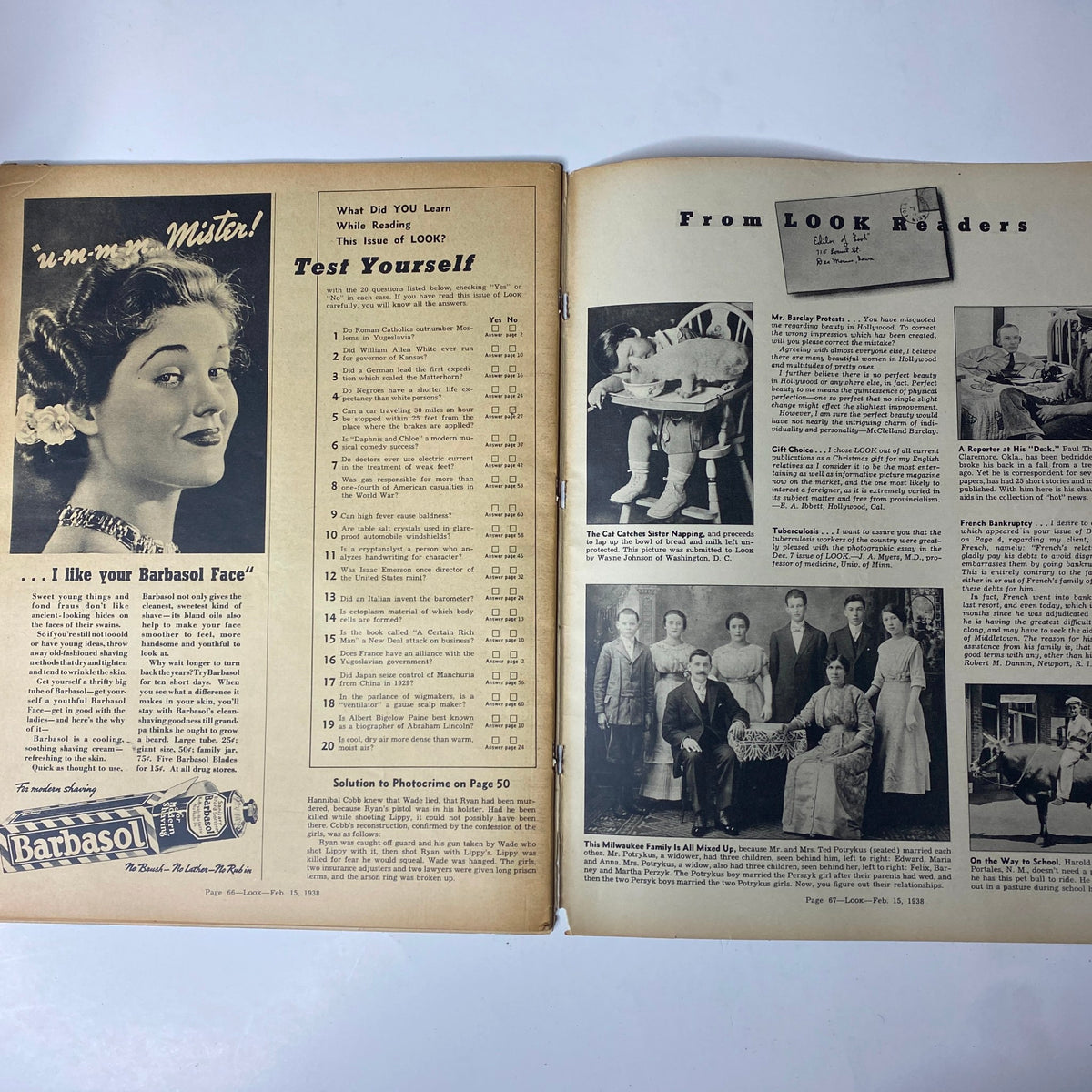


Description
Collector's Note – Why This Issue Matters
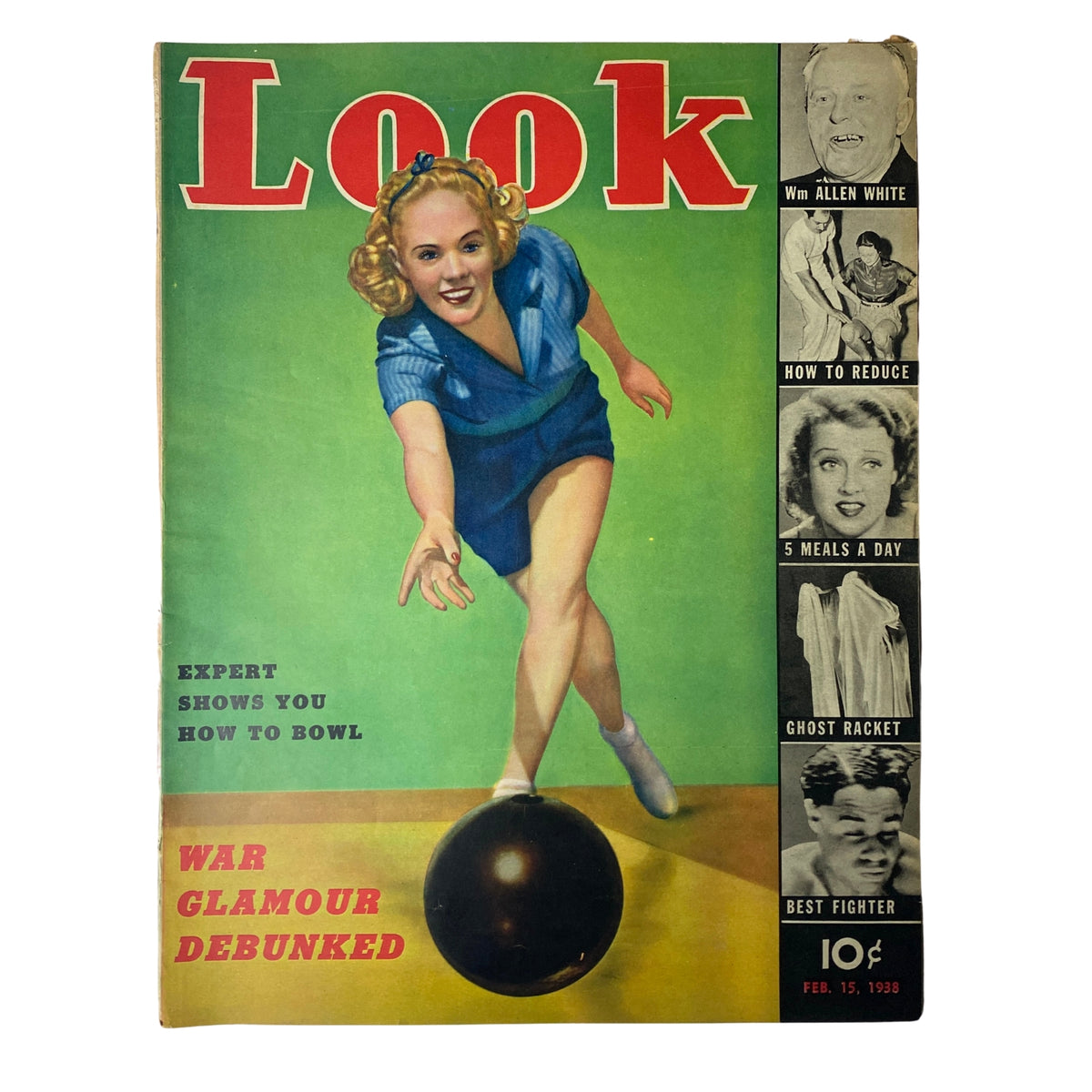
This February 15, 1938 issue of Look magazine is anchored by its headline feature, "War Glamour Debunked," a photojournalistic spread explicitly aimed at undercutting romanticized media and propaganda depictions of warfare by presenting starker, more unflinching imagery of armed conflict's actual toll. Arriving at a moment of escalating international tension, just months before the German annexation of Austria in March 1938 and roughly a year and a half before the outbreak of the Second World War in Europe, this feature reflects a genuinely prescient editorial instinct, using Look's signature photography-driven format to push back against the kind of glorified war imagery that had circulated in earlier propaganda and popular media. This kind of early visual anti-war messaging, appearing in a major American general-interest magazine well before the United States entered the coming conflict, offers a notable documented example of how some American publications were already engaging critically with the romanticization of warfare during this tense pre-war period.
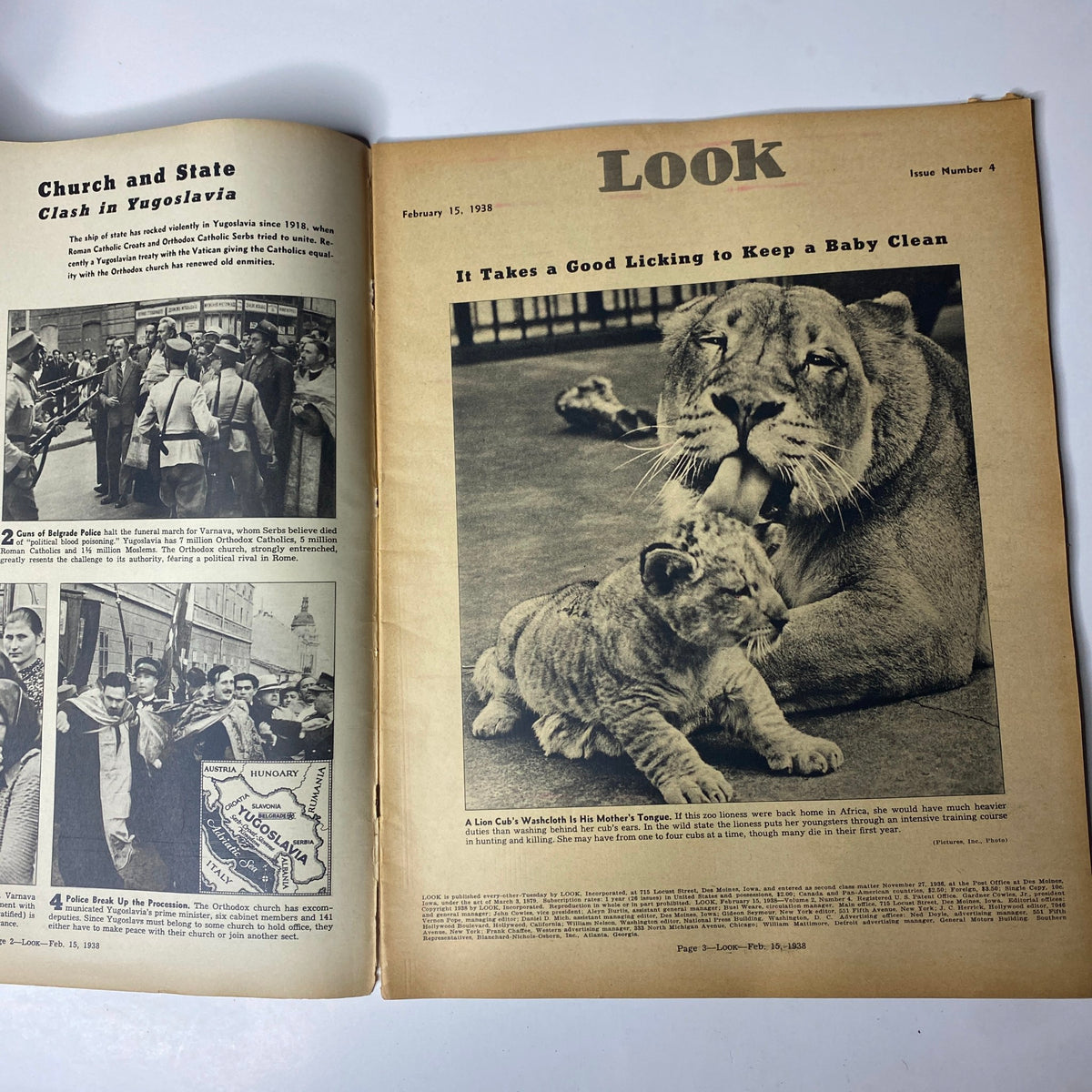
This issue's second major feature, "Church and State Clash in Yugoslavia," documents a genuine and well-recorded episode of religious and political tension within interwar Yugoslavia, centered on the death of Serbian Orthodox Patriarch Varnava in 1937. Varnava's death, which many Serbian Orthodox believers came to view with deep suspicion amid ongoing tensions over Catholic-Orthodox relations within the country, occurred against the backdrop of significant controversy surrounding a proposed concordat that would have granted expanded recognition to the Catholic Church within the predominantly Orthodox nation. The feature's coverage of police intervention during a funeral march reflects the genuinely volatile state of religious and political tension in Yugoslavia during this period, situated within the broader context of a multi-ethnic state still working through the unresolved religious and national divisions inherited from its formation after 1918.
The issue's animal feature, "It Takes a Good Licking to Keep a Baby Clean," offers a deliberate tonal contrast to the magazine's heavier political content, presenting a lioness grooming her cub as a gentler, more universally accessible human-interest subject. This kind of juxtaposition, pairing serious international political coverage with lighter natural history or animal photography within the same issue, reflects Look's broader editorial strategy of using its strong visual format to address a wide range of subject matter for a general American readership, balancing weightier journalism with more approachable visual storytelling.
Taken together, this issue offers a richly documented snapshot of a major American magazine actively grappling with international political tension on the eve of significant historical upheaval, combining genuine anti-war photojournalism with substantive reporting on a real and well-documented religious conflict in interwar Yugoslavia. It sits within the broader context of 1938 magazines and the editorial history of Look itself, capturing a specific, historically significant moment in pre-war American journalism. That combination of documented international events and Look's distinctive photography-driven format is precisely what gives this issue lasting reference value for collectors of late-1930s political and photojournalistic history.
About the Publication
Look magazine was an American general-interest publication that distinguished itself through a heavily photography-driven editorial format, emphasizing illustrated photo essays and visual storytelling alongside its written content. Launched in the mid-1930s, the magazine quickly established itself as a significant competitor within the photojournalism-focused magazine landscape of the period, offering readers a visually engaging alternative to more text-dense news publications. Its editorial scope typically combined serious political and international reporting with lighter human-interest and animal photography features, reflecting a broad general-interest readership rather than a narrowly specialized audience. By early 1938, Look had developed a recognizable editorial identity built around this combination of substantive political coverage and strong visual presentation, distinguishing it from more conventional newsmagazines of the same period. The magazine's willingness to tackle politically charged international subjects, as reflected in this issue's anti-war feature and its coverage of religious conflict in Yugoslavia, demonstrates the serious journalistic ambition the publication brought to its photo-essay format even during its relatively early years of operation. This February 1938 issue reflects that established editorial approach during a particularly tense period of pre-war international politics.
Key Highlights Inside
- "War Glamour Debunked," the issue's main feature, presenting a photojournalistic spread aimed at undercutting romanticized media depictions of warfare. This piece reflects an early example of visual anti-war messaging within American general-interest publishing. It arrives at a genuinely tense moment in pre-war international politics, just weeks before significant escalations in Europe.
- "Church and State Clash in Yugoslavia," appearing on page 7, documenting renewed religious tension between Roman Catholic Croats and Orthodox Serbs. The feature covers the controversial 1937 death of Serbian Orthodox Patriarch Varnava, viewed by many believers with suspicion amid broader Catholic-Orthodox tensions. It also covers police intervention during a related funeral march, reflecting genuine volatility in interwar Yugoslav religious politics.
- Coverage of tensions surrounding papal recognition of Catholic equality within predominantly Orthodox Yugoslavia, situating the issue's Patriarch Varnava coverage within a broader, well-documented controversy over religious status within the country. This context reflects genuine unresolved divisions inherited from Yugoslavia's formation after 1918. The feature's attention to this broader political and religious context adds significant historical depth to the issue.
- "It Takes a Good Licking to Keep a Baby Clean," an animal feature depicting a lioness grooming her cub, captured by a contributor credited as Dr. Photo. This piece offers a deliberate tonal contrast to the issue's heavier political content. It reflects Look's broader editorial strategy of balancing serious journalism with more universally accessible visual storytelling.
Condition & Rarity
Condition for general-interest photojournalism magazines of this age and type is generally assessed through cover and binding integrity, page completeness, and the overall legibility and visual clarity of printed photography and text. A copy described as good condition, free from mailing labels, generally indicates a cover that retains solid presentation, with binding and interior pages intact and free from significant structural damage. The absence of a mailing label is generally viewed favorably among collectors, since unlabeled copies tend to present a cleaner, unobstructed cover image without sticker residue or removal marks, which matters significantly for a photography-driven publication like Look. A protective plastic sleeve plays a meaningful preservation role for magazines of this kind, guarding against humidity, handling wear, and gradual paper degradation over decades of storage. Issues from the late 1930s, now approaching nine decades old, are old enough that some degree of edge softening and paper toning becomes common even among carefully stored examples. Given the magazine's relatively heavy reliance on photographic content, cover and interior image clarity carry particular weight when evaluating long-term collectible value for this specific publication, especially for an issue valued in part for its striking war photojournalism and animal photography. Collectors evaluating any surviving copy of this issue should weigh overall structural completeness and the continued clarity of its printed photography and text as the primary indicators of long-term collectible and reference value.
Looking for More Issues Like This?
A Look magazine issue from February 1938 combining early anti-war photojournalism with substantive coverage of religious conflict in interwar Yugoslavia represents a genuinely significant category of pre-war journalism collecting, given how few periodicals from this period engaged this directly with unfolding international tension. If this exact issue isn't what you're looking for, the broader Look collection spans material from across the magazine's publishing history, offering a wider range of issues and editorial eras for collectors interested in the title's overall journalistic legacy. For those more focused on this specific year, the full range of 1938 magazines brings together material from across that year, spanning multiple publications beyond Look alone. Browsing the Look collection can be especially useful for collectors building a set around significant political or international features or specific decades of the magazine's photojournalism history. Browsing by year, on the other hand, suits collectors more interested in capturing a broader cultural and political snapshot of 1938 across different types of periodicals. Either approach offers a practical way to continue exploring material connected to this issue's particular combination of era and editorial identity. Both collections represent solid starting points for finding comparable issues from this historically significant period in pre-war American journalism.