



Description
Collector's Note – Why This Issue Matters
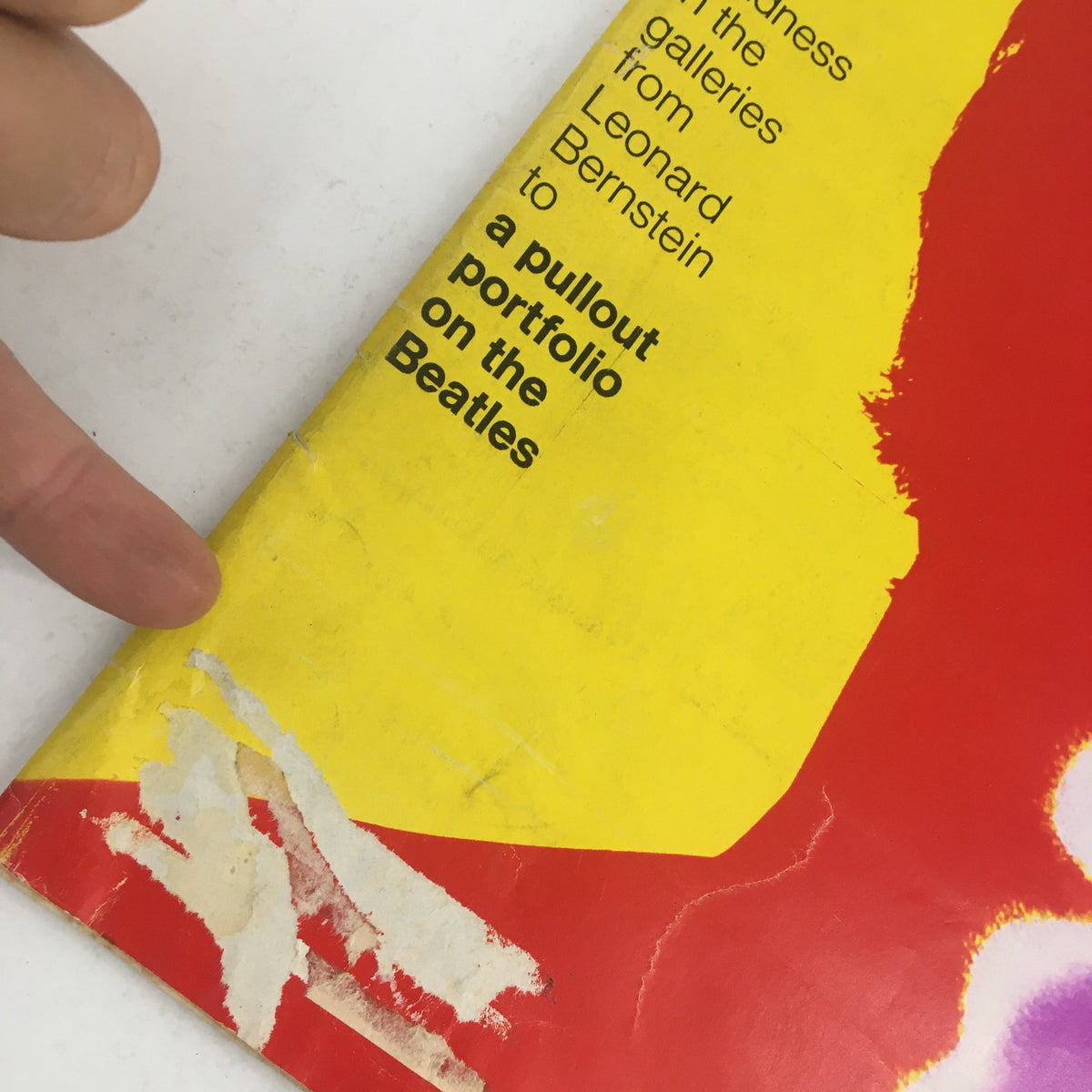
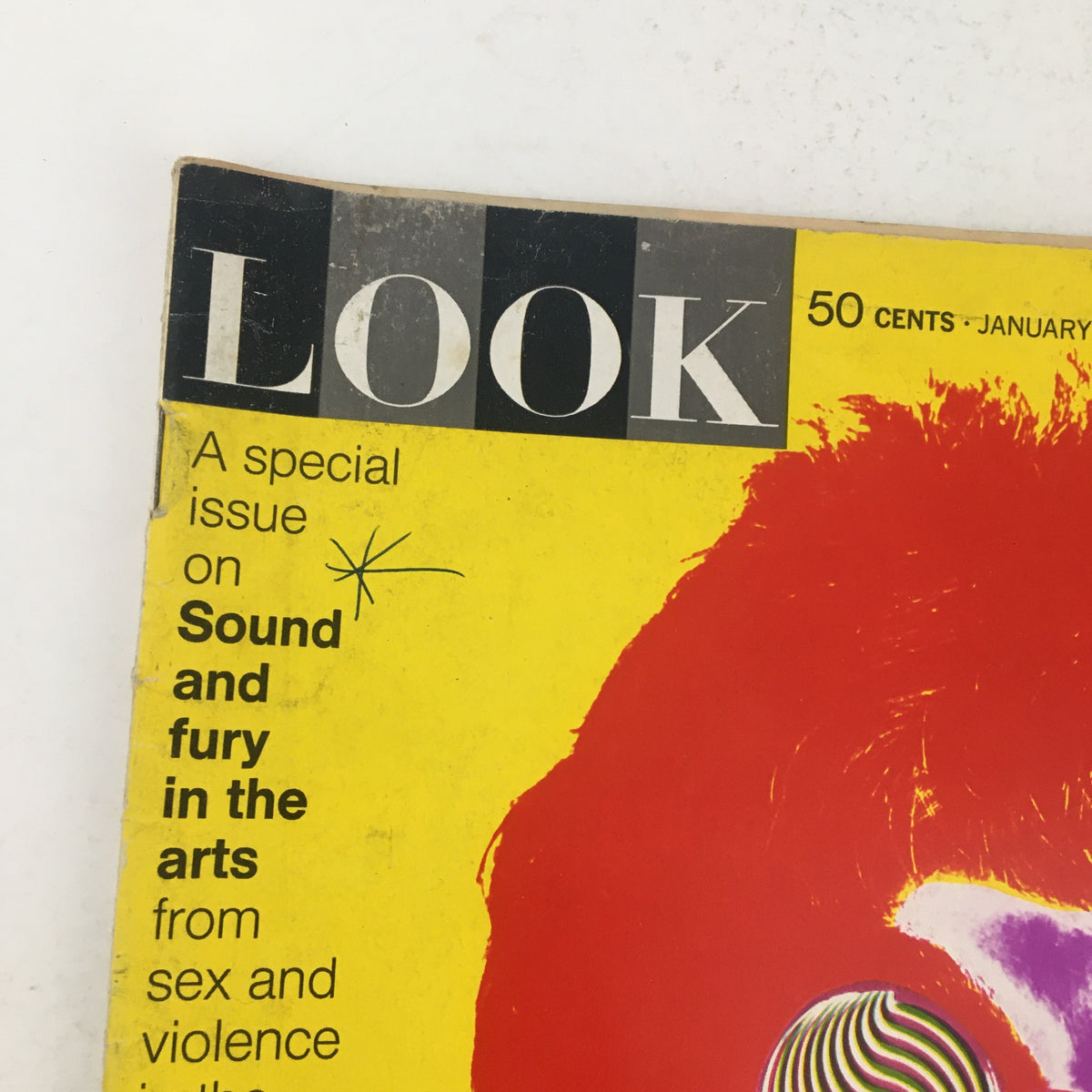
The January 9, 1968 issue of Look magazine — featuring a pullout portfolio of the Beatles photographed by Richard Avedon — is one of the most historically significant and most actively collected magazine issues in the history of rock and roll photography. The Avedon Beatles portfolio is not merely a set of celebrity photographs; it is a document of one of the most consequential artistic collaborations between a major photographer and a musical act in the twentieth century. Avedon had been developing a psychedelically influenced, double-exposure portrait style that reached its fullest expression in these Beatles images, and the results — extraordinary distorted, color-saturated portraits of each Beatle rendered in a visual language that had no precedent in mainstream magazine photography — had an immediate and lasting impact on how rock musicians were photographed. The images were explicitly not the clean promotional portraiture that the entertainment industry had previously applied to even its most avant-garde subjects. They were art photographs, conceived by one of America's greatest portrait photographers, published as a pullout portfolio in a major general-interest magazine in January 1968. For collectors building a focused archive through the John Lennon magazines collection, this is the single most artistically significant Lennon portfolio published during his Beatle years — a document of him at the peak of his creative influence, rendered by the photographer who understood him best.
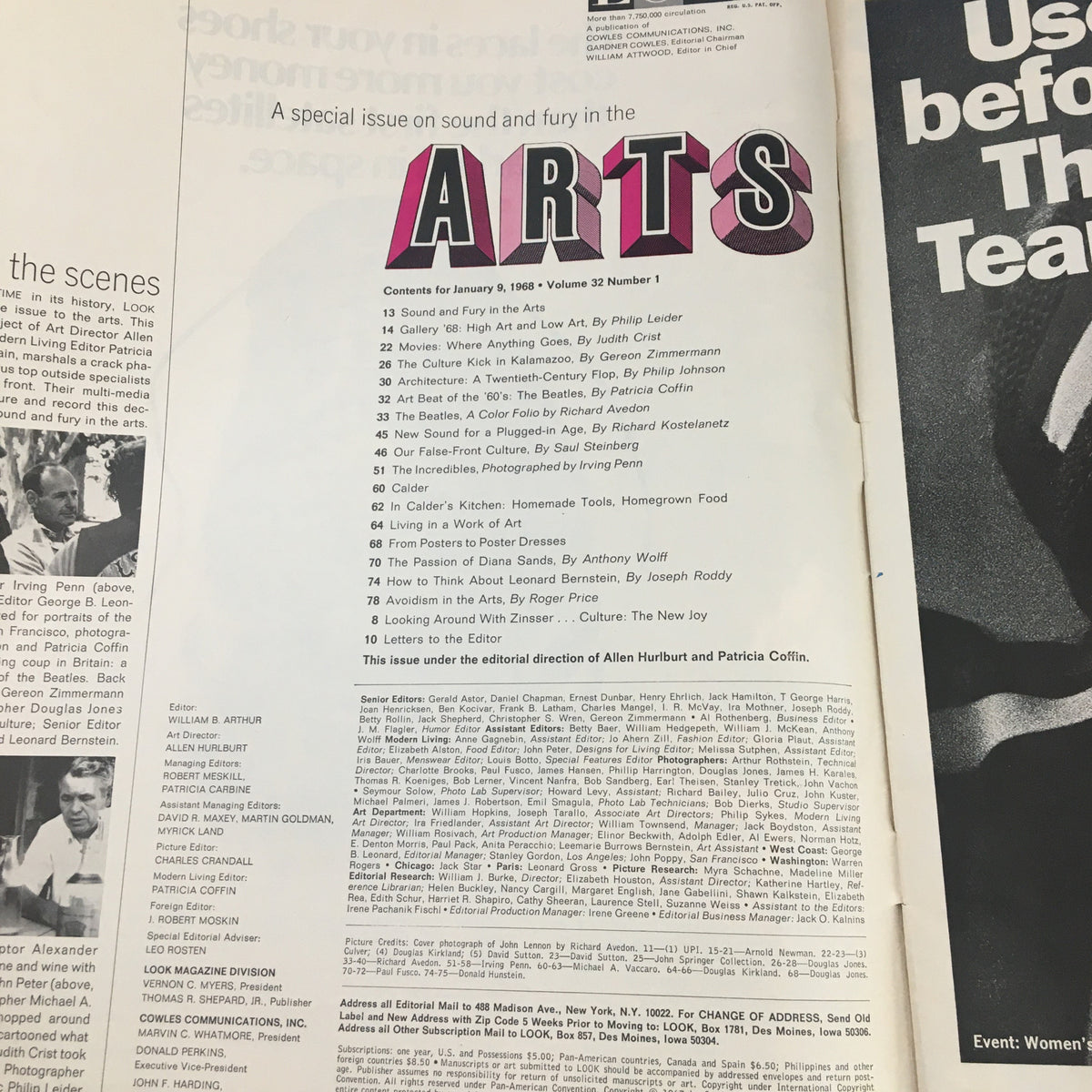
The broader editorial context of this issue amplifies its significance considerably. The "Sound and Fury in the Arts" theme that organizes the entire January 9, 1968 Look assembled an extraordinary roster of contributors engaging with American culture at its most turbulent moment: Philip Johnson on architecture, Judith Crist on film, Saul Steinberg writing on "Our False-Front Culture," Leonard Bernstein examined, Alexander Calder profiled, Irving Penn photographing "The Incredibles," and the Beatles article by Patricia Coffin providing the textual anchor for Avedon's visual essay. This is Look operating at its fullest editorial ambition — a general-interest magazine making a sustained argument about American culture in January 1968, the month before the Tet Offensive would transform the political landscape, with the Beatles portfolio as its visual centerpiece. For collectors focused on the Look magazine run of the late 1960s, this issue is the publication's single most culturally ambitious edition. For anyone researching American art, music, and cultural journalism at the opening of 1968, it is a primary document of extraordinary density.
The pullout portfolio format deserves specific attention as a collecting criterion. The Avedon Beatles images were designed as a detachable insert — posters, essentially, intended for display — which means that the most important evaluation question for any surviving copy is whether the portfolio remains intact and unpulled. Portfolio-complete copies in any solid condition represent a meaningfully different collecting category from copies where the portfolio has been removed, and the difference in research and display value is significant. The combination of Avedon's visual contribution, the Patricia Coffin Beatles essay, and the contributions from Steinberg, Penn, Johnson, and Crist makes this an issue that rewards examination on every page.
About the Publication
Look magazine, founded in 1937 and by January 1968 one of the two dominant general-interest photo-journalism weeklies in the United States alongside Life, combined photographic essays with reported journalism, celebrity profiles, and cultural commentary for a broad mainstream American readership. Its format gave significant space to cultural and arts coverage alongside its news and politics content, and the January 9, 1968 "Sound and Fury in the Arts" issue represents the publication at its most editorially ambitious, assembling major contributors across every art form for a comprehensive statement about American cultural life at the beginning of one of the most consequential years of the postwar era.
Key Highlights Inside
- Richard Avedon Beatles color portfolio — psychedelically distorted double-exposure portrait photographs of all four Beatles, conceived as a pullout display insert and representing one of the most significant works of rock photography in the history of the medium; portfolio-intact copies are a primary collecting criterion for this issue.
- "Art Beat of the '60s: The Beatles" by Patricia Coffin — the textual essay accompanying Avedon's visual portfolio, providing the cultural framing for the images within the issue's broader "Sound and Fury in the Arts" editorial theme.
- Saul Steinberg's "Our False-Front Culture" — an essay by one of The New Yorker's most intellectually sophisticated contributors, published in the same issue as the Avedon portfolio, reflecting the editorial ambition of the entire arts-themed issue.
- Irving Penn photographing "The Incredibles" — a second major photography contribution from one of the twentieth century's most significant portrait photographers, in the same issue as the Avedon Beatles portfolio.
- Philip Johnson on architecture, Judith Crist on film, and "How to Think About Leonard Bernstein" — a roster of major cultural critics contributing to a single January 1968 issue, reflecting Look's sustained attempt to document the full range of American creative life at a moment of extraordinary cultural ferment.
Condition & Rarity
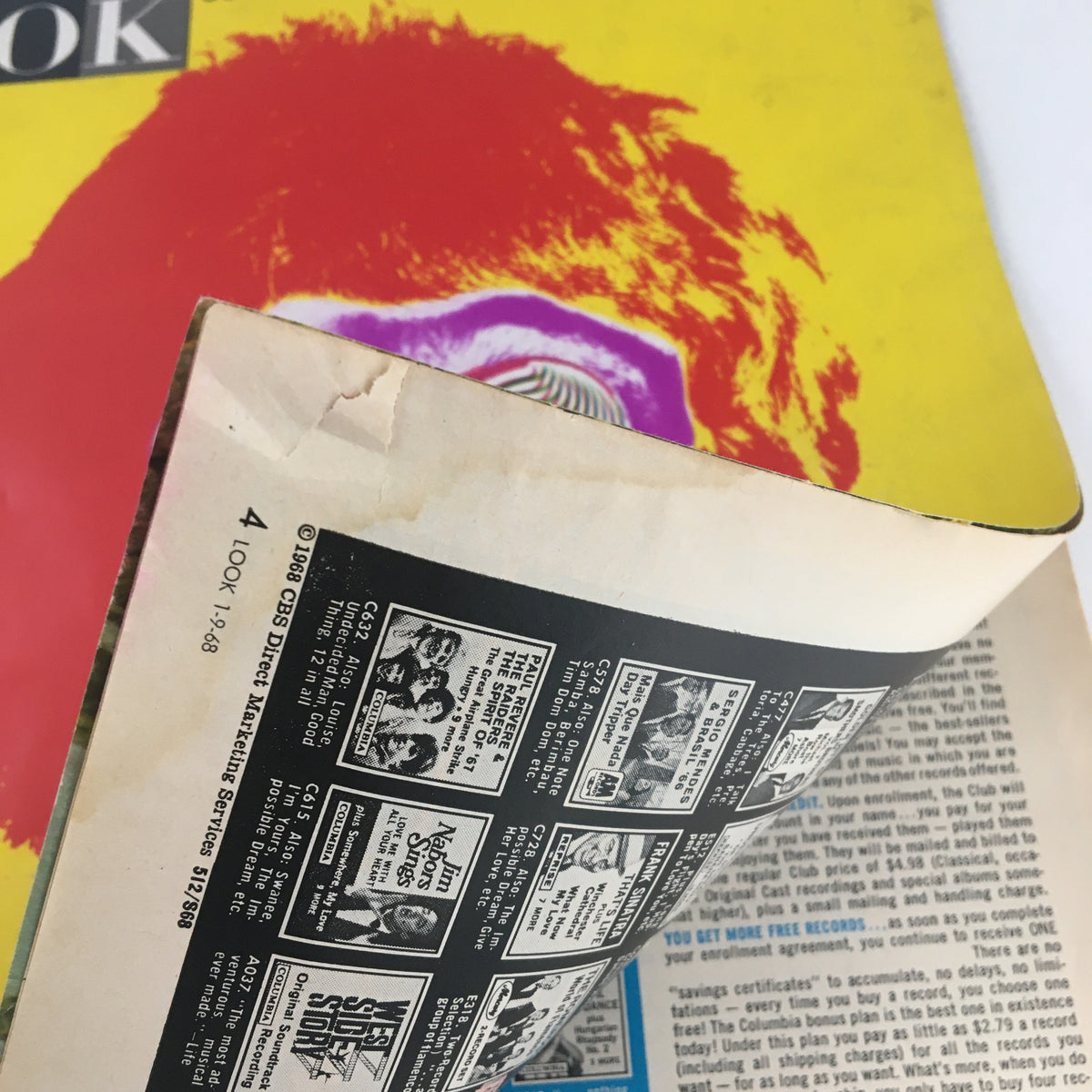
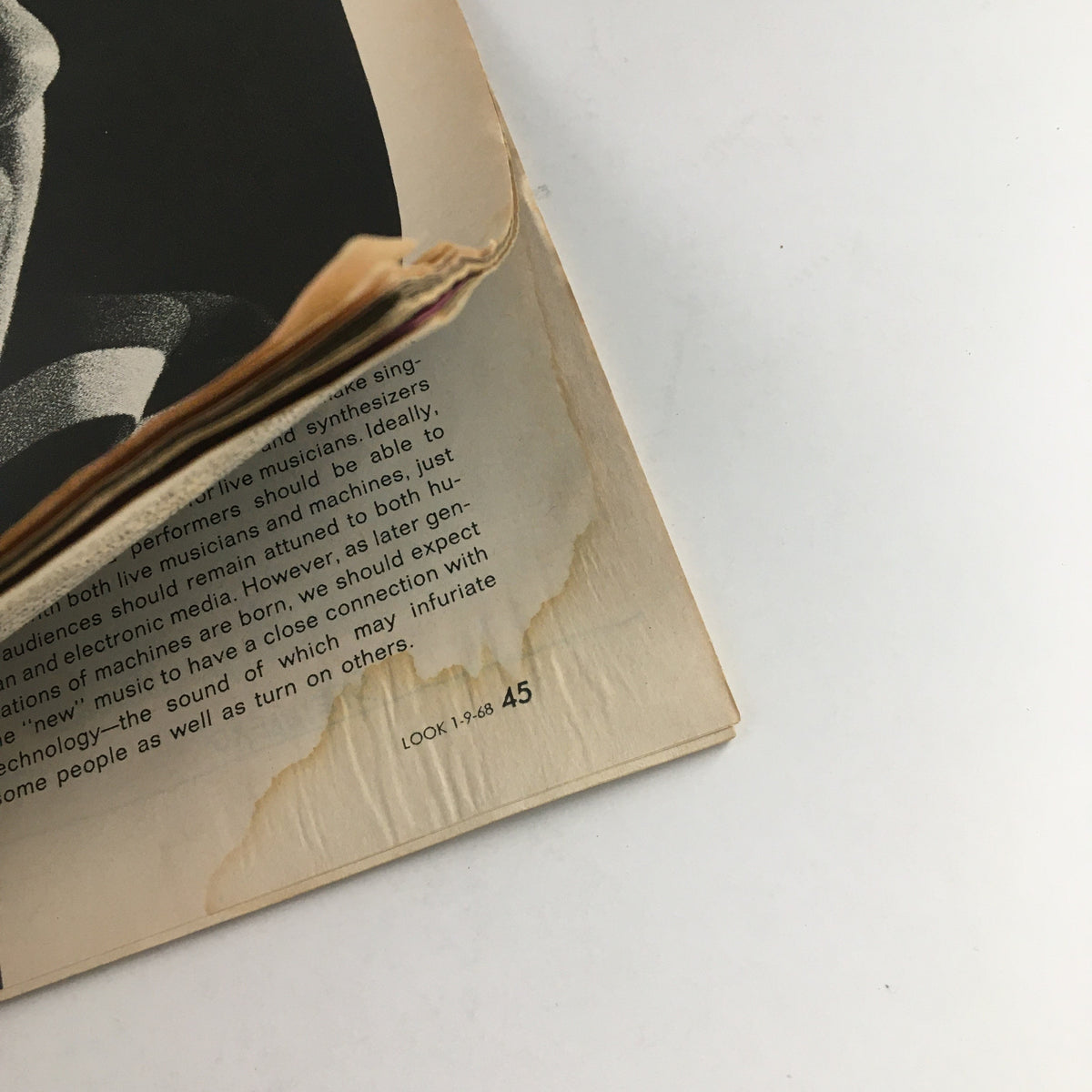
Surviving copies of this issue in good condition with minor wear, a subscriber address label on the front, some marks, and water damage present a condition profile that requires careful assessment against the provided photographs before research or display use. Water damage is a meaningful condition factor that can affect both cover image integrity and interior page quality — the Avedon portfolio pages are coated stock that responds differently to moisture exposure than standard newsprint, and the extent and placement of water damage relative to the portfolio images should be evaluated carefully. The subscriber label is characteristic of most Look issues that survive in collections. A plastic protective sleeve confirms current preservation intent. For this specific issue, the single most important evaluation criterion beyond overall condition is whether the Avedon pullout portfolio remains intact — portfolio-complete copies in any solid condition represent a premium over portfolio-removed examples. This issue is sought by Lennon collectors, Avedon photography archivists, Look completists, and 1960s cultural history researchers simultaneously.
Looking for More Issues Like This?
The January 9, 1968 Look with the Avedon Beatles portfolio is one of the most recognized and most actively sought issues in rock and roll magazine collecting, and portfolio-intact copies in any solid condition are claimed consistently when they surface. If this issue has already found a collector, the dedicated John Lennon magazines collection at OriginalMagazines.com gathers his most significant print appearances across his career. The full Look magazine collection is essential for anyone building a serious archive of the publication's late-1960s cultural journalism, and the complete 1968 magazines collection offers broader context for American cultural life from the most consequential year of the decade.